

Tecnología inalámbrica de vanguardia para el monitoreo ambiental
El sistema de monitoreo viewLinc de Vaisala hace un seguimiento de las condiciones ambientales de forma inalámbrica usando dispositivos inalámbricos…
Nota de aplicación
Published by Isotech · 18 September 2025 · Updated 25 September 2025
To discover Earth-like planets, astronomers use extreme precision radial velocity (EPRV) spectrographs, which can detect the tiny “wobbles” of stars caused by orbiting planets. These spectrographs, often placed on high-altitude observatories, demand exceptional stability: even a thousandth of a degree change in temperature can create false signals.
The Isotech microK precision thermometer has become a trusted solution for monitoring and verifying this stability. Its use is documented across several flagship projects: the Habitable-Zone Planet Finder (HPF) in Texas, which targets planets around cooler stars; NEID at Kitt Peak, designed for ultra-precise Doppler measurements; iLocater at the Large Binocular Telescope, pushing diffraction-limited precision; PARAS-2 in India, Asia’s highest-resolution spectrograph for exoplanet discovery; SPIRou in Hawai’i, optimised for faint, cool stars in the infrared; and G-CLEF in Chile, the first-light instrument of the Giant Magellan Telescope, built to detect Earth-like worlds.
Together, these projects highlight how a thermometer first developed for temperature metrology in calibration laboratories is now central to cutting-edge astronomy on mountaintops around the globe.
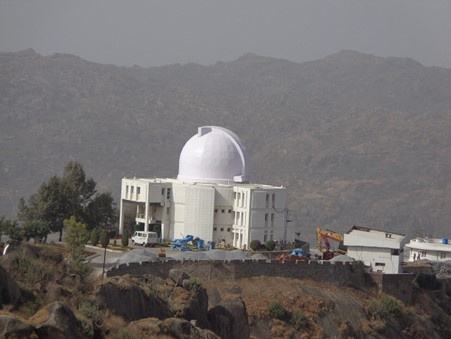
The Mount Abu Observatory in Rajasthan, India, home to the PARAS-2 spectrograph. The project employs an Isotech microK to achieve the thermal stability required for high-precision exoplanet searches. Image credit: PQRS22, Wikimedia Commons (CC BY-SA 4.0)
6 Major Observatories
3 Continents
< 0.001°C Temperature Precision
Astronomical spectrographs designed for detecting exoplanets via the radial velocity (RV) method must maintain exquisite stability. RV signals from Earth-mass planets correspond to stellar velocity shifts of ~10 cm/s, demanding instrumental stability beyond that achieved by earlier facilities such as HARPS (~1 m/s). Temperature fluctuations as small as 0.001 °C can cause spectral drift larger than the planetary signal itself.
High-altitude observatories present a unique challenge: while their sites offer stable seeing and low atmospheric water vapor, the ambient environment can fluctuate dramatically. To overcome this, modern spectrographs are placed in vacuum chambers with active thermal enclosures, where temperature must be controlled and verified at the sub-milliK level.
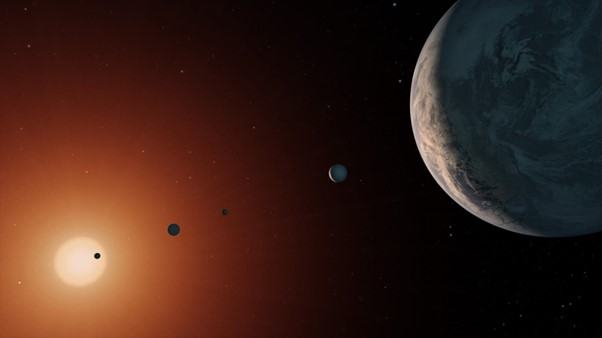
Artist’s impression of a planetary system orbiting a distant star. Instruments such as those using the Isotech microK help astronomers detect subtle signals that reveal the presence of worlds like these. Image credit: NASA/JPL-Caltech — Public Domain
The Mount Abu Observatory in Rajasthan, India, home to the PARAS-2 spectrograph. The instrument employs an Isotech microK to achieve the thermal stability required for high-precision exoplanet searches. Image credit: PQRS22, Wikimedia Commons (CC BY-SA 4.0)
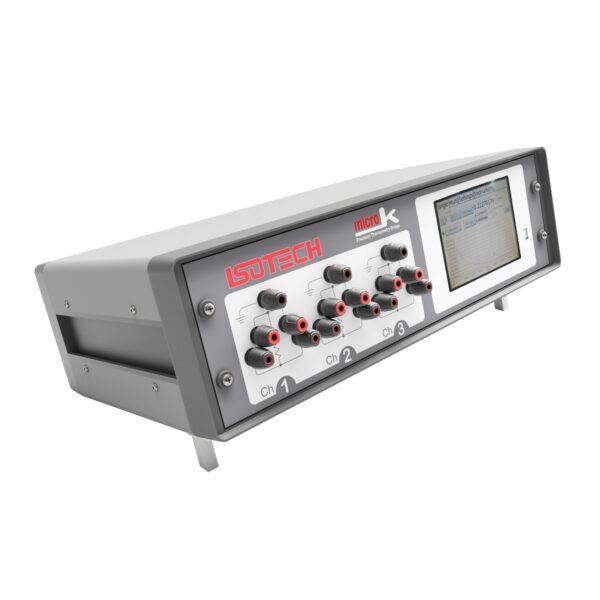
The microK is a precision thermometer originally developed for temperature laboratories to realise and disseminate the International Temperature Scale (ITS-90). It achieves parts-per-billion resistance ratio measurements, corresponding to temperature resolution on the order of tens of microkelvins.
These qualities make the microK uniquely suited to long-duration astronomical observations where tiny thermal drifts can compromise science goals.
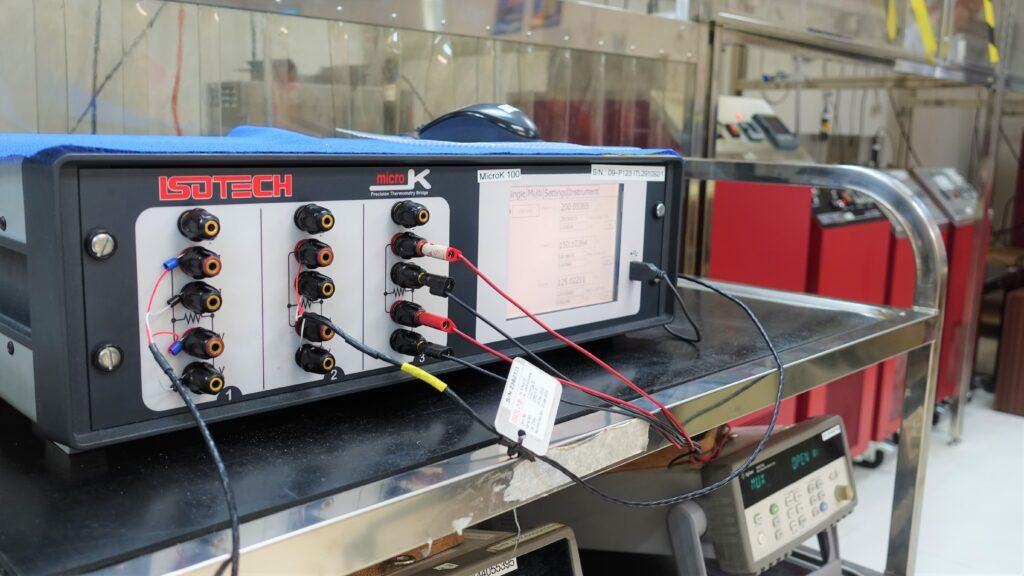
An Isotech microK precision thermometer in use during a laboratory calibration. The same instrument design is deployed at major astronomical observatories worldwide to achieve high thermal stability in planet-hunting spectrographs. Image credit: Acez (used with permission)
The HPF spectrograph at the 10 m Hobby–Eberly Telescope (Texas) operates at 180 K in a vacuum cryostat. Its Temperature Monitoring System (TMS) employed a microK 250 to read out 20 Cernox thermistor sensors, providing precision of 0.1 mK at 180 K. HPF achieved stability of 0.64 mK RMS over 15 days, verified by microK measurements.
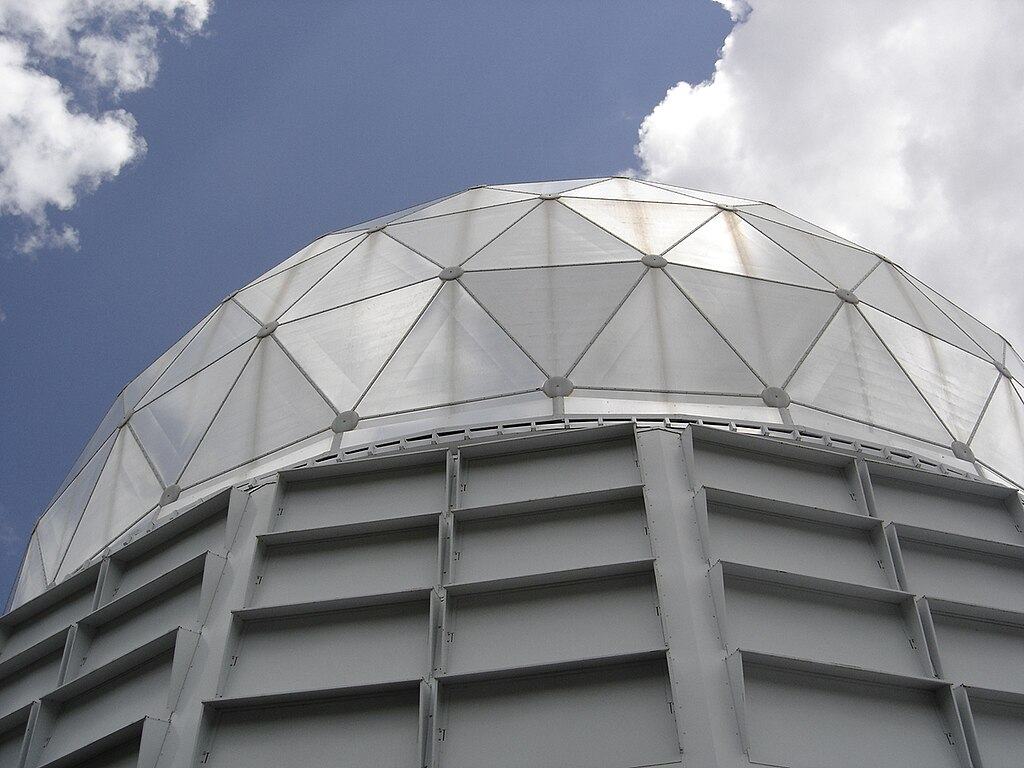
The 10 m Hobby–Eberly Telescope at McDonald Observatory, Texas, home to the Habitable-Zone Planet Finder (HPF) spectrograph. Image credit: Nima; Wikimedia Commons, CC BY-SA 3.0
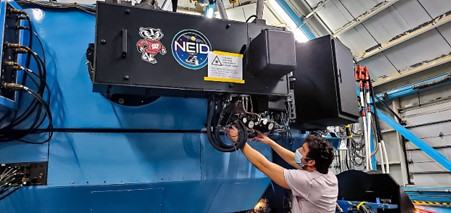
The NEID spectrograph, commissioned at the WIYN 3.5 m telescope on Kitt Peak, targets 0.1 m/s Doppler precision. Its environmental control system uses a vacuum chamber with active heaters and ~30 platinum RTDs monitored by a microK 250. Stability tests demonstrated better than 0.4 mK RMS over 30 days, confirming the chamber remained within 0.001 °C of setpoint.
Modern precision astronomy facilities like the Hobby-Eberly Telescope in Texas require extreme thermal stability for exoplanet detection. The HPF spectrograph uses an Isotech microK 250 to monitor temperature with 0.1 mK precision at cryogenic temperatures. Image credit: NASA, Public Domain
iLocater, under development for the Large Binocular Telescope on Mt. Graham, Arizona, aims for diffraction-limited precision. It will operate in a cryogenic vacuum cryostat (~80–100 K) and builds directly on the HPF and NEID designs. Conference proceedings note the use of sub-mK-level thermal monitoring and control, achieving sub-mK thermal stability in prototype systems.
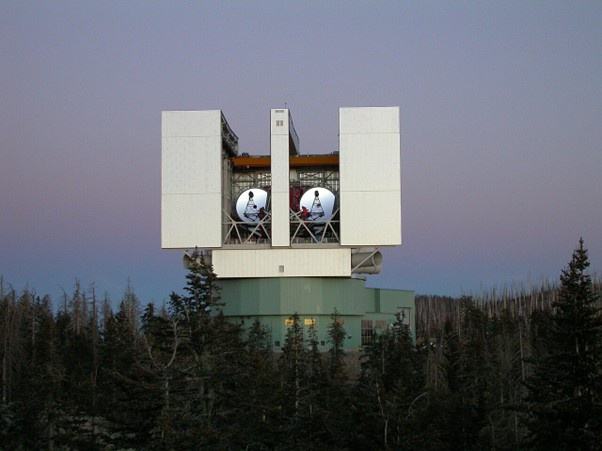
The Large Binocular Telescope on Mount Graham, Arizona, where the iLocater spectrograph will use an Isotech microK for high accuracy thermal monitoring, enabling extreme precision radial velocity measurements. Image credit: NASA, Public Domain
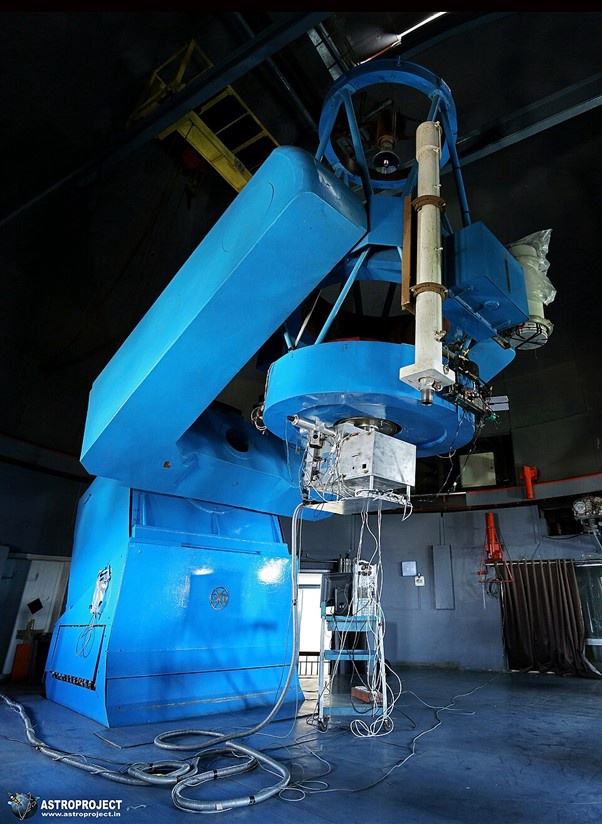
India’s PARAS-2 spectrograph, developed by the Physical Research Laboratory (PRL) in Ahmedabad and installed at the 2.5 m telescope on Mt. Abu, is the highest-resolution stabilized RV spectrograph in Asia. It operates in a vacuum environment stabilized to 24 ± 0.001 °C and 0.005 ± 0.0005 mbar. PARAS-2 demonstrated laboratory RV stability at the 30–50 cm/s level and contributed to the discovery of exoplanet TOI-6038A b.
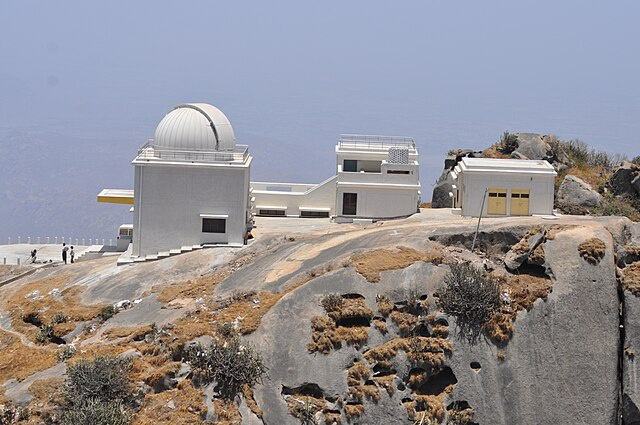
The Mount Abu Observatory in Rajasthan, India, home to the PARAS-2 spectrograph. Situated at high altitude with clear skies, this site supports India’s most advanced exoplanet-hunting programme.
Image credit: Vishnupriyan.m, Wikimedia Commons, CC BY-SA 4.0
SPIRou is a near-infrared spectropolarimeter and high-precision velocimeter operating on the 3.6 m CFHT at Maunakea. It has been in routine operation since 2019. The SPIRou instrument-control system design specifies an Isotech microK 500 thermometry bridge for high-precision temperature measurement of the optical bench, and the microK 500 is also used to read active-shield and other RTDs within the system.
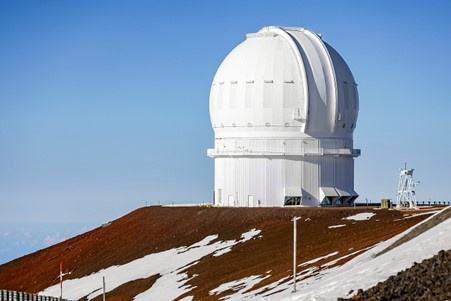
The Canada–France–Hawai’i Telescope (CFHT) on Maunakea, Hawai’i, where the SPIRou spectrograph operates. SPIRou uses an Isotech microK 500 thermometry bridge for high-precision temperature measurement of its optical bench. Image credit: NOIRLab/NSF/AURA — CC BY 4.0
G-CLEF is the GMT first-light, optical echelle spectrograph designed for extreme precision radial velocities. It is vacuum-enclosed and thermally insulated to reach millikelvin level stability. The instrument-design paper states: “The core of this control system is the Isotech microK 125 temperature measurement system, which is capable of microkelvin accuracy.” A 1/5-scale thermal prototype measured with Isotech microK electronics and glass-bead RTDs demonstrated ~0.25 mK per day control stability.
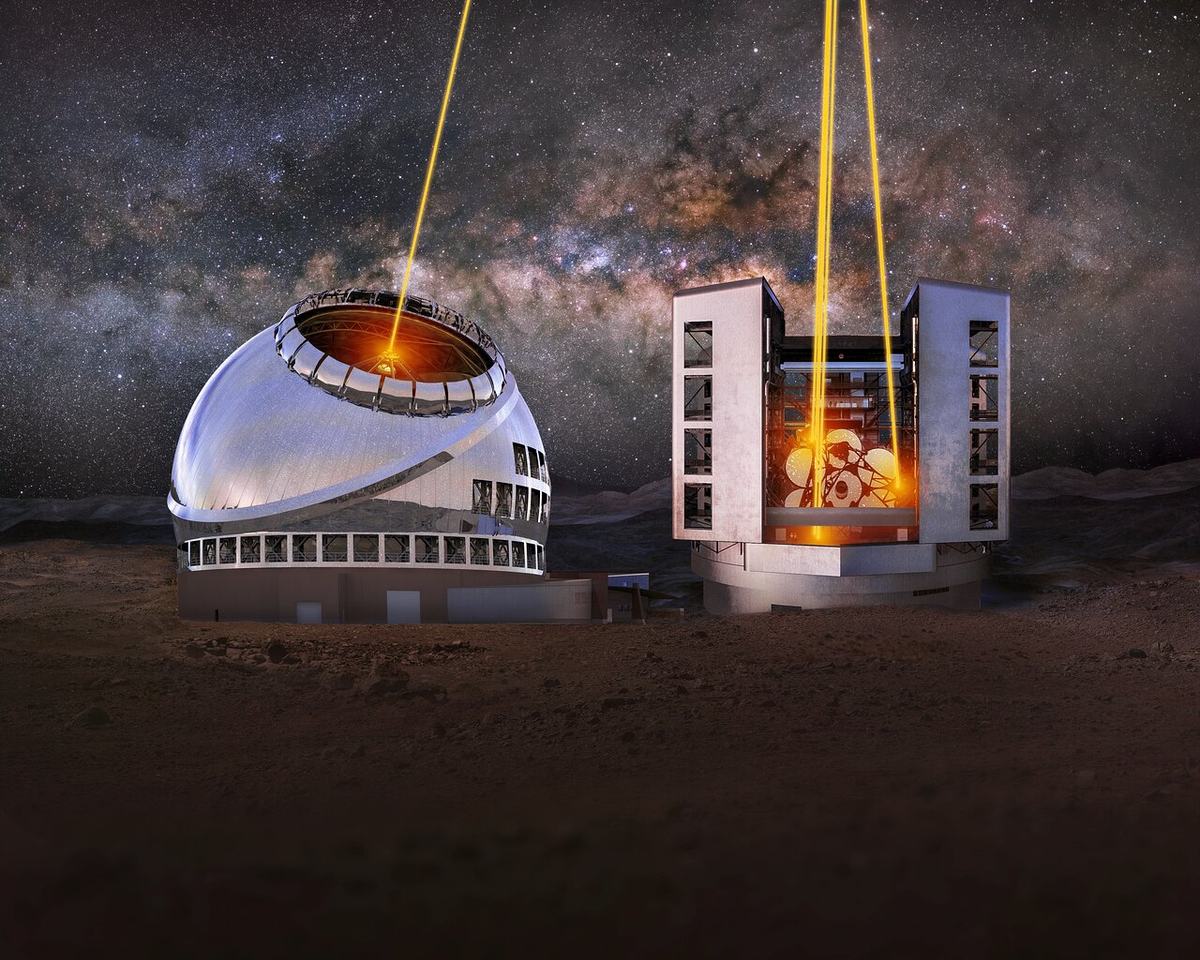
The Giant Magellan Telescope at Las Campanas Observatory, Chile (left), operating alongside another observatory facility. This is the site where G-CLEF, the GMT-Consortium Large Earth Finder spectrograph, will be installed to enable the detection of Earth-like exoplanets through extreme precision radial velocity measurements.
Image credit: US‑ELTP media release, CC BY 4.0
Beyond the cases above, microK bridges are also used in precision calibration for spaceborne radiometers. During pre-launch calibration of Sentinel-3’s SLSTR at RAL Space, the external blackbody target temperatures were measured with an Isotech microK 250 resistance bridge (0.25 ppm; <0.1 mK equivalent for the reference thermometers), providing ITS-90-traceable inputs to the radiometric model (Smith et al., 2020, Remote Sensing 12:2510).
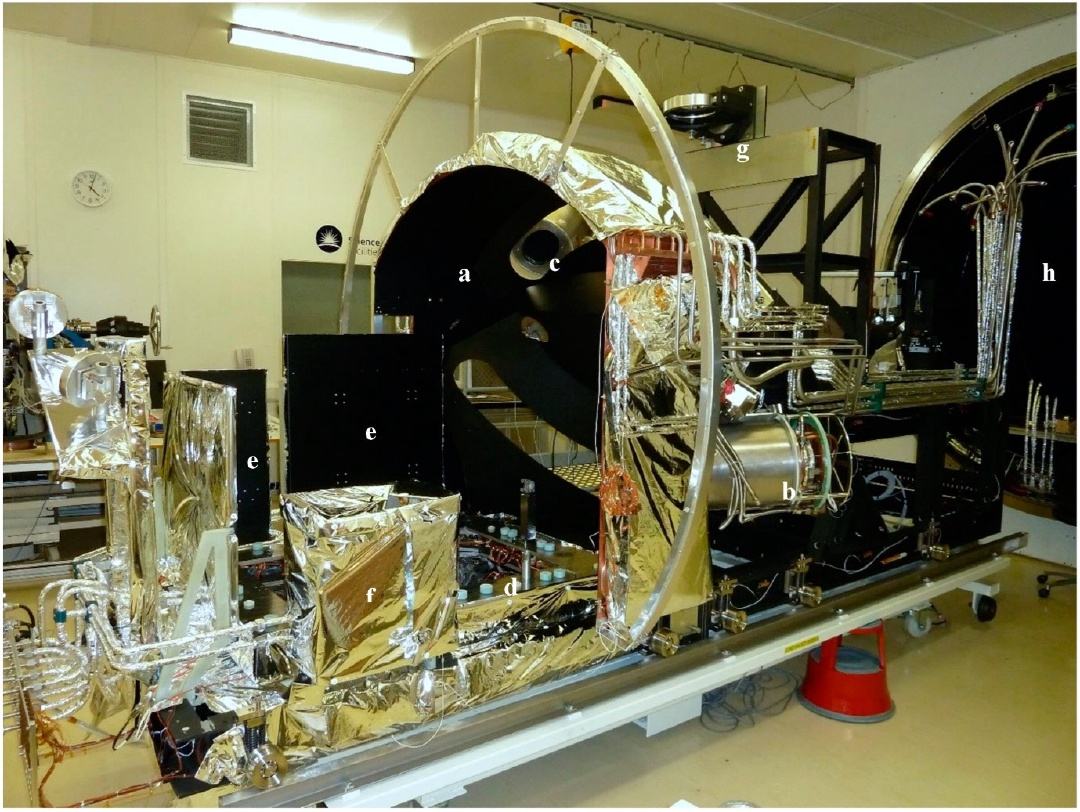
Across these diverse projects, the microK consistently provided the metrology-grade temperature measurements needed to validate sub-millikelvin stability. Its role is not limited to astronomy; it is very widely used in national standards laboratories (e.g., NIST, NPL, PTB) for primary temperature metrology. The migration of such instrumentation from national labs to mountaintop observatories demonstrates the convergence of metrology and astrophysics in pursuit of extreme precision temperature measurement.
The microK’s unique combination of microkelvin sensitivity, long-term stability, and multi-channel monitoring has made it an essential component in the new generation of astronomical spectrographs. From Texas to Arizona to Rajasthan, it enables instruments on mountaintops to behave like those in world-leading laboratories, opening the door to the detection of Earth-like exoplanets.
Mentions of organisations, instruments, and projects are for identification and informational purposes only and do not imply endorsement or affiliation. Technical parameters reflect publicly available sources as of August 2025 and may change without notice. All trademarks are the property of their respective owners. Images used under public-domain or Creative Commons licenses; see captions for credits and license terms.
-200°C to 1800°C
Product Spec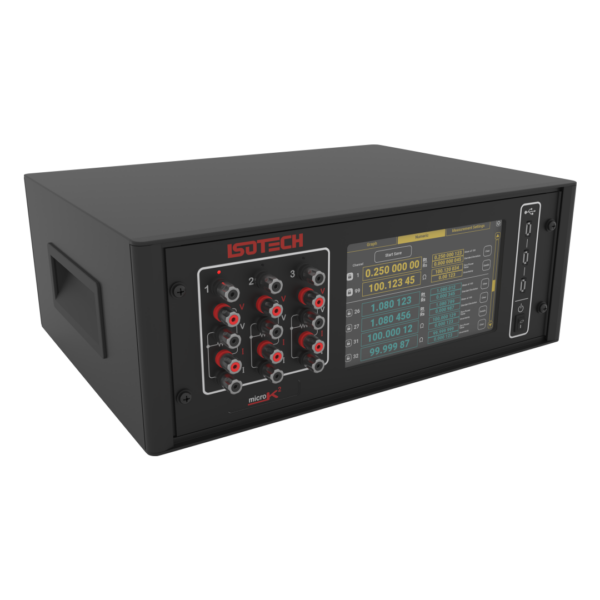
-260°C to 1800°C
Product Spec
Product Spec See more products
El sistema de monitoreo viewLinc de Vaisala hace un seguimiento de las condiciones ambientales de forma inalámbrica usando dispositivos inalámbricos…

Uno de los requisitos más importantes para reducir los costos de enfriamiento es medir adecuadamente las condiciones. Las primeras cuestiones a…
El dióxido de carbono y otros gases compuestos por dos o más átomos diferentes absorben la radiación infrarroja (IR) de una forma característica y…
Otra estrategia para evitar explosiones es instalar los equipos eléctricos dentro de carcasas “a prueba de explosiones”. Estás carcasas pueden…
Un especialista responde con la solución, el instrumento y el servicio que corresponden.
Productos para cotizar
Todavía no hay productos. Se puede escribir igual: un especialista responde.