

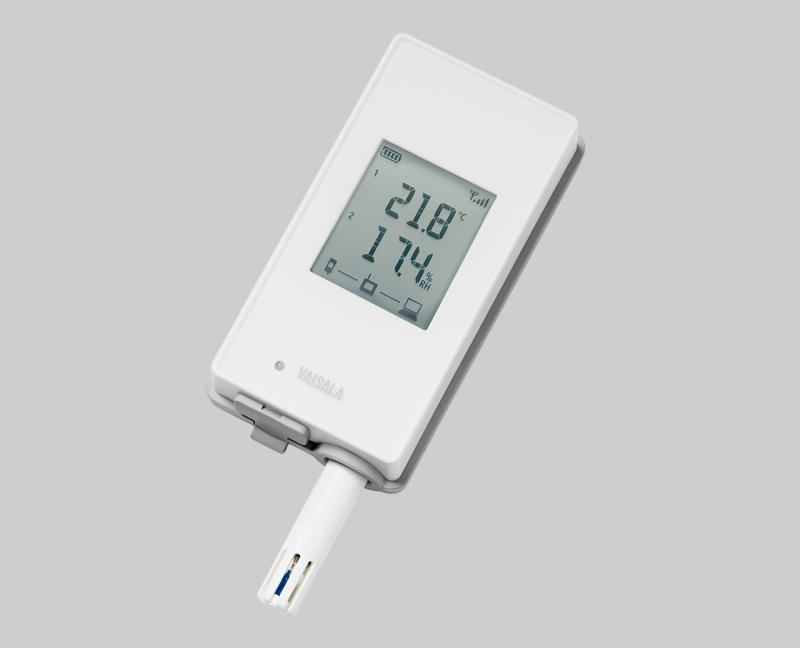
Registrador de datos inalámbrico VaiNet RFL100
Para monitoreo inalámbrico de áreas controladas
Nota de aplicación
First, define the objective of the validation in writing, creating an outline of the methods to be used, and list any anticipated barriers. In most cases, these three items will form the bulk of the validation protocol. Below there are several questions, the answers to which will ideally be in writing as part of the Validation plan.
What regulations and requirements must you comply with?
Start with a review of those listed in the quality guidelines of the facility (i.e. CFRs 210, 211, etc) and scan for recent changes or updates. Although many regulatory bodies mandate temperature mapping of controlled spaces, they do not specify any particular method so the onus is therefore on us to document and provide justification for our mapping procedures.
How many data points do you need to monitor/map?
This number will vary based on a number of factors, including environment, temperature/RH range, application, but a typical number of units used to map small chambers can include:
Where will each data logger be placed?
Spacing the loggers in an evenly distributed grid is recommended, however, it’s also important to monitor the worst-case locations within a chamber for heat-loss and/or air movement. Monitoring the corners of the chamber and near any openings/ pass-throughs will cover most worst-case locations; however shelving/ racking within the chamber may require the identification of additional worst-case locations. Place a sensor at or near the control sensor for the temperature control unit, and any alarm sensors within the chamber.
What is the chamber load?
Will the mapping take place with the chamber empty, as for an Operation Qualification (OQ), or full of product, as for a Performance Qualification (PQ)? For most pharmaceutical and biotechnical applications, both tests are important. Consider how OQ and PQ might affect the process. As well, some regulatory bodies(2) mandate the use of maximum and minimum loads during the validation process. An empty chamber can be considered the minimum load and is usually the worst-case for temperature fluctuations within the chamber.
Tracking air temperature inside the chamber Vs. interior product temperatures:
Tracking interior product temperatures, such as the temperature inside a solution bottle, is sometimes considered more meaningful as it insulates the data against minor disturbances such as periodic door openings and closings.
What parameters will you measure?
Should the chamber be mapped for temperature only? Or temperature and relative humidity? If there is any plan to store products with humidity sensitivities, then the chamber should be mapped for relative humidity as well as temperature.
How frequently will take readings?
Typical sample rates are once every minute or once every five minutes, however, as with most other aspects of validation, be prepared to justify sample rate and include that rationale in the plan and/or protocol.
How long will the mapping study be?
Again, it varies and justification may be required. Typical study lengths are 24, 48, or 72 hours. Occasionally facilities map for one week, one month, or even longer. For laboratory scale chambers and walk-in chambers, 24- 72 hours can be sufficient. However for larger scale projects (i.e. a temperature controlled warehouse) where the temperature can be influenced by the temperature outside the facility, longer studies may be required. Larger scale chambers may also require studies during summer and winter months depending on the seasonal temperature variations at the facility’s location.
What will the duration be?
Predetermining a test schedule will allow the validation technician to set all data loggers to simultaneously start and stop collecting data at the same time.
How frequently will testing be repeated?
While some industries only require an initial qualification, some require that temperature mapping be repeated on a regular basis. Once again, review any applicable regulations and be sure to document the intended test frequency in the validation plan/protocol. Generally, while the initial qualification will usually include mapping of the empty chamber and the loaded chamber, subsequent re-qualifications only require mapping of the loaded chamber.
What additional tests may be useful?
In most cases regulatory bodies only require validation of an empty chamber and a loaded chamber. However, other types of tests may provide valuable information. Two common tests that many companies find useful are:
Many of these questions may already be answered by past practices, protocols, or SOPs.
In a GMP environment it is essential to ensure that the equipment being used to perform any chamber qualification is not only appropriate for the job but in good working order. Two considerations:
Check for damage before use. The facility may have an SOP that covers this type of check. If not, there are several ways to ensure proper operation. For example, if the data loggers have been stored together and set to “wrap” (take readings on a continuous “sliding window” basis), simply transfer the information collected by the data loggers to a PC and compare the readings from the various data loggers. If the loggers have not been stored together, another way to confirm their function is to place the loggers side by side for a short time and compare the readings. To minimize the risks of using any equipment that might have drifted out of calibration, there are several possible ways to check calibration.
There may be obvious signs of problems such as measurement readings that vary widely from the norm. If the environment has been stable, look for chemical contamination that may have corrupted the sensor measurements. Or if the logger has been dropped, physical damage in the form of a broken circuit may be the cause. For less obvious causes of out-of-cal performance, a quick accuracy check can be performed without sending the loggers to a calibration lab. Simply compare the logger(s) to other calibrated (NIST-traceable) data loggers or a NIST-traceable instrument for a reference. Finally, comparing any suspect loggers to an accepted reference standard (such as an ice bath or saturated salt solution environment) is another “sanity check.”
Place the sensors in the chamber according to the validation protocol, or according to a diagram or grid. The interior of the chamber can be photographed to show both logger and product placement. If using probe sensors (rather than just loggers with internal sensors), it is important to ensure that they are not in contact any surfaces within the chamber.
Be sure to also place a data logger outside the chamber to monitor ambient temperature, or both ambient temperature and relative humidity. Failure to do so may invalidate the results as exterior temperatures can sometimes significantly influence interior performance. Place this outside data logger away from areas of undue temperature influence such as an outside wall, a heat-generating piece of equipment, near a window, or in a high traffic area.
If possible, it’s a good idea to check the study results periodically to ensure that the mapping is progressing as expected. As an example, a typical validation protocol may call for the validation technician to establish when the temperature in the chamber stabilizes or to verify operation throughout the course of the study. Using a “flat cable” can allow for periodic checks of the data for one logger without disturbing the chamber.
Once the study is complete, to transfer the data from each data logger to a PC. Customize the filename format to make it easy to track files and relate them to the deployment. It is recommended that the software be set to automatically include the following information in each file name: serial number of the data logger, time and date of the data download, and user description of the data logger. Most validation software will provide files that are tamper-proof and secure in order to meet the FDA’s electronic record requirements of 21 CFR Part 11. Each file must be uniquely identified, allowing users to relate each printout to the original data logger files.
The results of the mapping study can be reported in several different ways:
It is important in the report to identify the maximum, minimum and average temperatures recorded at each data logger location. In some cases it is also valuable to include the Mean Kinetic Temperature at each location. This information is valuable in identifying any hot or cold spots within the chamber, as these are the locations where sensors for continuous monitoring and alarms should be located (3).
Para monitoreo inalámbrico de áreas controladas

para inspecciones rápidas y comprobación de errores

Transmisores de ±1,5 % HR para HVAC exigentes, con certificado
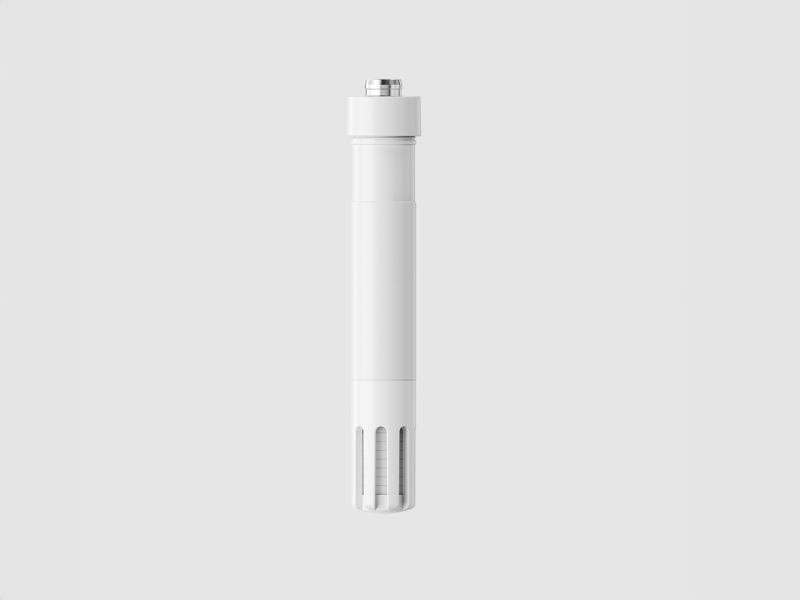
La sonda de humedad HMP113 con gabinete de plástico tiene una confiabilidad excelente y una tolerancia química, y es apta para ambientes sin…
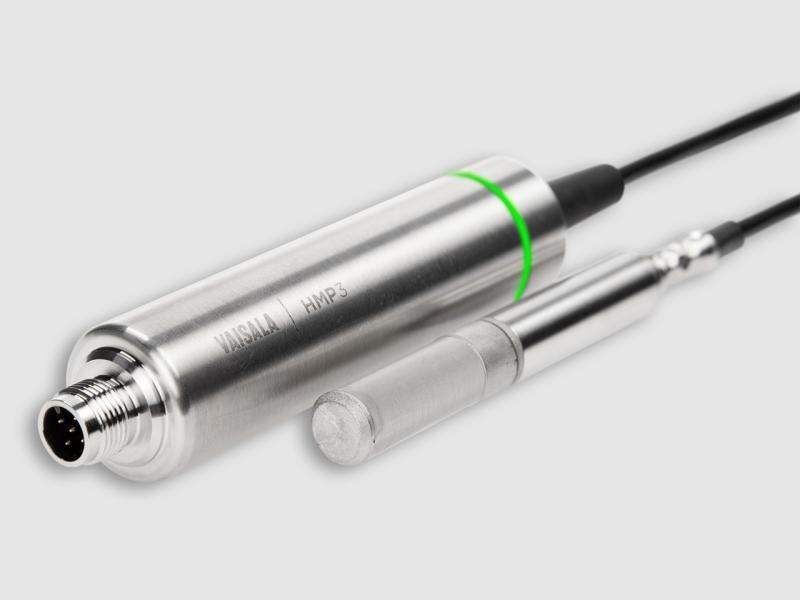
para aplicaciones de humedad y temperatura de uso general con sensor intercambiable
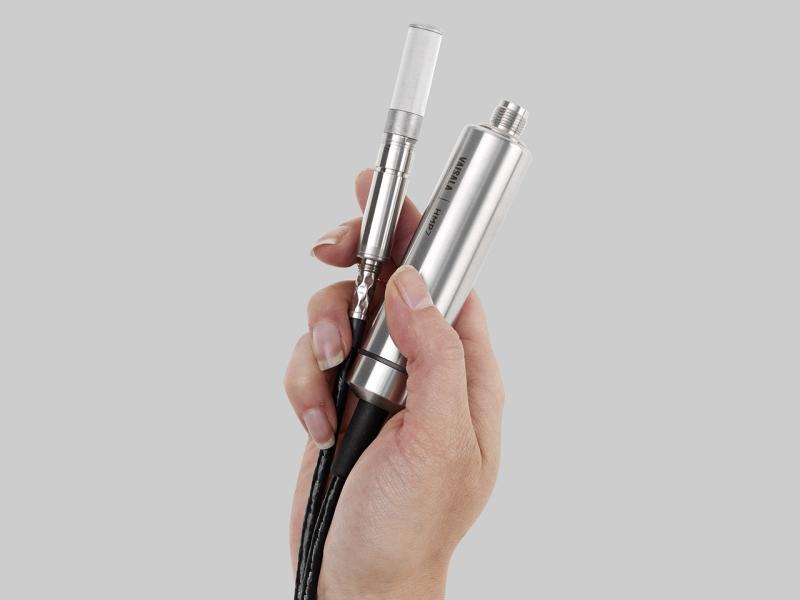
para altas humedades
Principio de funcionamiento de los sensores infrarrojos, compensación por temperatura, presión y humedad, y ubicación de transmisores.
Por qué el CO2 es crítico en el cultivo celular, el riesgo de condensación al medir en alta humedad y temperatura, y por qué la esterilización sin…

Por qué se reduce el O2 y se eleva el CO2 en cámaras de atmósfera controlada, y qué instrumentos toleran el frío y la humedad elevada de este entorno.

Qué es el muestreo por equilibrio, por qué el calefaccionado del sensor puede alterar la medición en el campo, y qué rango se necesita para perfiles…
Un especialista responde con la solución, el instrumento y el servicio que corresponden.
Instrumentos para cotizar
Todavía no hay instrumentos. Se puede escribir igual: un especialista responde.