


Autosonde AS41
Upper air soundings provide the crucial data necessary for a complete atmospheric weather profile that leads to accurate forecasting. However…
Nota técnica
Cleanrooms are energy-intensive environments with stringent requirements. Smarter design, combined with precise measurement technology, can make a real difference. Read on to discover how you can enhance cleanroom sustainability, reduce energy consumption, and meet compliance standards – all without compromising reliability or performance.
A cleanroom is a space where the concentration of airborne particles is controlled. It is constructed and used in a manner that minimizes the introduction, generation, and retention of particles inside the room. Air temperature and humidity levels inside a cleanroom are also tightly controlled, as well as the differential pressure between the spaces.
Cleanrooms are found in a wide range of fields, including the pharmaceutical industry, food industry, semiconductor industry, and research laboratories. The main standard that affects the construction and operation of cleanrooms is EN ISO 14644, which, among other things, defines the permissible amount of particles in the air. Good Manufacturing Practice (GMP) regulations also apply to cleanrooms in the pharmaceutical industry.
Cleanrooms should be located, designed, constructed, adapted, and maintained to suit the needs of the process being carried out. They are usually designed using a material flow diagram, which describes the operations that will take place in the cleanroom and maps personnel and material flows. The aim of the design is to minimize the risks of errors and cross-contamination, permit effective cleaning and maintenance, minimize dirt and dust build up, and eliminate any adverse effect on product quality.
People are often the most significant source of particles in a cleanroom, which is why special clothing is required to filter particles released from a person’s skin. The better the filtration capacity, the fewer particles are released.
A cleanroom is typically a room within a room, with a tightly controlled environment. While the typical height is 2,600 mm, some process equipment can require more space. Maintaining pressure differences is essential to maintain cleanliness – and can be a common error in cleanroom design.
GMP guidelines recommend a pressure difference of 10–15 Pa between cleanroom classes. Airlocks and gowning rooms are usually negatively pressurized compared to the process room and positively pressurized compared to the non-classified corridor. Interlocking doors help to maintain the pressure difference, with access to cleanrooms tightly controlled.
Tight requirements for cleanroom spaces set the bar high for indoor environmental control and related sensors. Maintaining the required levels of temperature, humidity, and pressure requires precise and reliable control of conditions. Sensors feeding the measurement data into the control system play an essential role: Reliability and long-term stability of sensors are crucially important in maintaining optimal conditions in cleanroom spaces.
For example, the Vaisala HMT120 humidity and temperature transmitter has proven to be a popular choice for cleanrooms because it provides accurate, reliable measurements with excellent long-term stability. Switching the probe is quick and easy – the devices use a standard connection, so probes that need to be swapped out for calibration can be quickly exchanged. This reduces sensor downtime to just a few seconds.
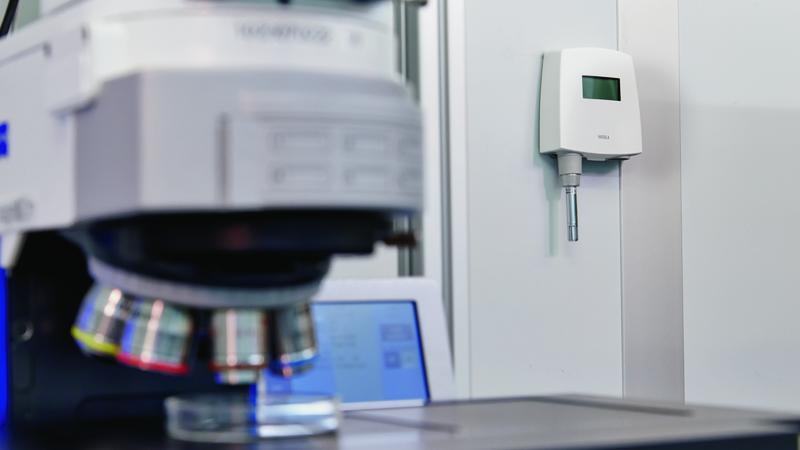
Vaisala HMT120/130
In addition to controls, cleanroom compliance must also be demonstrated with regular measurements and documentation. This is usually achieved with a validated environmental monitoring system, for example Vaisala viewLinc which is trusted by all top pharmaceutical companies.
Environmental monitoring systems are made up of transmitters, data loggers, and particle counters to measure and collect data on pressure differences, particle counts, temperature, and humidity. Validation is required to comply with regulations, making accurate measurements essential from the design stage through to commissioning and normal operation. Continuous monitoring confirms that the right conditions are maintained.
The most important factors in safely controlling cleanroom cleanliness and energy efficiency are ventilation and ventilation control technology. The amount of air changed in a minute in a cleanroom is the same as the amount of air changed in an hour in an office. Moving this amount of air requires a lot of power for fans. Consequently, ventilation consumes more energy than anything else in a cleanroom – with especially high levels if fans are left running at maximum speed regardless of room conditions. Smarter ventilation, precise control technology, and reliable components and products can lead to significant savings.
Finding ways to save energy in cleanrooms is not just good for the environment – it is also part of the EN ISO 14644 standard. Part 16 of EN ISO 14644 now highlights energy savings and requires users to take this into account.
Sustainability of cleanrooms starts by avoiding oversizing and over-ventilating of spaces. Energy efficiency can be further improved by reducing the unnecessary energy used for ventilation by taking it towards demand demand-based and proactive controlled mode, taking into account the number of people in the space, and the process currently underway. A dynamic system can adjust airflow accordingly, based on real-time usage, occupancy, and contamination risk.
Smaller clean zones within larger rooms or facilities can be controlled independently, helping to further optimize air change rates. Flexible layouts let you condition only the areas required, rather than entire rooms.
Accurate measurement sensors are a key part of a well-functioning and energy-efficient system, helping to ensure compliance and optimize energy consumption. Ensuring sensors are accurately calibrated is also important, making ease of calibration an important consideration. High-quality, stable sensors ensure that control systems operate based on accurate and reliable data, preventing over-ventilation due to false readings.
Smarter design, precise control, and accurate measurement technology are essential elements of reliable and sustainable cleanroom operations. Vaisala offers a wide range of products that are trusted by cleanroom operators around the world – making cleanroom energy savings achievable, without compromising standards.
For more insights into sustainable cleanroom design, see our article on strategic partnerships for cleanroom sustainability.
Upper air soundings provide the crucial data necessary for a complete atmospheric weather profile that leads to accurate forecasting. However…
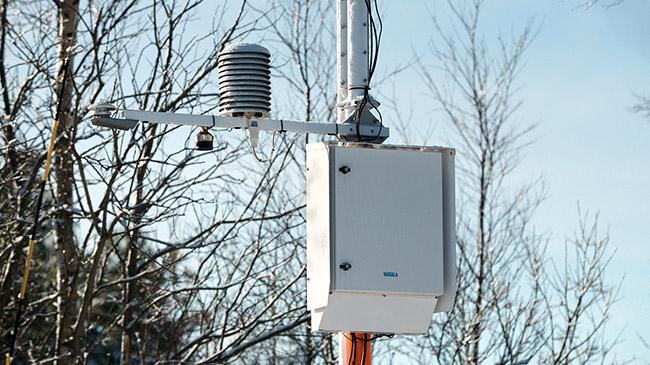
Vaisala Automatic Weather Station AWS310 is a complete communication and weather observation solution that can be used as a standalone unit, or as…
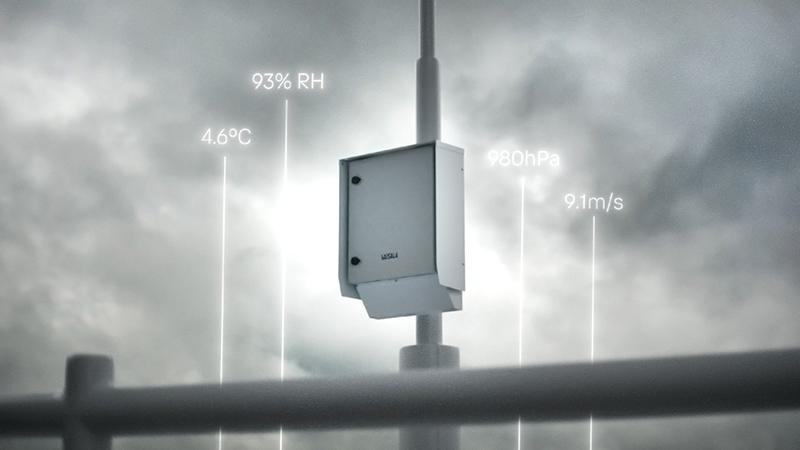
Our next-generation, cyber secure and modular Maritime Automatic Weather Station AWS830 is engineered for harsh marine environments and compliant…

The Vaisala Automatic Weather Station AWS810 enables modern, high-quality surface weather observation networks anywhere in the world.
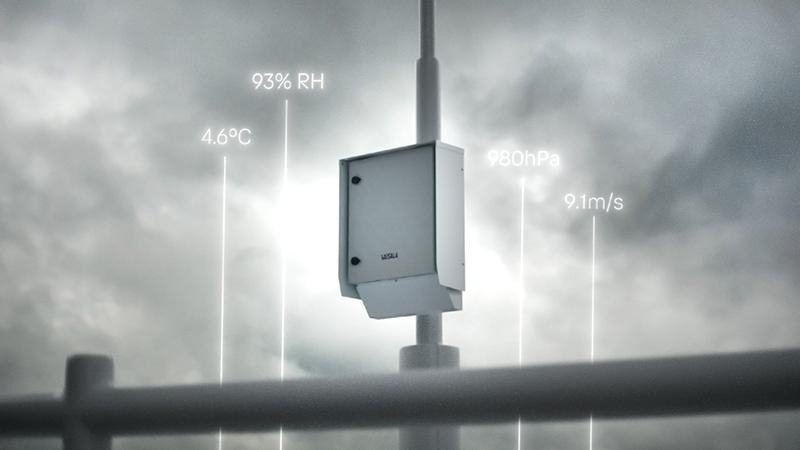
Vaisala Maritime Automatic Weather Station AWS830 delivers accurate, always‑on weather, environmental, oceanographic, and motion data for demanding…
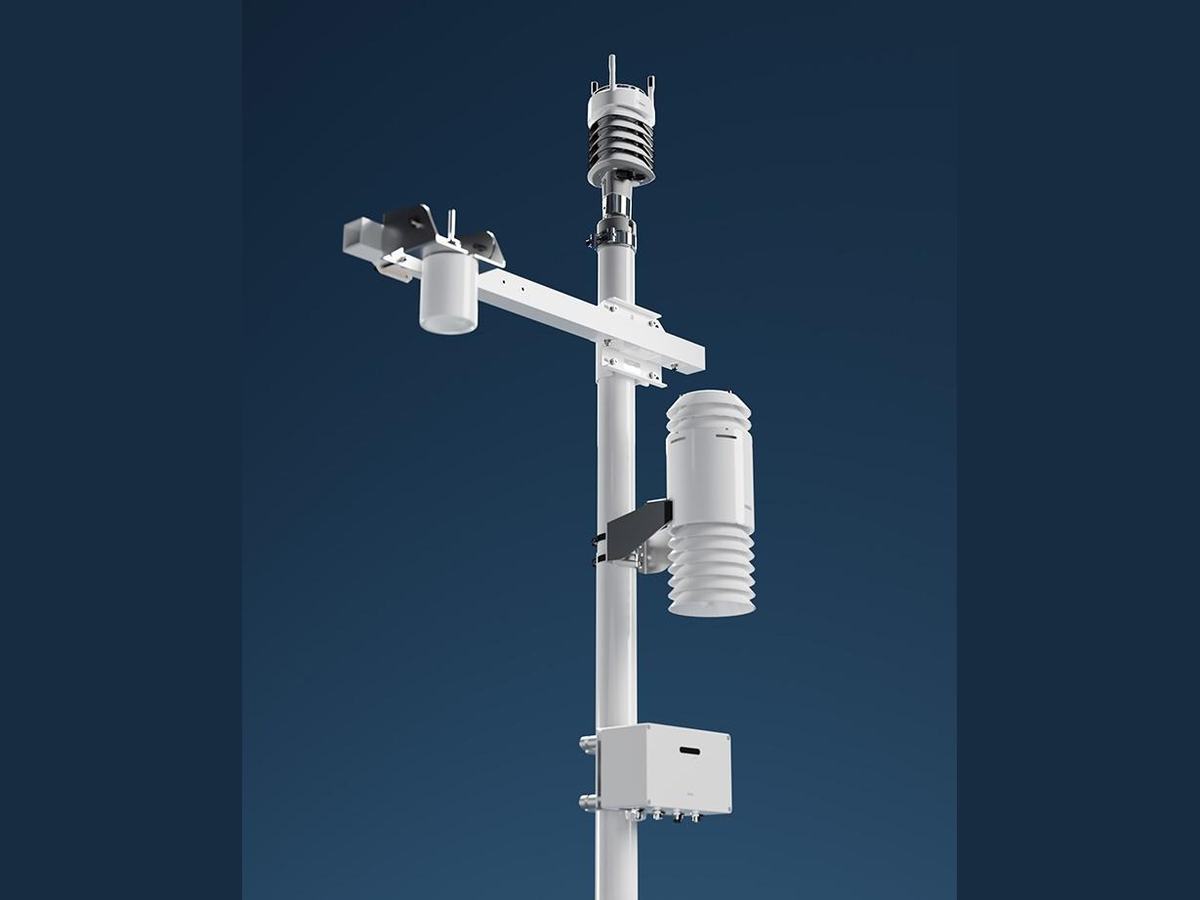
Vaisala Beam Weather Station BWS500 is a compact, scalable station for weather, air quality and road condition data, from a single standalone station…

La Punto de Rocío y Temperatura DMP5 Vaisala DRYCAP® está diseñada para la medición de humedad en línea en aplicaciones de secado industrial con…

El Dr. Lauri Reuter es una experta en el futuro de los alimentos y la persona a quien preguntar si alguna vez te has preguntado qué vamos a comer en…

Las empresas industriales continúan tomando medidas para minimizar sus emisiones de carbono. Muchos están reduciendo el uso de combustibles fósiles y…

En el proceso de caustificación, los químicos pasivos se convierten en químicos de cocina activos para producir licor blanco. Se utiliza en el…
Un especialista responde con la solución, el instrumento y el servicio que corresponden.
Productos para cotizar
Todavía no hay productos. Se puede escribir igual: un especialista responde.