

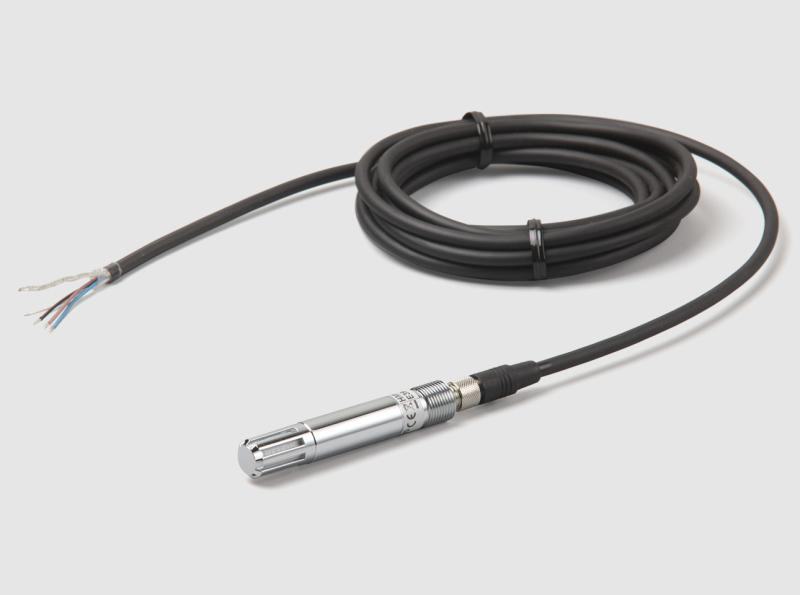
Sonda de humedad y temperatura HMP110
con ±1,5 % HR Precisión para aplicaciones de volumen exigentes
Nota técnica
Another humidity webinar is behind us! You are welcome to download the recording of Diving Deep into Advanced Humidity Measurement and Specifications at any time.

If you attended the live session with hundreds of others on May 16th, thank you! If not, thank you anyway for your interest since you have found your way to this blog. This time we focused on a bit more advanced things, although that of course depends on who is listening. For some of you it could be basic knowledge, but for most people who gave us feedback, the presentation was on a suitable level.
Anyway, let's get to the actual topic - the questions and answers! We received some great questions and I have asked our humidity expert and Product Manager Jarkko Ruonala to answer them.What mechanisms are best suited for measuring humidity above 90% in industrial environments? We use wetbulb/drybulb and it seems like electronic sensors are unable to operate successfully at these high levels and maintain a great deal of accuracy.Continuous high humidity and exposure to liquid is problematic with certain humidity sensor technologies. However, HUMICAP® sensors withstand immersion to water and you can operate them continuously in high humidity.
It is good to keep in mind that continuous high humidity may shorten the calibration interval for the sensor. Another possible issue associated with continuous high relative humidity is that very small changes in temperature are enough to bring the sensor to condensation, i.e. the dry-bulb temperature is very close to the dew point temperature by the laws of nature. For instance, if the ambient temperature is 22 °C and RH was 97 %RH, a fluctuation of 0.5 °C is enough to cause condensation and wetting the sensor. Maintaining this uniform temperature may be challenging even in a condition chamber. Thirdly, the accuracy specification is typically better in relative humidity levels below 90 %RH.
To overcome these issues, you can use the Vaisala warmed probe technology. This technology is available in certain products, such as HMP7 humidity and sensor probe, HMT337 humidity and temperature transmitter and HMP155 humidity and temperature probe. In this technology, not only the sensing element but the whole probe and probe filter are warmed slightly above the ambient temperature in order to
In this solution, the humidity probe is warmed and another temperature probe is used for measuring the actual ambient temperature. This information is then used for calculating the relative humidity at the actual ambient temperature.
What is the accuracy of chilled mirror hygrometer at 90-100% RH?The chilled mirror hygrometer accuracy is specified in terms of dew point temperature. These instruments are able to measure dew point temperature with very high accuracy, in the order of +/- 0.1 °C. However, measuring dew point temperature alone is not enough if relative humidity is the desired reading, as it requires information on the dry-bulb temperature as well.
So, the accuracy that can be obtained for relative humidity with the help of chilled mirror hygrometer depends not only on the accuracy of the chilled mirror, but also the accuracy of the temperature reference, and the whole measurement arrangement, primarily the temperature uniformity and stability.
As a reference, typical accuracy for professionally designed calibration stations using chilled mirrors and accurate thermometers with carefully designed calibration cells having very good thermal uniformity will provide uncertainty in the order of +/- 0.8 %RH over the full RH range.
What methods or instruments are known today to measure ambient wet bulb temperature? Is there a more advanced way other than the psychrometer?Most Vaisala humidity and temperature instruments are able to calculate the wet bulb temperature from measured relative humidity and temperature and output directly the humidity in terms of wet-bulb temperature.
For example, in room temperature the Indigo series HMPx humidity- and temperature probes or HMT330 series transmitters may output calculated wet-bulb temperature with accuracy better than +/- 0.5 °C over the full RH range.
Psychrometers measure wet-bulb temperature directly, but they have limitations with RH accuracy (combined uncertainty from two temperature measurements) stability and repeatability. This is especially the case with manual psychrometers, as there may be operator related variance, the wicks may get residues or deposits, and there is uncertainty on whether the evaporation at the wet wick is perfect.
Furthermore, calibration for psychrometers is troublesome, which may contribute to the common misconception that the psychrometers would not require calibration or that they can be calibrated by only performing temperature calibration on the thermometers, which does not account for sources of measurement uncertainty in the actual wet-bulb measurement.
What is the best sensor to use to when testing RH 90-100%?You are welcome to find more webinars on our webinar central and please do not hesitate to contact your local sales engineer to discuss specific needs!
con ±1,5 % HR Precisión para aplicaciones de volumen exigentes

Upper air soundings provide the crucial data necessary for a complete atmospheric weather profile that leads to accurate forecasting. However…
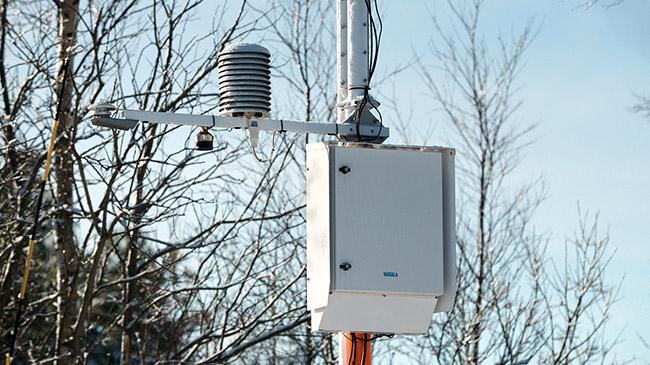
Vaisala Automatic Weather Station AWS310 is a complete communication and weather observation solution that can be used as a standalone unit, or as…
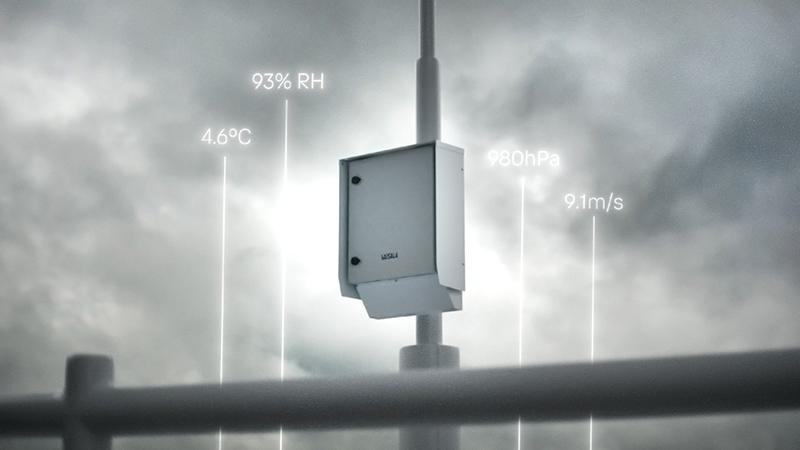
Our next-generation, cyber secure and modular Maritime Automatic Weather Station AWS830 is engineered for harsh marine environments and compliant…
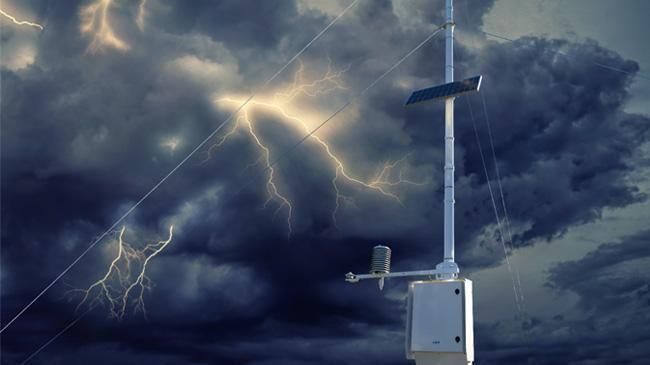
The Vaisala Automatic Weather Station AWS810 enables modern, high-quality surface weather observation networks anywhere in the world.
Vaisala Maritime Automatic Weather Station AWS830 delivers accurate, always‑on weather, environmental, oceanographic, and motion data for demanding…

La Punto de Rocío y Temperatura DMP5 Vaisala DRYCAP® está diseñada para la medición de humedad en línea en aplicaciones de secado industrial con…

El Dr. Lauri Reuter es una experta en el futuro de los alimentos y la persona a quien preguntar si alguna vez te has preguntado qué vamos a comer en…

Las empresas industriales continúan tomando medidas para minimizar sus emisiones de carbono. Muchos están reduciendo el uso de combustibles fósiles y…

En el proceso de caustificación, los químicos pasivos se convierten en químicos de cocina activos para producir licor blanco. Se utiliza en el…
Un especialista responde con la solución, el instrumento y el servicio que corresponden.
Productos para cotizar
Todavía no hay productos. Se puede escribir igual: un especialista responde.