

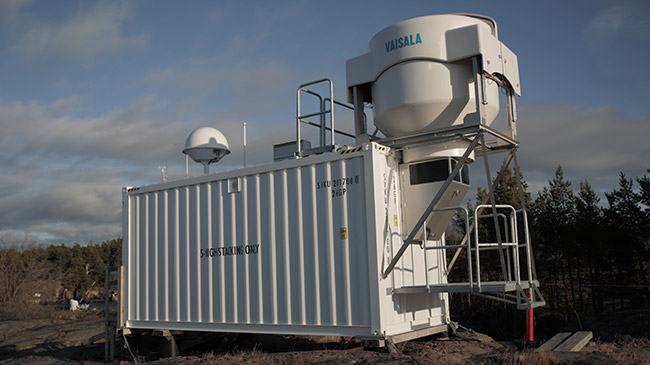
Autosonde AS41
Upper air soundings provide the crucial data necessary for a complete atmospheric weather profile that leads to accurate forecasting. However…
Nota técnica

Rapidly changing environments are always a challenge for humidity control. This is especially true in applications where relative humidity is the preferred control parameter. Relative humidity is the most commonly specified control parameter in many industries and standards. It is a good choice for example in drying, moistening, or storage applications such as food drying, where the equilibrium moisture content (EMC) of an end-product is closely related to the relative humidity. The downside of relative humidity as a control parameter is that it’s relative to temperature, which means that accurate measurement requires representative readings from both humidity and a temperature sensor.
Measuring in slowly changing environment vs. rapidly changing temperaturesA good-quality capacitive humidity sensor can accurately measure relative humidity in a stable or slowly changing environment, but as relative humidity depends on temperature, rapidly changing temperatures may be challenging for accurate relative humidity measurements. Humidity sensors measure from inside a filter, which is attached to a sensor head. In industrial applications, the sensor head is usually made out of metal and has a significant thermal mass, which becomes a problem if there is a rapid change in the surrounding environment.
Let’s imagine, that the temperature drops suddenly; it takes some time for the probe head mass to stabilize to the new temperature. Meanwhile, the conditions inside the probe filter are not the same as on the outside: it’s still warmer in the microclimate created by the filter and the probe body while it’s cooling down. The rapid change in the environment can’t be detected accurately because of the sluggishness of the thermal mass, and this sluggishness may be a challenge for responsive humidity control.
Solution: a lighter probe body can adapt to the changing environment faster, improving the response timeThe solution to this problem is to reduce the thermal mass of the probe. A lighter probe body can adapt to the changing environment faster, improving the response time of the temperature measurement. The Vaisala HMP9 Compact Humidity and Temperature probe has a miniature probe head (5 mm in diameter) with a low thermal mass providing a superior response time. The probe contains a HUMICAP® sensor that provides industry-standard humidity measurement performance, and its small size enables installation in tight spaces. This allows measurements to be made in locations where traditional 12 mm diameter probes simply can’t fit.
Upper air soundings provide the crucial data necessary for a complete atmospheric weather profile that leads to accurate forecasting. However…
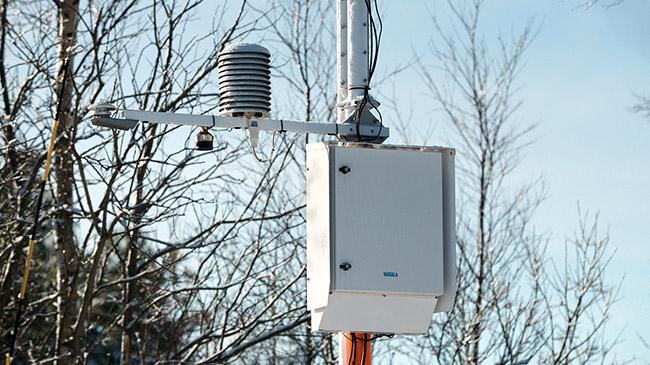
Vaisala Automatic Weather Station AWS310 is a complete communication and weather observation solution that can be used as a standalone unit, or as…
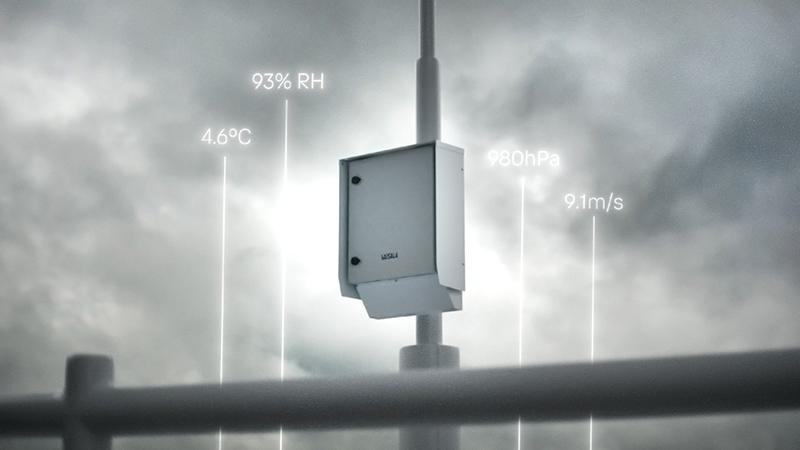
Our next-generation, cyber secure and modular Maritime Automatic Weather Station AWS830 is engineered for harsh marine environments and compliant…

The Vaisala Automatic Weather Station AWS810 enables modern, high-quality surface weather observation networks anywhere in the world.
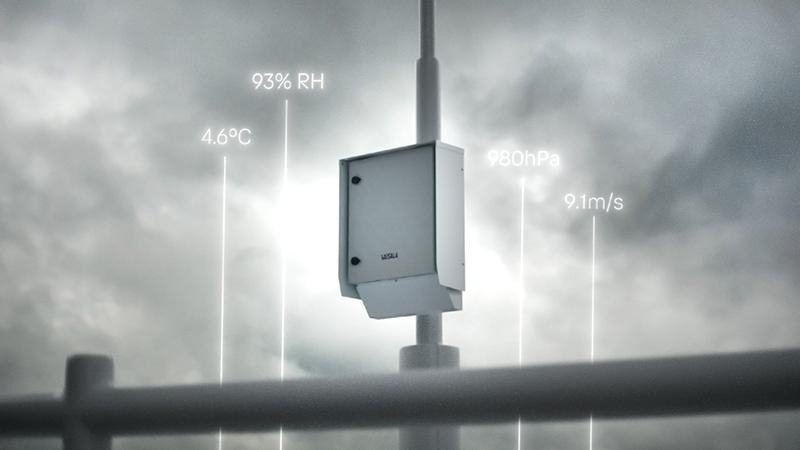
Vaisala Maritime Automatic Weather Station AWS830 delivers accurate, always‑on weather, environmental, oceanographic, and motion data for demanding…
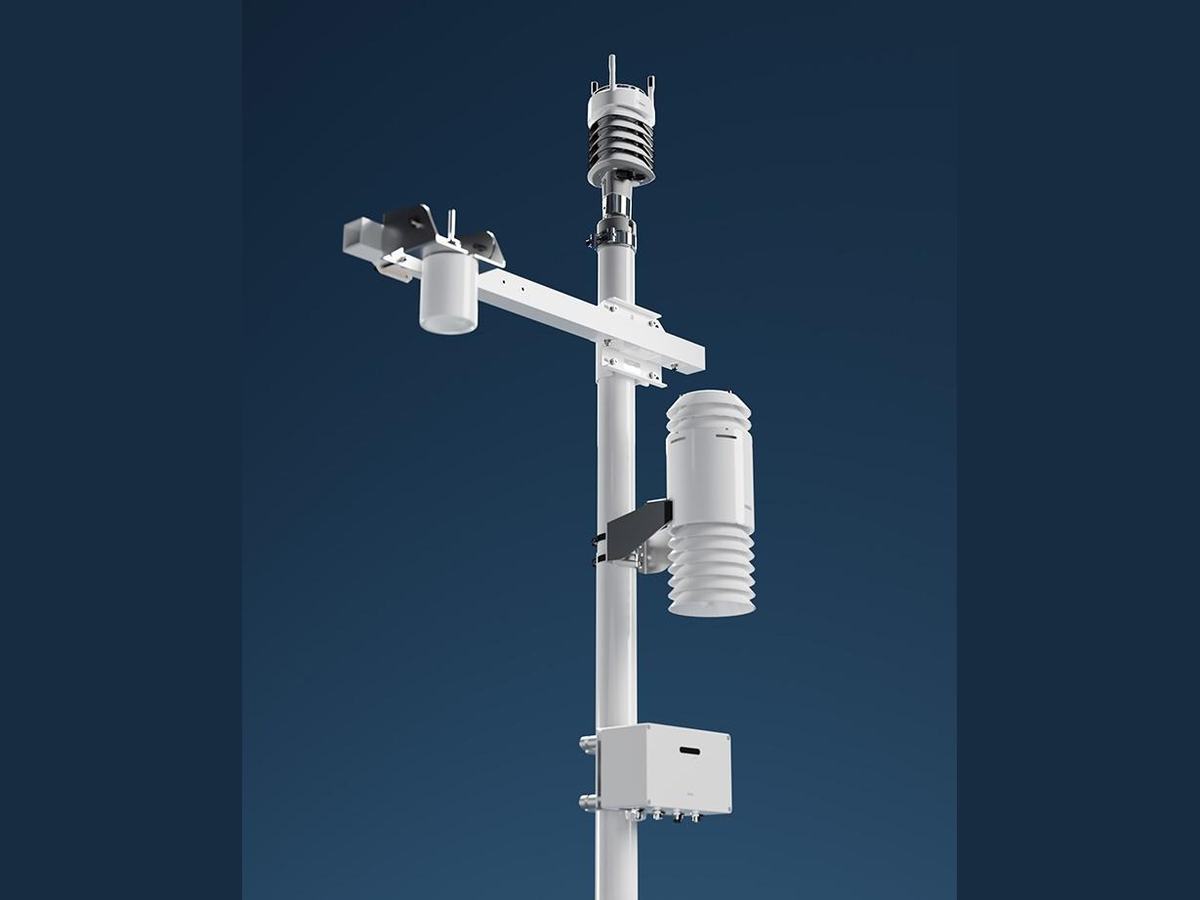
Vaisala Beam Weather Station BWS500 is a compact, scalable station for weather, air quality and road condition data, from a single standalone station…

La Punto de Rocío y Temperatura DMP5 Vaisala DRYCAP® está diseñada para la medición de humedad en línea en aplicaciones de secado industrial con…

El Dr. Lauri Reuter es una experta en el futuro de los alimentos y la persona a quien preguntar si alguna vez te has preguntado qué vamos a comer en…

Las empresas industriales continúan tomando medidas para minimizar sus emisiones de carbono. Muchos están reduciendo el uso de combustibles fósiles y…

En el proceso de caustificación, los químicos pasivos se convierten en químicos de cocina activos para producir licor blanco. Se utiliza en el…
Un especialista responde con la solución, el instrumento y el servicio que corresponden.
Productos para cotizar
Todavía no hay productos. Se puede escribir igual: un especialista responde.