

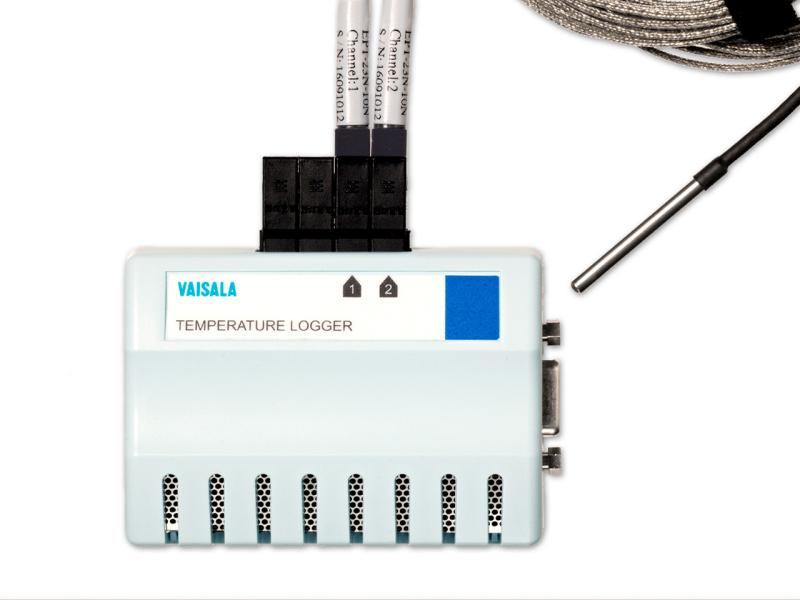
Registrador de Temperatura DL1000-1400
para control y mapeo de temperatura exigentes
Nota técnica
After our webinar "Continuous Mapping" we received several questions:
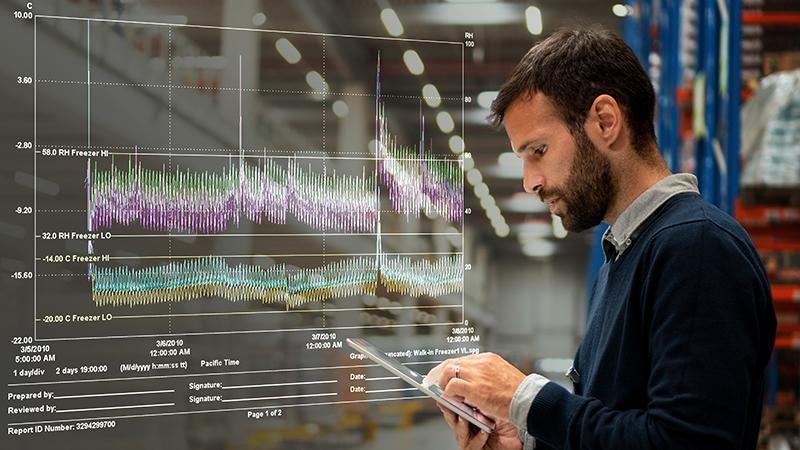
We have multiple mapping applications. Please allow me to outline some of our approaches to you, so that I can get your feedback to implement potential improvements to our procedures.
Scenario 1:We have a vacuum oven that has 10 shelves which generate heat. On each shelf there is a tray. Once the tray is too large to manage, we replace it with two smaller trays using the same available area.
An initial mapping is performed using the original large tray. Once that's done, we will replace that tray by two smaller in each shelf with the same material, should I repeat a mapping study with the two smaller trays?
Scenario 2:Our warehouse has three years of routine mapping study data from mapping performed only during the summer. The summer is considered the worst-case period due the high temperatures. However, for our initial qualification, we performed both a winter and summer mapping. Those original studies also allowed us to define the monitoring probe’s location.
My question is: once those two probes are connected to the monitoring system and we begin gathering data, can that be considered continuous mapping?
Scenario 3:Based on your presentation, the three-year routine mapping studies to re-assess monitoring probe placement must consider the winter and summer seasonal period.
Thank you for joining our webinar and for asking great questions!
Scenario 1:In the case of a vacuum oven, I would repeat the mapping. Using a different tray, of a different size, or a different material, will change how heat is transferred from the heated shelf to the tray, and could change the end performance and the amount of heat delivered to each product location.
Scenario 2:This is not continuous mapping as outlined in the webinar. Yes, it is continuous, but it is not mapping. Mapping cannot be performed with only probe locations. I think you are assuming that the hot and cold spots will remain the same over time. You cannot prove this when you only gather data from two locations. Continuous mapping involves a high density of sensors continuously sampling.
Scenario 3:Winter/Summer is better interpreted as “the most challenging seasons”, or “the hottest and coldest parts of the year”. If your cold season in your region is not cold enough to present a problem with your warehouse storage, then perhaps mapping is not needed in the winter. But you will still have to do something, such as provide a documented rationale why your facility doesn’t do winter mapping.
Overall:Probably the most common activity that changes conditions is items being placed in a way that alters air flow and heat distribution. This alone affects where hot and cold spots are located and that can’t be detected by two sensors. Unless your warehouse is quite small (less than 100 cubic meters), I would add some additional monitoring locations. While you are expected to monitor the hot and cold spots, you are misinterpreting the guidance and the practice if you are monitoring ONLY the hot and cold spot.
Let me know of any follow-up questions!
Thank you for these wide-ranging questions! I’ve tried my best to answer…
It was the known tendency of thermocouples to drift in accuracy that created the practice of pre- and post-calibration. What we’ve seen is that older inspectors and auditors will expect to see this step. However, we do have mapping service providers as customers who use our loggers and they do not do pre- and post-calibration – they just verify the factory calibration certificate. This is based on the known stability of the devices as well as the experience of the provider. These service providers have enough experience with Vaisala products that they know how infrequently a mapping data logger will fail a calibration.
From our own internal studies, we see know our data loggers fail calibration it’s about 2% of the time. But since you don’t have this experience or data to rely on, I would just play it safe and do a simple documented pre- and post-cal. Nothing fancy, just put the mapping loggers (and a reference logger) in a small box in the space to be mapped for an hour, before and after the study, and show that all the values are within 0.2°C of the reference logger.
Finally, you mentioned Vaisala VL-170054T Thermocouple Logger used in LN2 units. If you are mapping, especially with a thermocouple, I would definitely do a pre-calibration and post-calibration check. Again, this doesn’t have to be complicated, just enough to document the sensor’s accuracy.
Note that at liquid nitrogen temperatures, thermocouples have a lot of error. In my experience, mapping LN2 units is difficult. I had to map some LN2 storage dewars back in the day and we eventually managed to get it done. But we weren’t really able to conclude much, other than radially symmetric spaces are hard to map and the largest contributor to temperature variation were inherent insulation faults due to the method of construction of the vessel.
para control y mapeo de temperatura exigentes
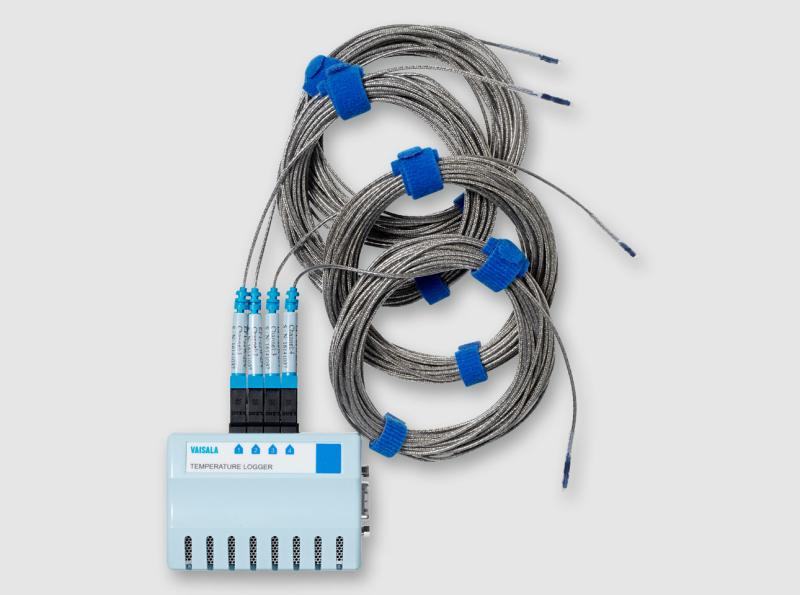
para monitoreo de temperatura de amplio rango
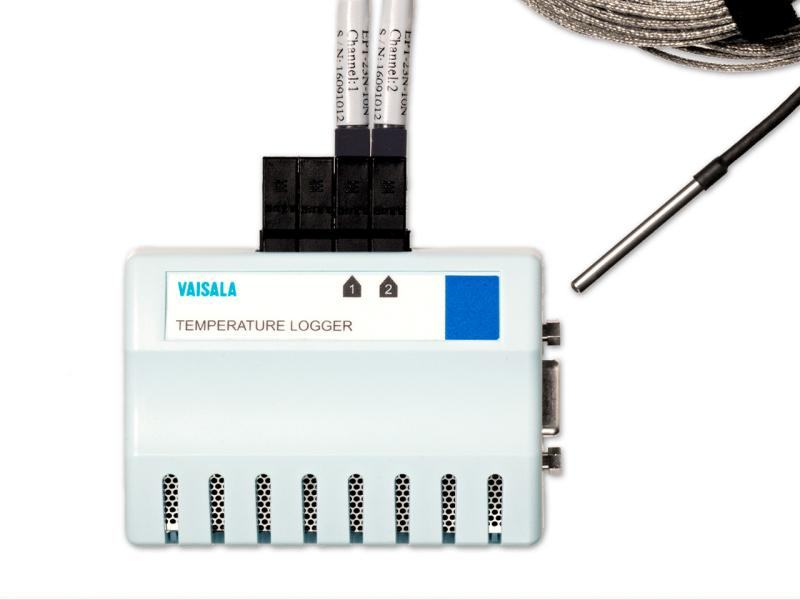
para control y mapeo de temperatura exigentes
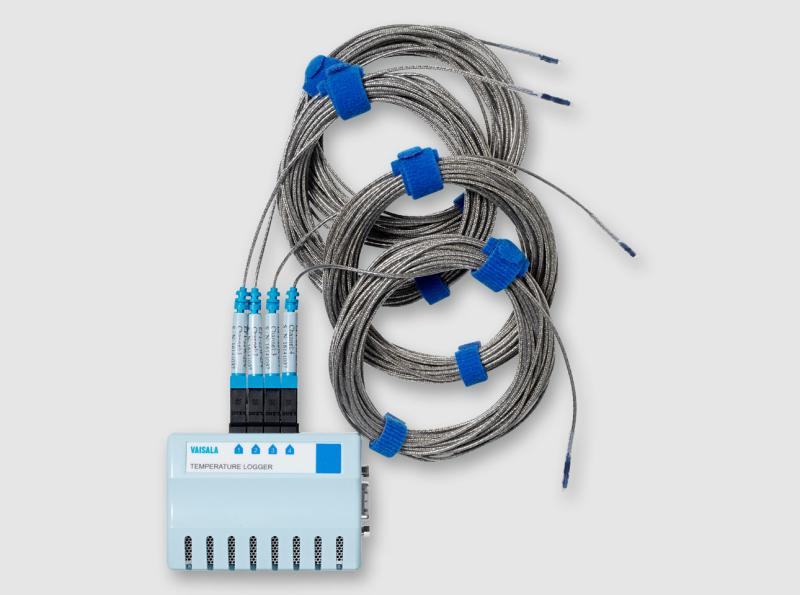
para monitoreo de temperatura de amplio rango
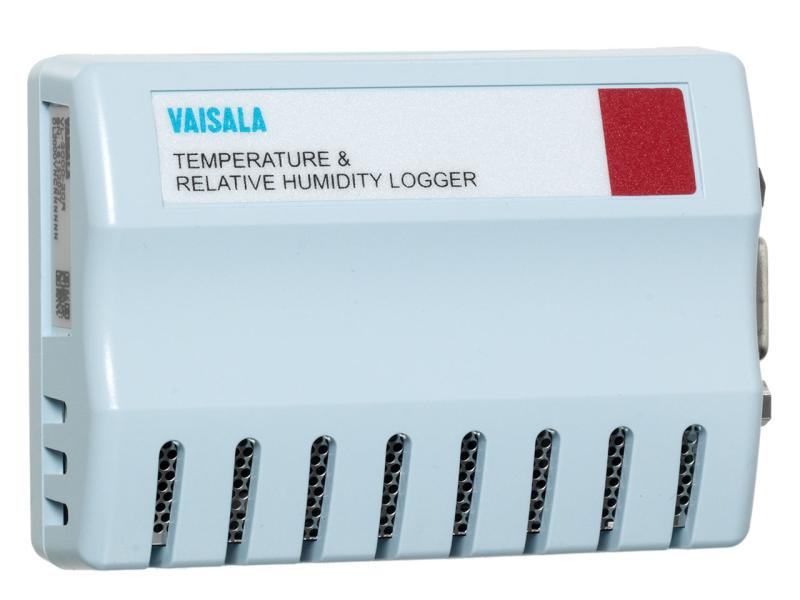
para monitoreo de temperatura, humedad y entradas analógicas opcionales
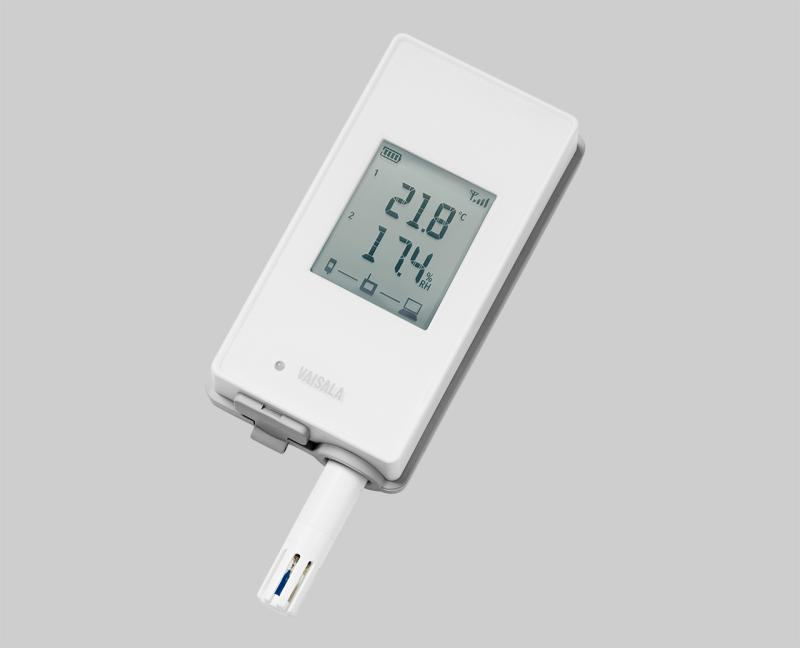
Para monitoreo inalámbrico de áreas controladas

La Punto de Rocío y Temperatura DMP5 Vaisala DRYCAP® está diseñada para la medición de humedad en línea en aplicaciones de secado industrial con…

El Dr. Lauri Reuter es una experta en el futuro de los alimentos y la persona a quien preguntar si alguna vez te has preguntado qué vamos a comer en…

Las empresas industriales continúan tomando medidas para minimizar sus emisiones de carbono. Muchos están reduciendo el uso de combustibles fósiles y…

En el proceso de caustificación, los químicos pasivos se convierten en químicos de cocina activos para producir licor blanco. Se utiliza en el…
Un especialista responde con la solución, el instrumento y el servicio que corresponden.
Productos para cotizar
Todavía no hay productos. Se puede escribir igual: un especialista responde.