


Resaltando la belleza de la madera: secado de chapa con control de humedad
La Punto de Rocío y Temperatura DMP5 Vaisala DRYCAP® está diseñada para la medición de humedad en línea en aplicaciones de secado industrial con…
Nota técnica
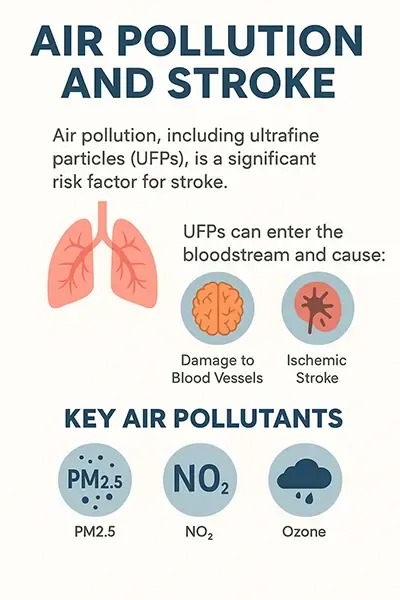
Ever noticed how the air feels heavy on high-smog days or after a wildfire? Turns out, it’s not just your lungs that take a hit — your brain and blood vessels do too. The link between air pollution and stroke is getting a lot more attention these days, especially as more people ask, “how does air pollution increase stroke risk?”
Let’s break it down together, using some real-world tips and relatable examples.
When we talk about air pollution and stroke, we’re really talking about a mix of invisible particles and gases floating around us every day. The main offenders are particulate matter (PM2.5), ultrafine particles (UFPs), nitrogen dioxide (NO₂), and ozone (O₃). These pollutants come from car exhaust, industrial emissions, wildfires, and even some household activities.
If you’re living with a history of stroke or have risk factors like high blood pressure or diabetes, you’re more vulnerable. Seniors, children, and anyone living in a city with lots of traffic or frequent wildfires should be extra careful. If you’re wondering about living with stroke risk in polluted cities, you’re not alone—urban dwellers face higher exposure to these harmful pollutants.
Most of us spend the majority of our time indoors, but indoor air quality can sometimes be just as bad as outdoor air. Everyday activities like cooking, cleaning, or burning candles can fill your home with fine particles. If you’re looking for indoor air quality tips for stroke prevention, try using HEPA air filtration systems, ventilate when cooking, and avoid burning wood or smoking inside.
If you’re serious about reducing your risk, investing in the best air purifiers for stroke prevention is a smart move. Look for HEPA filters, which are proven to capture PM2.5 and even some ultrafine particles. Place them in bedrooms and living spaces for the biggest impact.
Keeping tabs on the air quality index and stroke risk is easier than ever. Most weather apps and websites display the AQI, so you can see when it’s safe to go outside. On high-pollution days, avoid outdoor activities, especially if you’re in a high-risk group. Safe exercise tips during high air pollution days include working out indoors or choosing lower-intensity activities.
Wildfire smoke can send PM2.5 and other pollutants soaring. The effects of wildfire smoke on stroke risk are real, especially for people with existing cardiovascular or neurological conditions. On smoky days, keep windows and doors closed, use air purifiers, and avoid outdoor exertion.
Supporting clean energy policies and stroke prevention go hand in hand. Cleaner transportation, renewable energy, and stricter pollution controls can help lower stroke rates in our communities. If you’re passionate about public health, speak up for these changes in your neighborhood.
There are plenty of tools out there to help you monitor air quality for stroke prevention. Use apps, websites, or even handheld particle counters to get real-time updates on PM2.5, NO₂, and O₃ levels in your area. The more you know, the better you can protect yourself and your loved ones.
Air pollution and stroke are tightly linked, but you have more control than you think. By understanding the risks, checking the AQI, using air purifiers, and supporting clean air policies, you can help lower your stroke risk and keep your brain healthy. What steps are you taking to protect yourself from air pollution?
La Punto de Rocío y Temperatura DMP5 Vaisala DRYCAP® está diseñada para la medición de humedad en línea en aplicaciones de secado industrial con…

El Dr. Lauri Reuter es una experta en el futuro de los alimentos y la persona a quien preguntar si alguna vez te has preguntado qué vamos a comer en…

Las empresas industriales continúan tomando medidas para minimizar sus emisiones de carbono. Muchos están reduciendo el uso de combustibles fósiles y…

En el proceso de caustificación, los químicos pasivos se convierten en químicos de cocina activos para producir licor blanco. Se utiliza en el…
Un especialista responde con la solución, el instrumento y el servicio que corresponden.
Productos para cotizar
Todavía no hay productos. Se puede escribir igual: un especialista responde.