


Resaltando la belleza de la madera: secado de chapa con control de humedad
La Punto de Rocío y Temperatura DMP5 Vaisala DRYCAP® está diseñada para la medición de humedad en línea en aplicaciones de secado industrial con…
Nota técnica
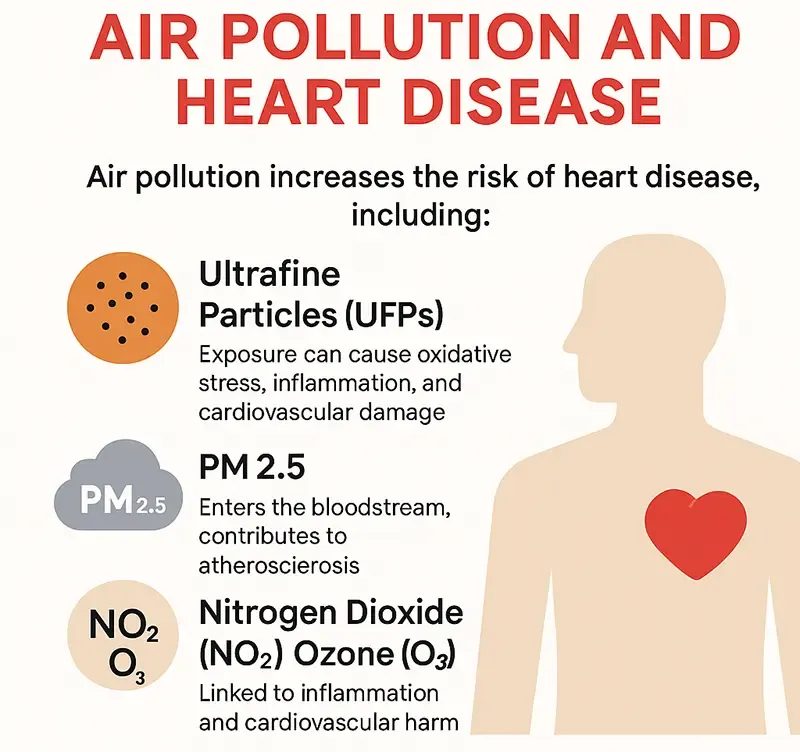
Did you ever wonder how air pollution affects heart health? It’s not just about coughing or watery eyes — there’s a strong connection between what’s floating in the air and what’s happening inside your arteries. Let’s break down how air pollution and heart disease are linked, and what you can do to protect yourself and your loved ones.
Air pollution is a big deal for anyone worried about heart disease. When you breathe in fine particulate matter (PM2.5), ultrafine particles (UFPs), nitrogen dioxide (NO₂), and ozone (O₃), these pollutants don’t just irritate your lungs—they can actually trigger inflammation throughout your body. That inflammation can damage the lining of your blood vessels, speed up atherosclerosis (the hardening and narrowing of arteries), and make your heart work overtime. If you’re searching for how does air pollution affect heart health, the answer is: in more ways than you might expect.
You might not notice symptoms right away, but over time, exposure to air pollution can lead to high blood pressure, chest pain, irregular heartbeat, and even heart attacks. If you’re already living with heart disease in polluted cities, you may notice your symptoms get worse on high pollution days or during wildfire smoke events.
Reducing exposure to PM2.5 at home is a smart move, especially for people at higher risk. These tiny particles can slip through your lungs and into your bloodstream, causing all sorts of trouble. Studies have shown a clear connection between atherosclerosis and air pollution, particularly with long-term exposure to PM2.5 and UFPs.
The impact of nitrogen dioxide on cardiovascular health is another hot topic. NO₂, mostly from car exhaust, can irritate your airways and blood vessels, raising your risk of heart problems. Ozone (O₃), which forms when sunlight reacts with pollution, is especially tough on folks with pre-existing heart conditions. If you’re wondering about the effects of wildfire smoke on heart conditions, both NO₂ and O₃ levels can spike during fire season, making it even riskier for heart patients.
Most people spend the majority of their time indoors, but indoor air quality can sometimes be just as bad—or worse—than what’s outside. Everyday activities like cooking, cleaning, or burning candles can fill your home with fine particles. If you’re looking for indoor air quality tips for heart patients, try using high-efficiency air purifiers, ventilate when cooking, and avoid burning wood or smoking indoors.
If you’re serious about protecting your heart, investing in one of the best air purifiers for heart disease prevention can make a real difference. Look for models with HEPA filters, which are proven to capture PM2.5 and even some ultrafine particles. Place them in your bedroom and living areas for maximum benefit.
Keeping an eye on the air quality index and heart attack risk is easier than ever thanks to smartphone apps and local weather reports. When the AQI is high, especially above 100, it’s smart to limit outdoor activities. Safe exercise tips during high air pollution days include working out indoors, choosing lower-intensity activities, or exercising early in the morning when pollution tends to be lower.
Protecting seniors from air pollution risks is especially important. Older adults, people with existing heart or lung conditions, children, and pregnant women are all more vulnerable to the effects of pollution. Educate your loved ones about the dangers and encourage them to check the AQI before heading outside.
If you’re looking for practical ways to improve indoor air quality, start by ventilating your home, using air purifiers, and keeping humidity in check to prevent mold. Test your indoor air quality if you’re concerned, and consider upgrading your HVAC filters to ones rated for fine particles.
On a bigger scale, supporting clean energy policies and heart disease prevention go hand in hand. Cleaner transportation, renewable energy, and stricter pollution controls can help reduce the burden of heart disease in our communities. Every voice counts, so don’t be shy about advocating for cleaner air where you live.
Living with heart disease in polluted cities can be tough, but you’re not powerless. Stay informed, take steps to reduce your exposure, and talk to your healthcare provider about ways to manage your risk. If you notice your symptoms getting worse on high pollution days, don’t hesitate to reach out for help.
There are plenty of tools out there to help you monitor air quality for heart health. Use apps, websites, or even handheld particle counters to get real-time updates on PM2.5, NO₂, and O₃ levels in your area. The more you know, the better you can protect yourself.
Air pollution and heart disease are tightly linked, but a little knowledge goes a long way. By understanding the risks, watching the AQI, using air purifiers, and supporting clean air policies, you can help keep your heart healthy no matter where you live. What steps are you taking to protect your heart from air pollution?
La Punto de Rocío y Temperatura DMP5 Vaisala DRYCAP® está diseñada para la medición de humedad en línea en aplicaciones de secado industrial con…

El Dr. Lauri Reuter es una experta en el futuro de los alimentos y la persona a quien preguntar si alguna vez te has preguntado qué vamos a comer en…

Las empresas industriales continúan tomando medidas para minimizar sus emisiones de carbono. Muchos están reduciendo el uso de combustibles fósiles y…

En el proceso de caustificación, los químicos pasivos se convierten en químicos de cocina activos para producir licor blanco. Se utiliza en el…
Un especialista responde con la solución, el instrumento y el servicio que corresponden.
Productos para cotizar
Todavía no hay productos. Se puede escribir igual: un especialista responde.