


Resaltando la belleza de la madera: secado de chapa con control de humedad
La Punto de Rocío y Temperatura DMP5 Vaisala DRYCAP® está diseñada para la medición de humedad en línea en aplicaciones de secado industrial con…
Nota técnica
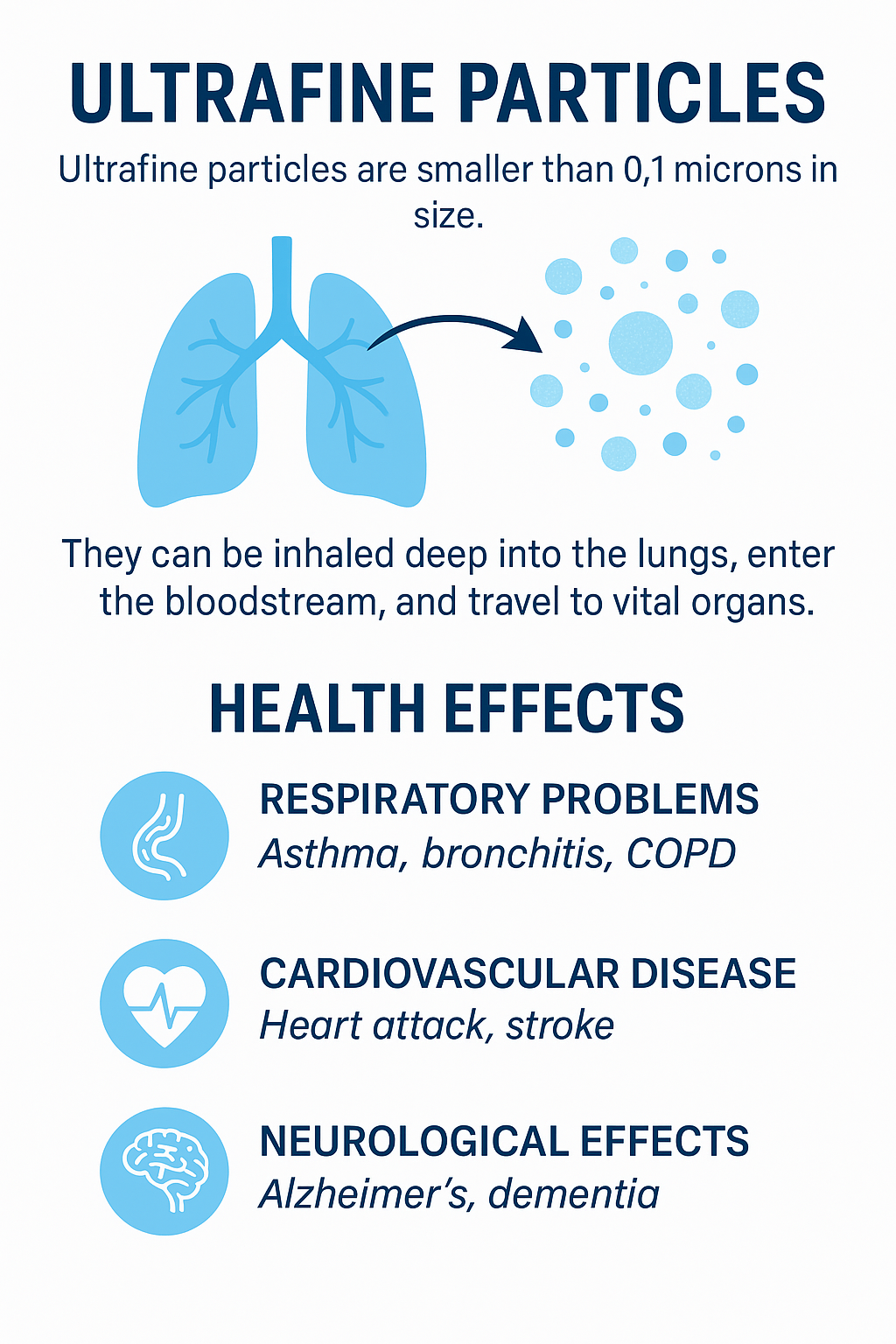
When we think about air pollution, we often picture smoggy city skylines, busy highways, or plumes of smoke rising from factories. But did you know that some of the most dangerous pollutants are completely invisible to the naked eye? These are called ultrafine particles (UFPs), and they’re quietly affecting our health in ways many people don’t realize.
Ultrafine particles are minuscule — less than 100 nanometers in diameter. To put that into perspective, you’d need more than 800 of them lined up to match the width of a single human hair! Because they’re so tiny, UFPs can float in the air for long periods and easily slip past our body’s natural defenses.
But where do they come from? Ultrafine particle sources are both indoors and outdoors. Common culprits include:
Even if you don’t live next to a factory or a busy road, chances are you encounter ultrafine particles every day—right in your own home or workplace, contributing to indoor air pollution and affecting indoor air quality.
Understanding the health effects of ultrafine particles is crucial for protecting yourself and your loved ones. Unlike larger particles, which may get trapped in your nose or throat, ultrafine particles are small enough to travel deep into your lungs when you breathe. From there, they can pass into your bloodstream and journey throughout your body, reaching vital organs such as your heart and brain.
Let’s take a closer look at some of the health risks associated with ultrafine particle exposure:
Ultrafine particles can trigger inflammation and oxidative stress in the lungs. This can worsen existing respiratory conditions and even contribute to the development of new ones, such as:
Because UFPs penetrate so deeply into the respiratory system, they can cause more cellular damage than larger, more visible particles.
The dangers of ultrafine particles don’t stop at the lungs. Once they enter the bloodstream, they can:
All of these effects raise your risk of heart attack, stroke, and high blood pressure. In fact, research has shown that people living in areas with high levels of UFPs are more likely to suffer from cardiovascular disease related to air pollution.
Emerging studies suggest that ultrafine particles may even affect our brains. Long-term exposure has been linked to:
Scientists believe UFPs can reach the brain either through the bloodstream or via the olfactory nerve (the nerve responsible for our sense of smell). Once there, they may trigger inflammation and damage brain cells, potentially speeding up age-related neurological diseases.
Ultrafine particles are everywhere—indoors and outdoors. Here are some common environments where you might encounter them:
It’s important to note that indoor air can sometimes be even more polluted than outdoor air, especially in spaces with poor ventilation, making indoor air quality a key concern.
While it’s impossible to avoid ultrafine particles entirely, there are practical steps you can take to reduce your exposure and protect your health:
Ultrafine particles may be invisible, but their impact on our health is very real. As research continues to uncover the full extent of their dangers, it’s clear that taking steps to reduce ultrafine particle exposure is one of the best things you can do for your lungs, heart, and brain.
At Lighthouse, we’re passionate about helping individuals, families, and businesses create healthier environments. Whether you’re looking for advanced air purification solutions or top-quality personal protective equipment, we’re here to support you every step of the way.
La Punto de Rocío y Temperatura DMP5 Vaisala DRYCAP® está diseñada para la medición de humedad en línea en aplicaciones de secado industrial con…

El Dr. Lauri Reuter es una experta en el futuro de los alimentos y la persona a quien preguntar si alguna vez te has preguntado qué vamos a comer en…

Las empresas industriales continúan tomando medidas para minimizar sus emisiones de carbono. Muchos están reduciendo el uso de combustibles fósiles y…

En el proceso de caustificación, los químicos pasivos se convierten en químicos de cocina activos para producir licor blanco. Se utiliza en el…
Un especialista responde con la solución, el instrumento y el servicio que corresponden.
Productos para cotizar
Todavía no hay productos. Se puede escribir igual: un especialista responde.