


Resaltando la belleza de la madera: secado de chapa con control de humedad
La Punto de Rocío y Temperatura DMP5 Vaisala DRYCAP® está diseñada para la medición de humedad en línea en aplicaciones de secado industrial con…
Nota técnica
If you use a standard platinum resistance thermometer (SPRT), or a good quality industrial platinum resistance thermometer, its calibration provides the basis for your measurements. It establishes the thermometer’s characteristics at the time of calibration. Regular checks help you assess whether those characteristics have changed in use.
An accredited laboratory can calibrate a thermometer with a stated uncertainty appropriate to the work. Between calibrations, however, you need a way to monitor its stability. A water triple point cell and a gallium cell provide two useful checks that can be made in your own laboratory.
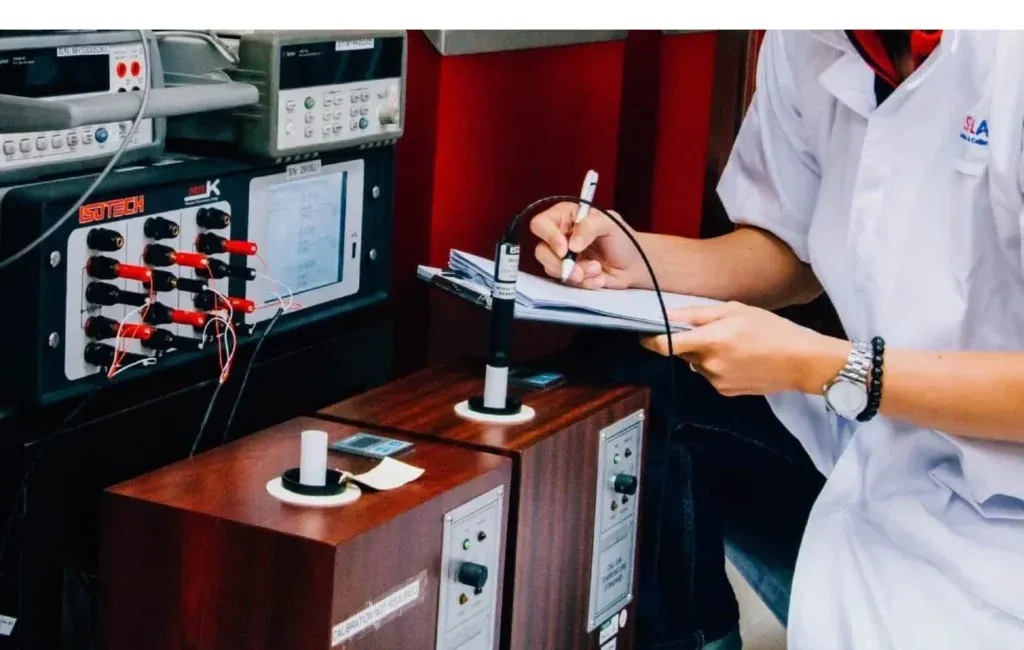
Handling in transit, mechanical shock, thermal cycling, contamination and strain in the platinum element can all change a thermometer’s resistance.
If a change is only discovered at the next calibration, you may need to review measurements made since the previous one. Depending on the application, this could mean re-testing batches, revisiting reported results or notifying customers. The difficulty is establishing when the change occurred and which measurements it affected.
Regular intermediate checks help narrow that period and provide a record on which to base any investigation.
ISO/IEC 17025:2017 addresses this through its requirements for intermediate checks, where needed to maintain confidence in equipment performance (clause 6.4.10), and for monitoring the validity of results (clause 7.7.1). For reference platinum resistance thermometers, checks at the water triple point and gallium point can contribute to meeting these requirements.
RTPW
The thermometer’s resistance at the water triple point, 0.01 °C.
This is the reference used to calculate SPRT resistance ratios.
W(t90)
The resistance ratio
R(t90)
/ RTPW.
By definition, W = 1 at the water triple point.
W(Ga)
The resistance ratio at the gallium melting point:
R(29.7646 °C) /
RTPW.
W(Ga) ≥ 1.11807 is one of the ITS-90 qualification criteria for an SPRT.
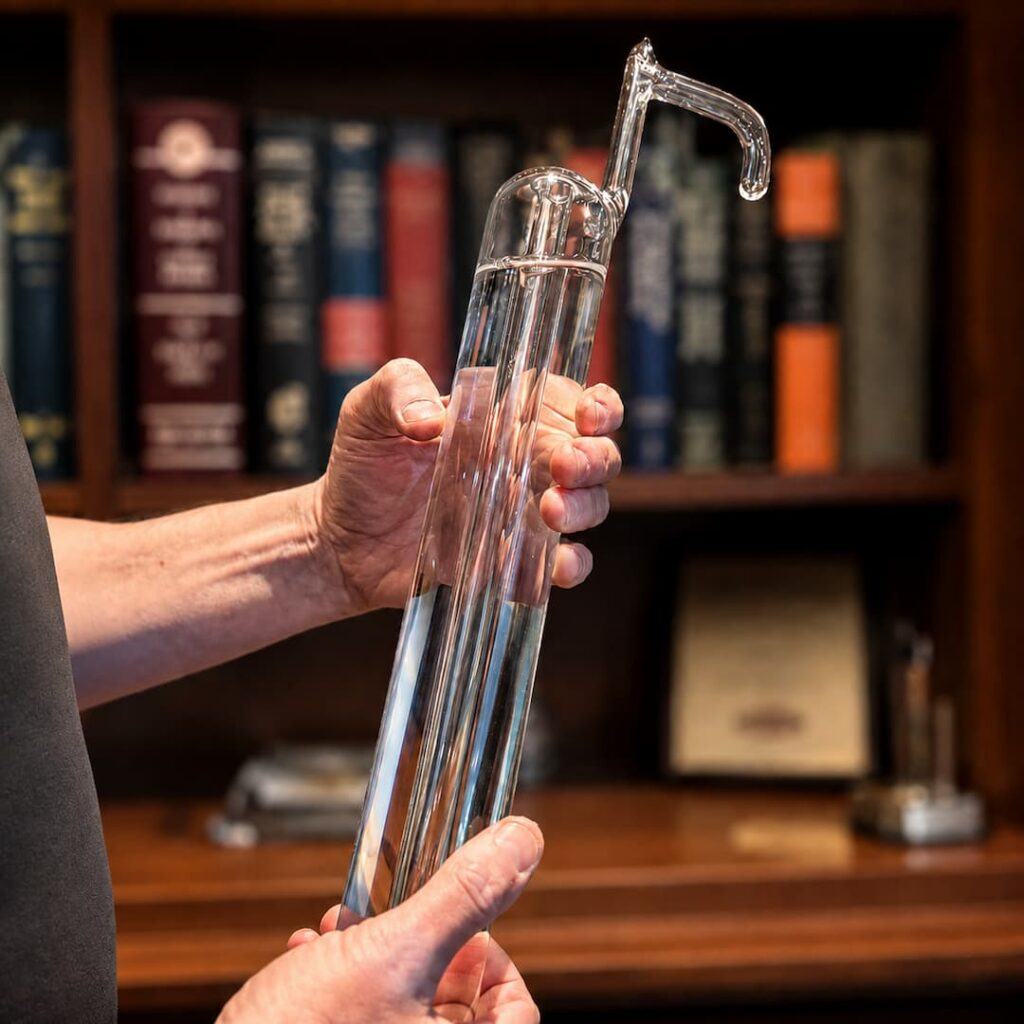
The water triple point is a defining fixed point of ITS-90. It provides the reference resistance used to calculate SPRT resistance ratios, making it central to both calibration and subsequent stability checks.
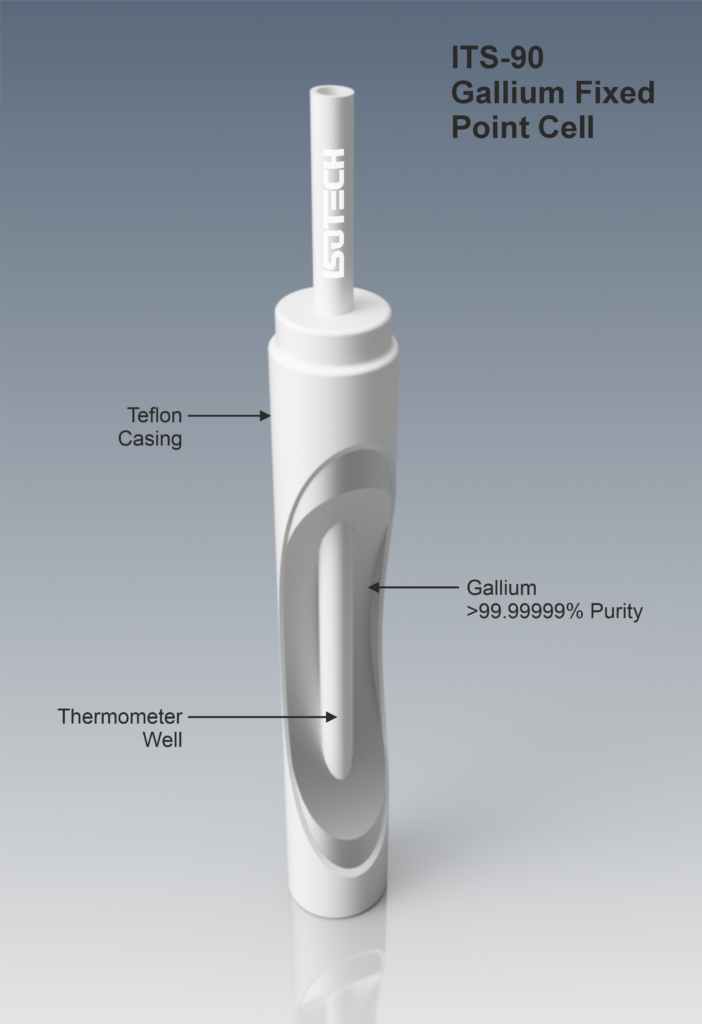
The gallium melting point, 29.7646 °C, provides a second check near room temperature. This is useful for laboratories working in healthcare, pharmaceuticals, food and environmental measurement. High purity gallium produces a long, flat melting plateau and is relatively straightforward to realise with suitable apparatus.
Measuring resistance at the water triple point is one of the most useful checks on a platinum resistance thermometer. With a suitable cell, measuring system and careful technique, uncertainties below 0.001 °C can be achieved.
A practical routine is to:
| Property | Water Triple Point | Gallium Melting Point |
|---|---|---|
| ITS-90 temperature | 0.01 °C | 29.7646 °C |
| Status | Defining fixed point and reference for SPRT resistance ratios | Defining fixed point near room temperature |
| Realisation | Ice mantle, prepared and annealed before use | Melt plateau |
| Typical purity | Distilled, of specified isotopic composition | > 99.99999 % (7N) |
| Achievable uncertainty | Tens of microkelvin with a good cell and careful practice | To below 0.25 mK; day-to-day reproducibility of ±0.000025 °C |
| Hydrostatic head | −0.73 mK per metre | −1.2 mK per metre |
| Practical strength | Provides RTPW for resistance ratios and stability checks | Provides a sensitive check of W(Ga) near room temperature |
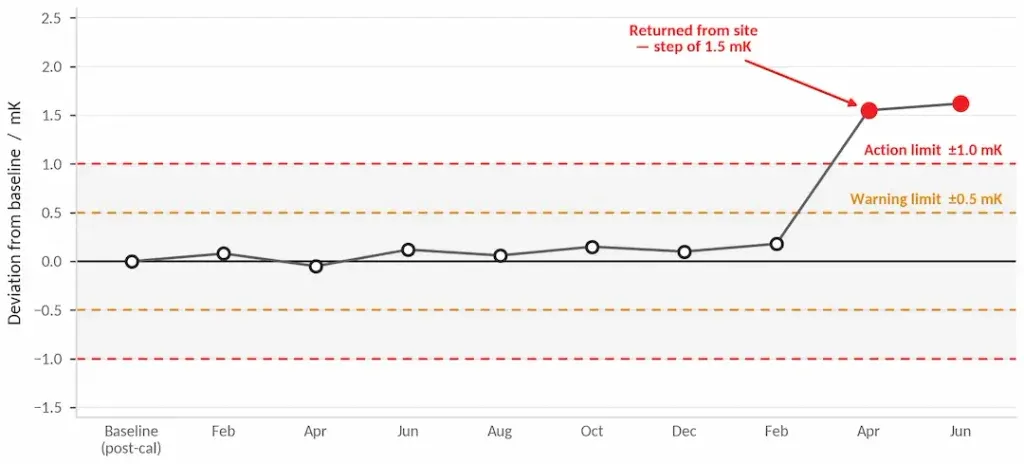
A series of readings shows whether the thermometer is stable, drifting or has changed abruptly. Keeping this record makes it easier to assess performance and explain the basis of decisions about continued use or recalibration.
A gallium cell allows you to check the resistance ratio as well as the resistance at the water triple point:
W(Ga) = R(29.7646 °C) ÷ RTPW
ITS-90 includes W(29.7646 °C) ≥ 1.11807 as one of the qualification criteria for an SPRT, with an alternative criterion at the mercury triple point. The ratio gives an indication of the purity and strain-free condition of the platinum element. Measuring W(Ga) allows you to check this criterion and compare the result with the thermometer’s calibration.
Considering RTPW and W(Ga) together can also help with diagnosis. Strain can increase resistance across the temperature range by approximately the same amount. This raises RTPW and reduces W(Ga) towards unity:
An SPRT calibration may include a W table giving the ratio W(t90) = R(t90) / RTPW across the calibrated range, together with the ITS-90 deviation function coefficients. Comparing a measured W(Ga) with the value calculated from those coefficients provides a sensitive check near room temperature.
Icarus, used in Isotech’s accredited laboratories to produce SPRT certificates, generates W tables from calibration coefficients. Our web SPRT calculator also provides calculations using ITS-90 coefficients. The water and gallium checks can help identify changes that may affect measurements elsewhere in the calibrated range. They do not, on their own, establish the thermometer’s error at every temperature or replace calibration at the other required fixed points.
These two checks are convenient to make near room temperature. Their results should be assessed alongside the thermometer’s history, operating range and required uncertainty.
Reliable checks depend on the measurement procedure as well as the cells. The main points to consider are:
For a laboratory with several SPRTs, in-house fixed-point checks may reduce external calibration and transport costs. A consistent record of stability can support a review of recalibration intervals. The likely saving depends on the number of thermometers, their use, the required uncertainties and the cost of maintaining the checking facilities.
Any extension to a recalibration interval should be documented and supported by performance data and an assessment of risk. For accredited work, it should also be consistent with the laboratory’s quality procedures and applicable accreditation requirements.
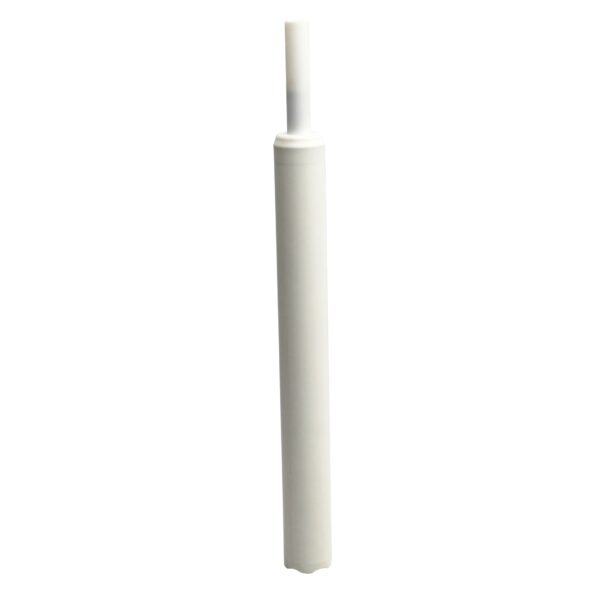
A calibration certificate and a record of intermediate checks serve different purposes. Together, they provide a stronger basis for deciding whether a thermometer remains suitable for its work.
Water and gallium cells, used with a suitable measuring system and a consistent procedure, make these checks practical within the laboratory. The value comes from recording the results, reviewing trends and acting when a limit is exceeded.
If you are considering fixed-point checks, or would like help with your existing procedure, we can advise on the cells, apparatus and measurement techniques appropriate to your application.
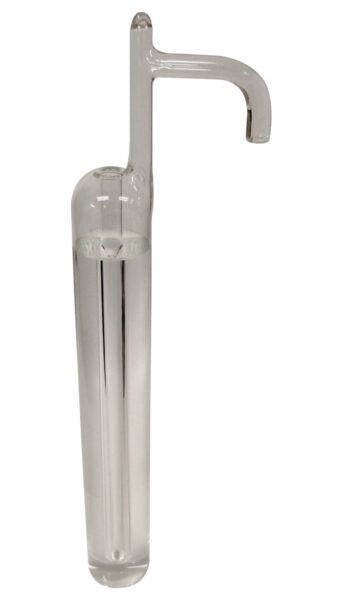
29.7646°C
Product Spec
La Punto de Rocío y Temperatura DMP5 Vaisala DRYCAP® está diseñada para la medición de humedad en línea en aplicaciones de secado industrial con…

El Dr. Lauri Reuter es una experta en el futuro de los alimentos y la persona a quien preguntar si alguna vez te has preguntado qué vamos a comer en…

Las empresas industriales continúan tomando medidas para minimizar sus emisiones de carbono. Muchos están reduciendo el uso de combustibles fósiles y…

En el proceso de caustificación, los químicos pasivos se convierten en químicos de cocina activos para producir licor blanco. Se utiliza en el…
Un especialista responde con la solución, el instrumento y el servicio que corresponden.
Productos para cotizar
Todavía no hay productos. Se puede escribir igual: un especialista responde.