


Resaltando la belleza de la madera: secado de chapa con control de humedad
La Punto de Rocío y Temperatura DMP5 Vaisala DRYCAP® está diseñada para la medición de humedad en línea en aplicaciones de secado industrial con…
Nota técnica
Thermogravimetric Testing of the Water Content in Plastic Granules
Sławomir Janas 1) , Iwona Kwiecień 2) , Małgorzata Kowalska 3)
Water content is an important quality parameter for the transport, storage, and processing of plastics. Excess water in plastics during processing typically results in a low-quality product with visible surface defects. Structural defects may appear even when the granules are pre-dried, which may indicate the need to modify the parameters of the process carried out. The most common method for testing the water content of plastics is to determine the weight loss of the sample after drying (LOD), the so-called moisture analyzer method. However, the seemingly simple test methodology does not always yield accurate results because it requires very accurate measurement of small weight loss. This work presents the measurement capabilities of a moisture analyzer, which was used to test the water content of various types of plastic granules.
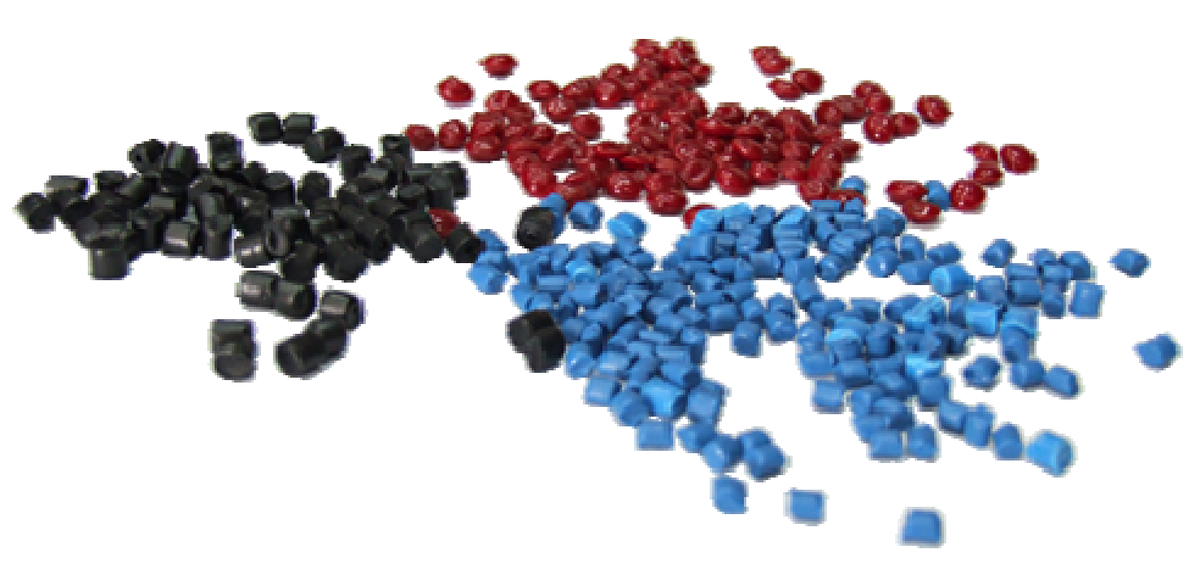
Water absorption by plastics is a physical phenomenon that is affected by storage conditions and the material's sorption capacity. In the case of low sorption plastics such as Polyethylene (PE), Polypropylene (PP), Polyvinyl Chloride (PVC) or Polystyrene, moisture accumulates on their surfaces (7). Plastics such as Polyamide (PA), Polystyrene (PS), Polycarbonate (PC), Polyethylene terephthalate (PET), Acrylonitrile-butadiene-styrene (ABS), Polybutylene terephthalate (PBT) show a much higher level of moisture sorption, which can significantly alter their weight, up to about 10% as in the case of Polyamide (5, 6). This high level of water sorption is caused by moisture migration into the granules, resulting in a volume absorption effect. Plastic granules typically require pre-drying, which is done over several hours at a suitable temperature. The drying method (adsorption, condensation, or hybrid methods) is critical in this process and should ensure that the granules are dehydrated to the level required by the processing. The drying process is assumed to be effective by default, but the final product's quality is always verified in terms of its visual, mechanical, and strength characteristics, among other things.
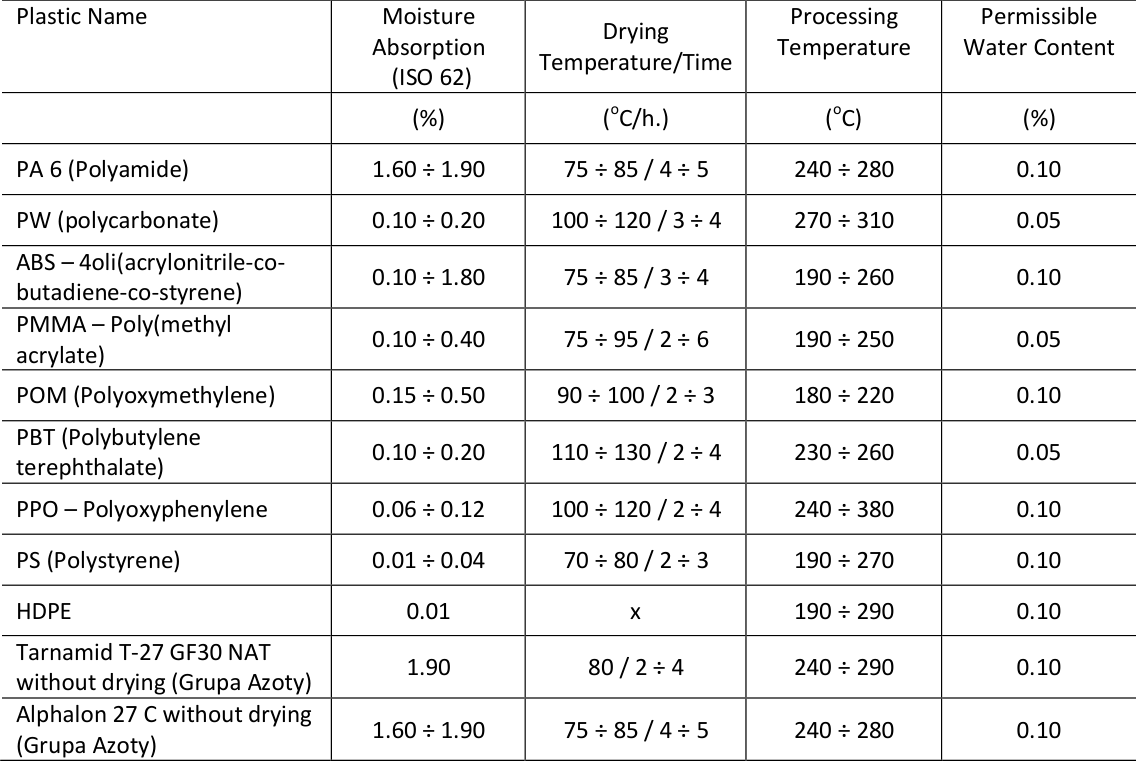
According to the theory of Quality by Design (8), quality should be built into the product and not verified at the final stage. The aim is, therefore, to develop a production method (transport, storage, processing) that allows rapid inter-operational verification of the key quality determinants of granules. One of them is water content. This parameter can be verified for material that is delivered to the warehouse. In this case, information is obtained verifying the quality of the granules ordered, i.e. the reliability of the supplier. The key test, however, is to determine the moisture content of the granules after the industrial drying process. Based on the measurements of water content, it is possible to conclude on the effectiveness of the drying process and to make adjustments to the parameters controlling the pre-drying process. Regardless of where the sample is taken, the tests are always carried out in a laboratory that should have the knowledge and skills to accurately determine the moisture content of the test sample. It should be noted that the permissible water content in the moulding process varies (Table 1) and is quite low (9), putting high demands on the measurement system in terms of precision and accuracy.
Table 1. Water content and permissible water content during plastic processing. Source: https://www.tworzywa.pl/wiedzopedia/baza-tworzyw
At least two methods can be used to determine the water content of plastic granules.
The first, which is given in normative documents, employs the Karl-Fischer reaction (1, 2, 3).
The advantage of this method is that it detects only the water particles present in the tested product, which, combined with the method's multivariate nature, makes it effective even when the moisture content of granules is very low. Due to its high operating costs and complexity, the KF method is not widely used by laboratories directly involved in production.
This is not the case with the second method for determining water content, which is based on the granules' weight loss during controlled heating (4). This is a much simpler method, but it requires validation, or empirical verification of the drying parameters' correctness. It is versatile and cheaper to operate, but unfortunately, slightly less accurate.
Water content was determined for plastic granules such as: PA6 Ultramid, PA66 GF50 EMS, PW Makrolon 1260, PC BAYER APEC 2095, ABS Nowodur HH-12, PMMA Plexiglas, POM Delrin 90 P BK602, HDPE CRP 1000, Tarnamid T-27 GF30 NAT, Alphalon 27 C. All samples were stored in tightly closed glass containers, from which an appropriate amount of sample was taken for analysis using the coulometric Karl-Fischer method and the thermogravimetric method on the MA 50.X2 moisture analyzer by Radwag Wagi Elektroniczne. The Karl-Fischer coulometric analyses were carried out in accordance with ISO 15512 B2 at the Plastics Application Design and Development Center , Grupa Azoty S.A. using a Metrohm 831 KF Coulometer with an 874 Oven Sample Processor.
In the KF coulometric method, a small amount of sample was placed in a hermetically sealed vial. A probe was inserted into the vial, which transferred the moisture released as a result of heating into the titration cell through a dry stream of carrier gas, Figure 1.
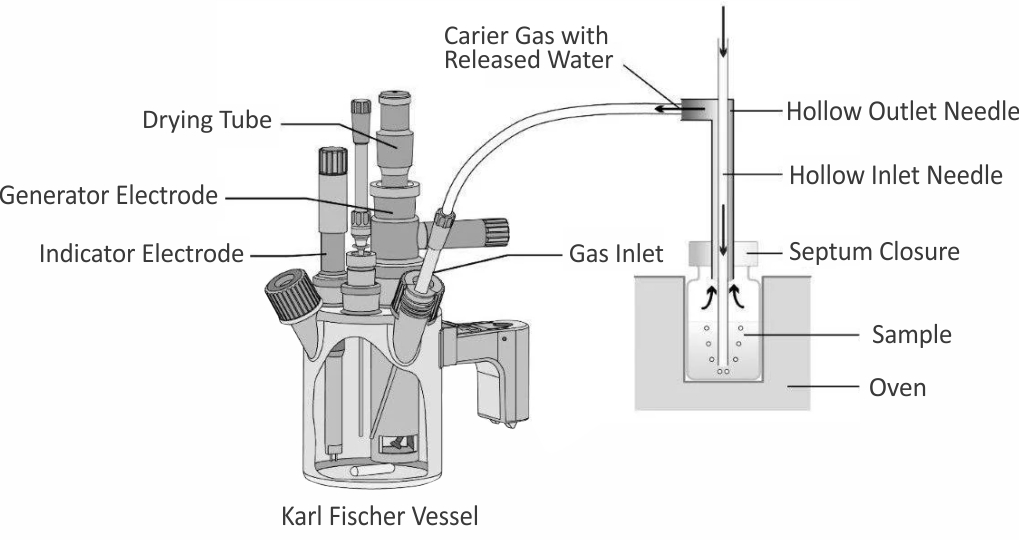
Figure 1. Schematic diagram of the KF coulometric method, source: Determination of Moisture in Petroleum Samples According to ASTM D6304 (Karl Fischer Oven Method). Metrohm USA Inc.
The reaction of water with electrolytically generated iodine took place in the titration cell. The procedure was carried out automatically until the analysis end point was reached.
Stoichiometrically, 1 mole of water reacted with 1 mole of iodine; thus, reaching the end point meant that no more water was present in the measurement system because it had been bound to the generated iodine. The product of the analysis time and the current required to reach the end point of the titration was directly proportional to the amount of iodine produced, allowing the amount of water in the sample to be determined.
In the method using the MA 50.X2.A moisture analyzer (Fig. 2), a sample of several grammes was placed on the weighing pan in the drying chamber. The initial wet weight of the granules was automatically recorded, and the drying chamber was then heated to a set temperature. The weight loss of the granules as a result of moisture desorption was continuously recorded and the moisture content was determined from relation (1).

where: m 1 – weight of wet granules m 2 – weight of granules after drying The temperature rise profile used was Standard, which meant a rapid rise in temperature from the initial state to the set temperature at which the granules were
heated.
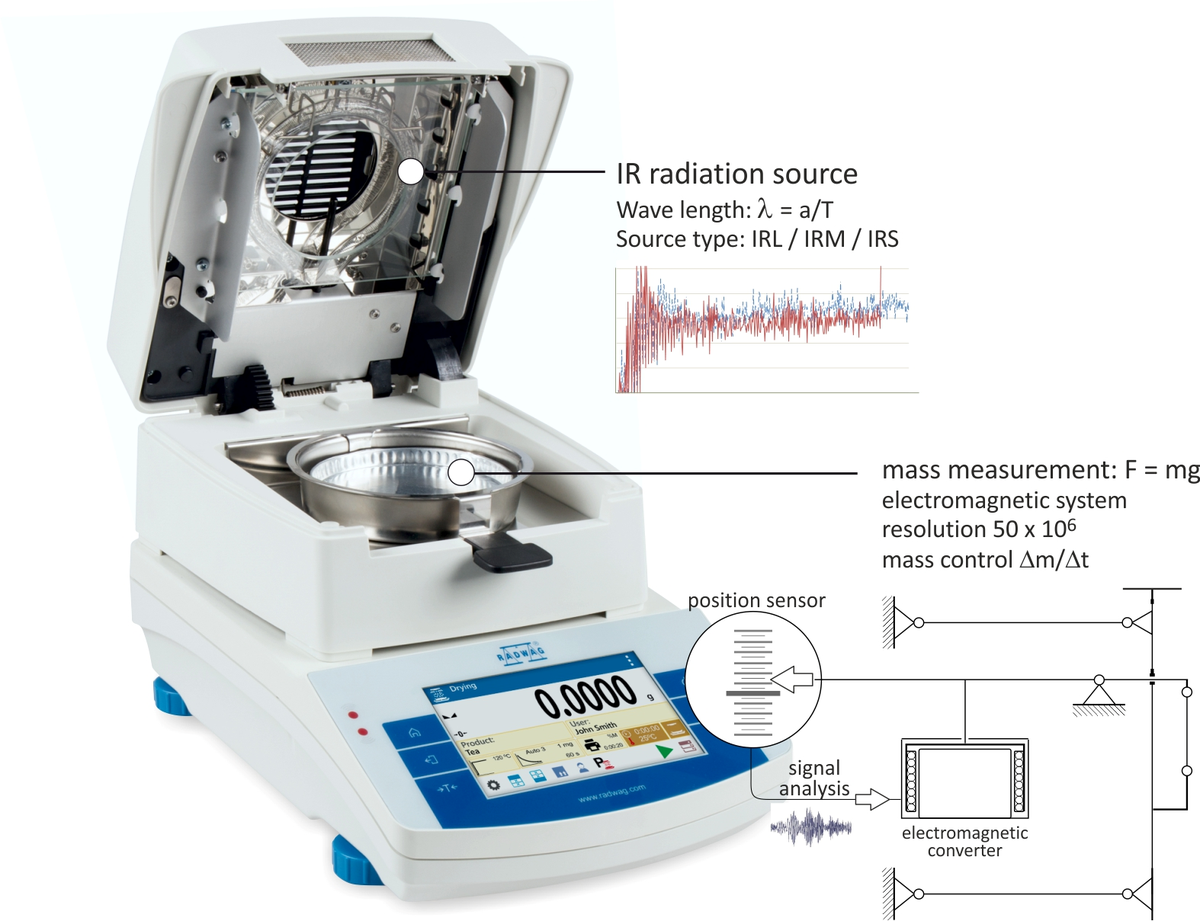
Figure 2. MX 50 X2.A moisture analyzer. Source: Own work.
The drying temperature and method used to complete the analysis for the granulate samples tested were optimised in order to achieve the best possible agreement between the water content results and those obtained using the Karl-Fischer coulometric method.
The increase in granules temperature required to remove moisture was achieved by convection and infrared radiation. It should be noted that this method of heating samples differs significantly from typical sample heating processes carried out in laboratory dryers, where convection dominates, or in industrial dryers, where hot air is moved in a controlled manner. The completion of the analysis equivalent to the complete removal of water from the sample was defined as the invariability of the granules weight within ± 1 mg over the specified time. Controlling the observation time made it possible to obtain a better convergence of the water content results of the moisture analyzer method with the water content results obtained by the Karl-Fischer method, which was one of the elements of the validation process. Table 2 shows the drying parameters used in the moisture analyzer
method.
Table 2. Drying parameters – moisture analyzer method
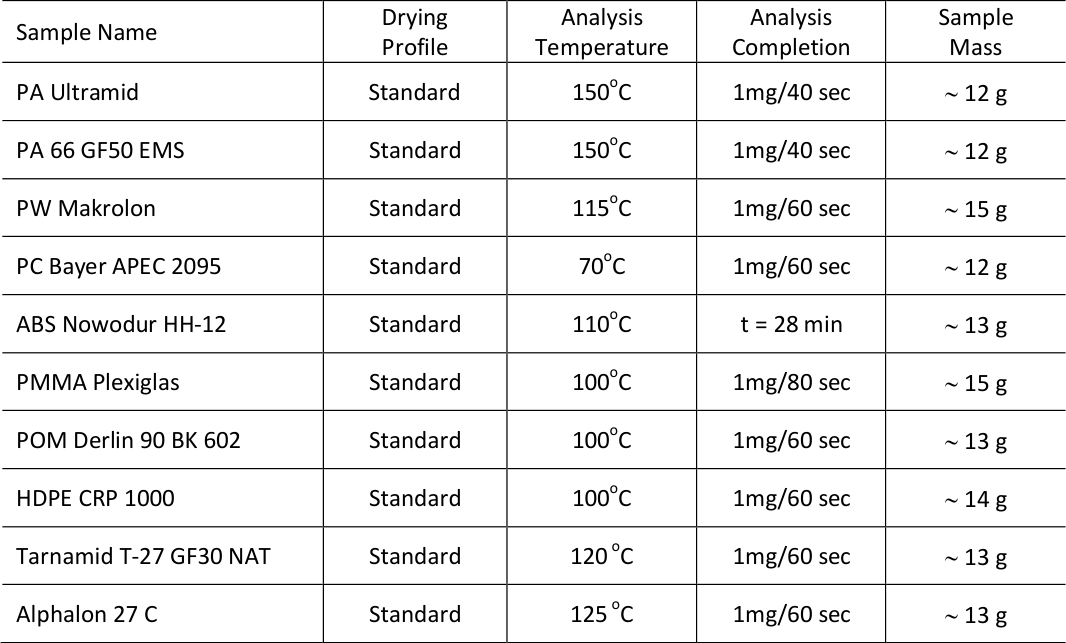
When the water content is analysed using a moisture analyzer, all substances that can be removed from the sample as a result of temperature increase are desorbed from the granules. Thus, in some cases, the obtained water content result may be subject to error due to the release of e.g. formaldehyde (11) during the depolymerisation process, as in the case of drying Polyoxymethylene (POM).
The results of the water content in plastic granules obtained by the Karl-Fischer method are shown in Table 3. The highest values were obtained for PA 6, PA 66 samples, confirming their hygroscopic properties, while the lowest values were obtained for HDPE, high density polyethylene, which has hydrophobic properties. The water content results from the KF method were used as reference values for the moisture analyzer method, which required optimisation in terms of drying parameters.
Table 3. Water content in the Karl-Fischer method.
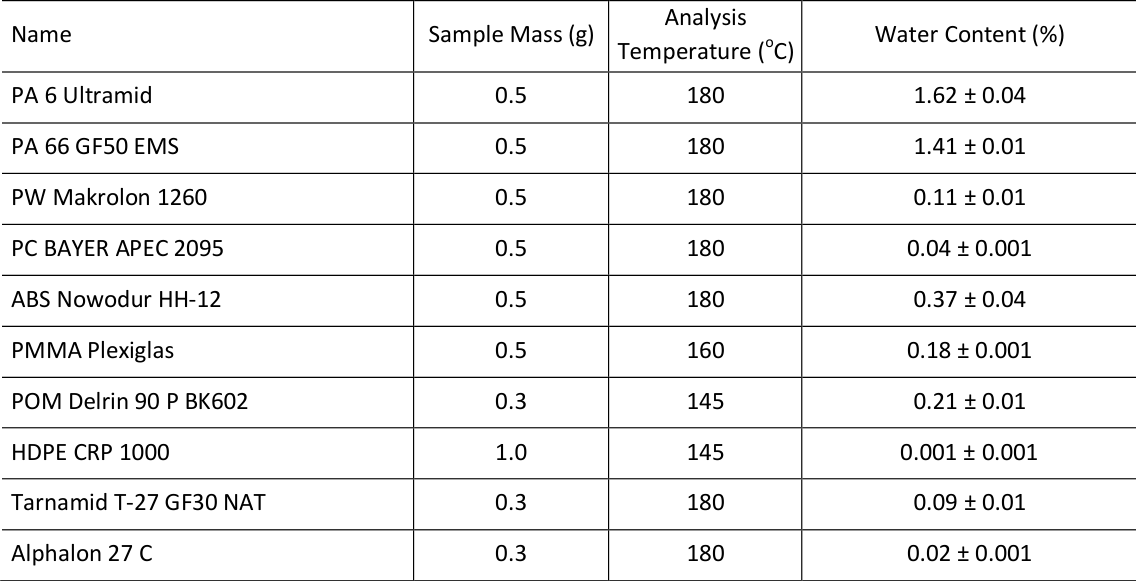
The water content test using the MA 50.X2.A moisture analyzer method was carried out using the parameters given in Table 2. Prior to measurements, each sample was stored in sealed containers that were only opened when the analytical sample was taken for testing. The results of the water content of the plastic granules, the precision of the measurement, the accuracy of the analysis, and the testing time obtained using the MA 50.X2.A moisture analyzer are shown in Table 4.
Table 4. Water content of plastic granules – MA 50.X2 moisture analyzer method
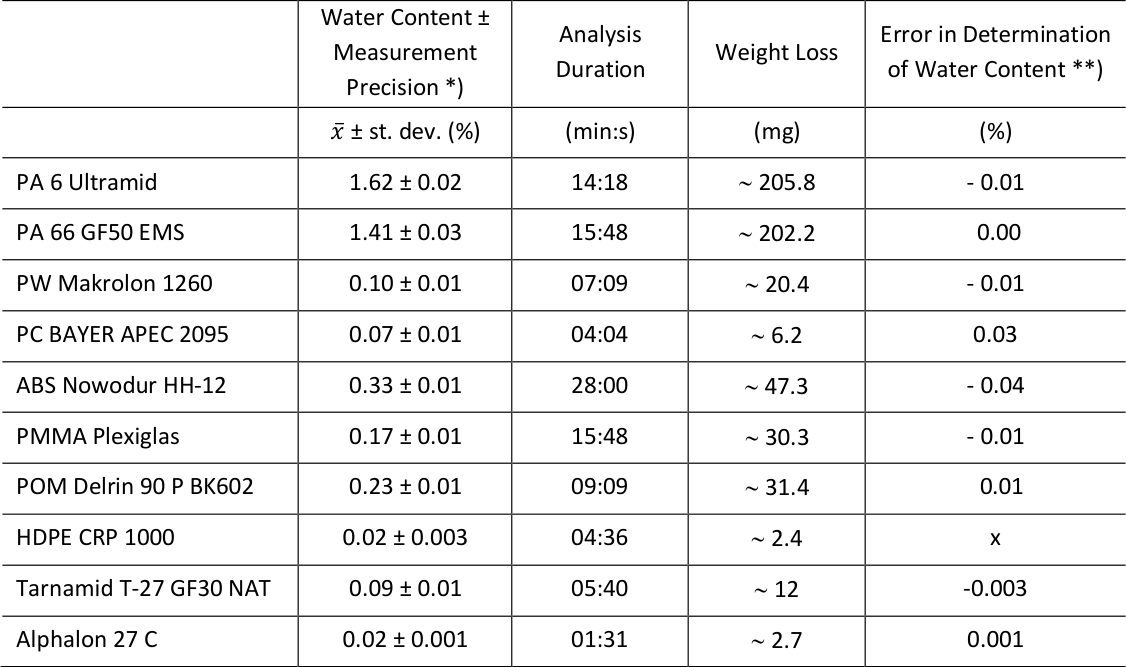
*) – the measurement precision was determined as the standard deviation of a series of 5 measurements. **) – the error in determining the water content was determined as the difference between the average water content obtained by the MA 50.X2 moisture analyzer method and the water content result obtained by the Karl-Fischer method.
The highest water loss was found for hygroscopic granules PA 6, PA 66, which was in accordance with the results of water content obtained using the Karl-Fischer method. The total analysis time for these samples was approximately 15-16 minutes when a sample of approximately 12 g was used. The precision of the water content measurement was 0.03 %, which is sufficient from the metrological point of view considering the limiting moisture content that is required during processing of this type of plastic (Table 1). The water content of the polycarbonates, Makrolon 1260/ Apec 2095 varied slightly; values of 0.10 %, 0.07 % were obtained with a high measurement precision of 0.01 %. Apec 2095 granulate was de facto a condensate of standard bisphenol A (Makrolon polycarbonate) and BPTMC, thus its hygroscopic properties may have been slightly different to Makrolon 1260.
The differences in the water content of the polycarbonates shown during the test could be due to the storage and transport conditions of the test samples; the water absorption value according to ISO 62 is 0.30 % for both polycarbonates.
The water content of the ABS granules was determined to be 0.33 % (using the MA 50.X2.A moisture analyzer method) with an error of - 0.04 %, suggesting that the granules were slightly undried compared to the KF test. A measurement precision of 0.01 % was obtained, which allows the difference in the water content results to be accounted for as a so-called systematic error. A constant ABS analysis time of 28 was specified during the study due to the very low dynamics of the sample weight change during the second drying period (Figure 3). For this process, the use of an analysis termination criterion based on the observation of changes in sample weight over time was insufficient.
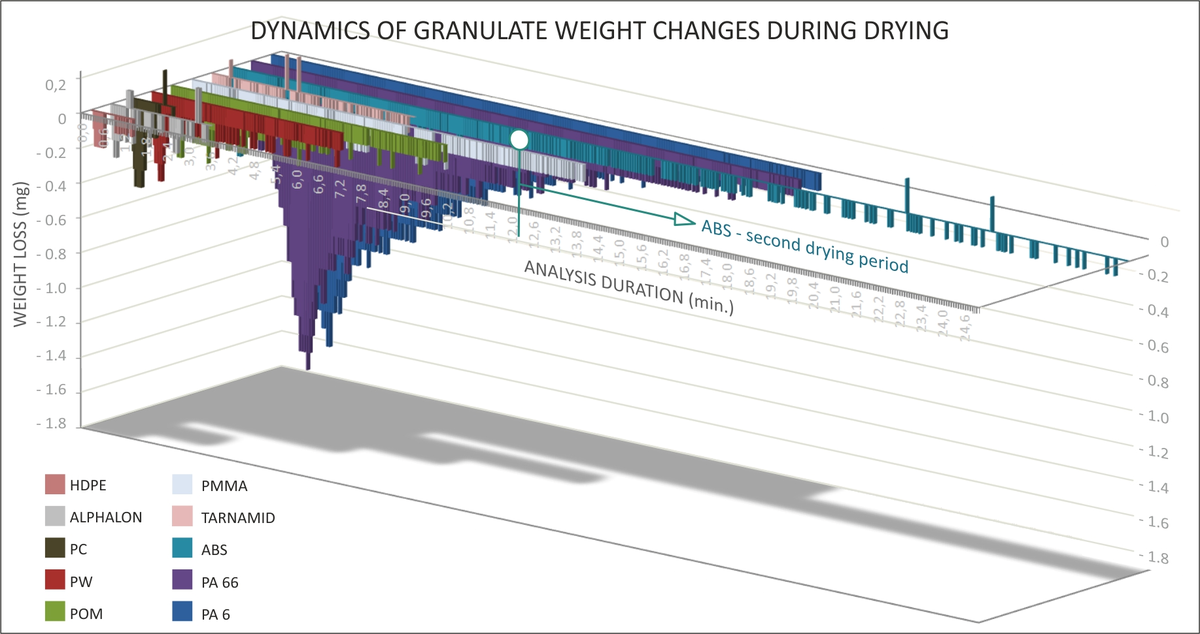
Graph 3. Dynamics of granulate weight changes during drying.
The water content for PMMA and POM granules was determined with an accuracy of 0.01 % with the same measurement precision of 0.01 %. The results showed a water content of 0.17 % for PMMA and 0.23 % for POM, with a weight loss of about 30 mg. A significant difference concerned the analysis time, which for Polyoxymethylene was about 30% shorter than that for Polymethylmethacrylate, which was about 16 minutes. This indicates some difficulty in desorbing water from the PMMA structure when the analysis temperature was the same for both samples, i.e. 100 o C. The lowest water content was obtained for High Density Polyethylene (HDPE) and Alphalon 27C (0.02 %) with a precision of 0.001 % ÷ 0.003
%. The values determined were close to the lower limit of quantification (LOQ) of the water content using the moisture analyzer method.
For the analysis of such samples, it was necessary to cool the drying chamber between measurements. This was to accurately determine the initial weight of the sample, as the total weight loss of the granules, as a result of drying, was less than 3 mg. The very good measurement precision values obtained for HDPE and Alphalon granules indicate that water content tests with the MA 50.X2 moisture analyzer method can be carried out even for samples with trace moisture content. It should be noted, however, that in such tests, it is critical to understand what phenomena occur during the analysis, both in terms of the dried sample and the instrument's operation. The drying process of Tarnamid T-27 required a time of about 6 minutes. The drying accuracy was obtained as 0.003 % with a precision of water content determination of 0.01 % (Table 4.). The sample weight was approximately 12 g, and the quantity was chosen to cover the entire surface of the weighing pan in a thin layer.
Practice has shown that it is possible to use much higher granulate weights in the test, but increasing the sample weight usually leads to an underestimation of the water content. The temperature gradient created in the structure of the dried sample limits the desorption of
water from the lower layers.
Testing the water content of plastic granules can be carried out using the MA 50.X2.A moisture analyzer, however, each measurement process needs to be optimised and the measuring capability of the instrument taken into account. In the case of laboratory tests carried out over a short period of time, the accuracy of the analysis should be determined only by the precision of measurement when we assume that other parameters of the conducted process, such as drying temperature, sample weight, and finish mode, are selected optimally. In addition to technology, the human factor must be considered, i.e. a certain level of knowledge and the ability to apply this knowledge in practise.
Nowadays, many devices work intuitively, so similar expectations also apply to the device and the method of determining the water content using a moisture analyzer. Unfortunately, not all processes can be automated, and understanding what processes are happening in the instrument and in the sample during the test is critical for evaluating the results. On the other hand, there is support from the manufacturer of the measuring equipment, which gives hope for the development of accurate and efficient testing methods for the plastics
processing industry.
The authors would like to thank the Plastics Application Design and Development Center at Grupa Azoty S.A. for their help in carrying out the research and for their valuable factual
comments.
1. ASTM D6304-20. Standard Test Method for Determination of Water in Petroleum Products, Lubricating Oils, and Additives by Coulometric Karl Fischer Titration 2. ISO 15512:2019. Plastics - Determination of water content. 3. ASTM D 6869 -17. Standard Test Method for Coulometric and Volumetric Determination of Moisture in Plastics Using the Karl Fischer Reaction. 4. D 6980 – 04. Test Method for Determination of Moisture in Plastics by Loss in Weight 5. D. V. Terjek, E. Kokai. Measurement possibilities of water content in polyamide. IOP Conference. Series: Material Sciencenand Engineering 903 012014. Doi: 10.1088/1757-899X/903/1/012014 6. Musielak G, Kloziński A. Wpływ technik suszenia na właściwości poliamidu. Tworzywa Sztuczne w Przemyśl, 1/2021, str. 3-5. 7. Jaymin Jeffery. Manufacturing Methods and The Impact of Moisture on Plastic Resins. Plastic Resins And Moisture Whitepaper. https://cdn2.hubspot.net/hubfs/203881/_CONTENT- RESOURCES/PDFs/Moisture-and-Plastic-Resins-White-Paper.pdf 8. Kengar MD, Tamboli JA, Magdum CS; Quality by Design- A Review; PharmaTutor; 2019; 7(4); 48- 51; http://dx.doi.org/10.29161/PT.v7.i4.2019.48 9. https://www.tworzywa.pl/wiedzopedia/baza-tworzyw 10. PN-EN ISO 62:2008. Tworzywa sztuczne. Oznaczanie absorpcji wody. 11. ZALECENIE KOMISJI (UE) 2019/794 z dnia 15 maja 2019 r. w sprawie skoordynowanego planu kontroli w celu ustalenia rozpowszechnienia niektórych substancji migrujących z materiałów i wyrobów przeznaczonych do kontaktu z żywnością.
La Punto de Rocío y Temperatura DMP5 Vaisala DRYCAP® está diseñada para la medición de humedad en línea en aplicaciones de secado industrial con…

El Dr. Lauri Reuter es una experta en el futuro de los alimentos y la persona a quien preguntar si alguna vez te has preguntado qué vamos a comer en…

Las empresas industriales continúan tomando medidas para minimizar sus emisiones de carbono. Muchos están reduciendo el uso de combustibles fósiles y…

En el proceso de caustificación, los químicos pasivos se convierten en químicos de cocina activos para producir licor blanco. Se utiliza en el…
Un especialista responde con la solución, el instrumento y el servicio que corresponden.
Productos para cotizar
Todavía no hay productos. Se puede escribir igual: un especialista responde.