


Resaltando la belleza de la madera: secado de chapa con control de humedad
La Punto de Rocío y Temperatura DMP5 Vaisala DRYCAP® está diseñada para la medición de humedad en línea en aplicaciones de secado industrial con…
Nota técnica
Determination of Dry Mass of Wastewater Ludge, Performed Using Microwave, and Infrared Radiation
P a g e | 1
suspended solids by means of filtration method. Practical application of balances and moisture analyzers in wastewater treatment plant, during the technological process, and in the laboratory.
1) dr Sławomir Janas, 2) Izabela Dasiewicz-Szparaga
This paper presents a method of measurement of wastewater sludge dry mass, wherein moisture analyzers manufactured by Radwag Wagi Elektroniczne are used. The analysis subject was the sludge collected from the technological system of Radom Wastewater Treatment Plant. The tests were performed with use of two moisture analyzers, the MA 50.X2 (IR radiation), and the PMV 50 PLUS (microwave radiation). In the case of infrared radiation, the analysis duration was conditioned by mass of the analysed sample and sludge structure. The obtained content of the sludge dry mass ranged between 97.10 % (sludge after drying, dried by IR radiation) and 1.16% (excess sludge). On average the analysis took about 3 to 11 minutes, this depends on the analysed sample size and the drying method. The shortest time was noted for the microwave radiation method – PMV 50 PLUS moisture analyzer – while carrying out tests for the sludge form a dephospatation chamber.
The moisture analyzer methods were validated by comparison of the test results with those achieved for convection drying method. Result compliance, with the maximum deviation of 0.08 %, was obtained. This allows adaptation and use of the moisture analyzer method instead of the standardized one. Suspended solids content in industrial sewage was determined by means of pressure membrane filtration, through fibre glass filters. The filter mass prior to the analysis and after filtration was determined using XA 82/220.4Y PLUS balance. Optionally, possibility to optimize filter mass measurement by means of MYA 2.4Y.F.A PLUS microbalance was presented. Keywords: wastewater sludge, dry mass, wastewater treatment plant, measurement, moisture analyzer, water quality, filtration, analytical balances, microbalances.
P a g e | 2
6. Water Quality, Determination of Suspended Solids, Method by Filtration through Glass Fibre Filters ..26
P a g e | 3
1.
Due to dynamic climatic changes and global development of urbanization, clear water becomes an extremely precious resource. In accordance with the current state of knowledge, fresh water takes only 2.5 % of the water resource on Earth, and about 2 milliard people worldwide have no access to clear water. It is estimated that in 2050 demand for water will increase by about 50 %. Unfortunately, water state is getting worse because of the development of production. The greatest water consumption is recorded in food, chemical and electromechanical industries. It may be estimated that daily water usage by person is about 150 litres, wherein 148 goes to canalization. The water footprint has been determined for many processes and products, but reduction of used water requires change in technology and mindset of numerous people, which is a challenging process. One of the largest biological wastewater treatment plants, located in Achères near Paris, processes about 1,450 mln m 3 sewage a day. In comparison to this number, in Poland the largest wastewater treatment plant processes around 500 thousand m 3 of sewage a day. This clearly shows that rational water management should include specific requirements with regard to the treatment processes realised by each wastewater treatment plant.
It must be said that the wastewater treatment plant is in fact an industrial enterprise which converts the input product, i.e., sewage, into the output product, i.e., clear water, dry mass of sewage sludge, organic fertilizer, mineral-organic fertilizer, plant growth promoter, soil conditioner, biogas. Water location in the sludge is presented in Figure 1. It is necessary to mention that water type and quantity depends on the analysed sludge type, which in turn is an effect of urban-industrial structure of the given area.
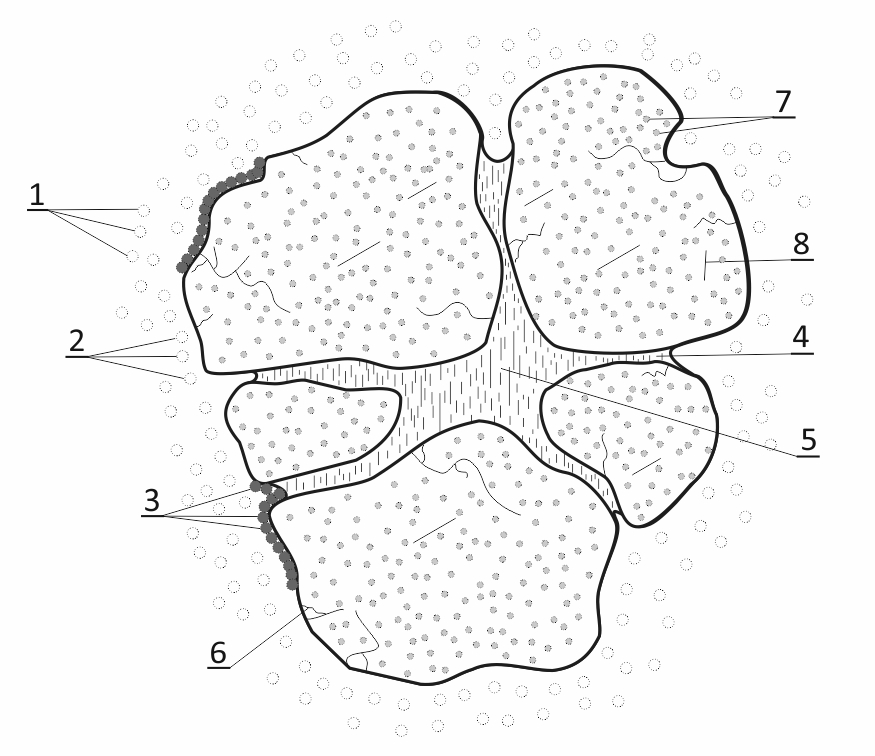
Figure 1. Types of water in sewage sludge Source: Modelling of composting process, critical points with regard to support by EM Technology. mgr inż. Agronomii spec. Mikrobiologia Rolna Rafał Nasindrowicz [Master's Degree of Agronomy, Agricultural Microbiology, Rafał Nasindrowicz]
Where: 1 - free water 2 - bond water 3 - adsorption water 4 - inter-capillary water
5 - capillary water 6 - microcapillary water 7 - cell liquids 8 - intracellular water
P a g e | 4
Sludge management in the wastewater treatment plant includes physical, chemical, and biological processes which reduce sludge volume, stabilise the sludge by eliminating its potential rotting and preventing the offensive odours it produces, minimise the risk caused by presence of pathogenic organisms, wherein the fertilising value of the sludge is preserved making the sludge possible to be processed further. Simplified functional diagram of the wastewater treatment plant of Radom Water Supply System is presented in Figure 2.
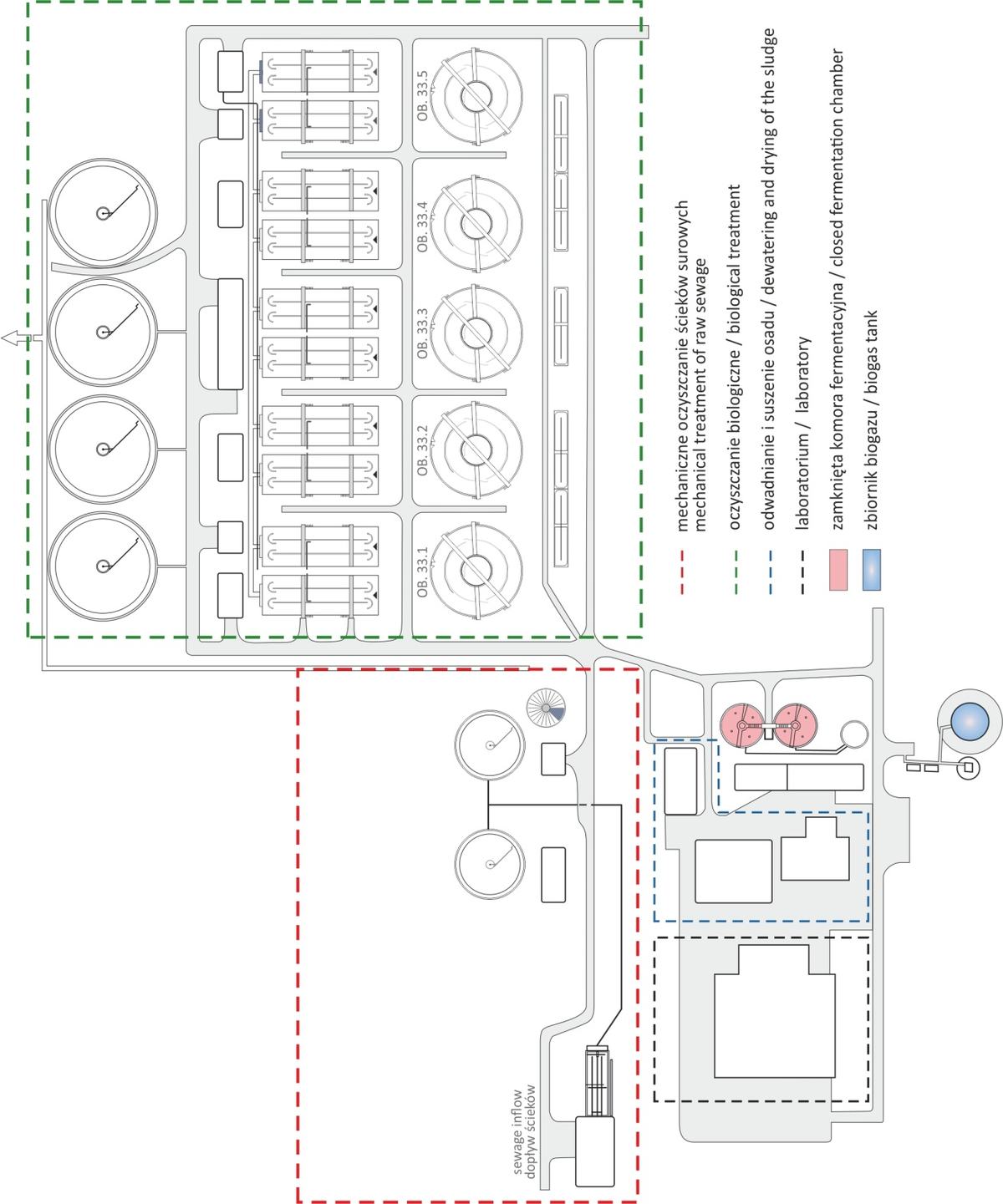
Figure 2. Simplified functional diagram of the wastewater treatment plant, Lesiów near Radom.
P a g e | 5
Sewage treatment is a two-stage process. The first stage is a mechanical treatment where grids and sieves of different cross-sections are used, in order to remove the coarse fraction, along with sand traps and primary settling tanks. The second stage is a biological treatment, consisting of few levels, performed under different aerobic conditions. The idea behind the biological treatment is to grow micro-organisms that take the form of suspended solids known as activated sludge. As a result of numerous interrelated physiochemical (secondary settling) and biochemical processes (dephospatation, denitrification), the pollutant matter is removed by the activated sludge suspension, wherein the micro-organisms of the activated sludge make use of the pollutant matter in aerobic metabolic processes, turning it into either source of energy or a building material. The products of the said transformations are: carbon dioxide, water, sulphates, nitrates and growing biomass, so called surplus sludge. These reactions take place in the secondary settling tank, see Figure 3.
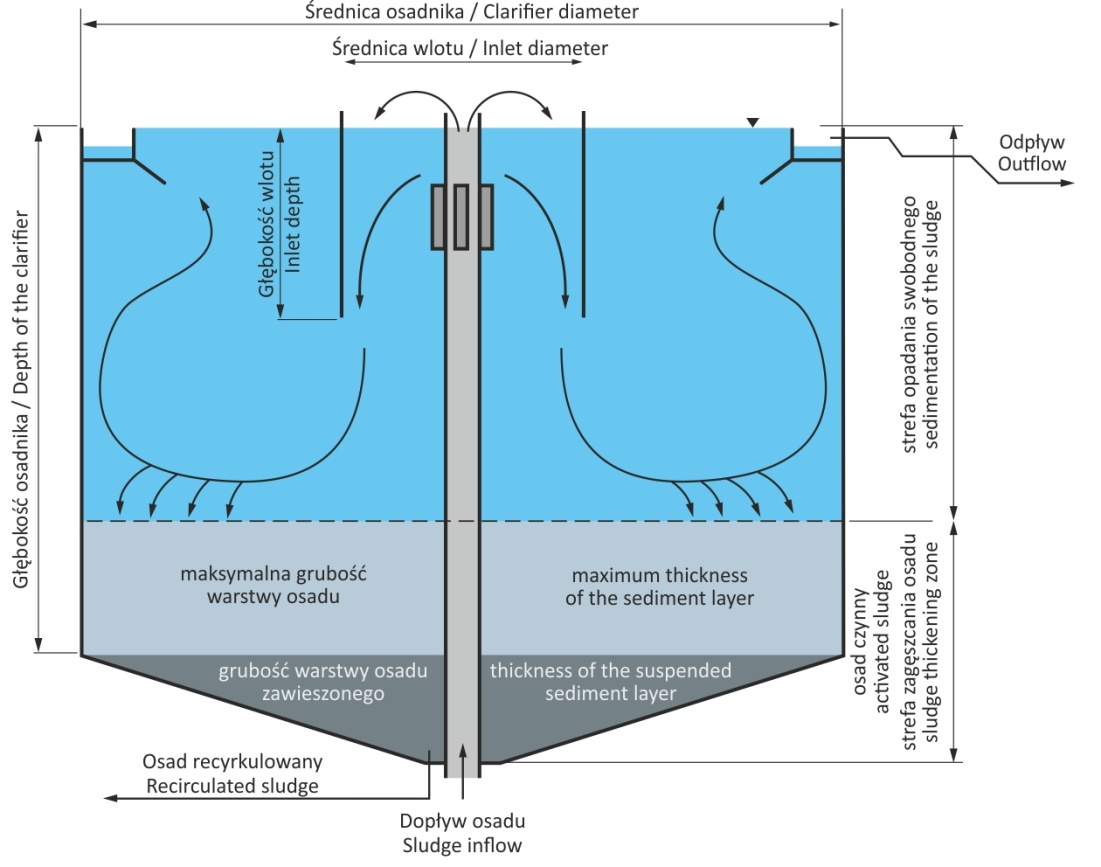
Figure 3. Secondary settling tank – functional diagram
Surplus sludge must be removed from the secondary settling tank due to the fact that the sludge of too great density successfully prevents aeration of the activated sludge chamber, and correct sludge sedimentation. Removal of the surplus sludge allows to keep balance in the sludge treatment chamber. One shall know that it is crucial to remove a proper amount of the surplus sludge, therefore information about its dry mass content is a key issue for control of the processes that take place in the secondary settling tank. Quantity of the to-be-removed surplus sludge, from the secondary settling tank, may be estimated via the method of constant sludge age, by means of equation 1.

Where: X – concentration (dry mass) of the sludge in the activated sludge chamber (mg/L) X n – concentration (dry mass) of the sludge, sample from the bottom of the clarifier funnel (mg/L) Xe – concentration (dry mass) of the sludge, sample from the clarifier outflow (mg/L) Q n – quantity of the surplus sludge discharged from the system (m 3 /d) Q – sludge inflow (m 3 /d) During assessment of quality of the technological process taking place in the activated sludge chamber, also the information regarding its concentration is used. In order to determine this value it is necessary to determine concentration of biomass and suspended solids as gsmo/m 3 or ChZT/m 3 , equation 2.
= B + 1 + MIN (2) Where: X B – concentration (dry mass) of activated sludge biomass (g smo/m 3 ; ChZT /m 3 ) X 1 – biologically non-degradable organic suspended solids (g smo/m 3 ; ChZT /m 3 ) X MIN – mineral suspended solids coming from treated wastewater (g smo/m 3 ) Another parameter crucial from the perspective of management of the technological process in the activated sludge chamber is Mohlman index, The index specifies the suspended solids sedimentation capacity, i.e., relation of activated sludge volume after 30 minutes of consolidation in 1 dm 3 cylinder, and mass of the sludge prior to consolidation (equation 3). Sludge sample is placed in the so called Imhoff cone, where its volume is determined after sedimentation. Next, dry mass of the sludge is determined after sample filtering and drying in the temperature of 105 o C. Alternatively, the dry mass can be determined using the microwave drying method – in such a case the analysis takes about 3 minutes.

Where: V os - volume of sludge sample after condensation (cm 3 ) G os – sludge dry mass (g) Dry mass content of sludge is determined using method specified by PN-EN 12880 standard, 'Characterization of sludge – Determination of dry residue and water content', wherein the sample is dried in the temperature of 105 o C. As for the mineral substance content, it is determined using weighing method, after drying of the sample in the temperature of 550 o C.
P a g e | 7
Alternative method of determination of dry mass content is a thermo-gravimetric method employing infrared radiation and microwave radiation. These methods are implemented in moisture analyzers of MA X2 PLUS and PMV 50 PLUS series by Radwag Wagi Elektroniczne. Means of operation and measurement technique for both these systems are presented further down this paper.
It must be noted that information regarding sludge dry mass is also a quality feature in the processes of sludge de-watering. At a later stage this feature facilitates savings during combustion, storage and logistics (material volume). With regard to this, determination of dry mass of the sludge should be precise, and the used method quite simple and universal – like in the case of moisture analyzers of MA.X2 PLUS and PMV 50 PLUS series.
2.
Material heating can be done by conduction, convection, or radiation. Both conduction and convection require medium (liquid, solid body, air) for transfer of heat. In the case of conduction, it is a direct contact between bodies in various temperatures, e.g. connection of the sample and the moisture analyzer pan (provided that there is a temperature gradient between these objects). Conduction can be also considered as transfer of heat into deeper layers of the sample, in such a situation we speak of heat transmission. This is a crucial factor for processes in which sample thickness is significant, e.g. technological drying of fruit and vegetables.
Convectional movement of heat is the interaction of warm air particles with the surface layer of the analysed sample (Figure 4). In this case, the temperature of the surface layer of the sample is significantly different from the deeper sample layers, and the process of heat transmission is critical when it comes to duration and accuracy of the analysis.
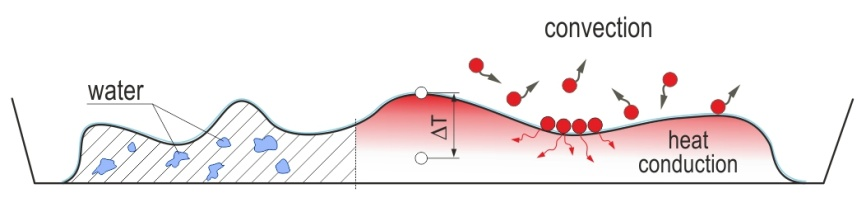
Figure 4. Convectional heating of the sample
Infrared radiation is an electromagnetic wave which does not need medium to transfer the heat. Heat transfer takes place when the emitted radiation hits other body and gets absorbed. Considering the wave length, radiation has been divided into short waves (0.78 ÷ 1.4 m), medium waves (1.4 ÷ 3 m), and long waves (3 ÷ 1000 m).
P a g e | 8
It must be noted that the emitted radiation may be absorbed, reflected or transmitted (Figure 5.), therefore the effectiveness of drying depends on the analysed sample structure ( 100 % = ).
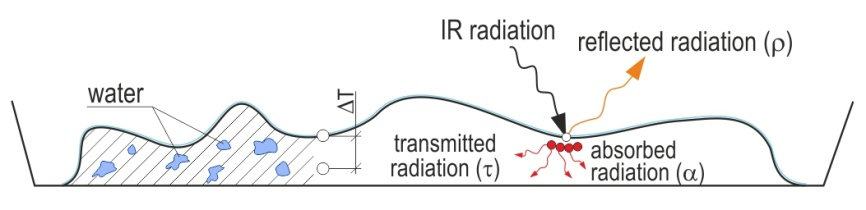
Figure 5. Physical phenomena for IR radiation
Also the microwave radiation is an electromagnetic wave which does not require any medium to generate increase of analysed sample temperature. Here, the sludge temperature increase is provided as a result of absorption of the microwave radiation by polar compounds of the sludge (mainly water). Reorientation of dipoles of polar compounds leads to molecular friction which results with temperature gain throughout the whole sludge volume (Figure 6).
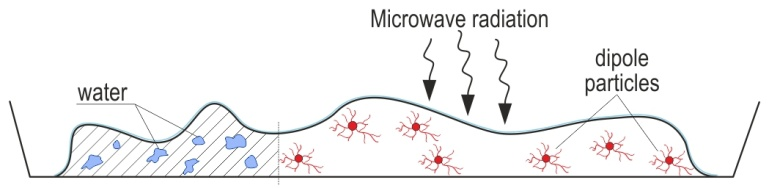
Figure 6. Physical phenomena for microwave radiation
Additionally the heat may be generated by directed movement of ions (provided that the material contains them), moving in the direction of electric field changes. In the course of this movement, the ions hit other particles, this generates heat energy which spreads throughout the material structure. Such technique of sludge heating is effective and efficient, whereas the analysis is fairly short, about 3 – 4 minutes. The effectiveness of such a process depends on the structure of the sludge and its chemical composition.
P a g e | 9
3.
Moisture analyzer is a universal device that can be used for numerous analysis, water content determination tests, dry mass determination, or for registration of sample mass variation during controlled heating. Moisture analyzer mechanical design includes precise measuring system and a weighing chamber where the heat source can be installed. There are heat sources of various IR radiation wave lengths (IRM – medium, IRS – short, IRL – long). Moisture analyzer is presented in Figure 7.
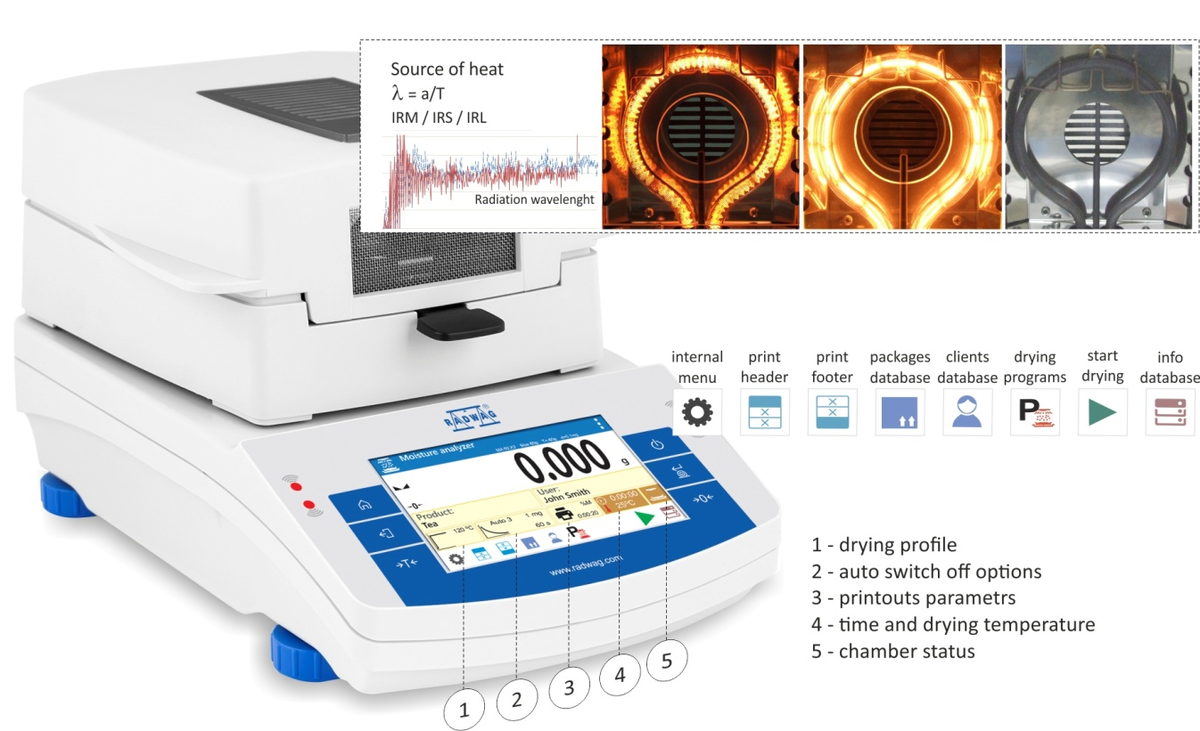
Figure 7. MA 50X2.A PLUS moisture analyzer - functional diagram
Moisture analyzer operation consist in constant record of sludge mass during the heating (Figure 8). Drying process usually finishes with consideration given to criterion of stability of sludge end mass, which criterion specifies variation of dried sludge mass in time. It is assumed that dry product is such one, variation of which mass ( m) in time (t) e.g. 60 seconds (Auto 3) is lower than 1 mg. Because it is possible to test samples of various texture, taken from different places of the wastewater treatment plant, the stability criterion can be defined differently, in a way providing that the obtained result of dry mass content (moisture) is similar to the results obtained using other methods (so called reference methods, EN 12880).
P a g e | 10
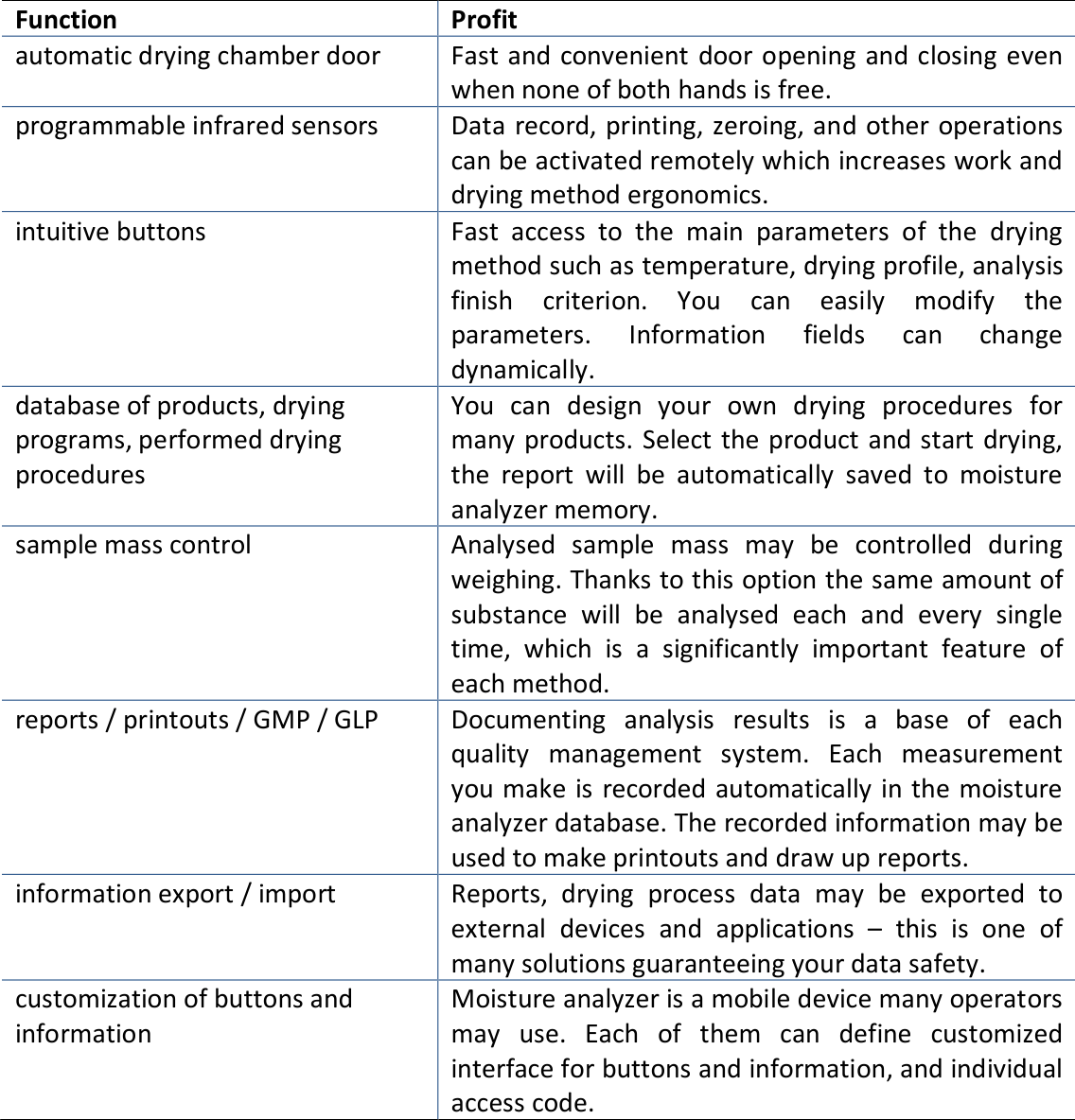
Moisture analyzer is a mobile device many operators may use. Each of them can define customized interface for buttons and information, and individual access code.
Moisture analyzers are used for determination of water/dry mass content where the measurement consists in determination of difference in sample mass prior to, and after drying. It is so called differential weighing which requires precise adjustment of the mass converter. With regard to this, most moisture analyzers are not equipped with an integrated internal adjustment device, however Radwag product range does include such models (Table 1). Complete product range and technical specification of moisture analyzers is to be found at www.radwag.com.
P a g e | 11
Table 1. Moisture analyzers of MA.X2.A PLUS series with internal adjustment system.
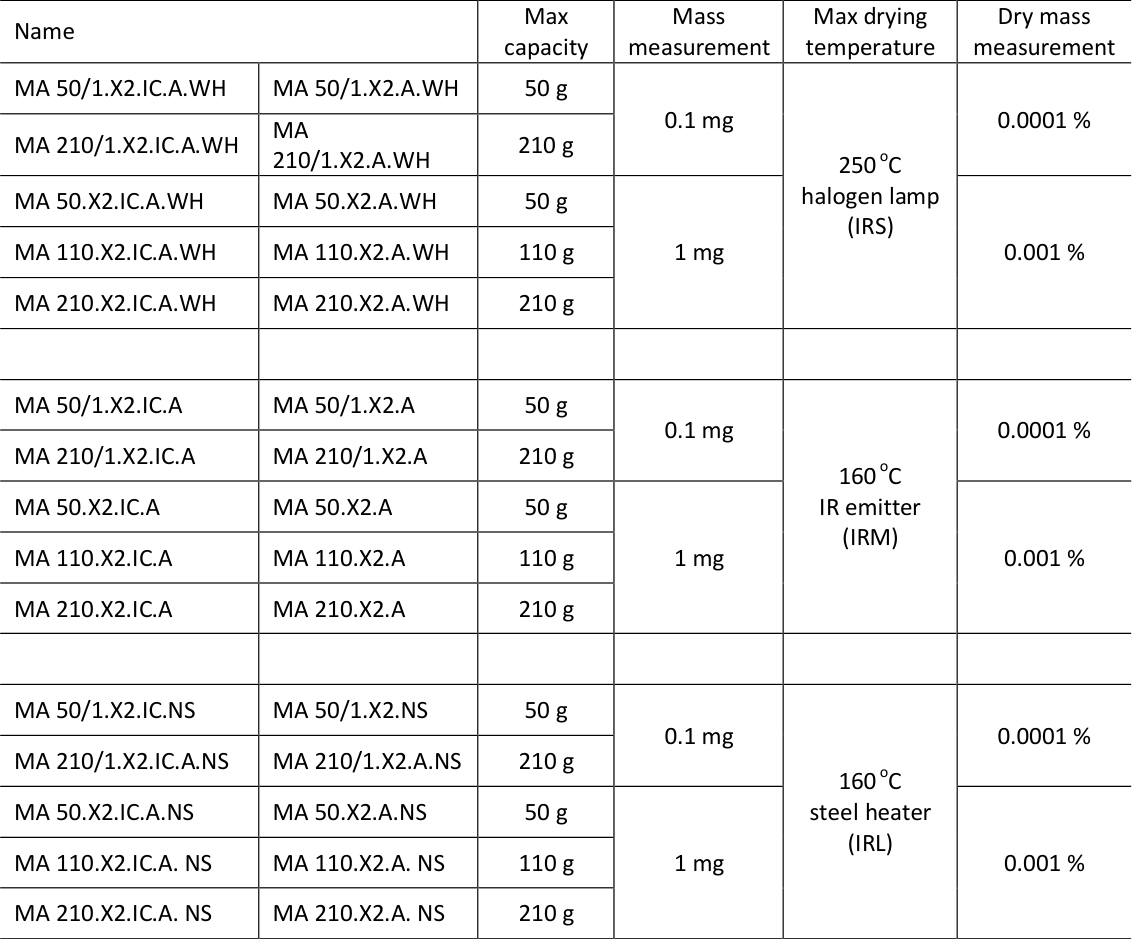
*IC – integrated internal adjustment *A – automatically open drying chamber Proving that dry mass content results, obtained for reference method (EN) and moisture analyzer method, are comparable, should be a part of validation process – operational qualification (OQ). Usually, in the course of operational qualification, modification of drying parameters for moisture analyzer method takes place. This is done in order to guarantee as alike dry mass content results as possible. Obtaining satisfying results depends on homogeneity of the analysed sample and two main parameters of the moisture analyzer method:
drying temperature, finish criterion – sludge dry mass stability.
Drying temperature in many cases ranges between 100 o C ÷ 120 o C, and its increase may be a result of combustion of fine fractions of already dry sludge. Means of operation and recommendations regarding the finish criteria are presented in Figure 8 and Table 2.
P a g e | 12
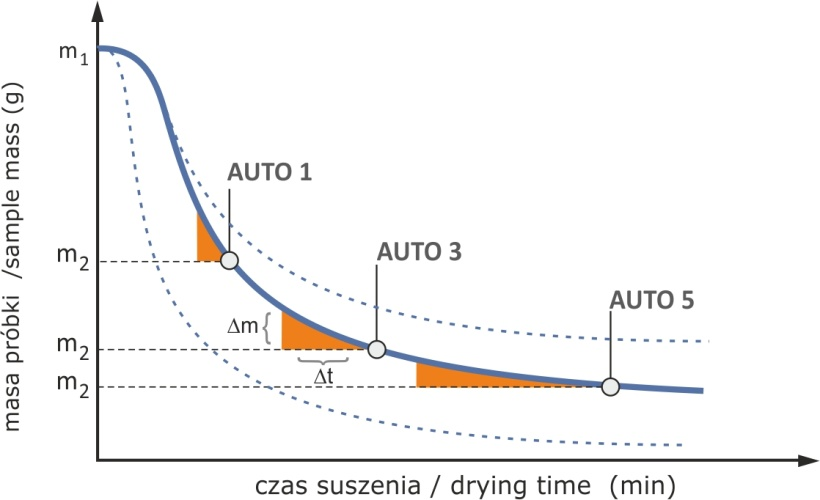
Figure 8. Drying curve – dry sludge mass, stability criterion
General recommendations regarding regulation of drying process finish parameters in relation to sludge structure are presented in the below table.
Table 2. Drying process finish criterion, conditioned by sludge structure
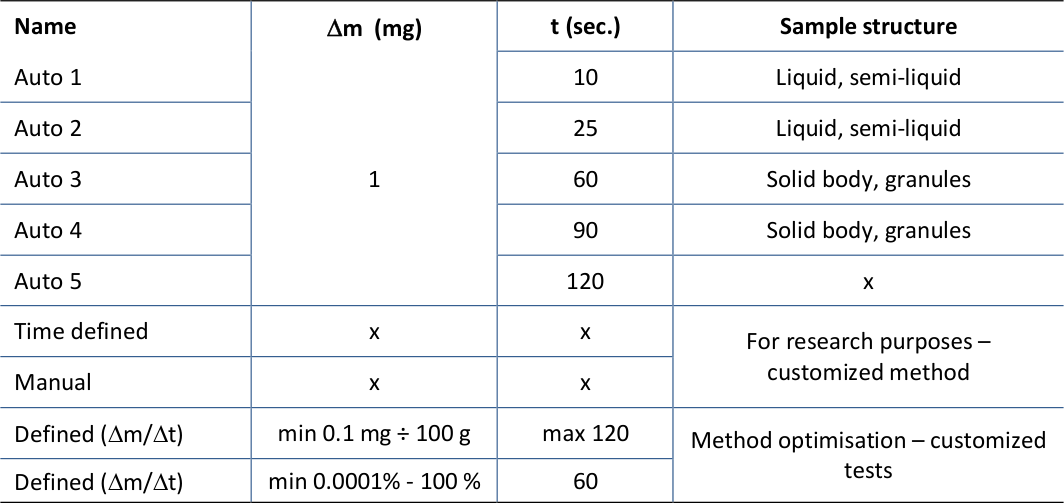
tests Defined ( m/ t) min 0.0001% - 100 % 60
In moisture analyzers it is possible to install heat source of different length of the peak infrared radiation wave, i.e., IRL ( 7.2 m), IRM ( 3.3 m) and IRS ( 2.7 m). In reality, quite broad spectrum of infrared radiation reaches the sample, mainly as a result of smooth control over the heating component, task of which is to ensure stable temperature inside the drying chamber. Dry mass content values, obtained for the sludge acquired from dephospatation chamber, OB.32.1, as a result of drying via IRL, IRM, IRS, are presented in Table 3. For each source of heat, the series of 5 repetitions was performed.
P a g e | 13
Table 3. Dry mass content of sludge, conditioned by the heat source
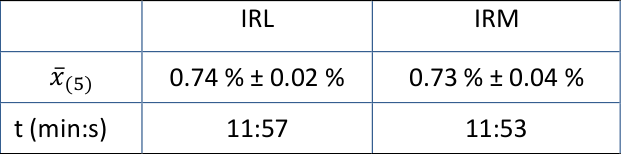
OB. 32.1 IRL IRM IRS
Dry mass x̅ ( 5 ) 0.74 % ± 0.02 % 0.73 % ± 0.04 % 0.74 % ± 0.02 %
Analysis time t (min:s) 11:57 11:53 13:48
The dry mass content result was comprised within 0.73 ÷ 0.74 % range, and measurement precision was 0.04 % maximum. It has been concluded that analysis accuracy is maintained regardless of IR radiation wavelength, emitted by the moisture analyzer. The longest analysis duration was observed for IRS, installed in moisture analyzers marked with ,,WH” symbol. Drying curve is presented in Figure 9, analysis of the same sample by microwave method (PMV 50 PLUS) is provided in the figure too.
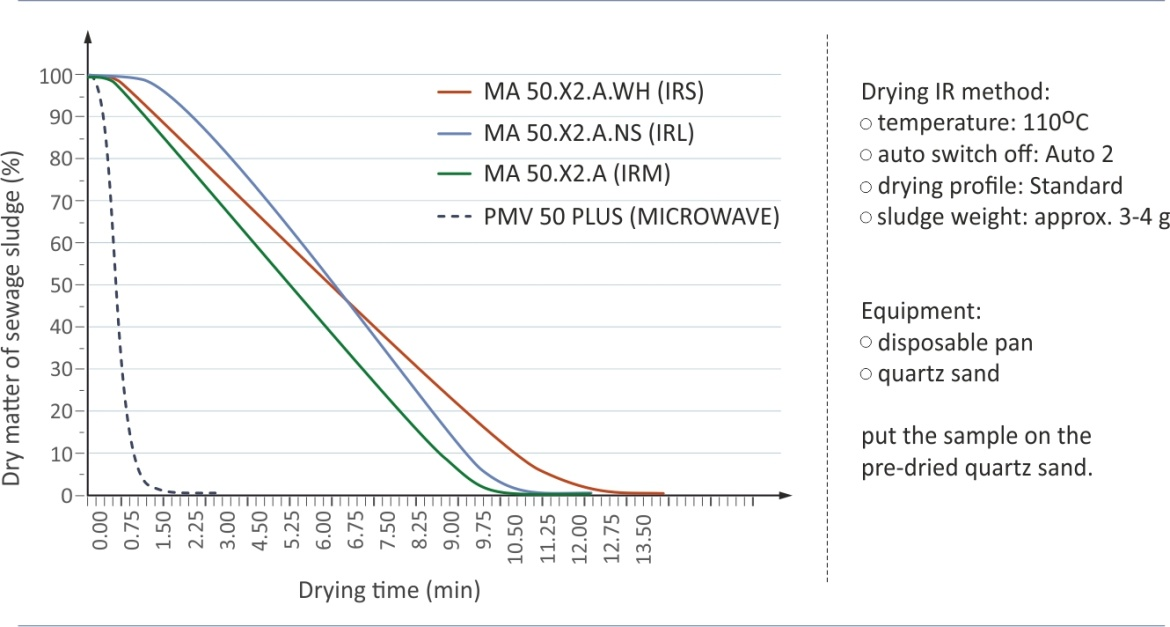
Figure 9. Drying curve for various IR radiation sources and microwave method The shortest sludge test duration was obtained using the microwave method, PMV 50 PLUS. The sample of about 1.5 g was placed on a glass fibre filter. Effectiveness of drying via microwaves is a result of the fact that within this process only sample temperature increase takes place, which is due to direct interference into the sample structure. Moist dispersed from the sample into the air is quickly removed by forced ventilation, which additionally hastens the drying process.
Infrared radiation drying (IR) requires drying temperature of about 105 o C in the whole drying chamber, regardless of the analysed sludge quantity. The heat is therefore absorbed not only via the sample but also via constructional components of the drying chamber.
P a g e | 14
4.
PMV 50 PLUS moisture analyzer by Radwag is the latest solution using the microwave radiation for determination of water content and dry mass content. Similarly like in the case of other methods, the measurement consists in finding out what is the difference in mass of wet and dry product. This is sufficient information for calculation of water content (equation 4) and dry mass content of the sludge (equation 5).


Where: %M - water content (%) m 1 – wet sludge mass (g) m 2 – dry sludge mass (g) This method required the sample to be placed on a filter or between glass fibre filters. Microwave radiation, while causing movement of water particles contained in sludge structure, heats the sample volumetrically. Due to this the analysis is 3 – 4 times shorter than in the case of moisture analyzers using IR radiation. PMV 50 PLUS microwave moisture analyzer is shown below.
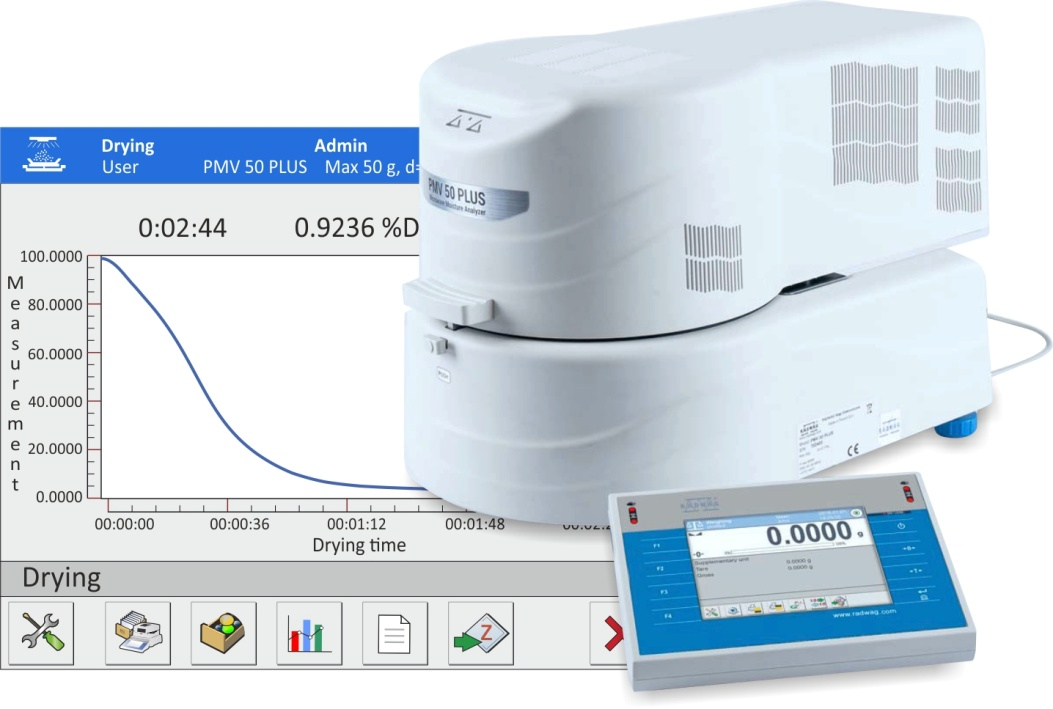
Figure 10. PMV 50 PLUS microwave moisture analyzer – wastewater sludge drying curve
P a g e | 15
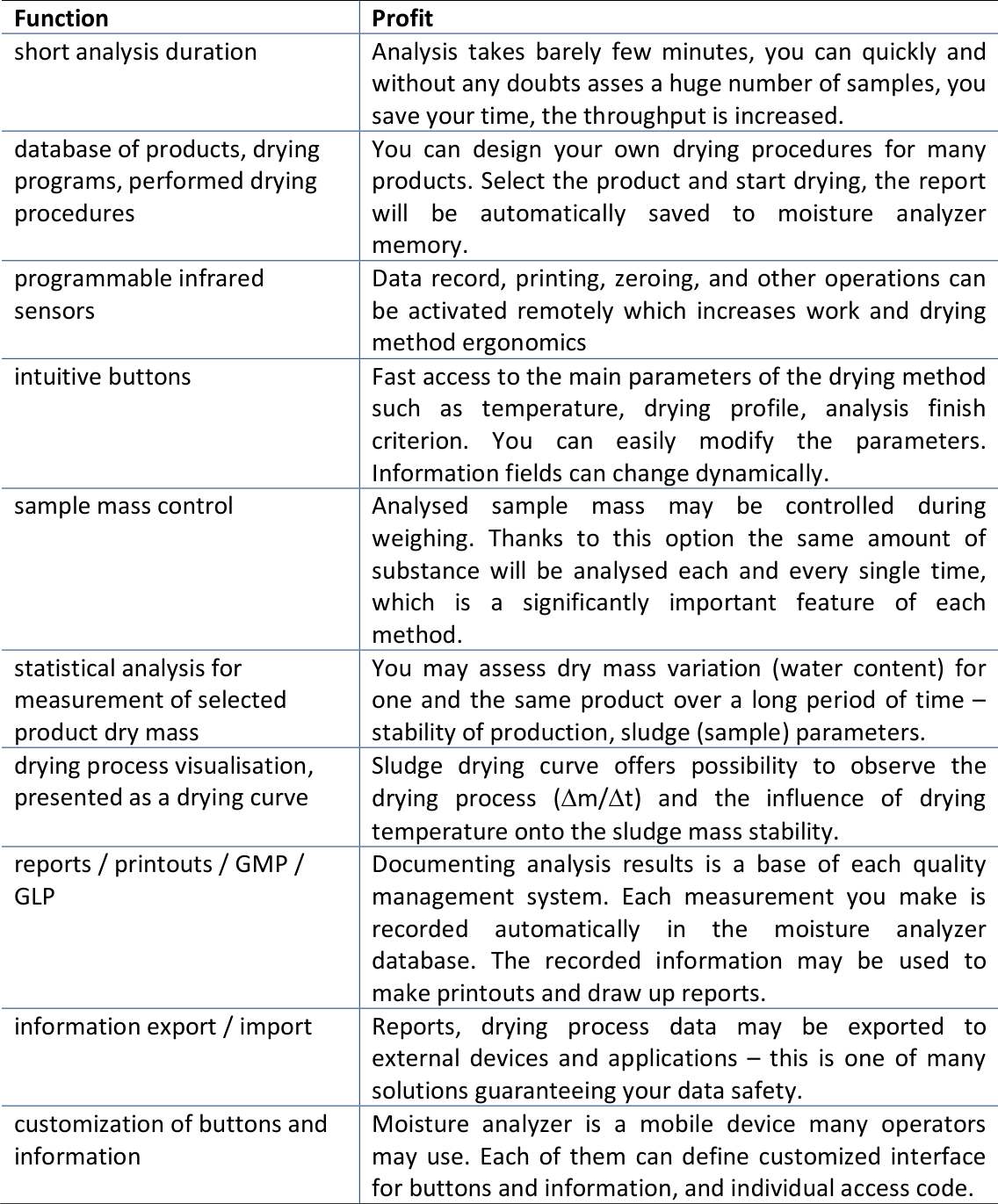
Moisture analyzer is a mobile device many operators may use. Each of them can define customized interface for buttons and information, and individual access code.
P a g e | 16
4.1.
Wastewater sludge is a suspension of many organic and mineral components in water. It is not a homogenous mixture, this enforces respective methodology of sampling for laboratory analysis. Sludge settling (sedimentation) occurs quite fast, therefore the laboratory sample must be well stirred, so that the subsequent analytical samples would allow precise determination of dry mass content. Sedimentation process is presented in the below photo. Dry mass content of such samples is about 0.7 ÷ 1.4 %, the value is conditioned by the technological process parameters.
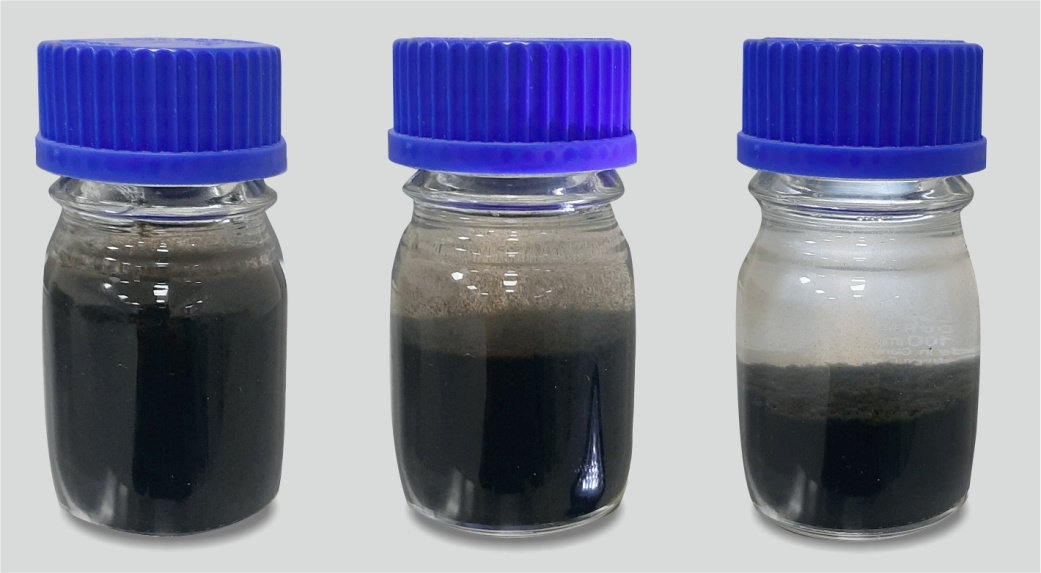
Figure 11. Wastewater sludge sedimentation
Semi-liquid samples require stirring due to the fact that dense fractions move to the bottom sample layers. Dry mass content of the surface layers of such samples may be significantly different shall the whole structure homogeneity be not provided. For samples of such structure the dry mass content is about 6 – 7 %.
(1) (2)
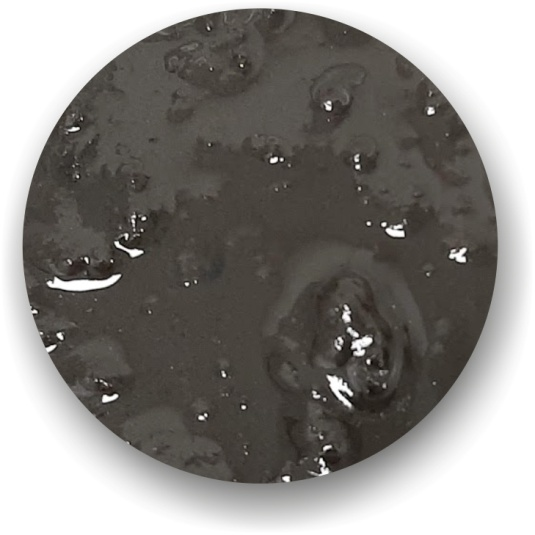
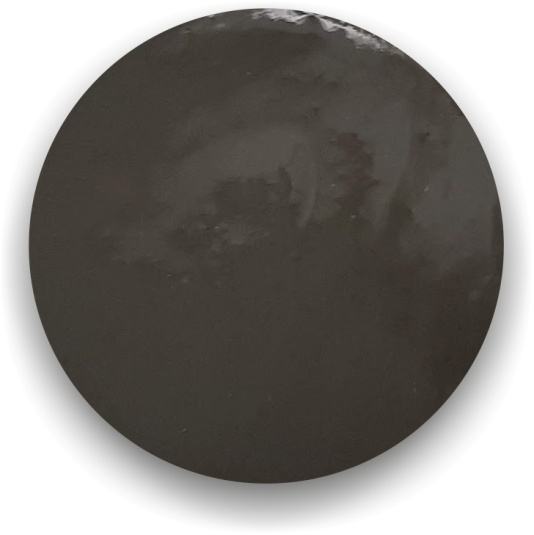
Figure 12. (1) - digested sludge, (2) – digested sludge after stirring
P a g e | 17
Samples of solid consistence (after drying in the drying room) form hard pieces of low water content, about few percent. Effective drying requires such sample to be fragmented mechanically to the form of tiny pieces, as shown in the photos below. Due to low water content, solid sample should be dried using IR radiation method – MA 50.X2.A moisture analyzer. Dry mass content after drying is about 96 % ÷ 97 %, however, this is conditioned by drying temperature and time, and used technology and economic aspects.
(1) (2)
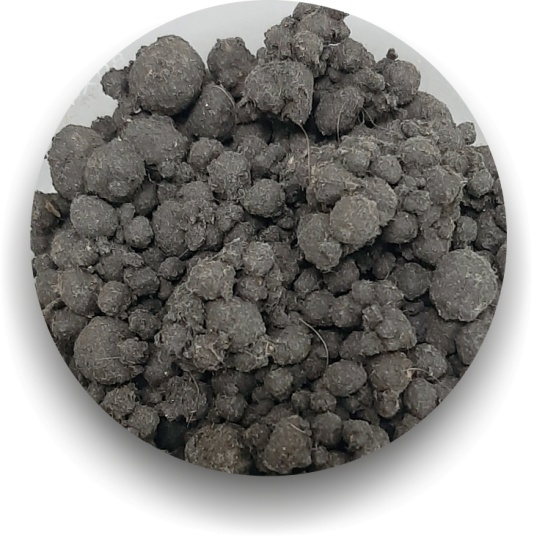
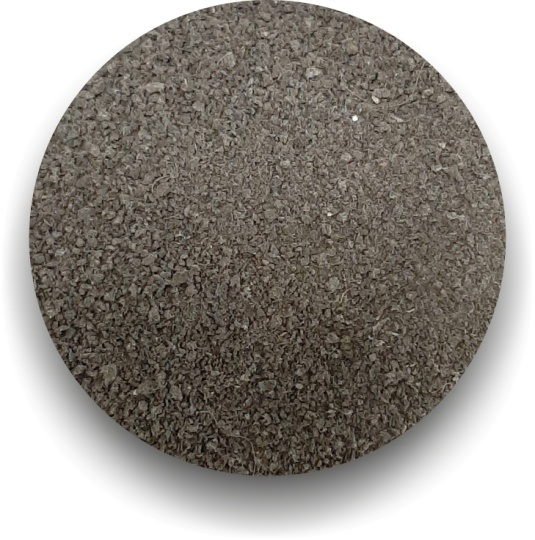
Figure 13. (1) - sludge after drying, (2) – fragmentation
Sludge processed by piston pressing unit is dehydrated to the level of about 20 % of dry mass and can be dried like this via either IR radiation method or microwave method. Sample consistency prevents application of a thin layer of the material, however it is necessary to prepare as thin sample as possible. In the case of IR method such a sample is spread over the whole surface of the weighing pan, and for a microwave method, insignificant quantity of the sample must be loaded in the very centre of the filter.
Digested sludge after being processed by a piston pressing unit Piston pressing unit, Bucher HPS 7507
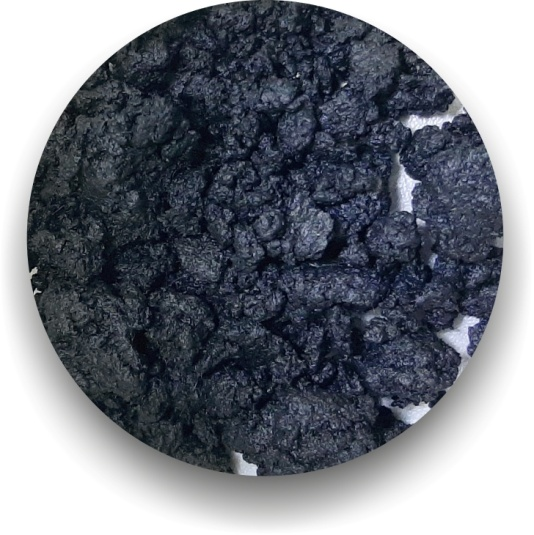
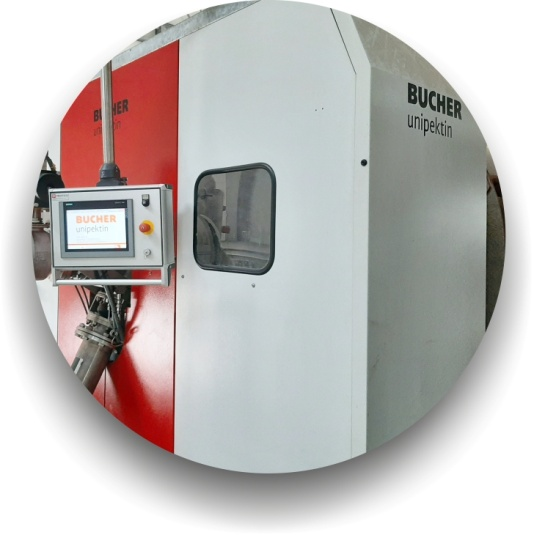
Figure 14. Sludge after being processed by a piston pressing unit
P a g e | 18
4.2.
Effectiveness of the microwave drying method depends on the quantity of emitted microwaves, maximum temperature of the sample during the analysis and hydration of the wastewater sludge. Value of two first factors is set in the PMV 50 PLUS moisture analyzer menu, sludge hydration is a characteristic feature conditioned by the sampling place. The power of emitted microwaves is set to the level of 100 %. This ensures fast analysis during the first drying stage. The first drying stage results with removal of about 90 % of the whole water content. In the course of the second stage of drying, the power of emitted microwaves is automatically limited to a value corresponding to the remaining amount of water that is to be removed. Figure 15 presents sludge drying curve after digesting, archived in the moisture analyzer's database of drying reports.
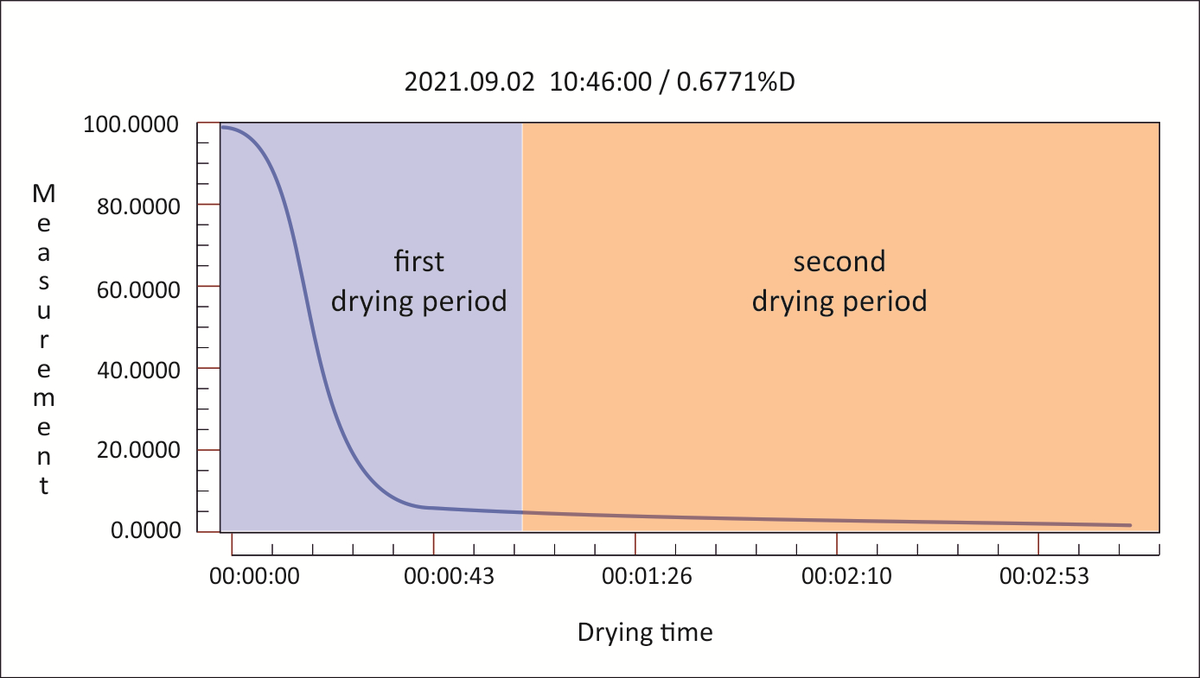
Figure 15. Drying curve - drying reports database, PMV 50 PLUS moisture analyzer The value of sample temperature shall be such one for which change in colour, being a result of surface burning, is not registered. It must be noted that water contained in well hydrated wastewater sludge (dry mass content of about 1 ÷ 10 %) is removed quickly, therefore there is no danger of so called sample 'overheating'. In the case of sludge samples of dry mass content of about 20 – 30 %, it is slightly bit more difficult to get completely dry material. This is by cause of differently, in terms of structure, bound water. The limitation here is dense consistency of the sludge which reduces evaporation capability - the heat is accumulated inside the dense structure of the sample. For samples of great level of hydration, the drying process finish mode, i.e. detection of sludge mass change in time ( m/ t) usually is set to value Auto 1 or Auto 2. The rule is that the greater water content, the lower Auto parameter value.
P a g e | 19
5.
5.1.
Sample preparation to-be-fragmented mechanically (see Figure 13) Device MA 50 X2.A moisture analyzer Accessories disposable aluminium pans Drying parameters temperature: 90 o C, finish mode: Auto 2, profile: Standard Dry mass content 98.32 % (EN 12880, 105 o C / 2 h)
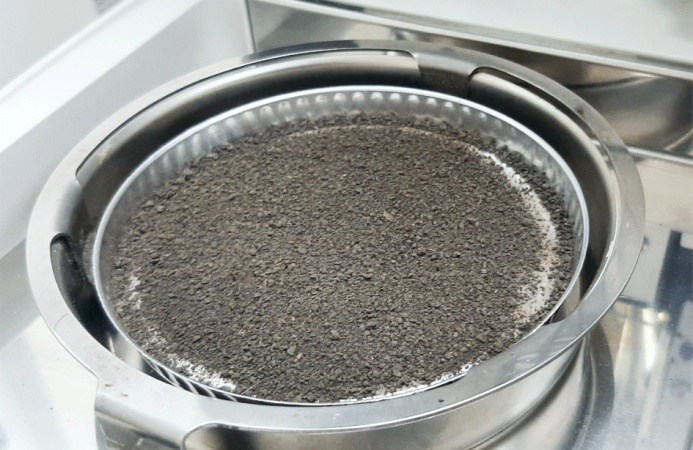
Figure 16. Sample 98 %D – MA 50 X2.A moisture analyzer
Table 4. Sludge after drying – dry mass content
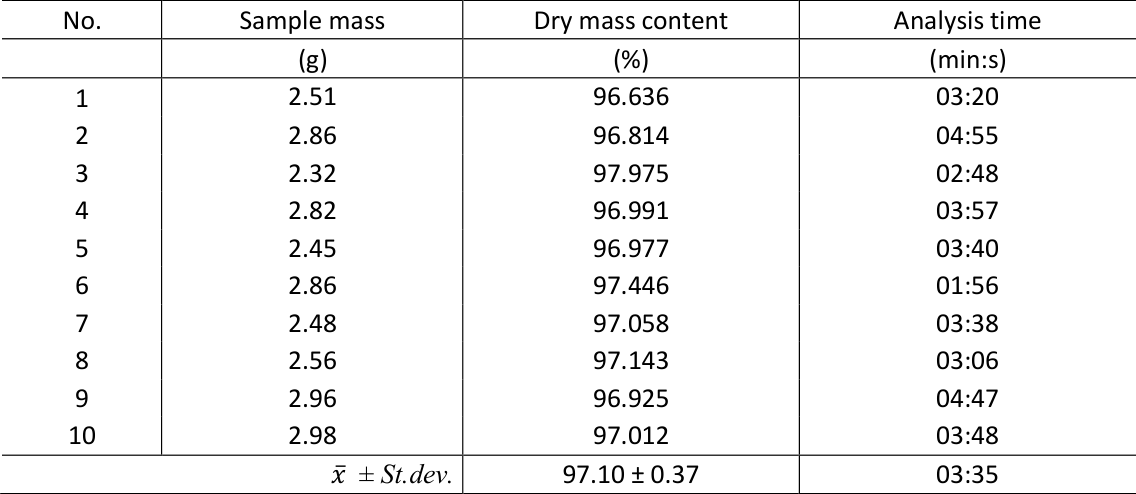
No. Sample mass Dry mass content Analysis time (g) (%) (min:s) 1 2.51 96.636 03:20 2 2.86 96.814 04:55 3 2.32 97.975 02:48 4 2.82 96.991 03:57 5 2.45 96.977 03:40 6 2.86 97.446 01:56 7 2.48 97.058 03:38 8 2.56 97.143 03:06 9 2.96 96.925 04:47 10 2.98 97.012 03:48 x̅ ± St.dev. 97.10 ± 0.37 03:35
Sludge samples of low water content value (about 2 %) are in general hygroscopic. Fine-grained structure of the sample favours water sorption, on the other hand the tiny fractions may burn shall the drying temperature be too high. Difference in dry mass content between the reference method (EN 12880) and the moisture analyzer method is 1.32 %, from the technological perspective this value is of no significance.
P a g e | 20
5.2.
Sampling place OB. 40 Sample preparation to-be-stirred (see Figure 12) Device MA 50 X2.A, PMV 50 PLUS moisture analyzer Accessories disposable aluminium pans, silica sand, glass fibre filters Drying parameters MA 50 X2.A temp: 110 o C, finish mode: Auto 2, profile: Standard, sample dried on silica sand. PMV 50 PLUS temp: 90 o C, power: 100%, finish mode: Auto 2, profile: Standard, sample dried on a filter.
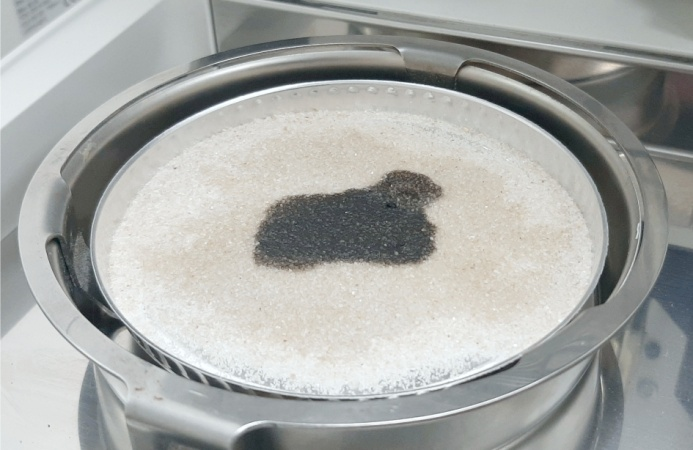
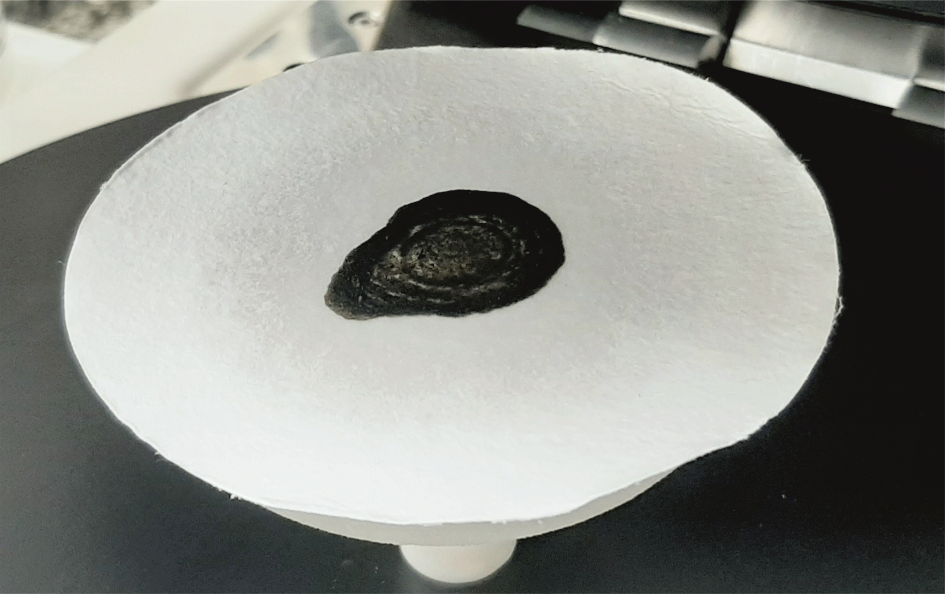
Figure 17. Sludge about 1.3 ÷ 1.5 %D
Figure 18. Sludge about 1.3 ÷ 1.5 %D
MA 50 X2.A moisture analyzer
PMV 50 PLUS moisture analyzer
Silica sand is a non-hygroscopic material which absorbs sludge samples of liquid consistence very well. When the drying temperature is reached, the volumetric sludge sample heating occurs, this helps to remove water content from the sludge much faster in comparison to sample placed directly on the moisture analyzer pan. Such drying method is productive especially when the dried sludge mass is significant, e.g., about 5 g. In such a case, silica sand quantity shall be about 25 g. For PMV 50 PLUS moisture analyzer, dry mass of the sludge is about 1 g, therefore the liquid part of the sample is absorbed via filter structure. In order to provide increase of the sample mass to about 3 – 5 g it is necessary to place the sample on at least two filters. This will result with much longer analysis - greater amount of to-be-removed water. Test results are presented in Table 5 and 6.
P a g e | 21
Table 5. Surplus sludge dry mass – IR radiation method (MA 50 X2.A)
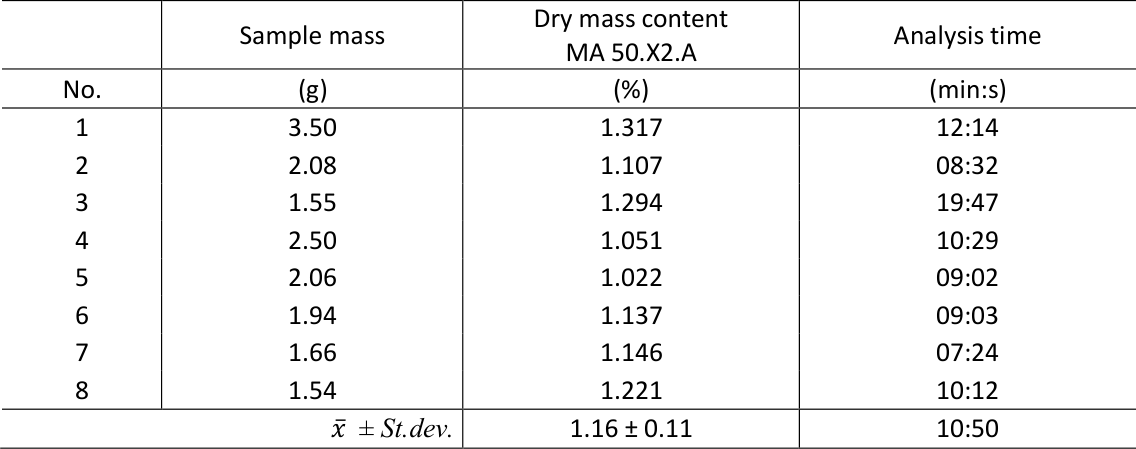
No. (g) (%) (min:s) 1 3.50 1.317 12:14 2 2.08 1.107 08:32 3 1.55 1.294 19:47 4 2.50 1.051 10:29 5 2.06 1.022 09:02 6 1.94 1.137 09:03 7 1.66 1.146 07:24 8 1.54 1.221 10:12 x̅ ± St.dev. 1.16 ± 0.11 10:50
Table 6. Surplus sludge dry mass – microwave radiation method (PMV 50 PLUS)
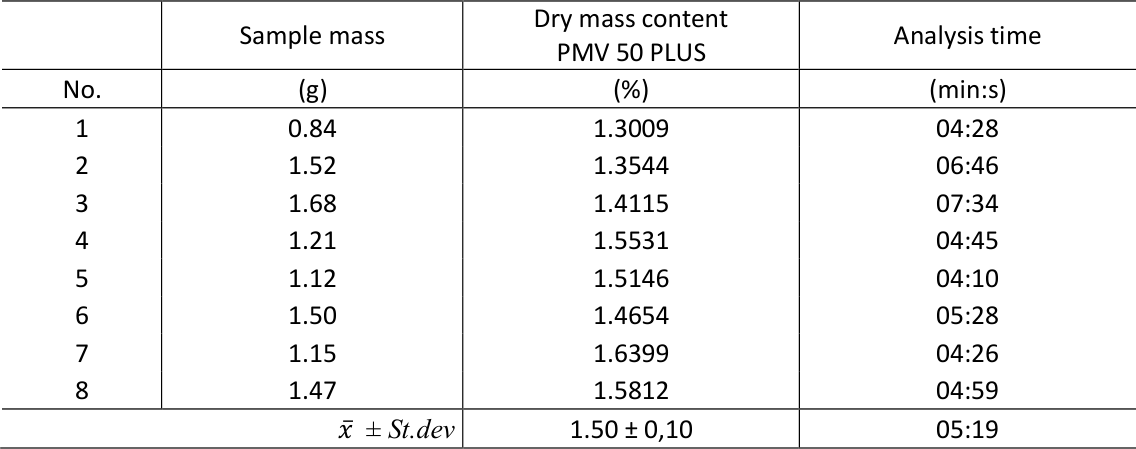
No. (g) (%) (min:s) 1 0.84 1.3009 04:28 2 1.52 1.3544 06:46 3 1.68 1.4115 07:34 4 1.21 1.5531 04:45 5 1.12 1.5146 04:10 6 1.50 1.4654 05:28 7 1.15 1.6399 04:26 8 1.47 1.5812 04:59 x̅ ± St.dev 1.50 ± 0,10 05:19
Precision of drying by means of IR radiation method (MA 50 X2.A) and microwave method (PMV 50 PLUS) is maximum 0.11 %, whereas the difference in accuracy of dry mass content between these two methods is 0.34 %. It must be noted that sludge sample of such consistence is a suspension of solid particles in water, therefore sample homogeneity influences the analysis greatly, also the used sample heating method does. With so high measurement precision the difference in results of dry mass content may be treated as a systematic error related to the method.
P a g e | 22
5.3.
Sampling place Flottweg centrifugal separator Sample preparation to-be-stirred (see Figure 12) Device MA 50 X2.A, PMV 50 PLUS moisture analyzer Drying parameters MA 50 X2.A temp: 105 o C, finish mode: Auto 2, profile: Standard profile, sample dried directly on a pan PMV 50 PLUS temp: 90 o C, power: 100%, finish mode: Auto 2, profile: Standard, sample dried between two filters (2F) Dry mass content 5.96 % (EN 12880)
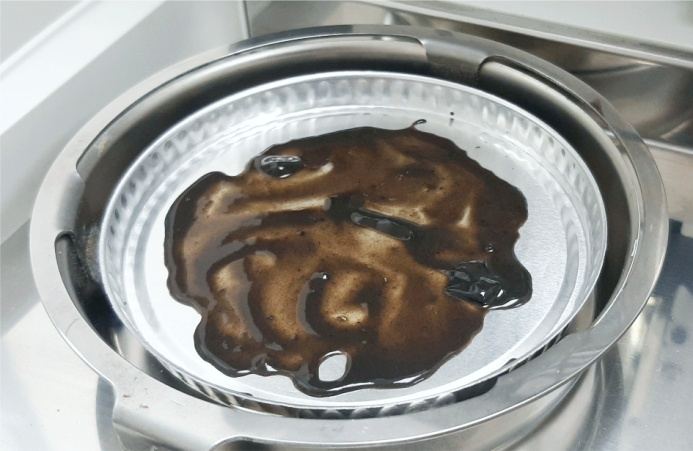
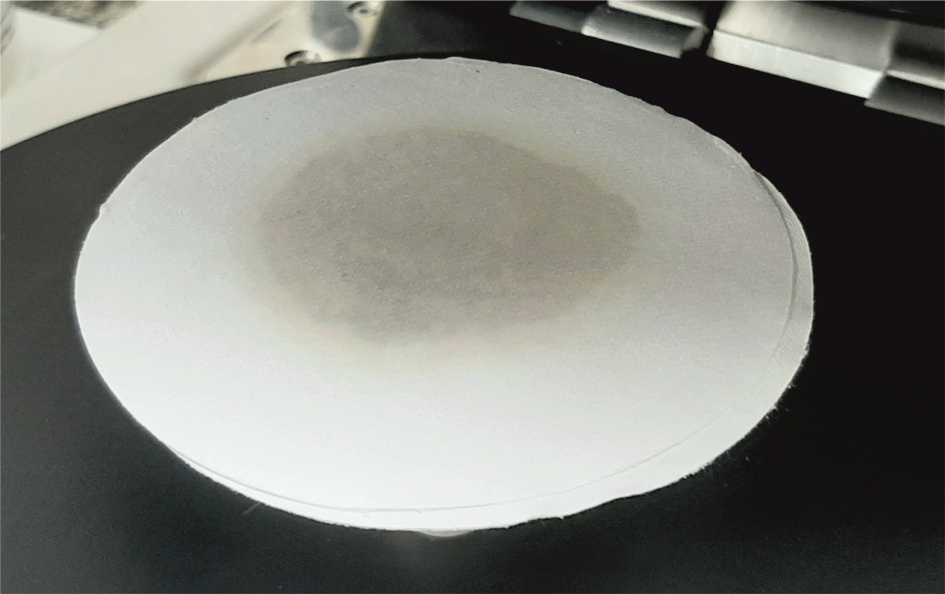
Figure 20. Sludge about 6 %D PMV 50 PLUS moisture analyzer
A thin layer of sludge of semi-liquid consistence must be spread over the pan of MA 50.X2.A moisture analyzer. One shall keep in mind that water will be removed quite fast from the sample structure, and only dry mass of the sludge will remain on the pan. For greater samples, i.e., samples of 5 g and heavier, the process of crust formation may take place, a thin crust will form on the sample surface. In such a case, water from the deeper layers of the sample will remain unremoved and the analysis result will be burdened with an error. Another risk is the possibility of burning of dried top surfaces of the sample, shall the temperature be too high. Drying a semi-liquid sample when placed between two filters (PMV 50 PLUS) is a must due to the fact that it is not possible to smear a substance of such a consistence over a single filter. As a result of this, water from the analysed sample would enter filter structure and some part of the solid substance would be unintentionally ‘removed’ when the sample would be rubbed onto the filter in an attempt to provide a thin layer of it. Such methodology can be used, however greater dispersion within a measuring series is generated this way. Placing the analysed sample between the filters (with slight pressure applied) does not disturb the water / dry mass ratio in the analysed sample and the precision of the analysis depends on sample homogeneity. Test results of sludge dry mass tests are presented in Table 7 and 8.
Figure 19. Sludge about 6 %D MA 50 X2.A moisture analyzer
P a g e | 23
Table 7. Dry mass of sludge after centrifugation – IR radiation method (MA 50 X2.A)
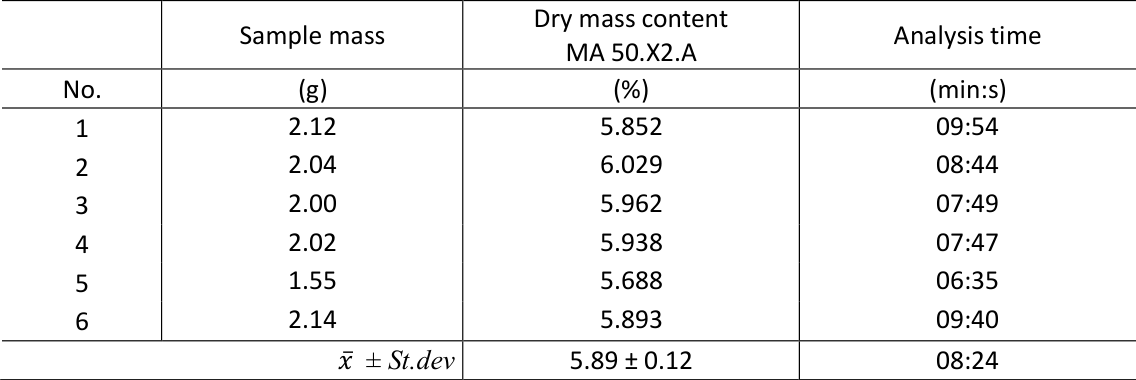
No. (g) (%) (min:s) 1 2.12 5.852 09:54 2 2.04 6.029 08:44 3 2.00 5.962 07:49 4 2.02 5.938 07:47 5 1.55 5.688 06:35 6 2.14 5.893 09:40 x̅ ± St.dev 5.89 ± 0.12 08:24
Table 8. Dry mass of sludge after centrifugation – microwave radiation method (PMV 50 PLUS)
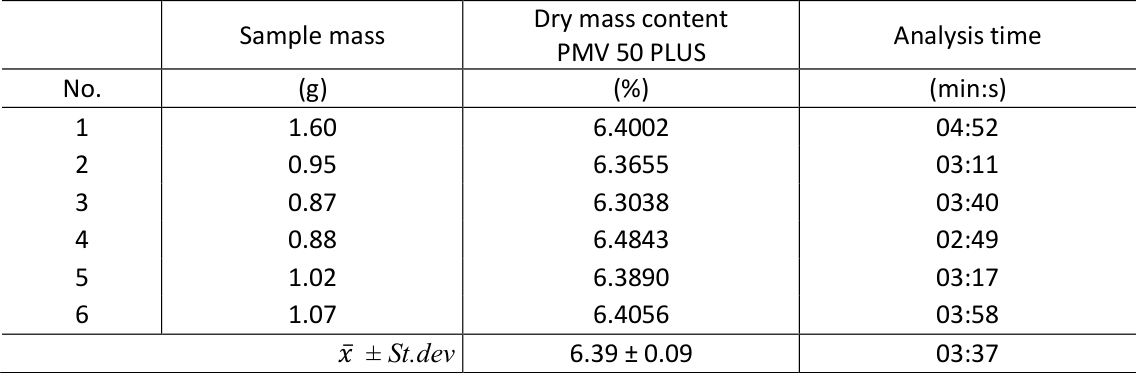
No. (g) (%) (min:s) 1 1.60 6.4002 04:52 2 0.95 6.3655 03:11 3 0.87 6.3038 03:40 4 0.88 6.4843 02:49 5 1.02 6.3890 03:17 6 1.07 6.4056 03:58 x̅ ± St.dev 6.39 ± 0.09 03:37
The content of dry mass of the sludge after centrifugation is about 6 %. Comparison of dry mass content results, obtained using few test methods, shall always account for the given method characteristics and some resulting limitations. The method specified by EN 12880 standard is known as the reference method, however it is rather long and potential areas of errors are drying (drying temperature accuracy) and stabilisation of samples after drying (possibility of sorption of moisture by the dry residues). The results obtained via IR and microwave methods are comparable with the reference result, and it is possible to optimise these two methods even further. In the case of the PMV 50 PLUS microwave method, its measurement precision (0.09 %) allows the systematic error of this method of ca. 0.4 % to be taken as a constant correction of the analysis result.
P a g e | 24
5.4.
Sampling place dephospatation chamber OB. 32.1 ÷ 32.5 Sample preparation to-be-stirred (see Figure 12) Device MA 50 X2.A, PMV 50 PLUS moisture analyzer Drying parameters MA 50 X2.A temp: 105 o C, finish mode: Auto 2, profile: Standard, sample dried directly on a pan. PMV 50 PLUS temp: 90 o C, power: 100%, finish mode: Auto 2, profile: Standard, sample dried between two filters (2F) Solitax sensor measurement of turbidity and total suspended solids (TSS), method using absorption and infrared scattering, automatic measurement in the dephospatation chamber PN-EN 12880 drying temperature: 105 o C, analysis duration: ca. 24 h. Laboratory tests.
Table 9. Sludge dry mass content in dephospatation chamber
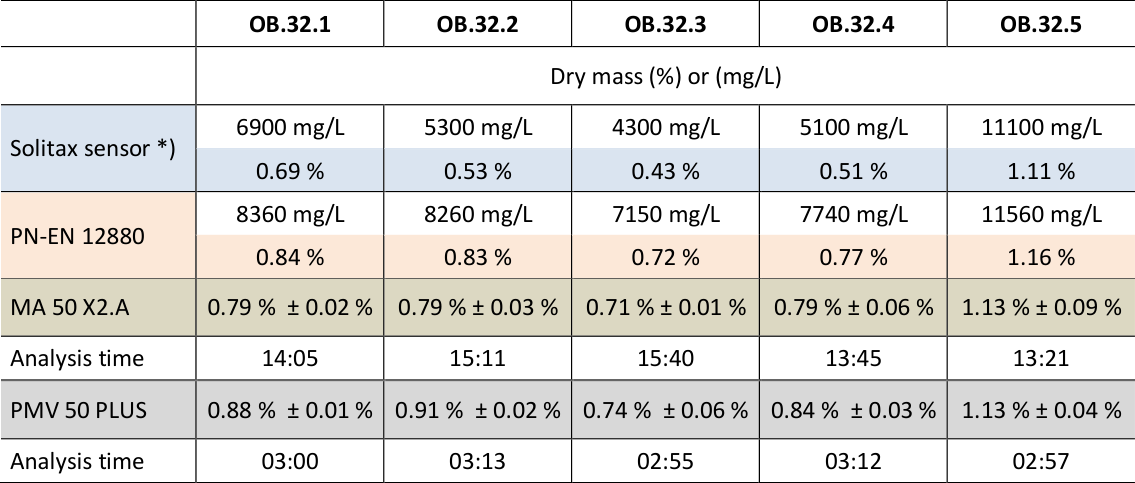
Analysis time 03:00 03:13 02:55 03:12 02:57
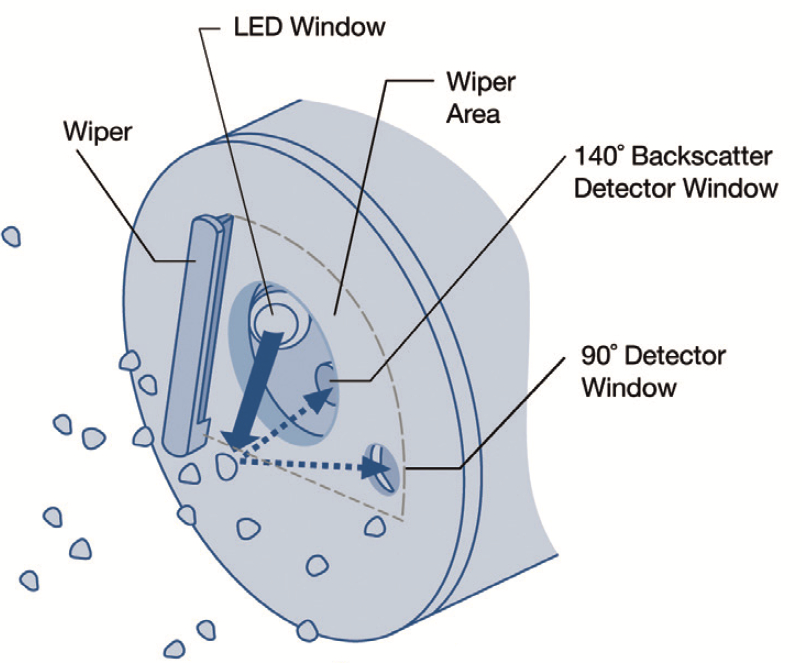
*) - Solitax ts-line sc sensor with 2-beam optics and an extra backscatter detector. Means of operation: Light beam passing through the sludge suspension gets scattered. Measurement of scattered light intensity allows to determine the concentration of the light-scattering substance, and particulate matter size and mass.
P a g e | 25
All the results from Table 10 have been presented as percent of dry mass content, this is for comparison purposes. It must be noted that the assessment concerns results obtained for four different measurement methods, therefore some differences resulting from the measurement methodology are possible. The result of dry mass content obtained while drying sludge sample in accordance with the PN-EN 12880 standard method serves as the reference point. Deviation of dry mass content referred to the said method has been set in Table 10.
Table 10. Deviation in the measurement of dry mass content of the sludge
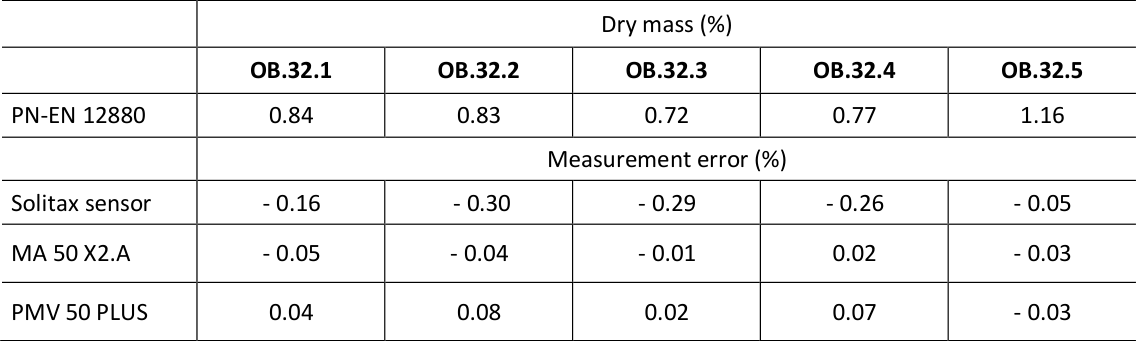
The smallest errors in measurement of dry mass content were obtained while drying the sample with use of the infrared radiation method – MA 50.X2.A moisture analyzer, and the microwave radiation method – PMV 50 PLUS moisture analyzer. The maximum measurement error was not greater than 0.08 %, therefore, the moisture analyzer method may be used alternatively instead of the reference method specified by PN-EN 12880 standard.
The accuracy of measurement of total suspended solids (TSS), of Solitax sensors is ca. 5% of the measurand, i.e., about 0.04 %. Registered deviations are much greater for OB. 32.1 ÷ OB. 32.4 chambers. This indicates potential necessity to calibrate the sensors. It is important to note that the measurement using the Solitax sensor is carried out under dynamic conditions that occur in the dephospatation chamber. Only indications of Solitax sensor installed inside the chamber no. 5 may be accepted as correct – the closest agreement of dry mass content when compared to the standard-specified method.
P a g e | 26
6.
Industrial sludge includes suspended solids of various degree of dispersion, and their chemical composition depends on production type and wastewater treatment system. Determination of suspended solids in sludge is of significant importance for assessment of the effectiveness of operation of the internal wastewater treatment system, and for judging to what extent the technological process is environmentally friendly. Taking into account the above dependencies, the research department of each wastewater treatment plant controls periodically the quality of industry sludge, discharged to the sewage system or collects samples delivered to the catchment basin by slurry tankers. The permissible amount of suspended solids in the sludge may be regulated by legislative measures or by an agreement - a contract between the wastewater treatment plant and the deliverer (the industry). Exemplary permissible levels of total suspended matter in wastewater treatment plant are:
sanitary sewage system sludge 330 mg/L, urban waste water 700 mg/L, industrial waste water 1200 mg/L, galvanic waste water 700 mg/L, tanning industry waste water 8000 mg/L, Test procedure for determination of suspended matter in sludge is provided by PN-EN 872 standard - Water Quality, Determination of Suspended Solids, Method by Filtration through Glass Fibre Filters. The sludge sample is filtered through glass fibre filters using apparatus for filtration under pressure or vacuum filtration (Figure 21).
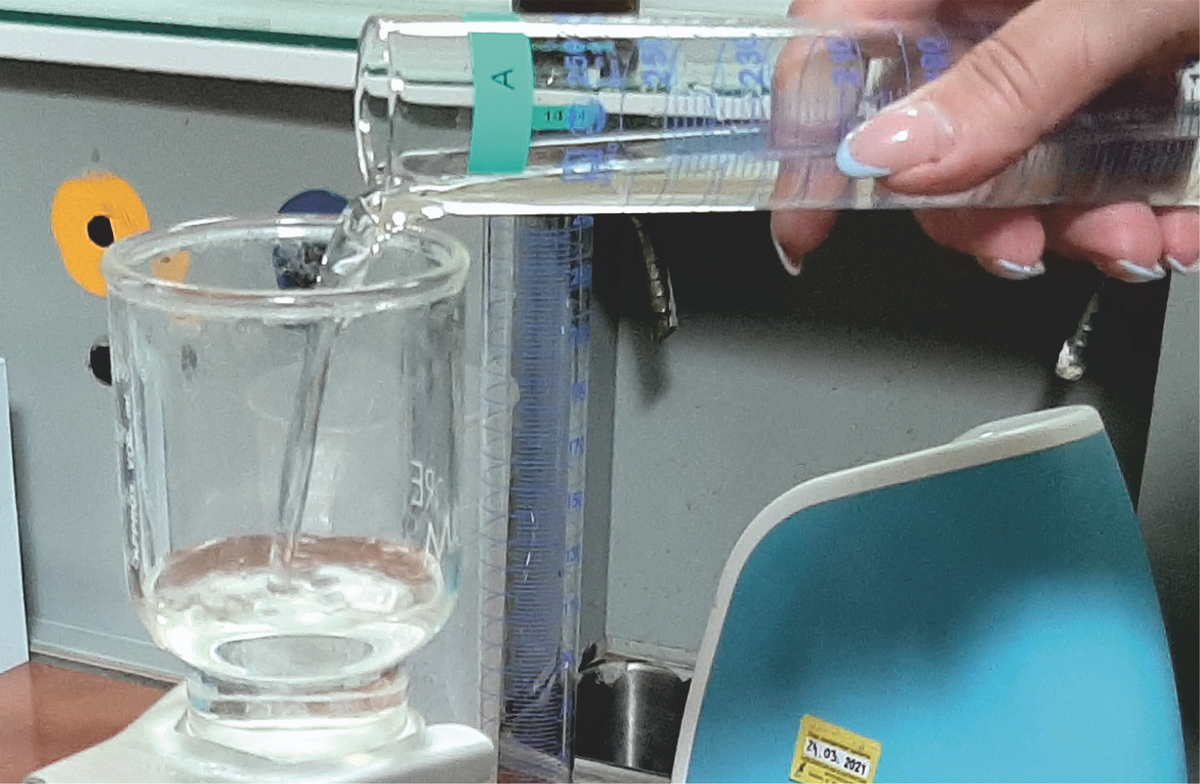
Figure 21. System for filtration of the suspended solids under pressure
P a g e | 27
Mass of clean filter used for filtration is determined prior to filtration and after filtration, and drying (T = 105 o C, t > 1 h). In mass measurement it is necessary to use device enabling measurement with at least 0.1 mg readability. Therefore, in practice the weight measurement should be carried out with use of a device with the reading unit (d) of 0.01 mg or 0.001 mg. The suspended solids content is calculated in accordance with equation (6).

Where: – suspended solids content (mg/L) b – filter mass past filtration (mg ) a – filter mass prior to filtration (mg) V – sample volume (ml). If the sample has been weighed then 1g is to be taken for 1ml.
6.1. Metrological Requirements for Weighing of Filter Regulated by PN-EN 872, Section 5.2.1. Filter mass loss in the case of blank test shall be of 0.017 mg/cm 2 value at most (filters of 47 mm diameter), this corresponds to weight loss of 0.3 mg , not greater. Note: Balances with the reading unit d=0.1 mg do not comply with the requirement, in their case, the main error contributor, when it comes to the measurement of small mass, is the measurement precision. Measurement precision is most often expressed by standard deviation or range (Max– Min). For balance with d=0.1mg, the standard deviation value is about 0.1 mg, which gives ca. 0.3 mg shall this value be expressed by range, i.e., Max – Min difference. Measurement of filter mass is a differential measurement, therefore, in order to assess usability of the balance, it is necessary to take into account the Max – Min difference.
The said problem does not occur in the case of balance with a reading unit lower than d=0.1 mg. Precision of these balances is respectively:
XA 82/220.4Y PLUS St.dev. = 0.006 mg Max – Min about 0.018 mg MYA 2.4Y.F.A PLUS St.dev. = 0.0006 mg Max – Min about 0.0018 mg Use of the above mentioned balances in measurement of filter mass is prresented further down this paper.
P a g e | 28
MYA 2.4Y.F.A microbalance – enables readout of filter mass measurement with ,,accuracy” of 0.001 mg. The filter is placed in a special chamber providing perfect conditions for mass measurement. Automatically open weighing chamber guarantees measurement speed and stability, and elimination of air flow as a factor disturbing the mass measurement. Control of weighing chamber closing/opening is realised via infrared sensors. Figure 22 presents the weighing process.
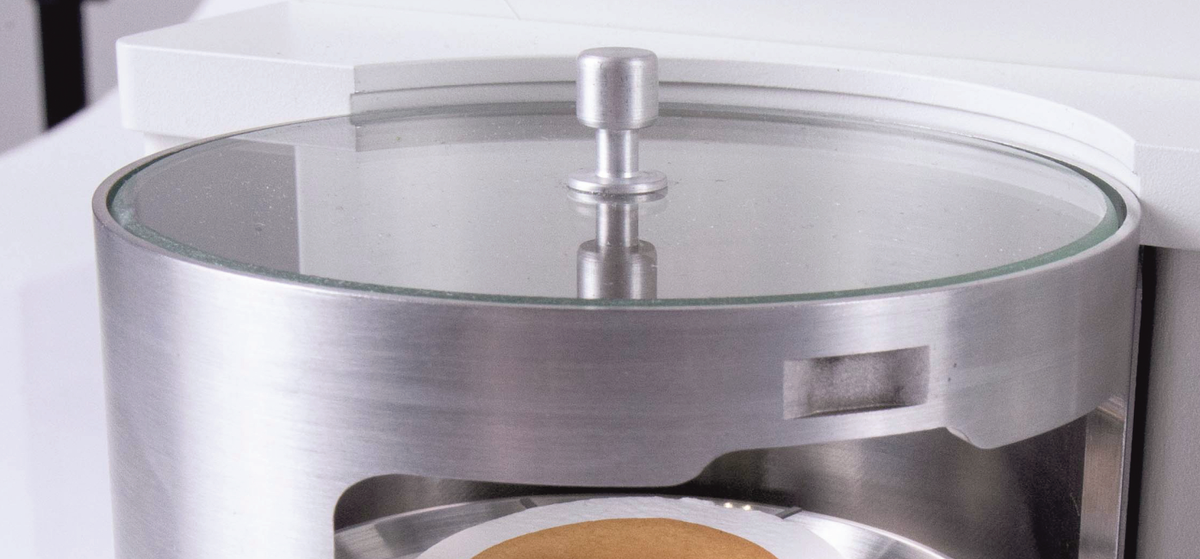
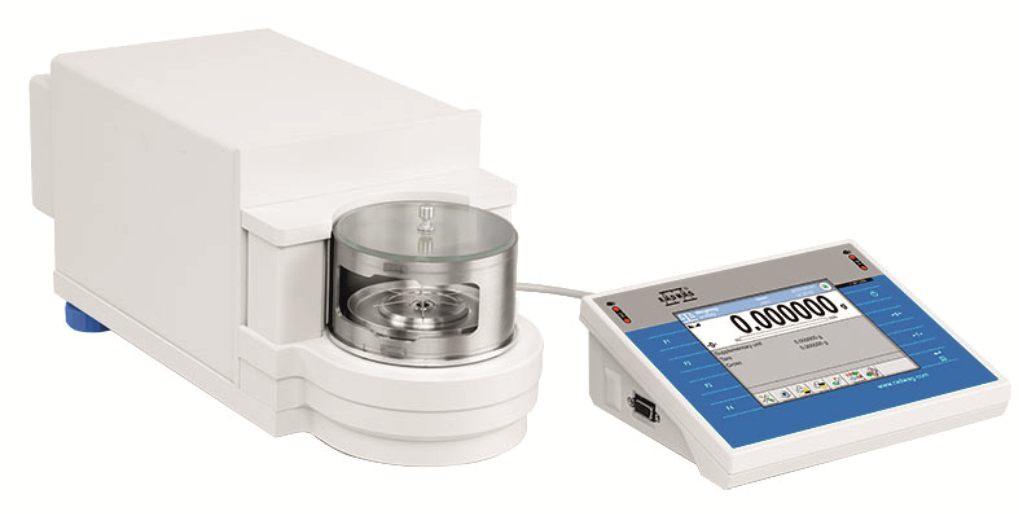
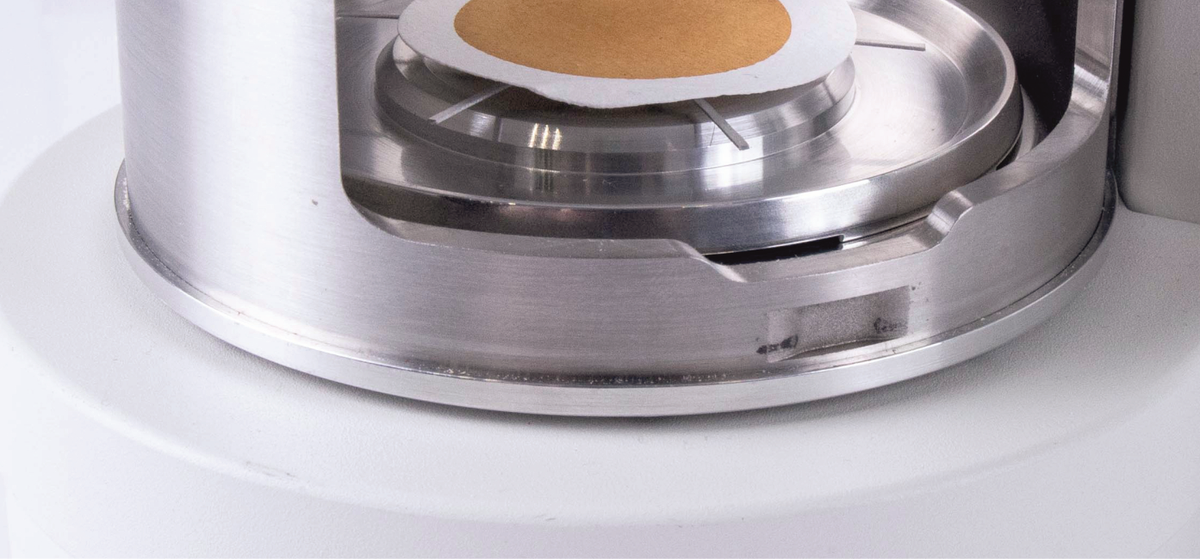
Figure 22. MYA 2.4Y.F.A microbalance
XA 82/220.4Y analytical balance offers measurement of mass with the 'accuracy' of 0.01 mg for loads of 82 g, for greater values this range switches automatically to measurement with the 'accuracy' of 0.1 mg. Large weighing chamber facilitates versatility, the balance can be used for numerous processes where the sample mass is not greater than 220 g. Measurement accuracy within the whole balance range is ensured by an automatic adjustment. This is an autonomous process controlled via temperature change and flow of time. The filter can be weighed directly on a pan or in Petri dish, see Figure 23.
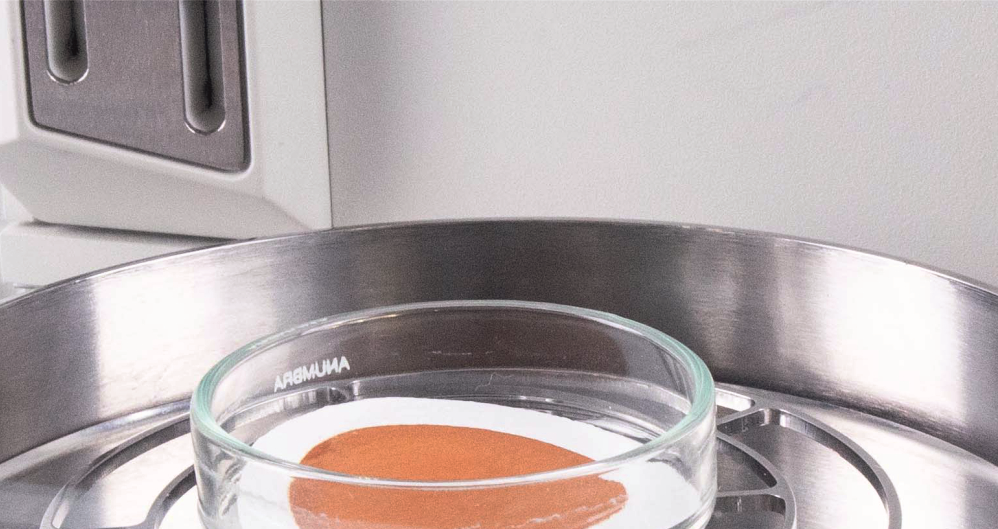
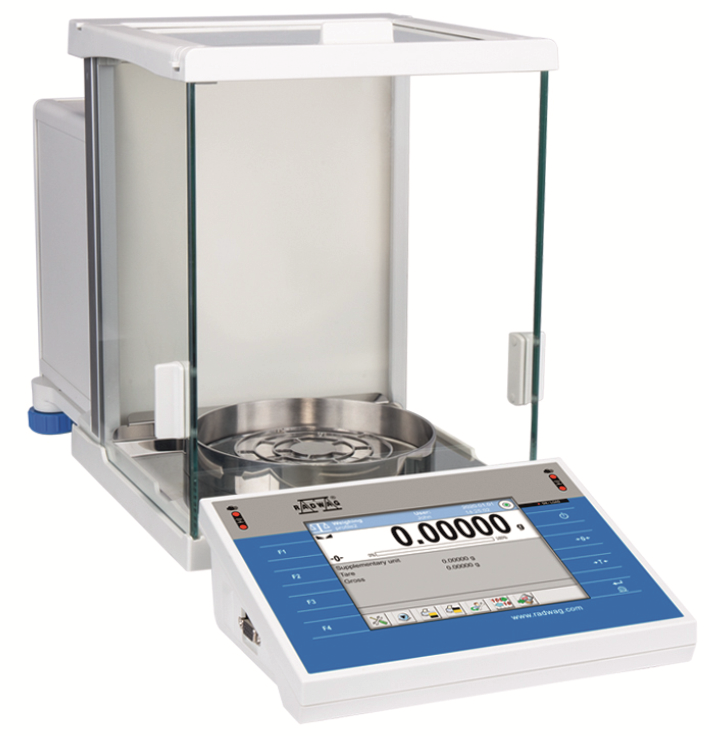
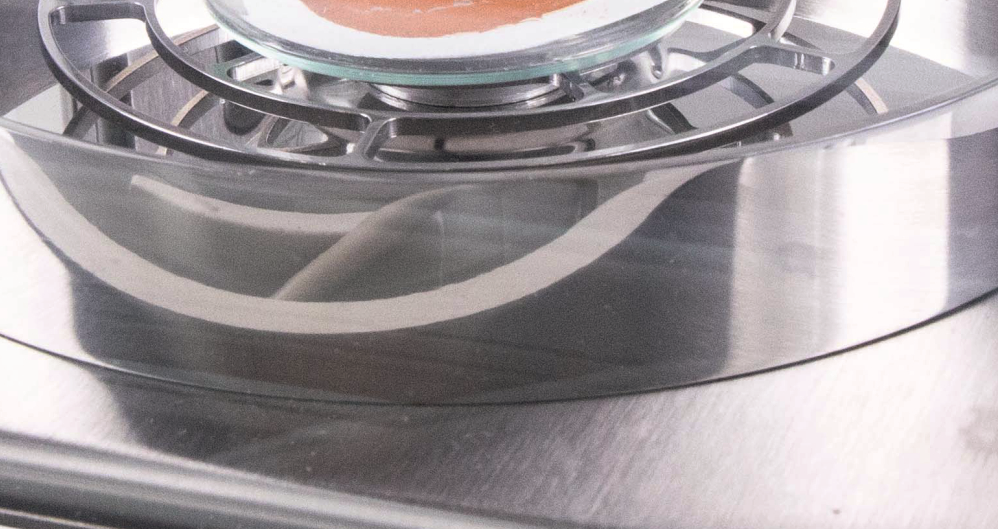
Figure 23. XA 82/220.4Y PLUS
P a g e | 29
Test results for sludge suspended solids obtained in laboratory conditions are presented in Table 11.
Table 11. Suspended solids content – laboratory results.
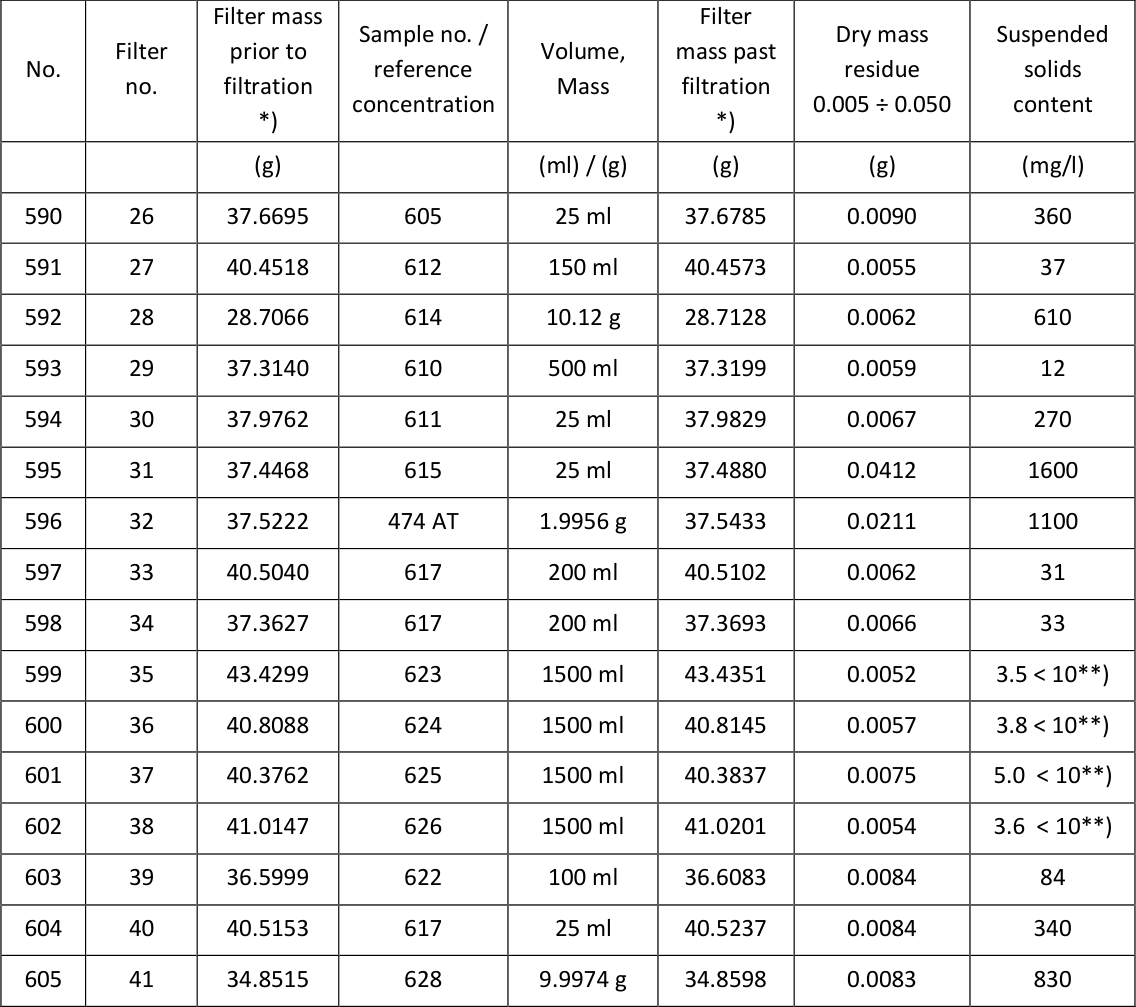
*) – mass of a filter with Petri dish. **) – result below the laboratory accreditation
Table 11 provides results of determination of suspended solids coming from various sources, this is why the results differ so much one from another. In practice, the limits with regard to suspended solids depend on the infrastructure of the particular industry. The internal wastewater treatment systems, with which the given industry plant is equipped, are also significantly important.
P a g e | 30
7.
Use of balances and moisture analyzers in technological and control processes, realised in wastewater treatment plants should account for real demands of these areas. The best solution is such a weighing system which is ergonomic and ensures fast analysis, and accurate and precise measurement. Such applications are to be found in Radwag product range, however, as years-long practice shows, the best results are an outcome of combination of knowledge on the weighing system operation and practical know-how.
When speaking of drying processes, it is possible to use moisture analyzers with infrared radiator (IR) – e.g. MA.R or MA.X2 series. In this case, the measurement methodology is well known, but still can be optimised with the backup of the manufacturer. Alternatively, in the process of dry mass content determination, it is possible to apply moisture analyzers with microwave radiation, which brings about shorter analysis duration. This can be a key issue for many process engineers, when assessing the effectiveness of coagulants and flocculents in the processes of sludge concentration, and sedimentation. Regardless of the adopted solution, the method validation is always required. Validation confirms correctness of moisture analyzer operation and also the fact that the drying method gives results comparable with those that can be obtained while drying the sludge using the standard-regulated method.
Mass measurement seems to be a quite simple and intuitive process, especially when there are no crucial requirements for the weighing accuracy. Unfortunately the dry mass of sludge / suspended solids after drying is quite small, barely few miligrams, therefore the quantity of this range must be determined precisely. Seeing significance of these issues, Radwag offers dedicated solutions, the MYA series microbalances, for weighing filters of various sizes and the XA.4Y series for other processes, where greater capacity is required.
P a g e | 31
8.
9.
P a g e | 32
CMBC - Testing Laboratory
e-mail: www.radwag.com
Research Laboratory, Water Supply Company, Radom
La Punto de Rocío y Temperatura DMP5 Vaisala DRYCAP® está diseñada para la medición de humedad en línea en aplicaciones de secado industrial con…

El Dr. Lauri Reuter es una experta en el futuro de los alimentos y la persona a quien preguntar si alguna vez te has preguntado qué vamos a comer en…

Las empresas industriales continúan tomando medidas para minimizar sus emisiones de carbono. Muchos están reduciendo el uso de combustibles fósiles y…

En el proceso de caustificación, los químicos pasivos se convierten en químicos de cocina activos para producir licor blanco. Se utiliza en el…
Un especialista responde con la solución, el instrumento y el servicio que corresponden.
Productos para cotizar
Todavía no hay productos. Se puede escribir igual: un especialista responde.