

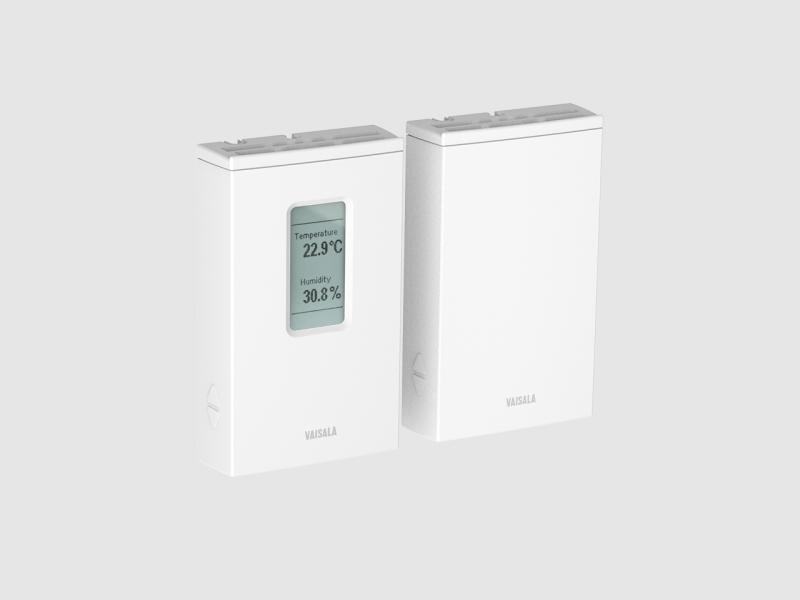
Transmissores de umidade e temperatura da série HMW90
Transmissores de parede de ±1.7% de umidade relativa com um certificado para HVAC exigente
Nota técnica

All gases in the environment will interact with a humidity sensor and potentially cause drift. Water needs to get in and out of the sensor, which means that other gases can too. In general, any strong smell is a warning sign that something is evaporating. Cleaning products are the most common cause, particularly floor wax; alcohols used to wipe down surfaces can also cause drift.
In new buildings, many substances are released, or outgassed, from new materials in the building’s structures and also from fixtures and fittings like furniture. Materials in storage areas are another potential cause of sensor drift, and while the amount outgassed from a single package can be tiny, there might be a large number of packages stored in the same location; even packaging materials can be a source of contamination in some cases. While dust can also be a real concern with some humidity sensors, Vaisala HUMICAP® sensors are more or less immune as the upper electrode blocks out dust.
When humidity sensors are exposed to chemicals, say from floor wax, the main effect is usually a decrease in sensitivity. The chemicals occupy spaces inside the polymer that would normally be accessible to water. As a result the ability of the polymer film to amplify the number of water molecules degrades, meaning that readings at high humidity decrease. A second effect is that the measured value in dry conditions may change; this effect is usually quite small in Vaisala HUMICAP® sensors. A typical example of drift can be seen below in Figure 1, which clearly shows that the main effect is a decrease in sensitivity.
Figure 1 Effect of chemical exposure on humidity sensor readingsIf you suspect chemical drift, it is not enough to check at just one humidity level as the effect might be negligible at that exact humidity level – for example, at 30%RH in Figure 1.
A completely different failure mode is corrosion. This is quite rare in normal office environments, but it can be a real issue, for example, in swimming pool areas. Far worse than causing sensors to give false readings, corrosion can cause them to fail completely.
If you are uncertain about the amount of chemical exposure your humidity sensors will experience and how much it will impair your measurements, contact our experts - we are here to help. The latest-generation Vaisala HUMICAP® sensor has increased resistance to chemical contamination compared to previous generations. If the situation is vague and the measurement in question is critical to your process, you could consider using a sensor product that includes a chemical purge feature, which periodically heats up the humidity sensor chip to remove any contamination.
The bottom line is, whatever you’re measuring and whatever kind of instrument you’re using to do it, proper maintenance and periodic calibration are essential.
Transmissores de parede de ±1.7% de umidade relativa com um certificado para HVAC exigente
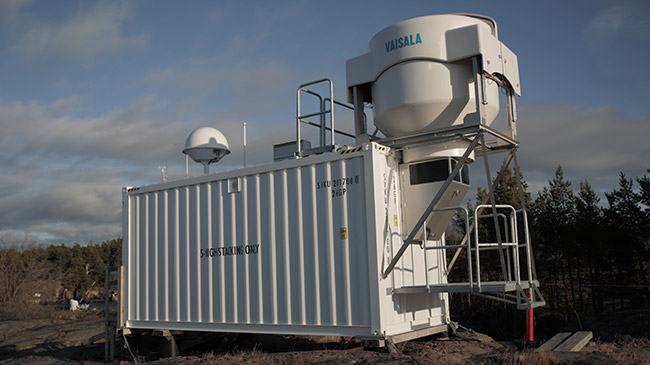
Upper air soundings provide the crucial data necessary for a complete atmospheric weather profile that leads to accurate forecasting. However…
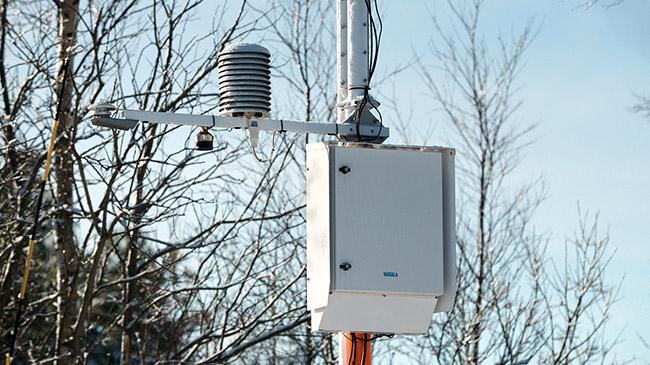
Vaisala Automatic Weather Station AWS310 is a complete communication and weather observation solution that can be used as a standalone unit, or as…
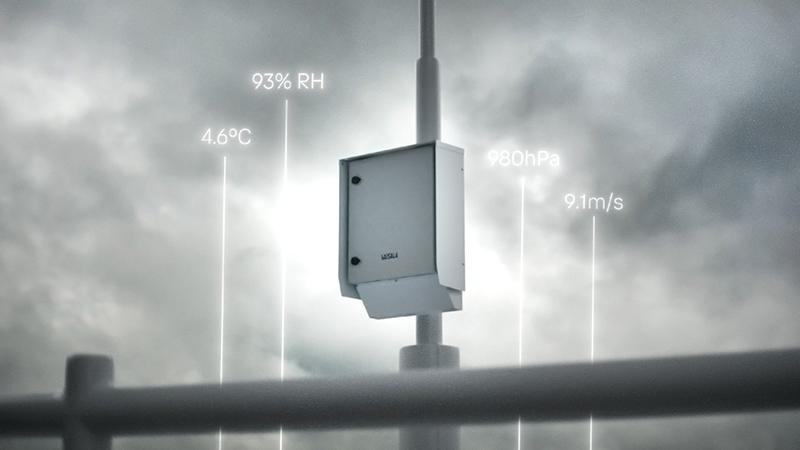
Our next-generation, cyber secure and modular Maritime Automatic Weather Station AWS830 is engineered for harsh marine environments and compliant…

The Vaisala Automatic Weather Station AWS810 enables modern, high-quality surface weather observation networks anywhere in the world.
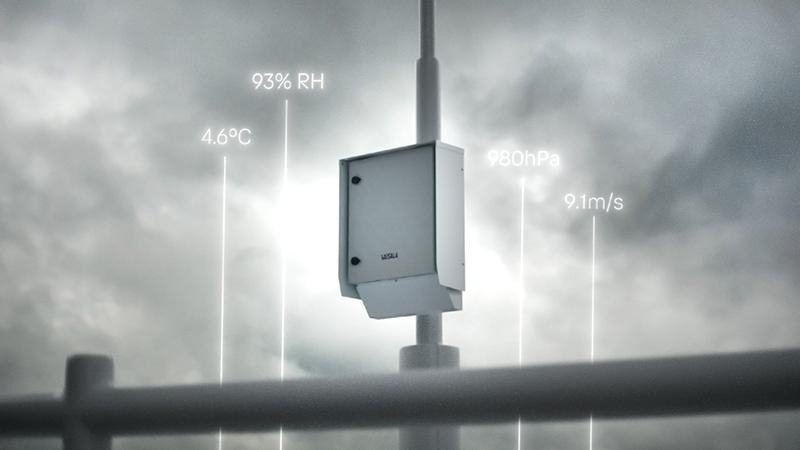
Vaisala Maritime Automatic Weather Station AWS830 delivers accurate, always‑on weather, environmental, oceanographic, and motion data for demanding…

A sonda de temperatura e ponto de orvalho DMP5 Vaisala DRYCAP® foi desenvolvida para medição de umidade em linha em aplicações de secagem industrial…

Lauri Reuter é um especialista no futuro da alimentação e a pessoa certa para perguntar se você já se perguntou o que comeremos no futuro e como toda…

As empresas industriais continuam a tomar medidas para minimizar as suas emissões de carbono. Muitos estão a reduzir a utilização de combustíveis…

No processo de caustificação, os produtos químicos passivos são convertidos em produtos químicos ativos para cozinhar para produzir licor branco…
Um especialista responde com a solução, o instrumento e o serviço adequados.
Produtos para cotar
Ainda não há produtos. É possível escrever mesmo assim: um especialista responde.