


Destacando a beleza da madeira: Secagem de chapa com controle de umidade
A sonda de temperatura e ponto de orvalho DMP5 Vaisala DRYCAP® foi desenvolvida para medição de umidade em linha em aplicações de secagem industrial…
Nota técnica
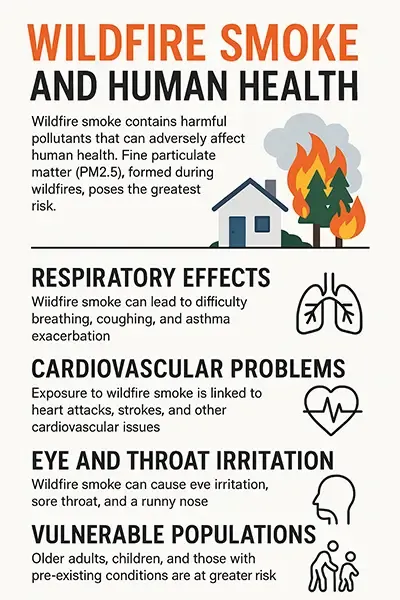
If you’ve ever stepped outside during wildfire season and felt your throat scratch or your eyes sting, you know wildfire smoke is more than just a nuisance—it’s a real threat to your health. As wildfires become more frequent and intense, especially with climate change, understanding the affects of wildfire smoke and human health is more important than ever.
Wildfire smoke is a complicated mix of gases and fine particles. The most dangerous ingredient is PM2.5—tiny particles less than 2.5 microns wide. These are so small you can’t see them, but they can easily slip deep into your lungs and even make their way into your bloodstream. Wildfire smoke also contains ultrafine particles (UFPs), carbon monoxide, volatile organic compounds (VOCs), and other toxic pollutants. All of these can cause trouble, especially for folks who already have health issues.
The main villain in wildfire smoke is PM2.5. Because these particles are so fine, they can penetrate deep into your lungs and cross into your blood. Once inside, they spark inflammation and oxidative stress, which can make asthma, bronchitis, and other chronic respiratory conditions much worse. For people with heart problems, PM2.5 can increase the risk of heart attacks, strokes, and other cardiovascular events.
Ultrafine particles, even smaller than PM2.5, are found in high concentrations in wildfire smoke. These UFPs can sneak past your lung’s defenses, get into your circulatory system, and even reach your brain. Over time, exposure to these particles may contribute to neurological problems like cognitive decline and a higher risk of dementia.
Some people are more vulnerable to wildfire smoke than others. These include:
Even at lower levels, these groups can experience more severe symptoms and complications. For example, a child with asthma might have more frequent attacks, or an older adult with heart disease could be at higher risk for a heart event during a smoky week.
When wildfire smoke fills the air, there are some practical ways to protect yourself and your loved ones:
You might think that closing up your house is enough, but smoke can still sneak in through tiny cracks, vents, or when you open doors. That’s why using a HEPA air purifier and checking your indoor air quality is so important.
Even healthy people can feel the effects of wildfire smoke. Watch out for:
If you or someone you know has trouble breathing, chest pain, or severe symptoms, seek medical help right away.
Repeated or prolonged exposure to wildfire smoke isn’t just uncomfortable—it can have lasting effects. Studies show that ongoing exposure to PM2.5 and UFPs can increase the risk of chronic respiratory diseases, heart attacks, strokes, and even neurological problems like cognitive decline and dementia. Kids and seniors are especially at risk for long-term impacts.
Wildfire smoke is more than just an inconvenience—it’s a real health hazard, especially for vulnerable groups. By understanding the risks, staying indoors when smoke is heavy, using HEPA air purifiers, and monitoring air quality, you can help protect yourself and your family. Don’t wait until you feel the effects—take action early, and you’ll breathe a lot easier.
What are your go-to strategies for keeping your air clean during wildfire season?
A sonda de temperatura e ponto de orvalho DMP5 Vaisala DRYCAP® foi desenvolvida para medição de umidade em linha em aplicações de secagem industrial…

Lauri Reuter é um especialista no futuro da alimentação e a pessoa certa para perguntar se você já se perguntou o que comeremos no futuro e como toda…

As empresas industriais continuam a tomar medidas para minimizar as suas emissões de carbono. Muitos estão a reduzir a utilização de combustíveis…

No processo de caustificação, os produtos químicos passivos são convertidos em produtos químicos ativos para cozinhar para produzir licor branco…
Um especialista responde com a solução, o instrumento e o serviço adequados.
Produtos para cotar
Ainda não há produtos. É possível escrever mesmo assim: um especialista responde.