


Destacando a beleza da madeira: Secagem de chapa com controle de umidade
A sonda de temperatura e ponto de orvalho DMP5 Vaisala DRYCAP® foi desenvolvida para medição de umidade em linha em aplicações de secagem industrial…
Nota técnica
Phd Sławomir Janas 1) , M.Sc. Michał Solecki 2) , M.Sc. Agnieszka Żukowska 3)
1) Head of the Research Laboratory, Radwag Metrology Research and Certification Center
2) Mass Comparator Department Manager, Construction Department
3) Deputy Head of Calibration Laboratory, Radwag Metrology Research and Certification Center
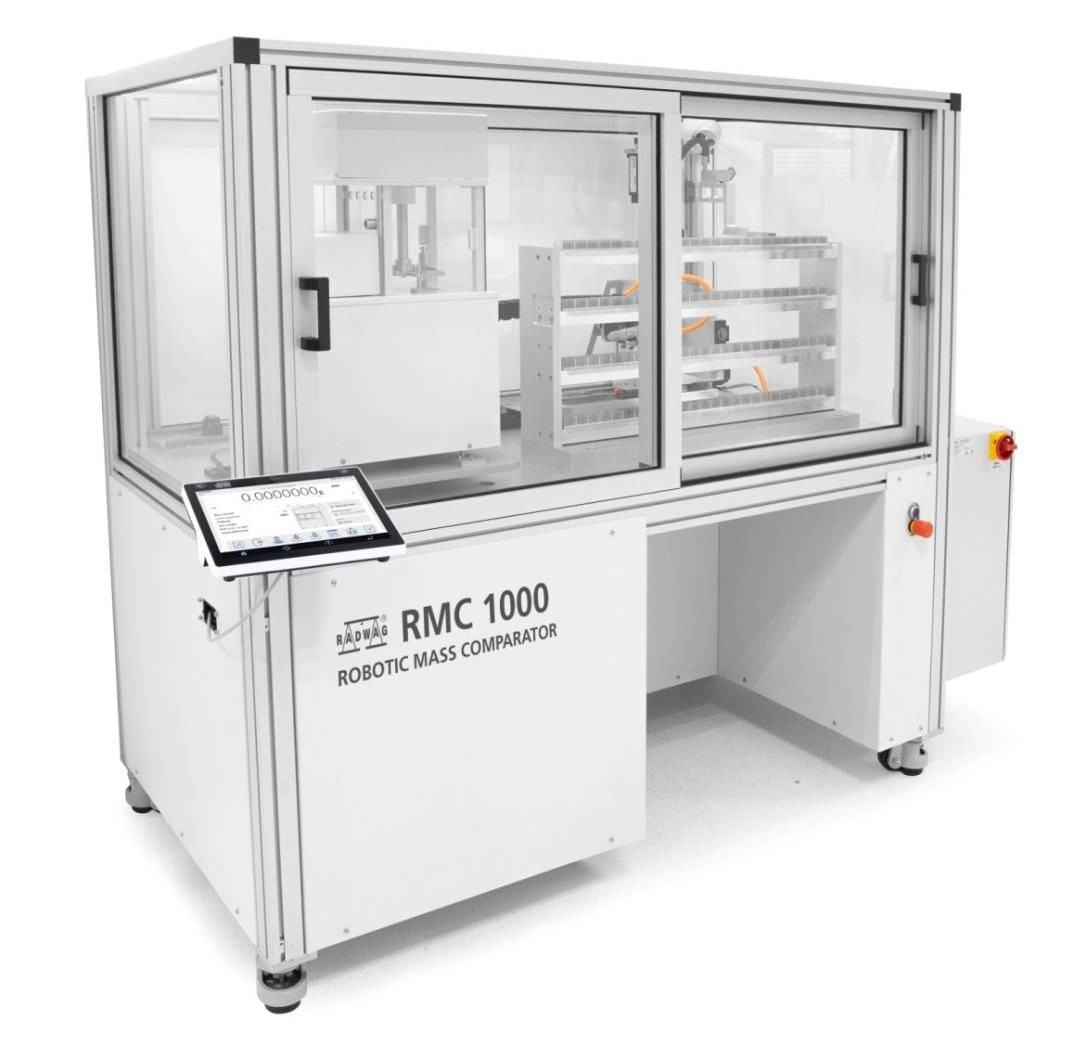
Comparison involves examining an object in question and measuring how it differs from a reference standard. Such an approach is used in numerous aspects, including mass measurement. Determination of medium mass is relatively common in any field, starting from pharmacy and ending up with heavy industry. The goal is always the same – precise measurement. Such a measurement is possible only when traceability is maintained while transferring the unit of measurement from higher-order standards to lower-order standards. The measurement unit transfer can be manual, automatic or robotic, as performed in the Measuring Laboratory of Radwag Research Metrology and Certification Center. The conclusion is that traceability, that is connection between samples masses, is one of the pillars of metrology that aside from the metrological aspect provides safety to all recipients and users who encounter metrology on a daily basis, e.g. by purchasing goods as per their weight or unit price.
The main parameter of numerous mass measurement processes, including the ones related to comparing the mass standard with the item in question, is repeatability. Generally speaking the term refers to ability to assure ‘identical’ results. From the engineering and designing point of view, this process is stable but widely dependent upon conditions in which it is performed. For this reason, relatively strict guidelines concerning stable working environment are recommended for comparison. Aside from the environment, the so-called human factor must be considered.
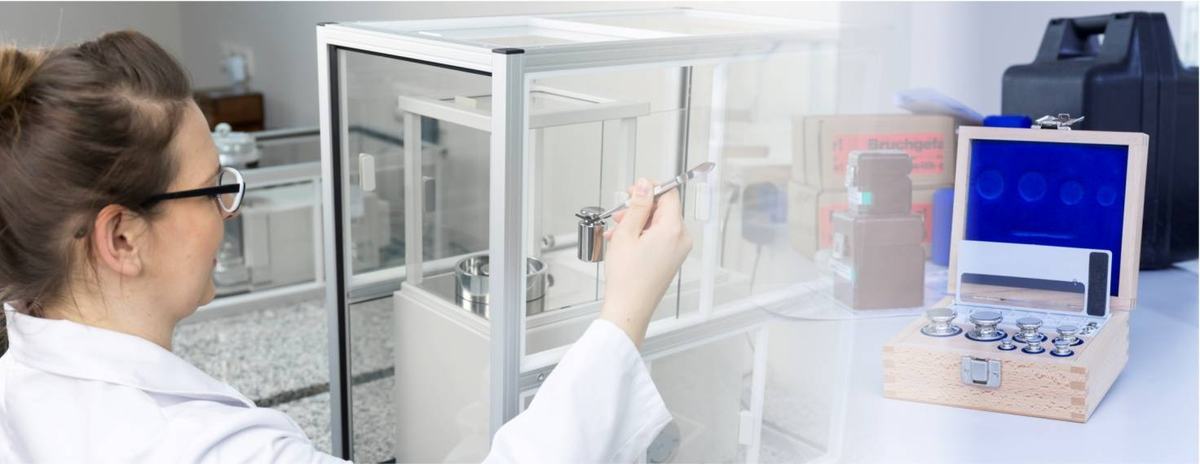
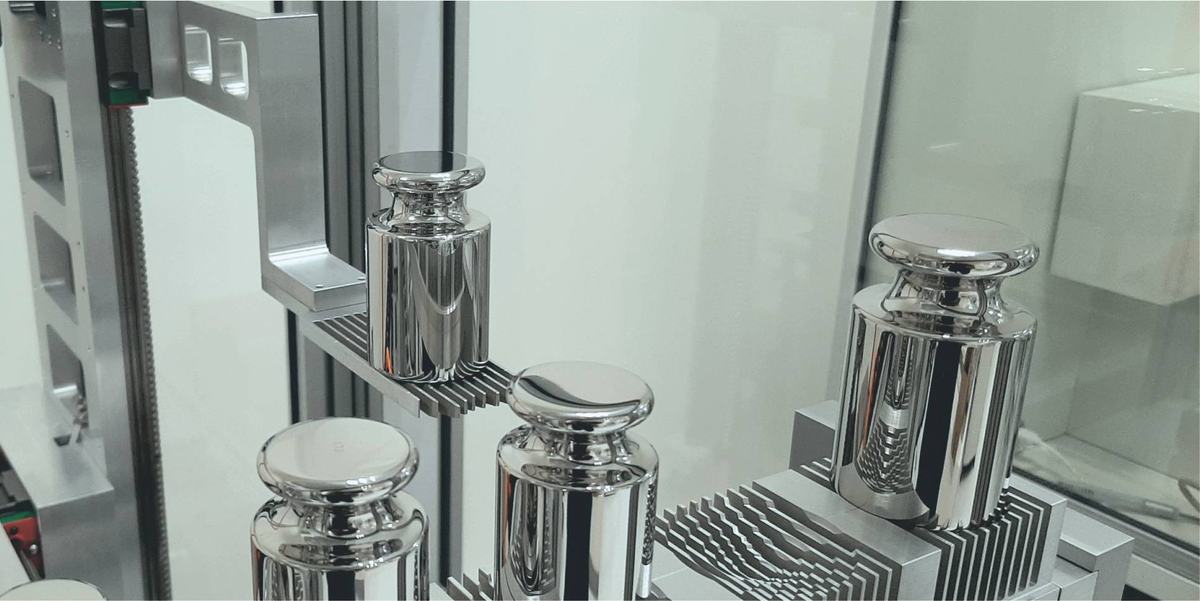
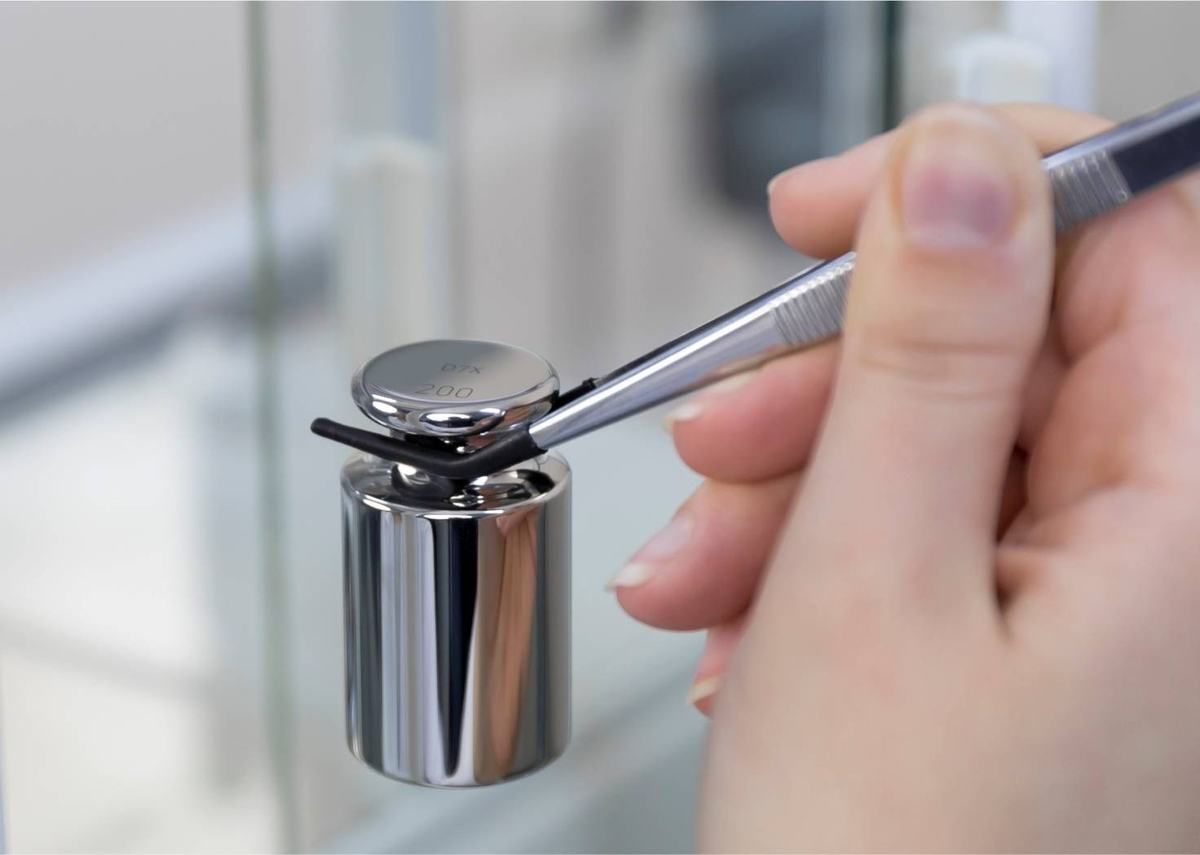
It is not a secret that the so-called ‘good handling’ (fig. 1) understood as a good weighing practice is somehow limited too. Such limitations apply to dynamics of placing the item in question on the weighing pan of the balance/mass comparator, and intervals between measurements. Therefore, when it is necessary to obtain very ‘accurate’ measurements, measuring must be automated, e.g. automatic and robotic comparators are introduced. Radwag provides such solutions not only to laboratories that deal with weight/mass standard measurements but also fields related to environmental protection that prioritise weighing efficiency and precise dosage of very small amounts of liquid.
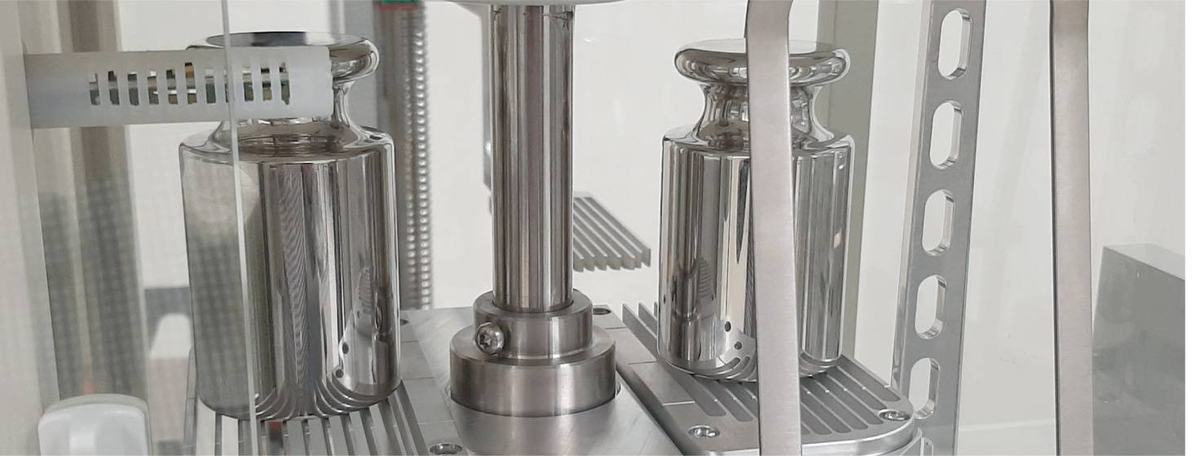
Apart from working environment humidity and temperature drifts, weighing entails two additional physical phenomena that have a negative influence on measurement precision. The first phenomenon is air movement, naturally existing in any laboratory, and the second is possibility of placing the mass standard/test weight out of the centre of the weighing pan. To eliminate air movement, the mass comparator can be covered or fitted. With regard to the RMC 1000.5Y comparator, a dual cover has been used because air movement inside the structure is generated by the robotic unit while collecting weights from the magazine and transporting them onto the mass comparator weighing pan. Opening of the internal cover of the weighing chamber is coupled with the robotic unit so that access to the weighing pan is possible only when mass standards are supplied or collected. The second problem, i.e. lack of centricity while placing weights, has been solved by using the so-called suspended weighing pan. This solution always assures perfectly central position of the weight in relation to the weighing unit (fig. 2).
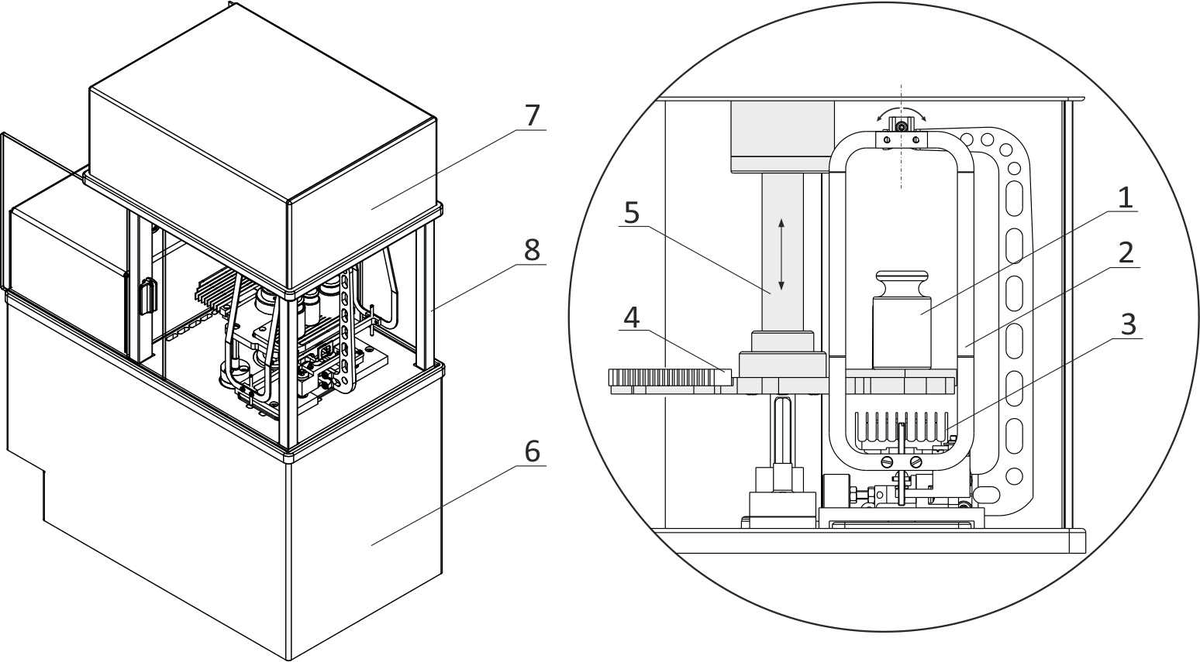
Figure 2. Weighing unit of the RMC 1000.5Y mass comparator. Key: 1 – mass standard, 2 – weighing pan suspension unit, 3 – weighing pan of the weighing unit, 4 – weighing pan of the internal magazine, 5 – internal magazine drive transfer, 6 – weighing unit, 7 – upper cover of the automatic unit, 8
The interior of the mass comparator is supplied with a precise measuring unit (4) that is connected from the above to the weighing pan arm (1) and weighing pan (3) and from the bottom the measuring unit is equipped with the ballast masses (5) that are automatically changed. Placing and removing additional loads is coupled with comparison plans by computer, while smooth changes are guaranteed by the automatic unit (6). Thanks to such a solution, the comparator load is always around 1 kg, irrespective of the mass weighed on the weighing pan (3).
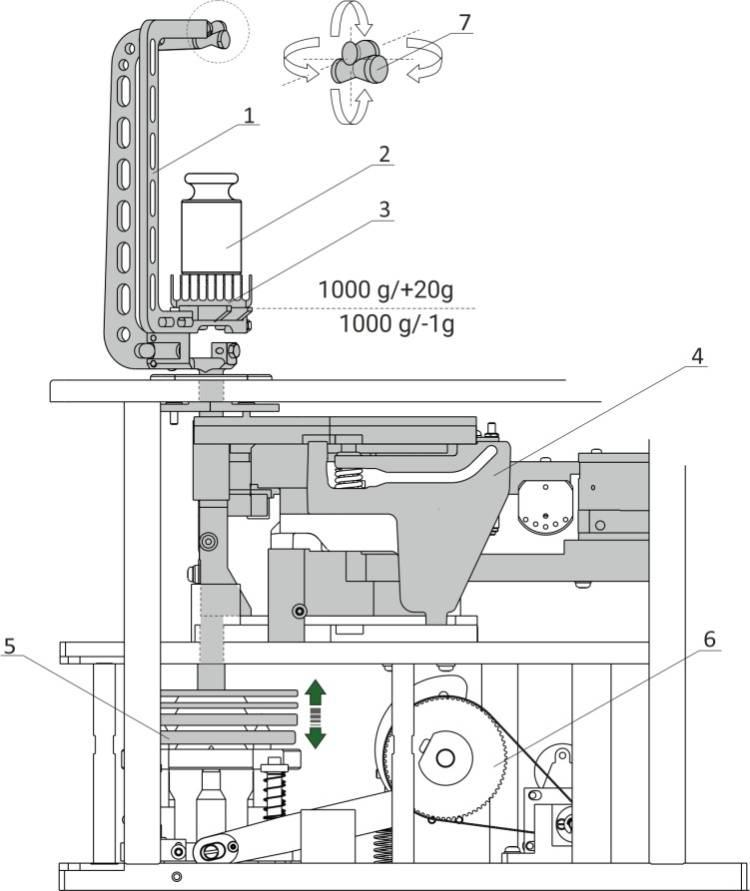
Key: 1-weighing pan arm, 2-weight, 3-comparator weighing pan, 4-mechanical unit, 5-ballast loads, 6-control unit, 7- self-aligning fixing of the weighing pan arm
The weighing pan arm (1) is pivotally supported (7) at the top, so that the potential error arising from lack of centricity can be considered as negligible. The interior of the anti-draft chamber (8, fig. 2) is supplied with a THB-series environmental conditions sensor that takes temperature, humidity and atmospheric pressure in the comparison spot. It is of paramount importance because variability of environmental conditions not only influences geometric or physical changes of the item in question but also has a potential impact on metrological aspects of the measuring unit. Importantly inside the measuring unit is an additional temperature sensor that monitors variability of this factor inside the mechanical structure. This information is used by the comparator algorithm to assure precise measurements. The THB-series environmental conditions sensor has been showed in the figure 4. Values presented by the THB sensor are referred to higher-order standards through calibration.
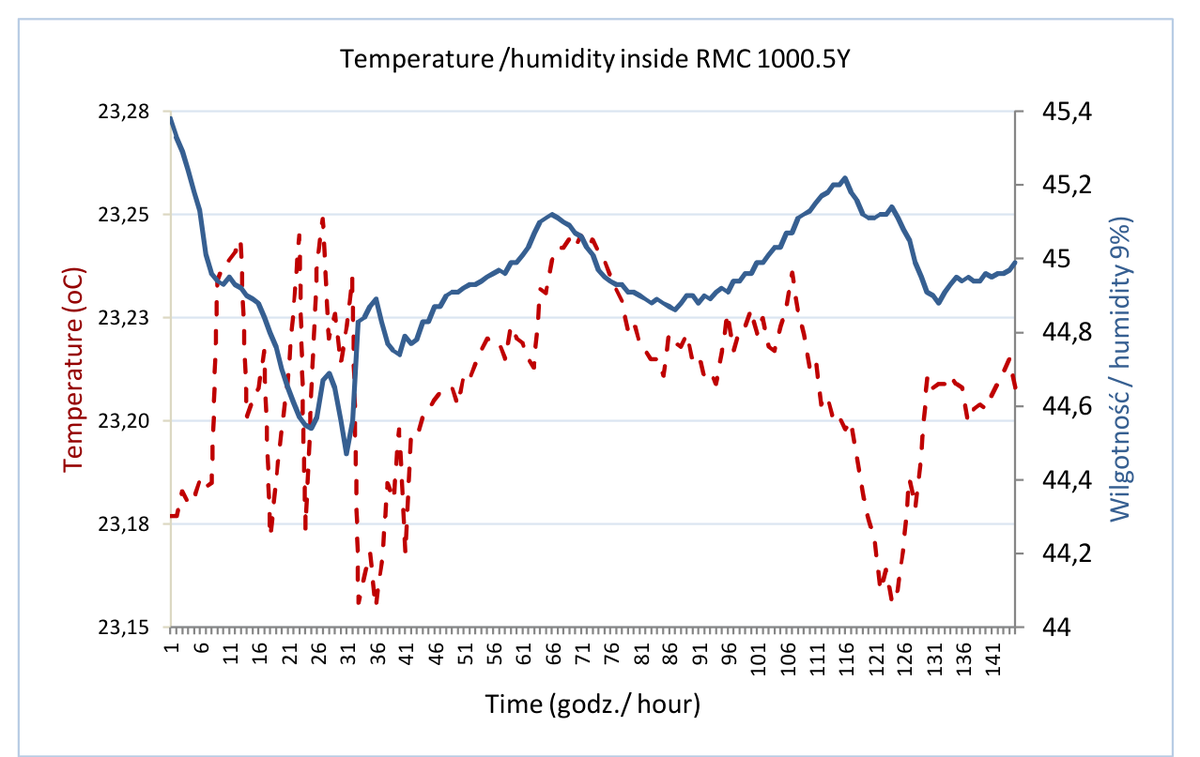
Variability of environmental conditions is recorded online in the database of the mass comparator. Collected data can then be selectively subjected to analysis in any application, as showed in the figure 5. In case of using the RMCS program, the information on environmental conditions is automatically processed, the operator is not required to do anything.
The information from mass comparator database (database of environmental conditions) The RMC 1000.5Y mass comparator has been showed in the figure 6. The interior of the comparator (1) is supplied with a main magazine (3) for mass standards (2). According to the schedule given in the comparison plan, the robotic unit (5) collects standards/weights from the magazine and puts them into the internal magazine of the measuring unit for comparison purposes. The mass comparator can be controlled through the operator’s panel (7). This is an ergonomically designed interface that not only controls but also stores all information related to comparison, such as databases, reports, device configuration, etc.
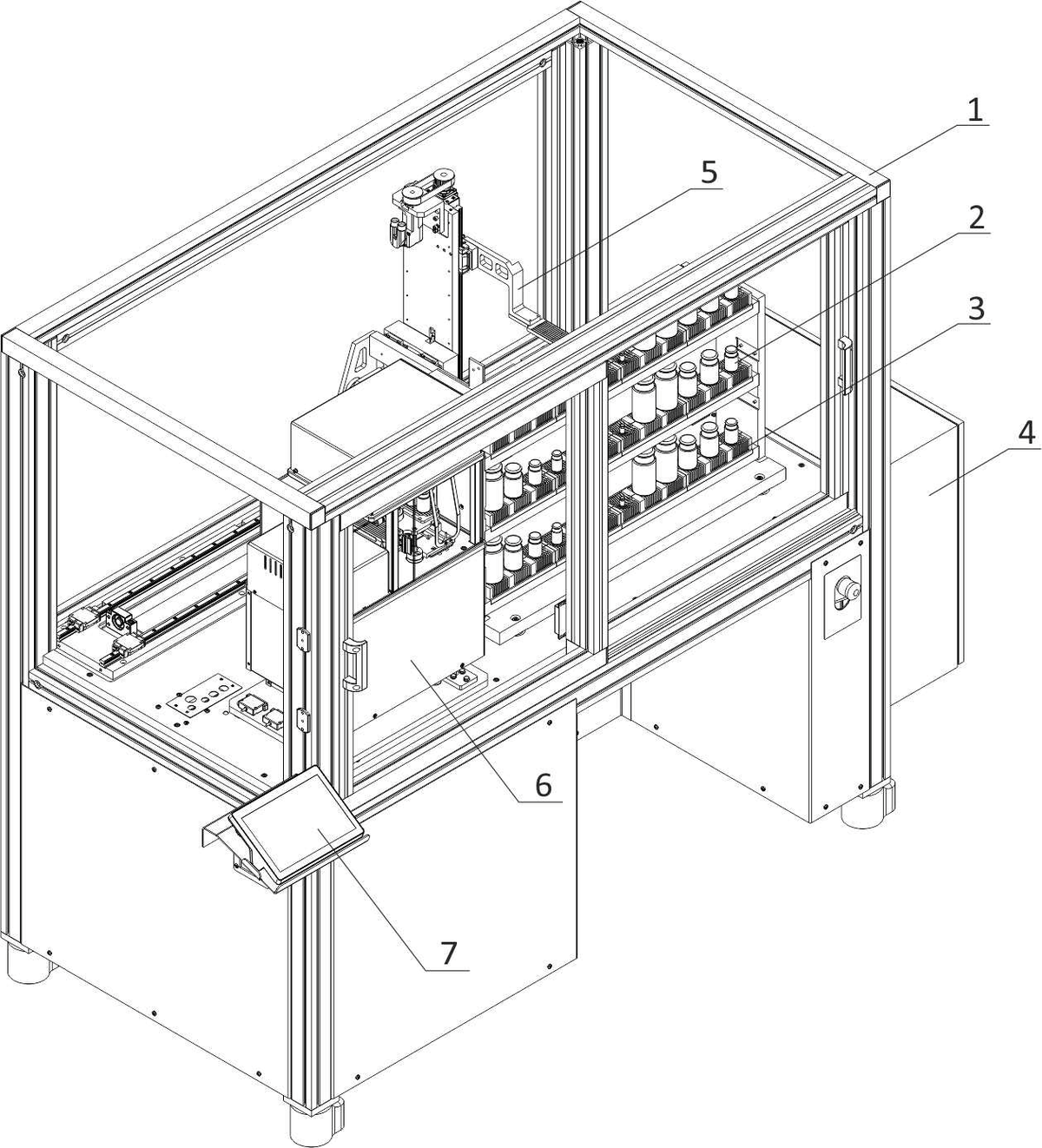
Key: 1 – outer cover of the comparator, 2 – mass standards, 3 – linear magazine for mass standards, 4 –comparator control unit, 5 – robotic unit (arm with weighing pan), 6 – comparator weighing unit, 7 – operator’s panel.
The RMC 1000.5Y comparator can be controlled remotely via the RMCS application that manages the entire process, starting from order receipt, through comparison, and ending up with calibration certificate issuance. The comparator is optionally equipped with a camera coupled with the customer’s individual environment (supervision of robotic unit’s operation).
As mentioned before, the metrological parameters of the mass comparator, mainly in the context of value repeatability, are widely dependent upon real working conditions. The pace of temperature changes should not exceed ±0,5°C/12h (±0,3°C/4h), while relative humidity ±5%/12h (2%/4h). The working temperature must range from 15 o C to 30 o C, whereas humidity from 40% to 60%. The comparator technical specification has been showed in the table 1
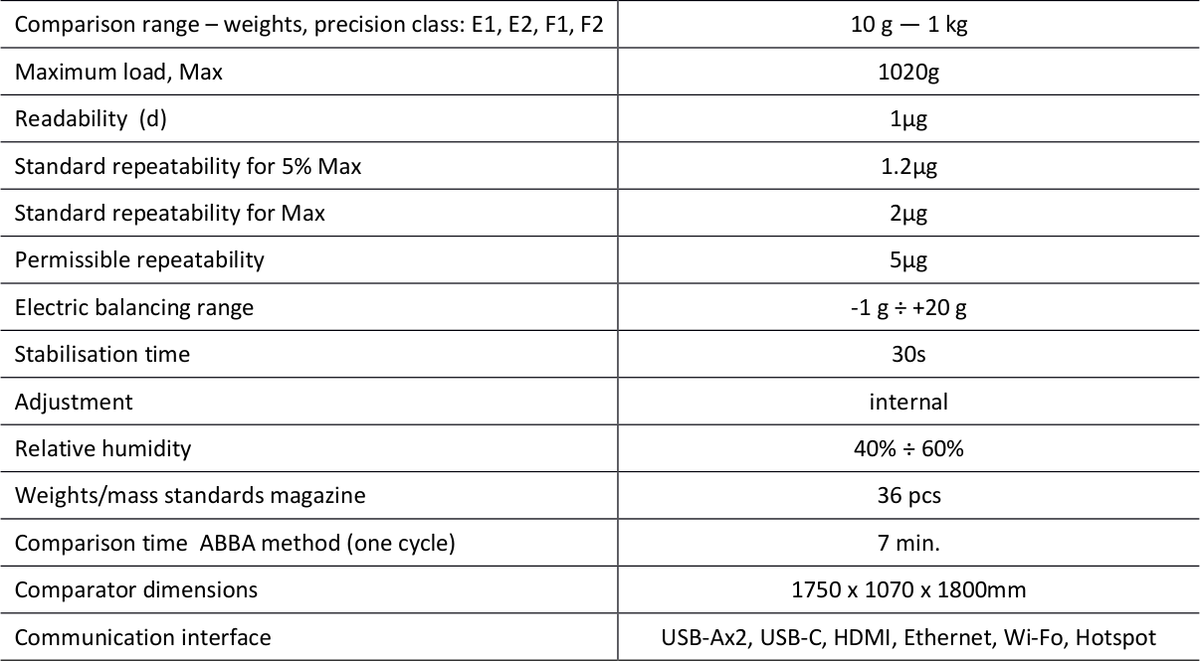
Repeatability is expressed through standard deviation determined for 6 ABBA cycles
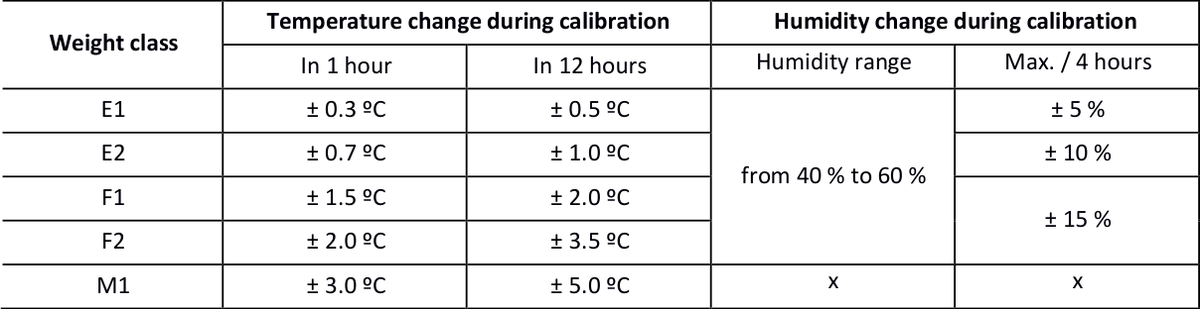
The assessment of the metrological usefulness of each mass comparator is primarily concerned with measurement precision that is measured by the standard deviation from the series of measurements based on ABA or ABBA method. It can be stated that the precision of measuring mass of the balance/mass comparator is a constant value, with a minor variability, when test conditions are perfectly stable. It is possible to obtain ideal working conditions but requires considerable financial expenditure that must cover a proper size of the laboratory, precise temperature and humidity control, elimination of flooring vibrations and substantial limitation of the so-called human factor. Bearing in mind the aforesaid dependencies, comparison conditions are considered as sufficient when negligible humidity and temperature drifts occur during the process. These values for weights have been defined in the OIML R111-1 standard. Weights of classes E 1 , E 2 , F 1 , F 2 , M 1 , M 1–2 , M 2 , M 2–3 and M 3 . Part 1: Metrological and technical requirements (table 2).
Table 2. Climatic conditions in weight comparison.
As part of own testing, the precision of mass measurements of the RMC 1000.5Y robotic mass comparator was assessed for the entire measuring range, i.e. from 1 kg to 10 g. Tests were performed in the Radwag Research Metrology and Certification Center. The reference standard in the ABBA method for each load was the weight of class E 1 and the test item was the weight of class F 1 as per OIML R111-1. For every load, the standard deviation was determined on the basis of 6 series of weighing based on ABBA method that was later repeated 8 times in order to determine the comparator stability in the long term. Climatic conditions during comparison have been showed in the table 3.
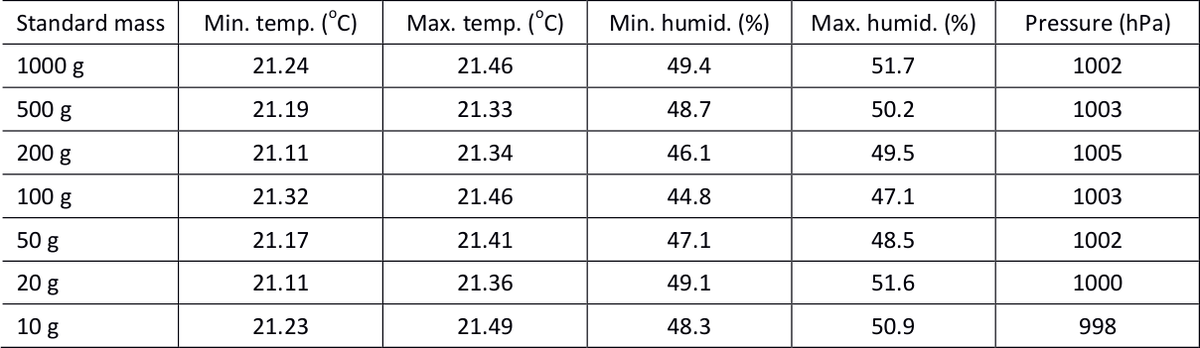
10 g 21.23 21.49 48.3 50.9 998
Comparison plans for test weights were designed in the RMC 1000.5Y comparator menu and then cyclically activated remotely in accordance with prearranged plan. The comparator work was remotely supervised through the RMCS application that is intended for managing comparison cycles, from order receipt until generation of the report and calibration certificate.
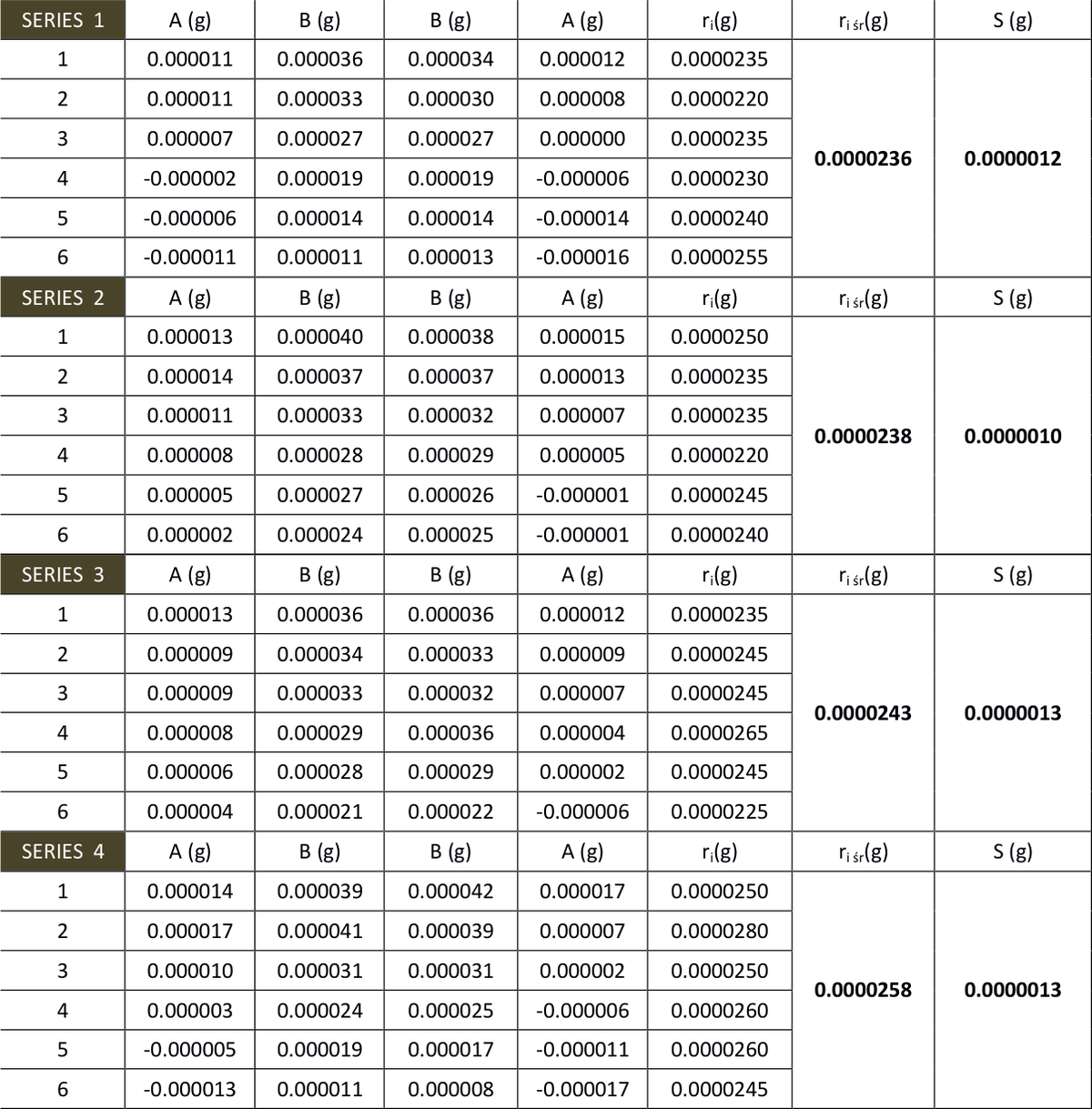
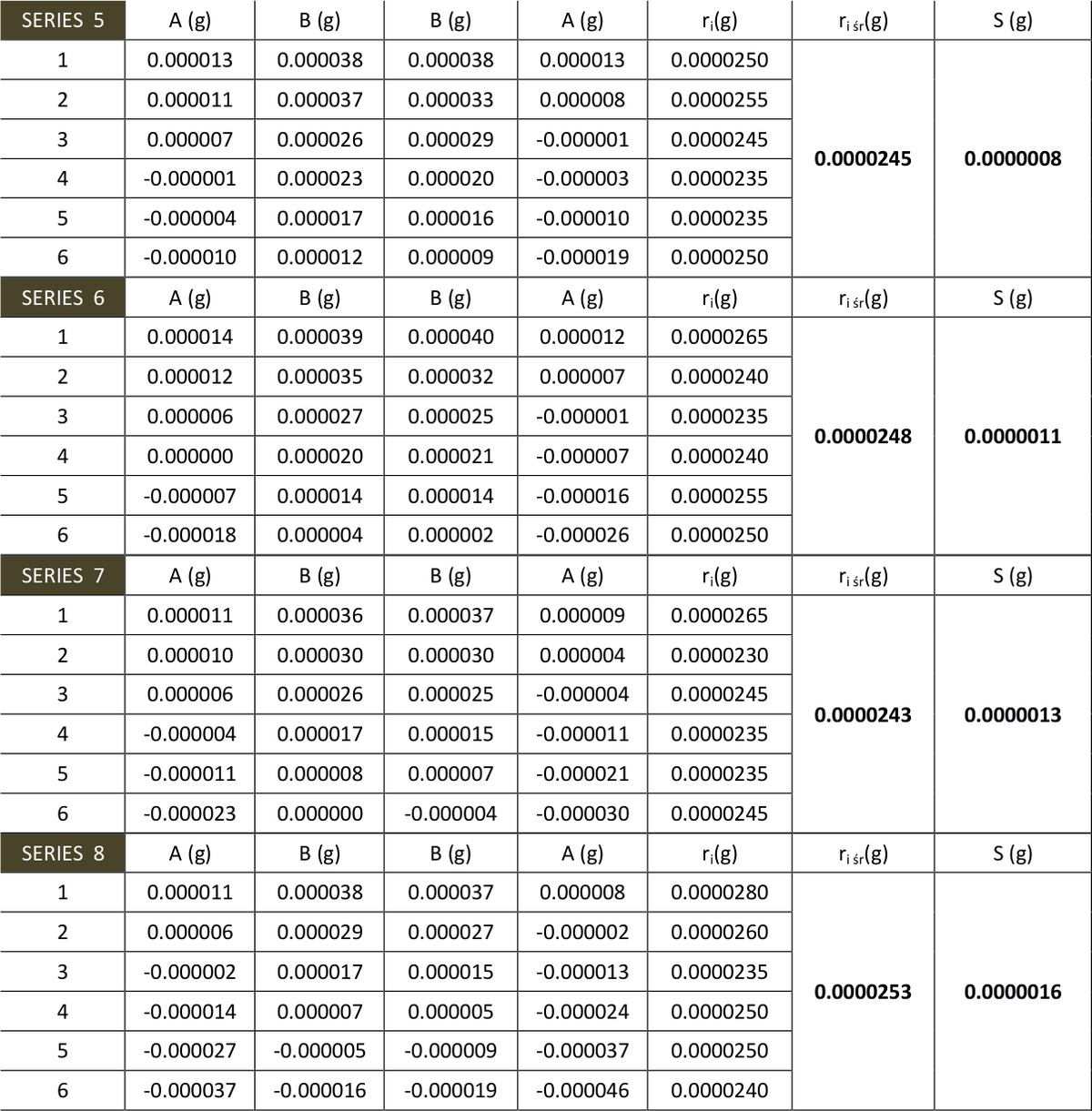
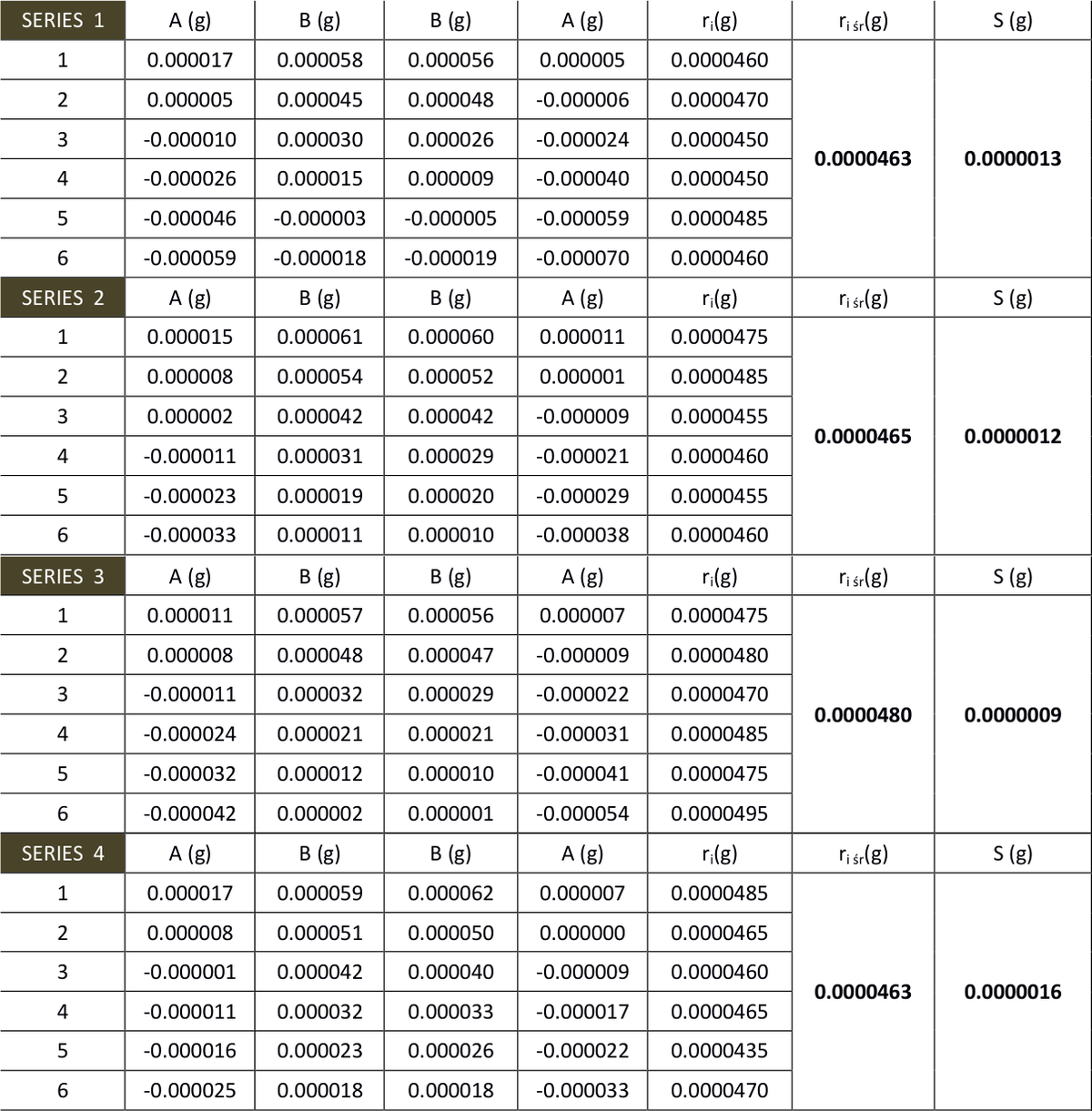
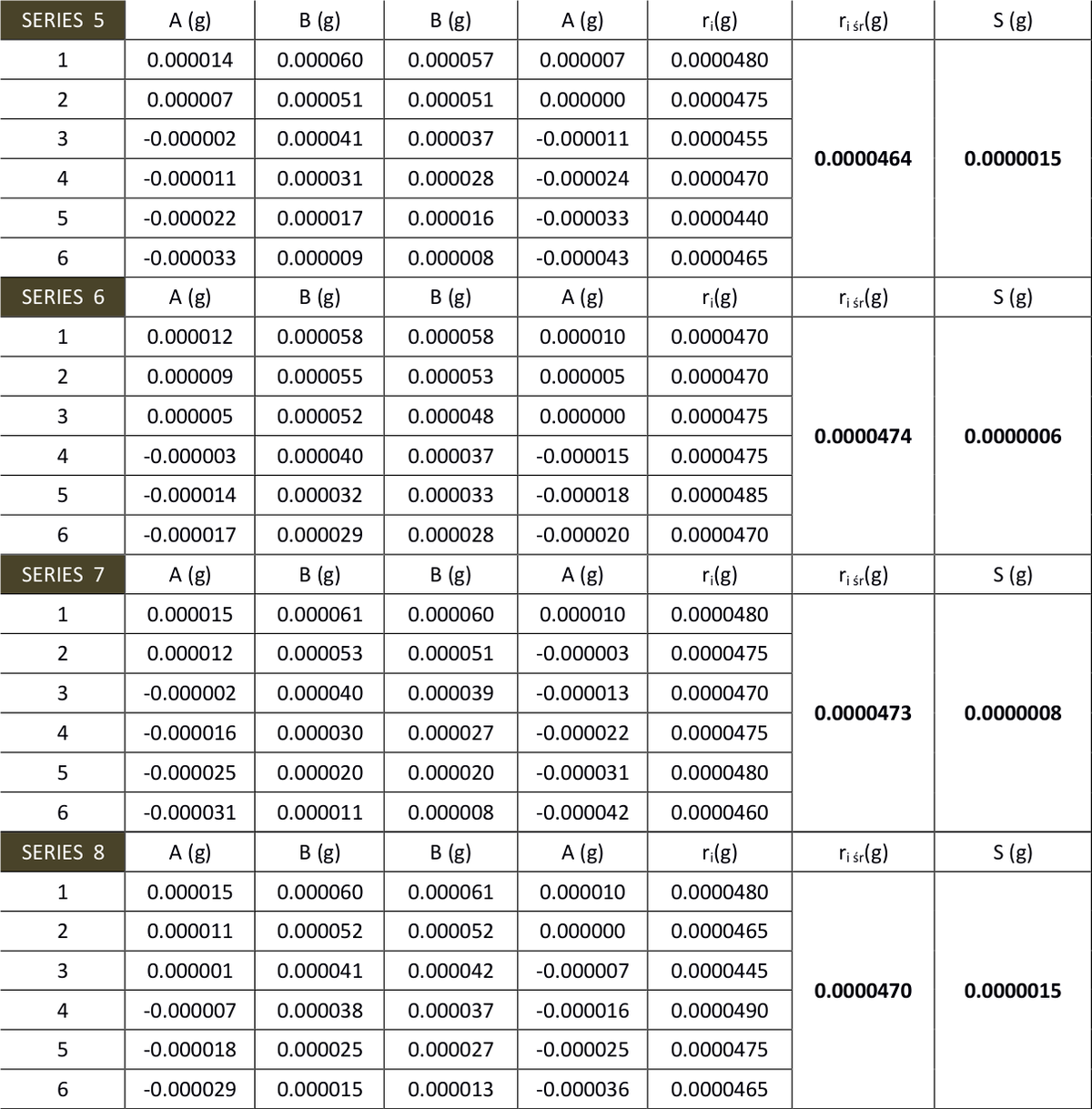
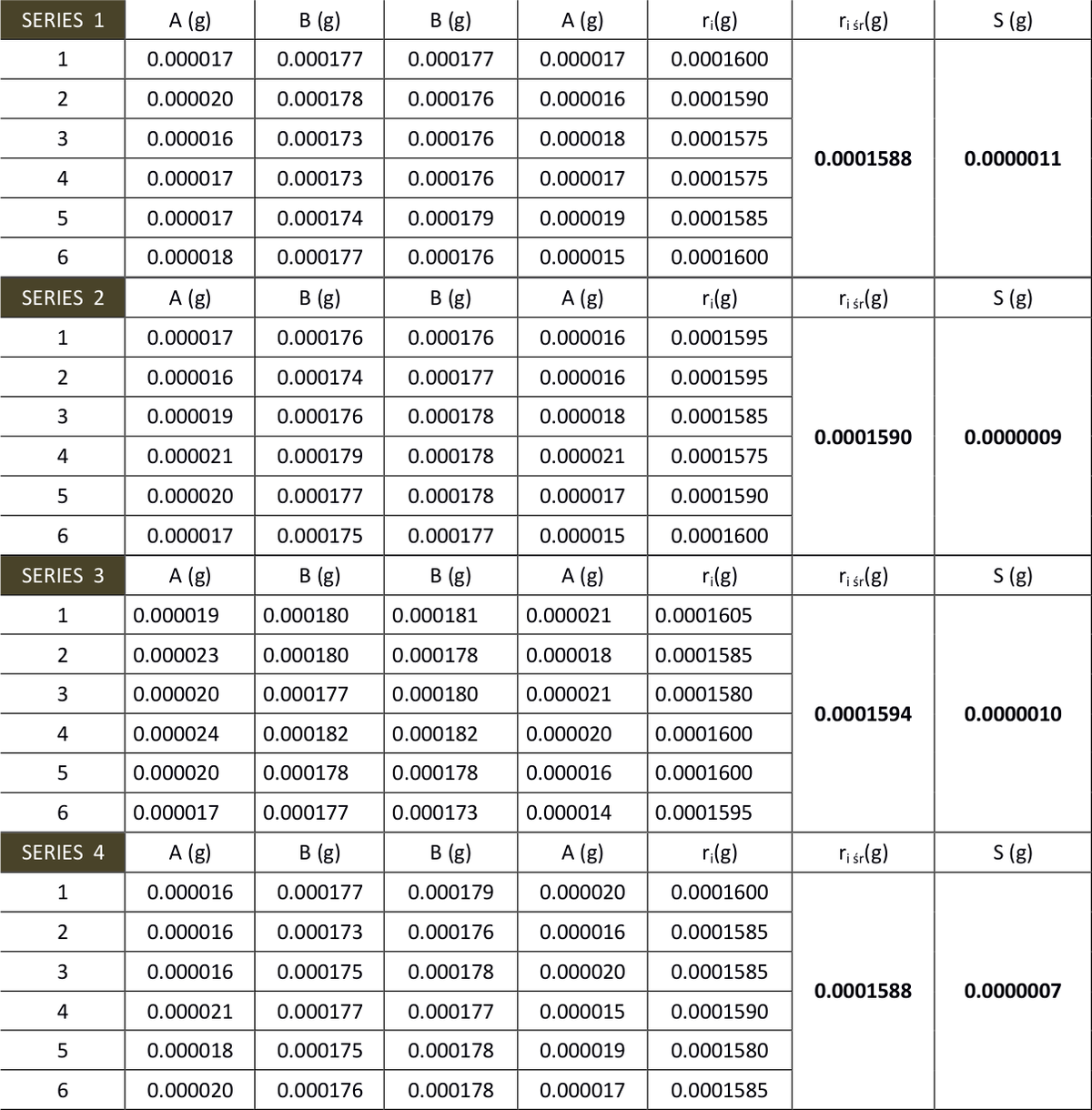
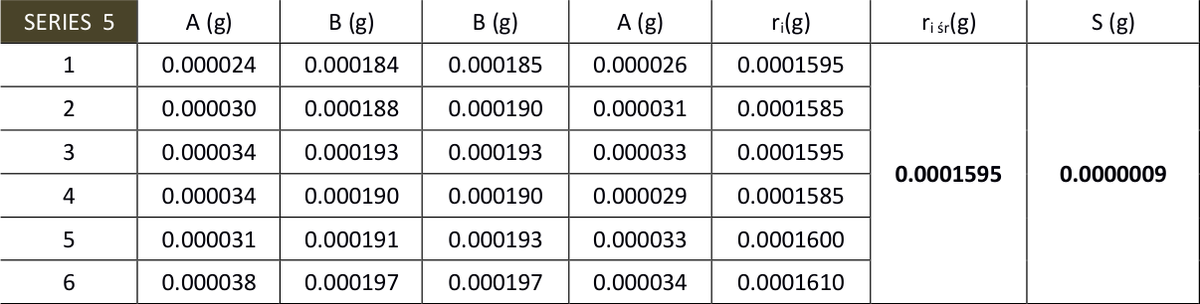
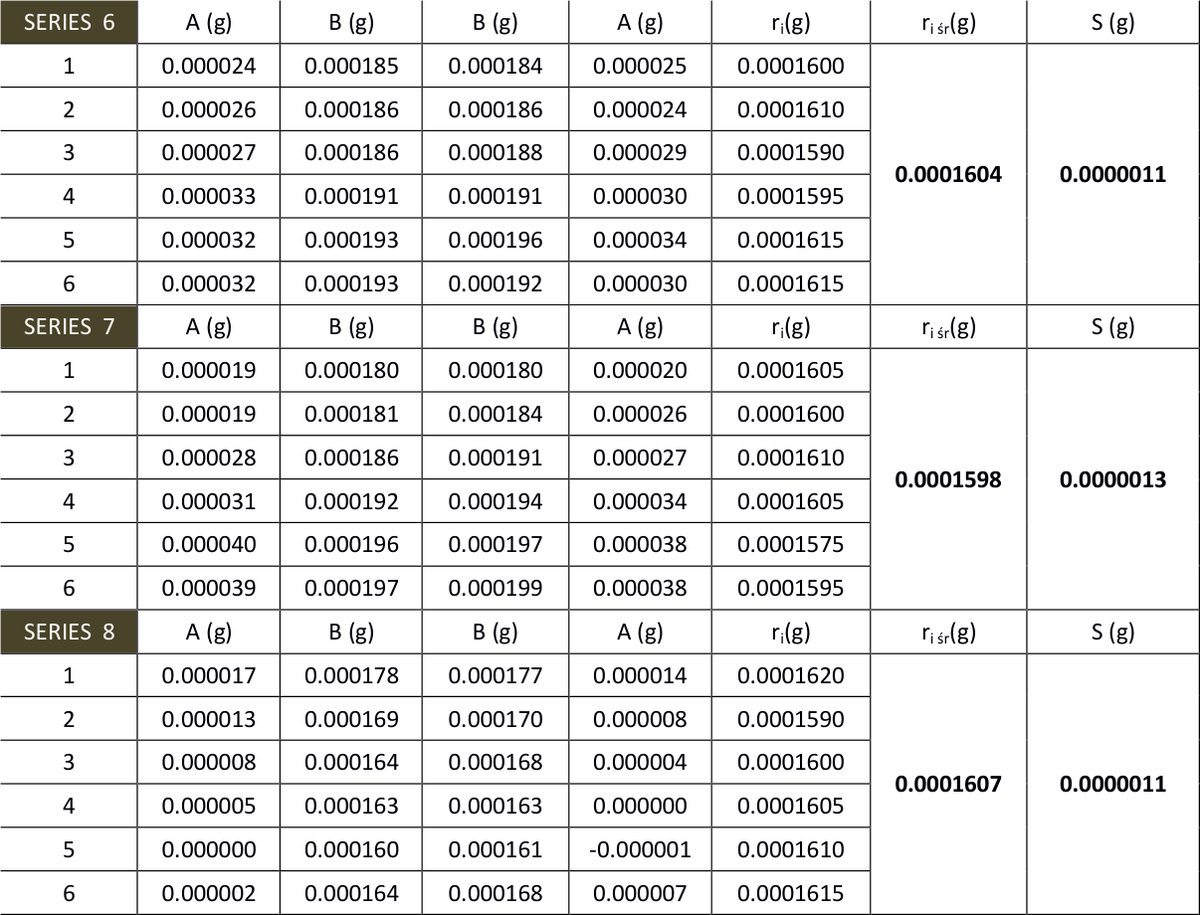
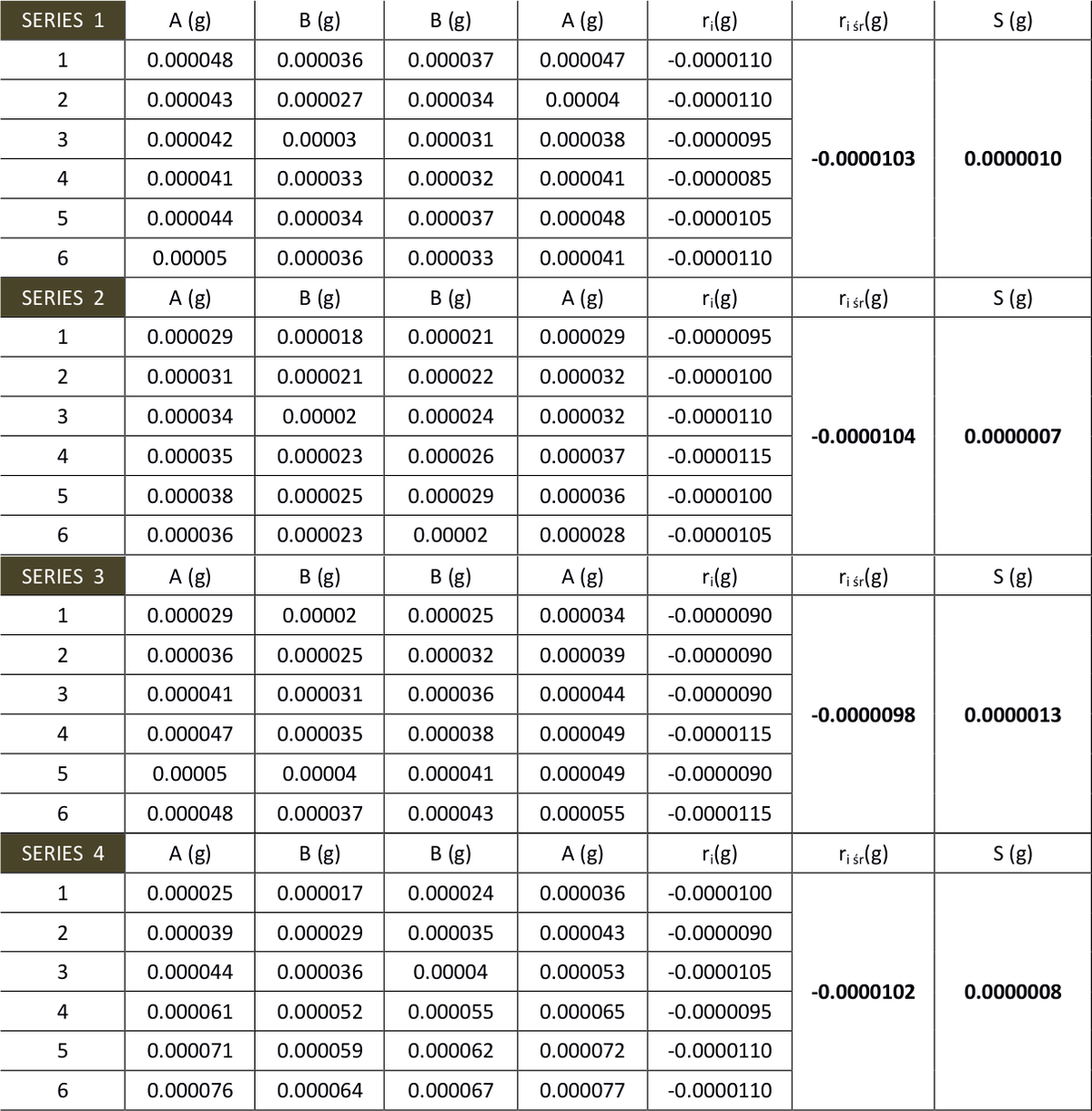
Aggregate results related to standard deviations obtained from testing have been showed in the table 4.
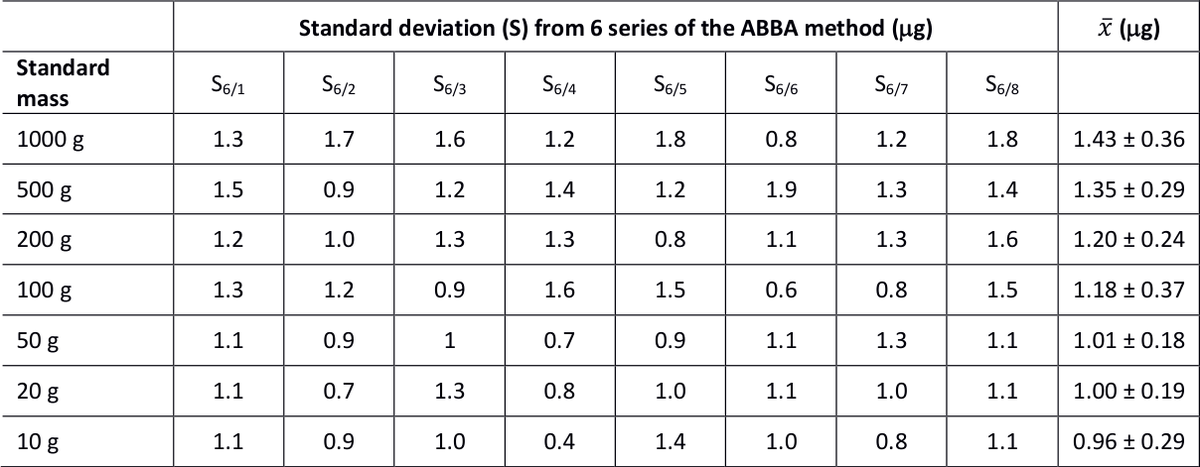
Detailed results from all ABBA series for test loads have been showed in the attachment 1.
The traditional manual method of determining weight/standard mass through direct comparison usually requires a relatively big number of repetitions. Such a weight mass determination method is exposed to errors arising from the so-called outliers that are hard to correctly diagnose. It may result in too high mass determination uncertainty applicable to the test item. This is all about combination of the economic effect, after all time is money, with metrology.
Automation and robotisation of mass measurements have substantially changed the world as the number of measurements is no longer so important. Another problem, weight mass determination uncertainty, mainly applies to weights of class E1 with a mass of less than 1g. A substantial impact arises from reference weight (6) mass determination uncertainty but you cannot forget about the influence of outside factors (e.g. air movement) when the surface of the weight is large. Considering these restrictions, the division (dissemination) method is more and more frequently used during testing.
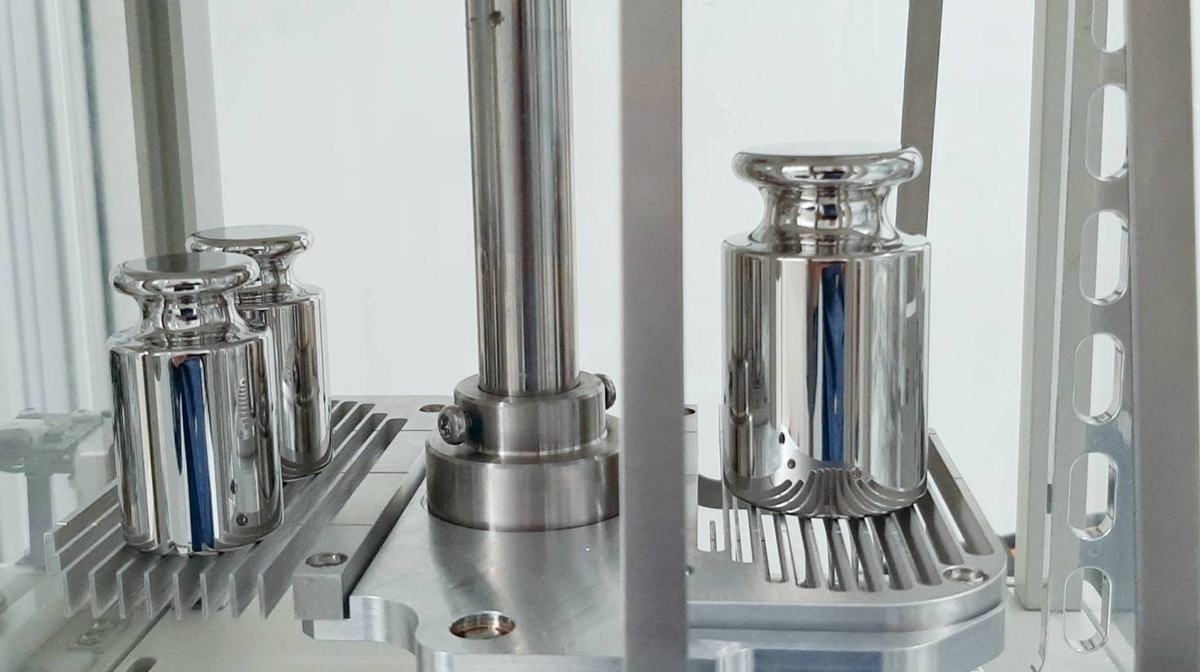
In general terms, dissemination is comparison of a set of weights in relation to one or several reference weights. The method requires a few or a dozen weighing cycles with various weight combinations of equal total nominal mass with the use of adjustment calculations in order to limit error propagation. In case of using robotisation, e.g. the RMC 1000.5Y robotic comparator can be freely used because all calculations are made by the RMCS software that cooperates with the robotic unit. Equations describing weight mass determination from decade 1 kg ÷ 100 g have been showed below.
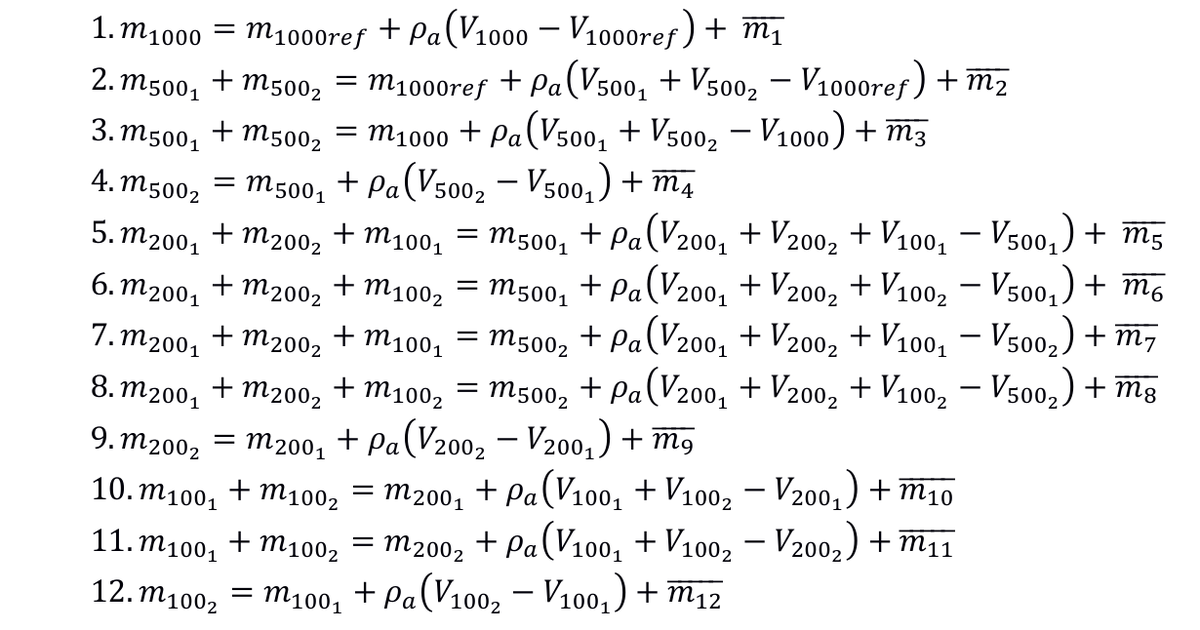
The algorithm describing a sequence of weighing of subsequent weights in dissemination is implemented in the PC software so it can be freely modified as per needs.
Automation and robotisation of mass measurements can be perceived in economic and metrological terms. In the former case you can substantially limit labour costs by obtaining a fail-safe measuring instrument able to remain reliable and operate 24 hours a day, for example RMC 1000.5Y mass comparator. From the metrological point of view, work ergonomics (e.g. remote supervision), operation (intuitive operator’s interface), software flexibility and perfect stability and repeatable results are expected. Such features apply to comparators manufactured by Radwag that is continually improving its products. Many of them are used in research laboratories that deal with mass measurements as well as laboratories of notified entities around the world.
7.1.
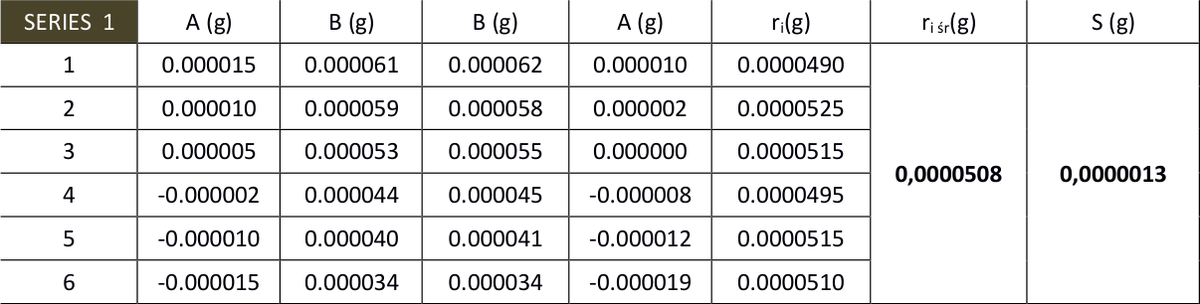
6 -0.000015 0.000034 0.000034 -0.000019 0.0000510
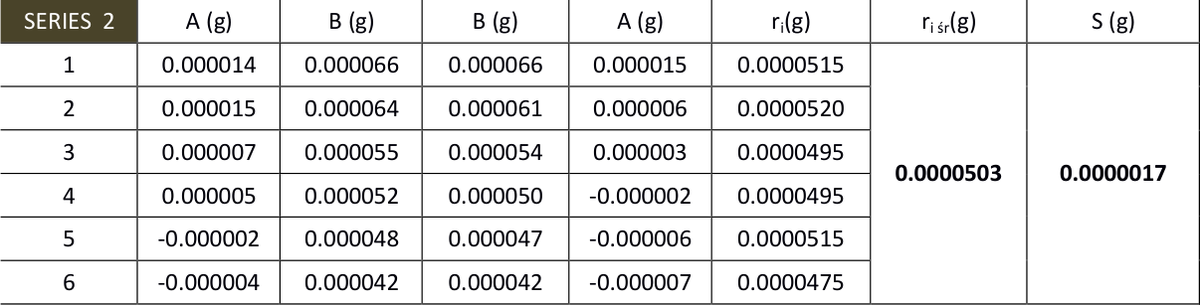
6 -0.000004 0.000042 0.000042 -0.000007 0.0000475
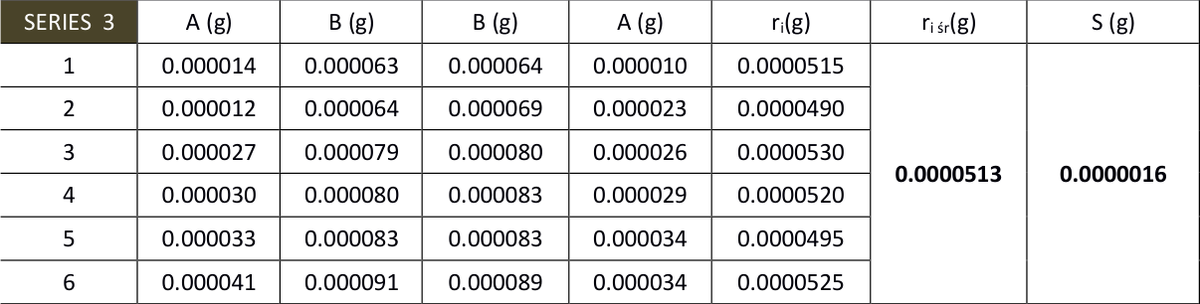
6 0.000041 0.000091 0.000089 0.000034 0.0000525
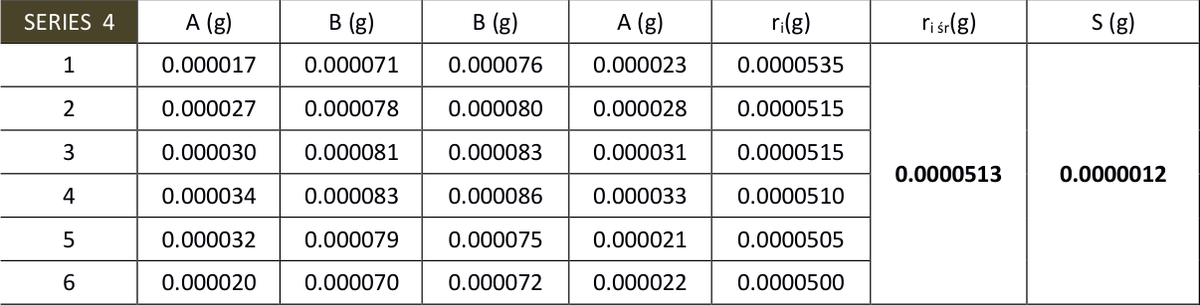
6 0.000020 0.000070 0.000072 0.000022 0.0000500
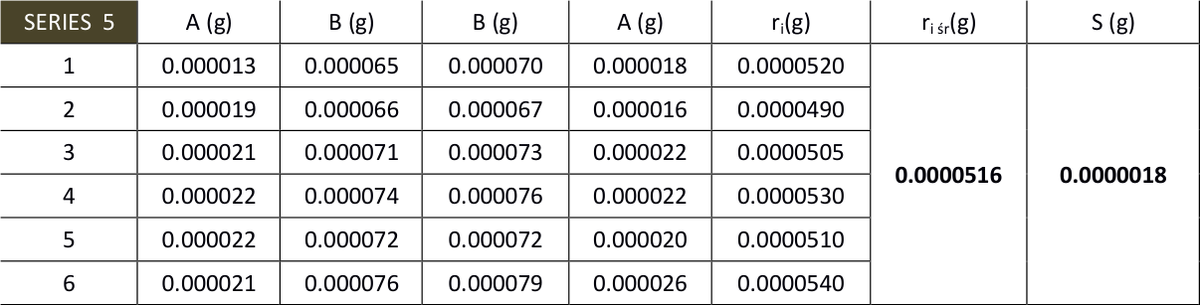
6 0.000021 0.000076 0.000079 0.000026 0.0000540
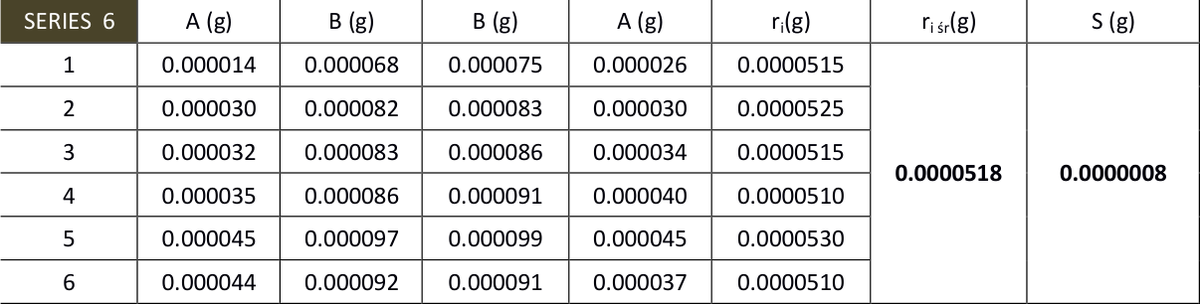
6 0.000044 0.000092 0.000091 0.000037 0.0000510
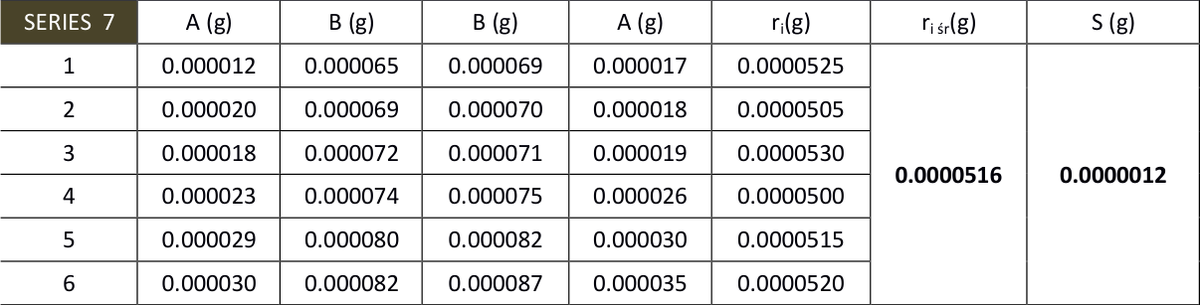
6 0.000030 0.000082 0.000087 0.000035 0.0000520
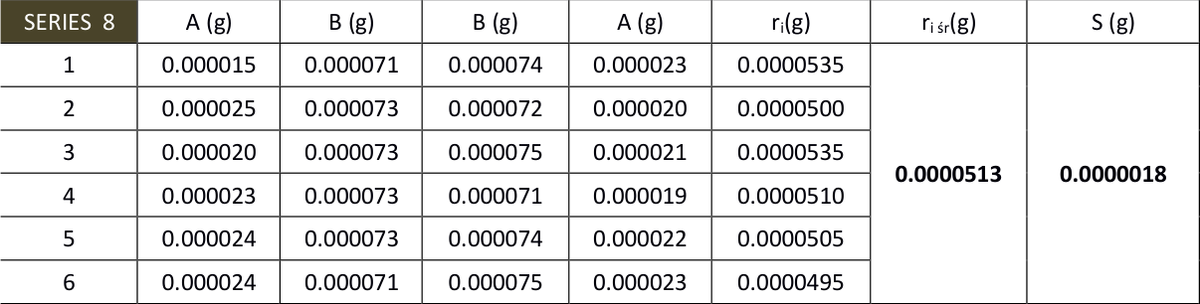
6 0.000024 0.000071 0.000075 0.000023 0.0000495
7.2.
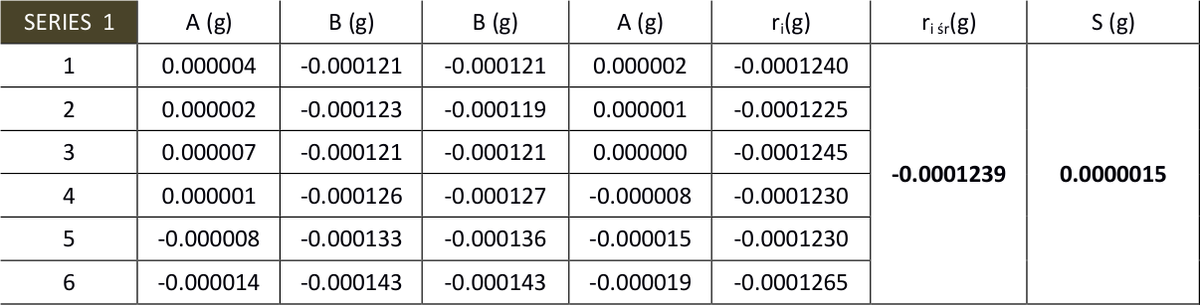
6 -0.000014 -0.000143 -0.000143 -0.000019 -0.0001265
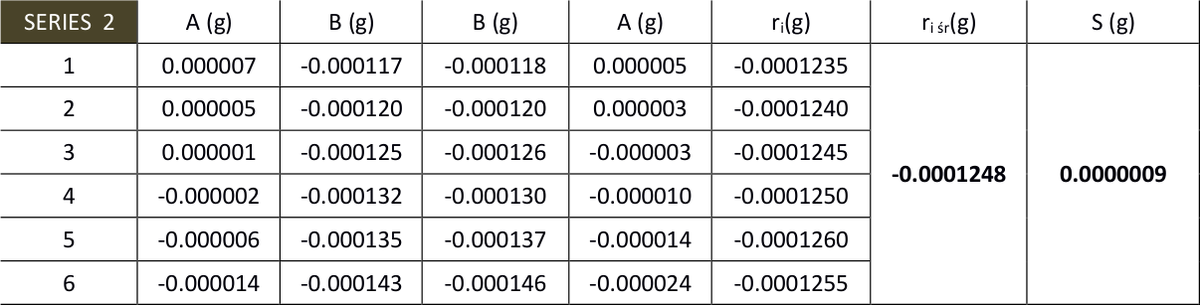
6 -0.000014 -0.000143 -0.000146 -0.000024 -0.0001255
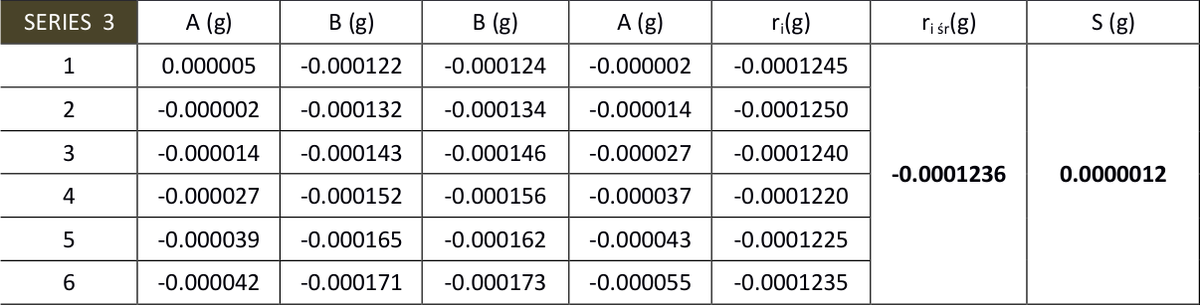
6 -0.000042 -0.000171 -0.000173 -0.000055 -0.0001235
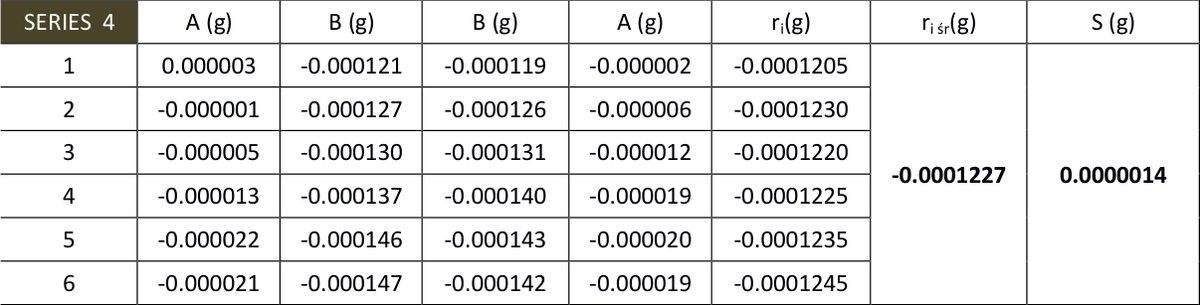
6 -0.000021 -0.000147 -0.000142 -0.000019 -0.0001245
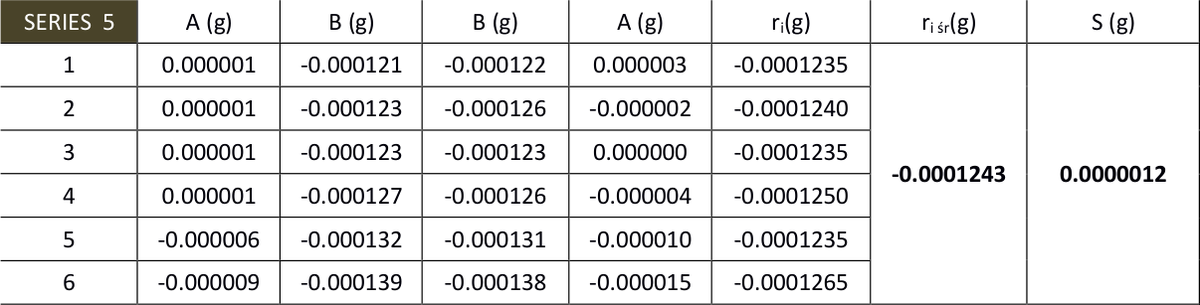
6 -0.000009 -0.000139 -0.000138 -0.000015 -0.0001265
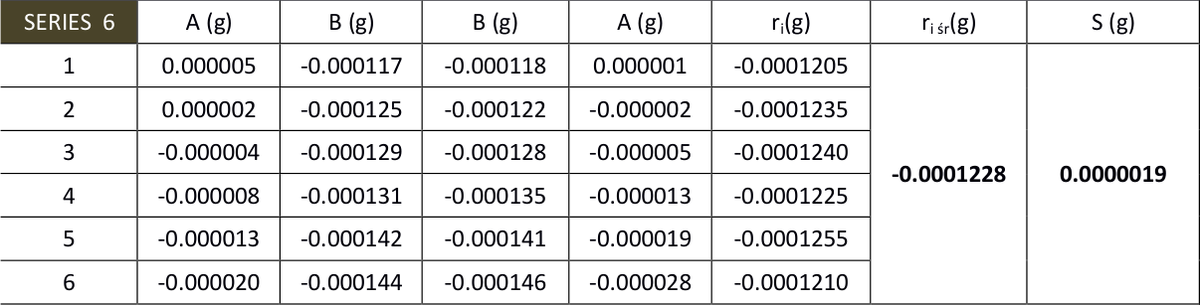
6 -0.000020 -0.000144 -0.000146 -0.000028 -0.0001210
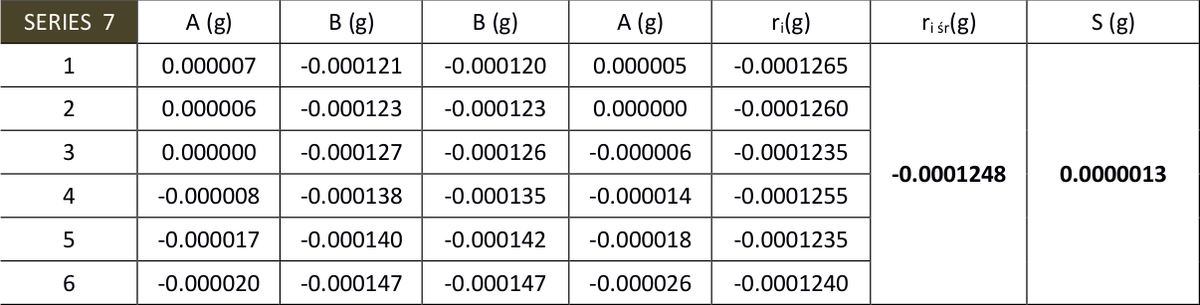
6 -0.000020 -0.000147 -0.000147 -0.000026 -0.0001240
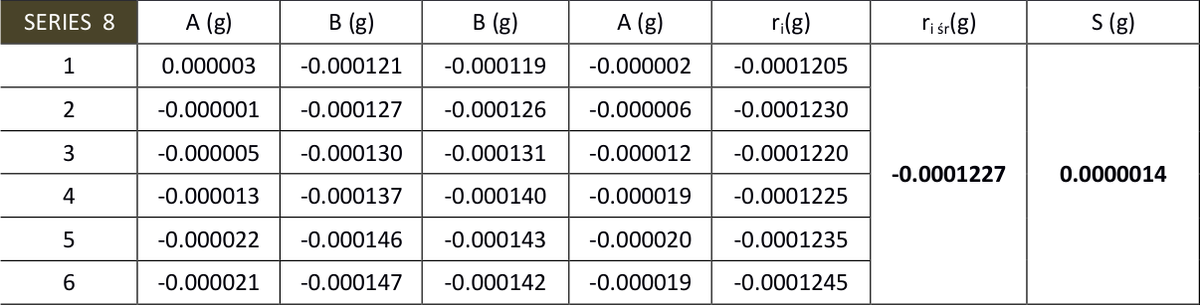
6 -0.000021 -0.000147 -0.000142 -0.000019 -0.0001245
7.3.
6 -0.000013 0.000011 0.000008 -0.000017 0.0000245
7.4.
7.5.
6 0.000038 0.000197 0.000197 0.000034 0.0001610
7.6.
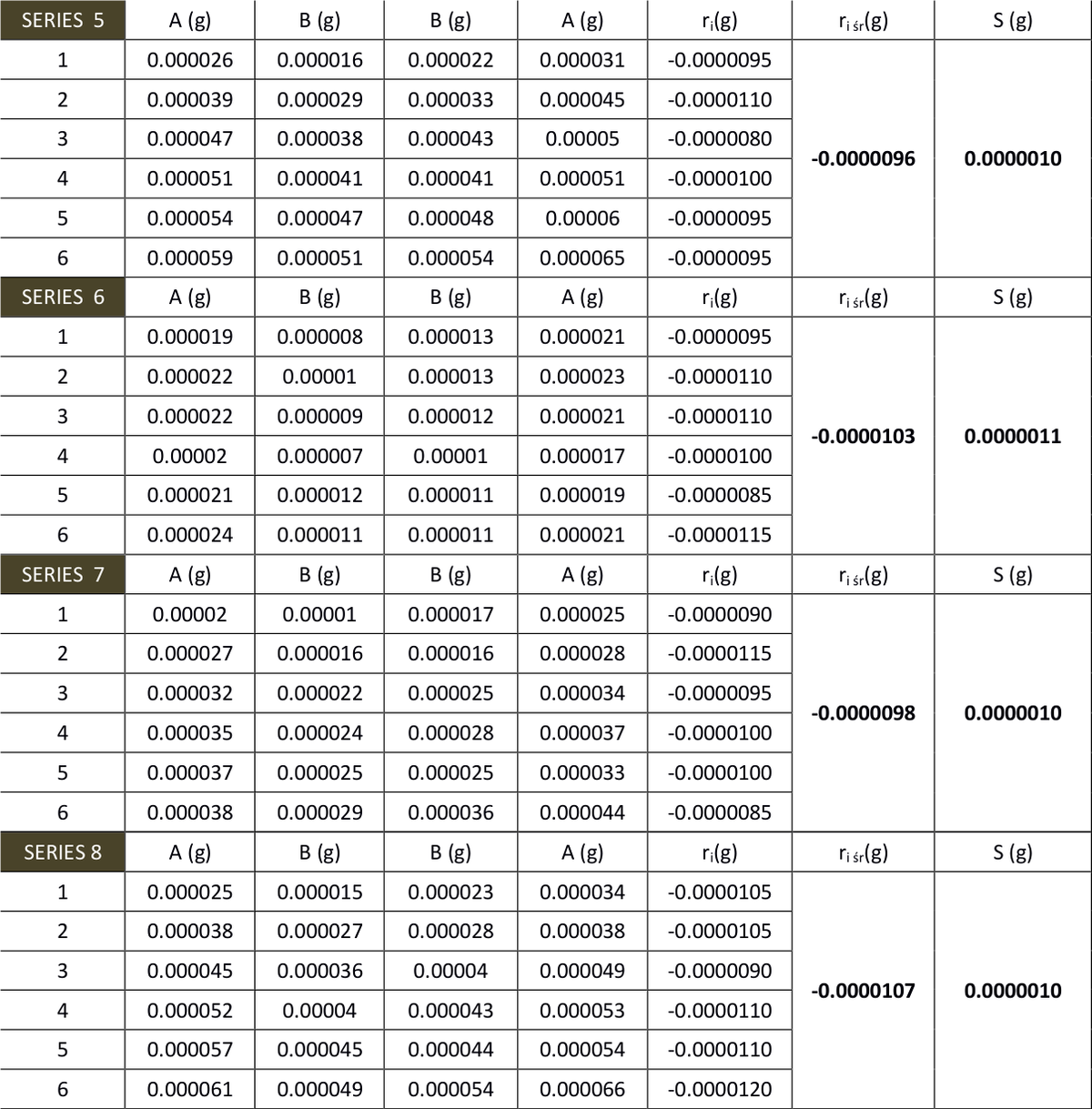
7.7.
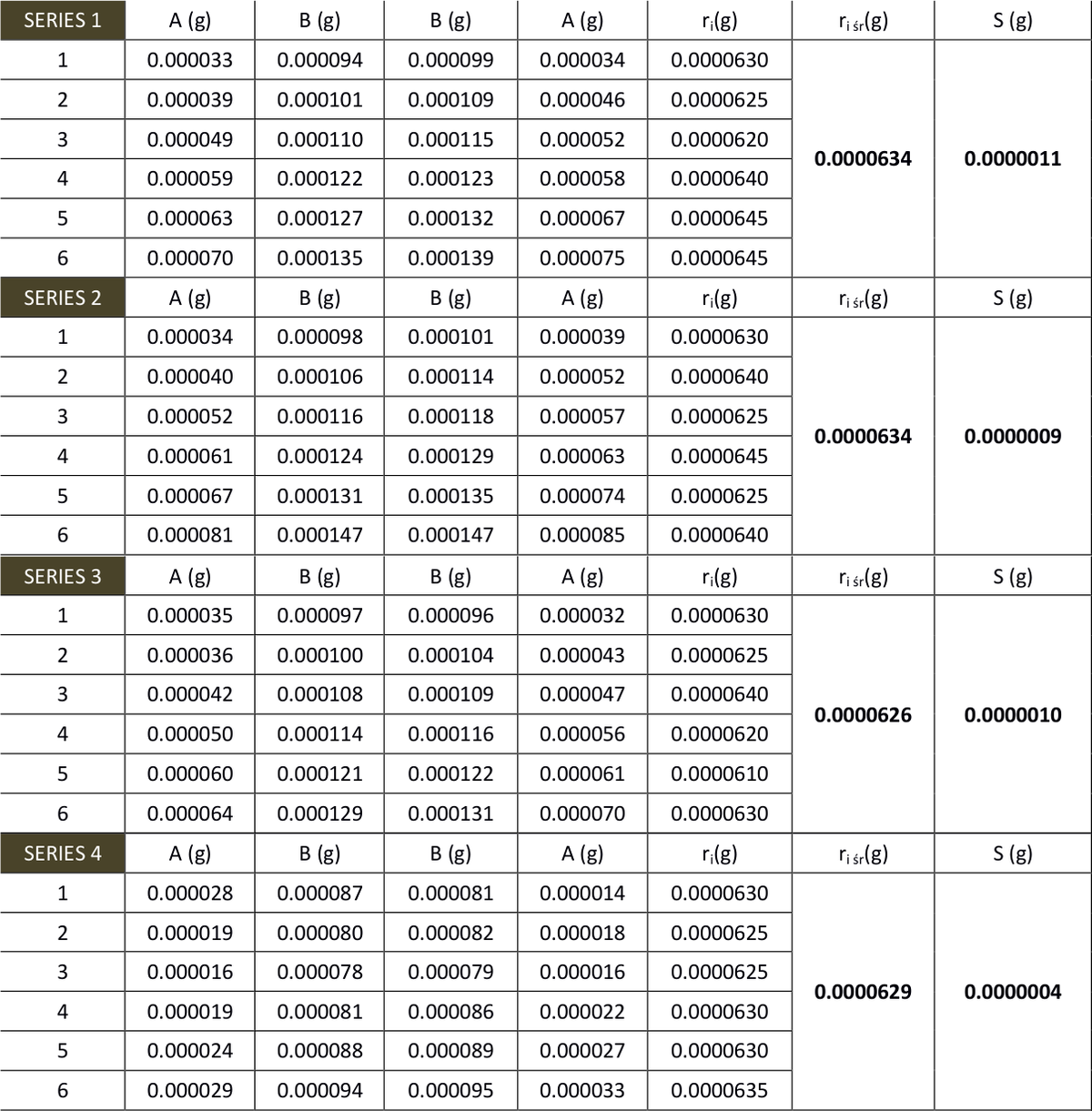
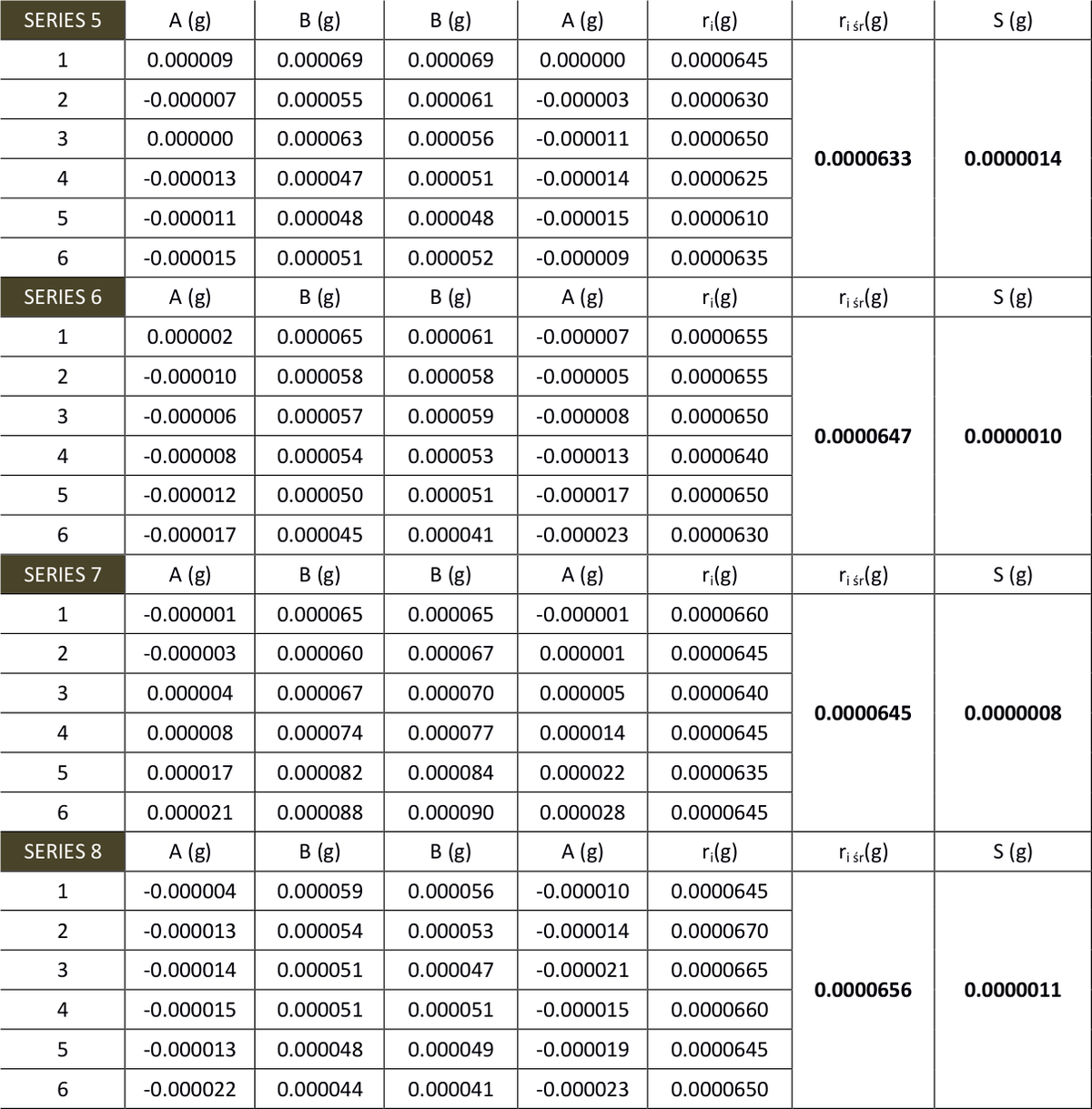
1. Adriana Vâlcu. 2022. An alternative approach for dissemination of mass unit after The new definition of the kilogram. Metrol. Meas. Syst., Vol. 29 (1). http://doi.org/10.24425/mms.2022.138540 2. Jaroslav Zůda, Ivan Kříž. 2017. DISSEMINATION OF THE MASS UNIT WITH VACUUM MASS COMPARISONS. IMEKO 23rd TC3, 13th TC5 and 4th TC22 International Conference 30 May to 1 June, 2017, Helsinki, Finland 3. Adriana Vâlcu. 2013.Extension of dissemination of mass unit below 1 mg in Romania. 16th International Congress of Metrology, 03004 (2013. http://doi.org/10.1051/metrology/201303004 4. Zaccaria Silvestri, Saïd Bouhtiyya, Patrick Pinot, Stuart Davidson. 2015. How to disseminate the mass unit for the new kilogram? 17 International Congress of Metrology, 18003. http://doi.org/10.1051/metrology/201518003 5. Christian Buchner. 2007. Fully automatic mass laboratory from 1 mg up to 50 kg – Robots perform high precision mass determination. IMEKO 20th TC3, 3rd TC16 and 1st TC22 International Conference Cultivating metrological knowledge. https://doi.org/10.1002/9780470611371.ch59 6. OIML R111-1. 20024. Weights of classes E 1 , E 2 , F 1 , F 2 , M 1 , M 1–2 , M 2 , M 2–3 and M 3 . Part 1: Metrological and technical requirements. 7. S. Janas, M. Solecki, T Szumiata. 2017. Automatic comparison of weights and mass standards. Radwag Balances & Scales. 8. M. Solecki, T. Szumiata. 2017. Optimization of mass standards and weights calibration (1 mg – 1 kg) using rotational automatic mass comparator. IMEKO 2017. 9. M. Solecki, T. Szumiata. 2018. Automatyzacja procesu wzorcowania wzorców masy i odważników oraz jej wpływ na poprawę parametru powtarzalności komparatorów masy. [ Automation of mass standard and weight calibration and its contribution into improving mass comparator repeatability parameter]. PPM Szczyrk.
A sonda de temperatura e ponto de orvalho DMP5 Vaisala DRYCAP® foi desenvolvida para medição de umidade em linha em aplicações de secagem industrial…

Lauri Reuter é um especialista no futuro da alimentação e a pessoa certa para perguntar se você já se perguntou o que comeremos no futuro e como toda…

As empresas industriais continuam a tomar medidas para minimizar as suas emissões de carbono. Muitos estão a reduzir a utilização de combustíveis…

No processo de caustificação, os produtos químicos passivos são convertidos em produtos químicos ativos para cozinhar para produzir licor branco…
Um especialista responde com a solução, o instrumento e o serviço adequados.
Produtos para cotar
Ainda não há produtos. É possível escrever mesmo assim: um especialista responde.