

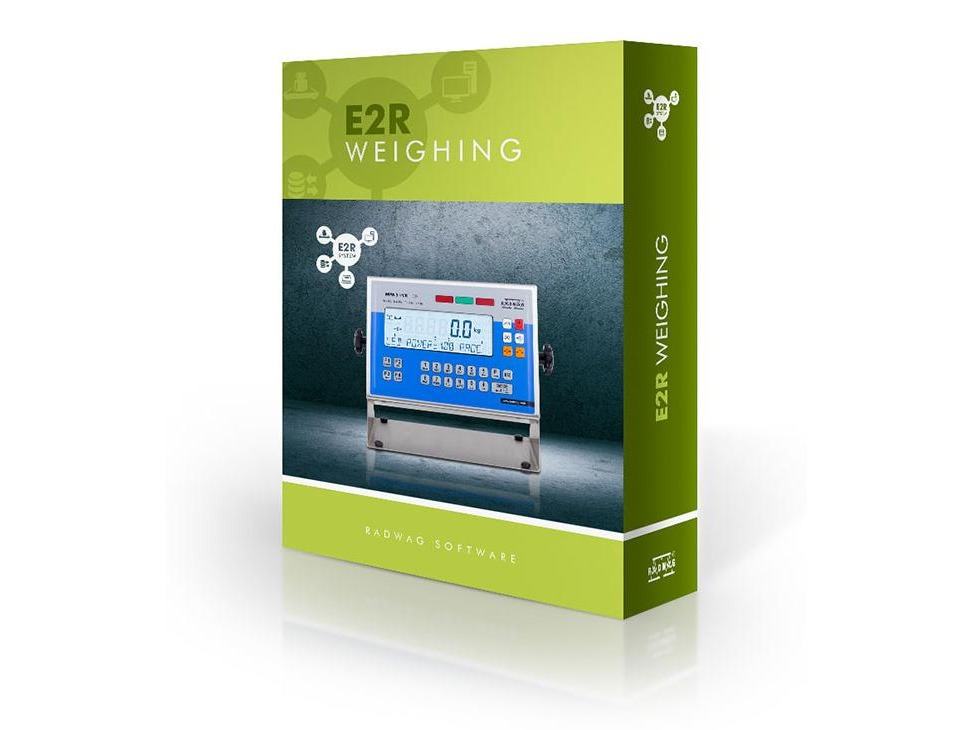
E2R Pesagem (WX-010-0099)
Ser capaz de analisá-los e corrigi-los em tempo real? Afinal, é a chave para aumentar a eficiência da linha de produção! Nossos clientes, os donos…
HY10.300.HRP
As balanças de alta resolução HRP são muito robustas. Suas plataformas se distinguem por um alto grau de proteção – IP 67. Elas possuem elementos de vedação adicionais que as protegem contra poeira e umidade. Como resultado, as balanças HRP podem ser limpas com uma lavadora de alta pressão.
Solicitar cotaçãoBaixar ficha técnica
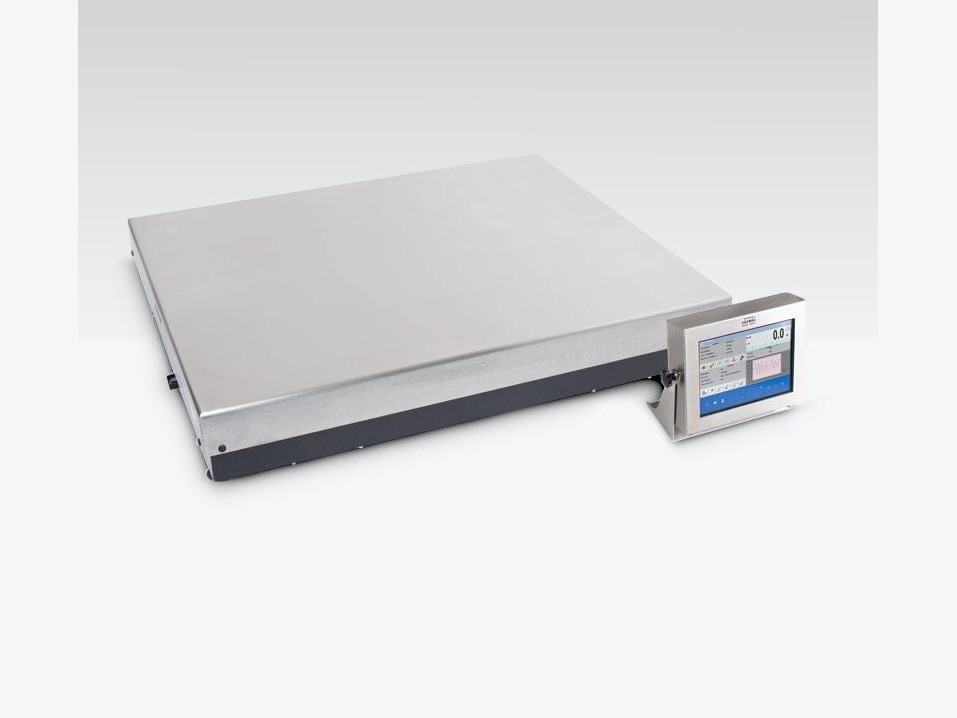
As balanças de alta resolução HRP são muito robustas. Suas plataformas se distinguem por um alto grau de proteção – IP 67. Elas possuem elementos de vedação adicionais que as protegem contra poeira e umidade. Como resultado, as balanças HRP podem ser limpas com uma lavadora de alta pressão.
A capacidade de pesar cargas de até 150 kg em um prato grande com alta resolução e boa repetibilidade, erro de excentricidade mínimo em toda a faixa, medição rápida e estável (alcançável em 1 segundo), estabilidade dos parâmetros ao longo do tempo e após o transporte, e uma dimensão do prato adaptada à resolução da balança – tudo isso é resultado do uso de um sistema de medição baseado na tecnologia aprimorada
MONO
BLOCK® . O novo
MONO
BLOCK® – mais alto e maior – proporciona a melhor repetibilidade e velocidade da classe de plataformas de pesagem industrial de alta resolução.
O ajuste automático com peso interno não só garante a melhor qualidade de trabalho e repetibilidade dos resultados, como também economiza tempo e proporciona conforto.
As balanças HY10.HRP são ideais para condições industriais onde são necessárias alta resolução e repetibilidade de medição, como nas indústrias farmacêutica, química e alimentícia. As balanças HY10.HRP e HX7.HRP, cujos terminais são feitos de aço inoxidável, podem ser usadas mesmo nos ambientes úmidos mais exigentes.
O uso de aço inoxidável na construção da plataforma de pesagem garante uma longa vida útil à balança. Ela não teme o contato com objetos úmidos ou respingos acidentais. A robustez e a resistência do design das balanças de alta resolução HRP permitem pesar objetos grandes, como paletes de mercadorias. A plataforma estável é resistente à vibração, o que é importante ao pesar objetos grandes.
Aqui está. A memória ALIBI é como uma caixa preta de uma balança. Ela registra todas as medições feitas no dispositivo. A memória ALIBI não pode ser modificada ou apagada.
Leitores de código de barras, impressoras de recibos, impressoras de etiquetas ou displays adicionais – graças ao software multifuncional, a balança HY10 é compatível com todos eles. Você pode encontrar todos os acessórios em nossa proposta comercial. E se tiver dúvidas sobre compatibilidade, nossos especialistas estão à disposição para ajudar.
Mas também contagem de peças, verificação de peso, pesagem percentual, pesagem de animais, formulações, pesagem diferencial, etiquetagem, retenção de pico e estatísticas. O poder dos módulos de trabalho do HY10.
Wi-Fi® é uma marca registrada da Wi-Fi Alliance®.
| Capacidade máxima [máx] | 300 kg |
|---|---|
| Carga mínima | 50 g |
| Faixa de pré-carga | 60 kg |
| Resolução [d] | 1 g |
| Faixa de tara | -300 kg |
| Repetibilidade | 3 g |
| Linearidade | ±6 g |
| Tempo de estabilização | 3 s |
| Ajuste | interna (automática) |
| Display | 10,1″ gráfico colorida tela touchscreen |
|---|---|
| Dimensões até prato de pesagem | 800×600 mm |
| Dimensões da embalagem L x P x A | 800×1000×537 mm |
| Peso líquido | 71,5 kg |
| Peso bruto | 119 kg |
| Classe de proteção | IP 66 / 67 construção, IP 66 / 67 / 69 terminal |
|---|---|
| Construção | aço carbono St3S |
| Material até prato de pesagem | aço inoxidável AISI304 |
| Interface de comunicação | 2×RS232, 2×USB-A, Ethernet, 4 IN / 4 OUT (digital) |
|---|---|
| Interfaces opcionais | módulo Wi-Fi ® 802.11 b/g/n, módulo Profibus (DP SLAVE), módulo RS485, módulo PROFINET (RJ45), módulo de saída analógica (4-20mA, 0-20mA, 0-10V) , 12IN / 12OUT (IN – 5-24 VDC, OUT – max 30 VDC, 0,5 ADC) |
| Fonte de alimentação | 100 – 240 V AC 50/60 Hz |
|---|
| Temperatura de operação | +10 – +40 °C |
|---|---|
| Umidade relativa | 15% – 80% |
Weighing process for which reference mass has been determined together with tolerance for its determination. Dosing tolerance is given in [%] and it is calculated in relation to the reference value thus being a permissible deviation of this process. This solution is used for weighing powders, liquids and loose materials. Dosing function performance is often supported with bargraph - load indicator. For industrial scales it is possible to use a control systems of dosing process.
Marking products with the right symbols contributes to quick and reliable identification. The balance/scale usually transfers product mass or product quantity to the label printer. The transferred value is printed with the following information: bar code, pictogram, content, address etc. In laboratory the labelling is performed in a semi-automatic mode, for industry in an automatic one (dynamic scales).
Control of sample's mass carried out with reference to specified MIN and MAX thresholds. The weight is considered to be correct if it is comprised within threshold values. A graphic visualisation of weighing result is displayed in a form of a bar graph.
Percent Weighing function is used for comparision of measured products with mass standard. Mass of a mass standard may be a numeric value taken from a database or it may be determined through a measurement process. Each measured product is compared to mass standard, mass of which is presumed as a model 100% ideal mass. For products weighing less than the mass standard, obtained results are lower than 100%, for products weighing more, the obtained results are greatly exceeded.
Function adding new mass value to already obtained one. This allows to determine mass content of the mixture, being a composition of number of different consistence components. Totalizing is limited by maximum capacity parameter.
Function using mass measurement for determination of measured items quantity. Mass of a single item is required for this process. It may be either estimated through weighment or taken from a database. For items counting the following algorithm is used: all items mass / single item mass = quantity. Function operation is supperted by a mechanism of Automatic Correction of Accuracy. This allows to update single item mass in course of the process. To a certain extend Automatic Correction of Accuracy eliminates error which may be a result of different mass values of seemingly alike single elements. For industry solutions items counting may be simultaneously carried out with checkweighing and dosing thus industry solutions feature audio signalling base informing that specified number of items has been weighed. It is possible to apply weighing systems using few platfroms of different MAX capacities and different accuracies.
Function registering the greatest temporary indication occurring in course of the weighing process. It is most often used in medical scales in order to hold the measurement indication.
Function supporting the mixture making process, wherein the mixture contains various components. Formulation function usually uses the balance/scale database of components. Formulation serves for monitored checkweighing of every single component with a given tolerance. It is enriched with a set of individual settings.
Statistiscs function registers and analyses performed measurements. This supplies the user withthe following information: Max and Min standard deviation, average value, variance, range et.
Checkweighing function is used for checking whether the measured sample mass is within the predefined threshold values, Low [LO] and Hgh [HI]. The thresholds are given in [g] and [kg] units. Current state of a sample being measured is signalled by means of pictorgams located on a display for laboratory balances, for industrial scales Stackligt System is used. This visual +/- inspection is in operation during segregation, control or packing process of products for which mass has bees determined with a specifaied tolerance, eg. 12860 g ± 5 g
Diagnostic function allowing to objectively document performed measurements. GLP procedures may be either presented in a short report form or extended one.
Process of mass determination for a product which may unwillingly reposition within the weighing pan. Mass determination in such cases requires much longer period of time when compared to typical weighing process. It is the user who defines period of time needed for control of measured product mass. The user can thus optimize the function depending on the measured product characteristics.
Differential weighing informs about mass variation a particular sample, wherein the said variation is a result of manufacturing processes.
Weight function to change the weight unit.
Statistical control for determination of basic statistical criteria: maximum, minimum, standard deviation, mean values for each batch, etc.
"ALIBI" memory enables saving and storing up to 100000 measurements. Measurements are saved automatically upon each pressing of the key. There is no need for any additional operations or changing settings.
The following data related with the measurements is saved: measurement date; measurement time; result (mass); tare value; operator carrying out the measurement (logged in); product name.
The software saves the measurement in a so called loop, i.e. when the measurement no. 100001 is saved, the measurement 1 gets automatically deleted from the memory.
Measurements saved to balance memory cannot be deleted.
You can preview and print out the data saved to the ALIBI database.
Complex weighing mode for registration of weighings that are part of transactions such as sale, purchase and warehouse transfer. You can create a new transaction using the scale. It is possible to pause the transaction or abort it. The function supports warehouse management in an enterprise.
Escolha modelo, sondas e acessórios. As combinações incompatíveis são bloqueadas na hora; as demais regras são verificadas ao adicionar o equipamento à cotação.
Carregando as opções…
É possível colar um código e a configuração se monta sozinha.
São cotados à parte: não é preciso configurar o equipamento.
Ser capaz de analisá-los e corrigi-los em tempo real? Afinal, é a chave para aumentar a eficiência da linha de produção! Nossos clientes, os donos…
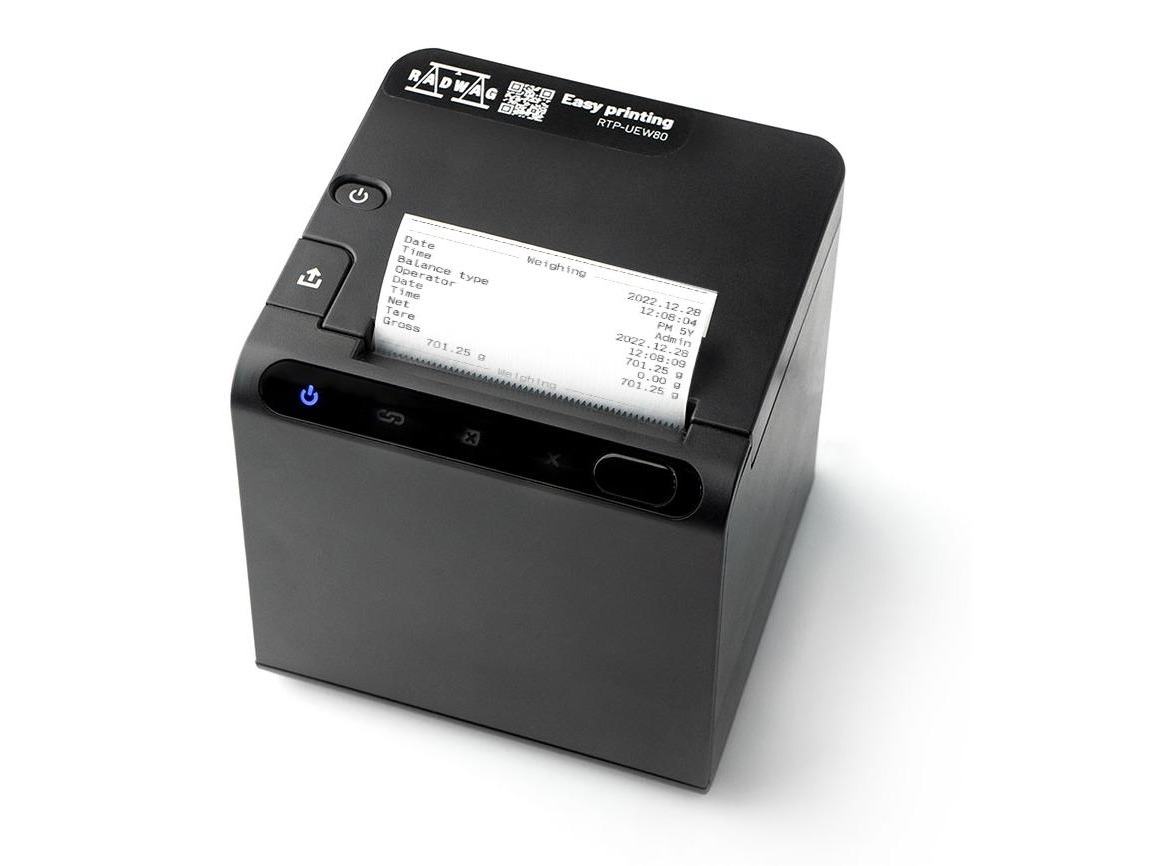
A comunicação sem fio via Wi-Fi® é um dos principais diferenciais da impressora RADWAG RTP-UEW80. O equipamento permite a impressão prática de…
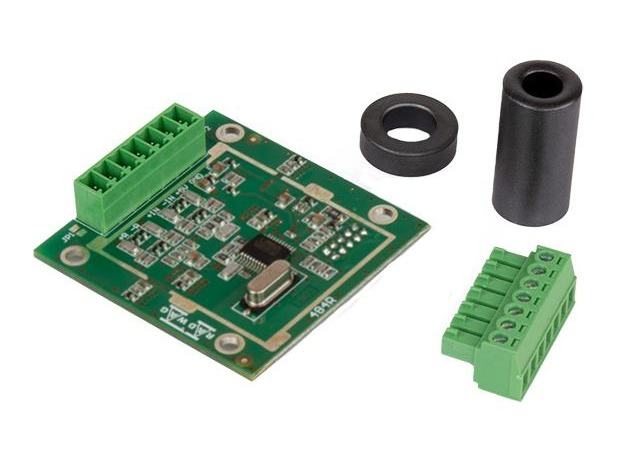
Aprimore a funcionalidade do seu sistema de pesagem com o móduloDP-6 da RADWAG, líder em inovações de pesagem de precisão. Este módulo avançado…
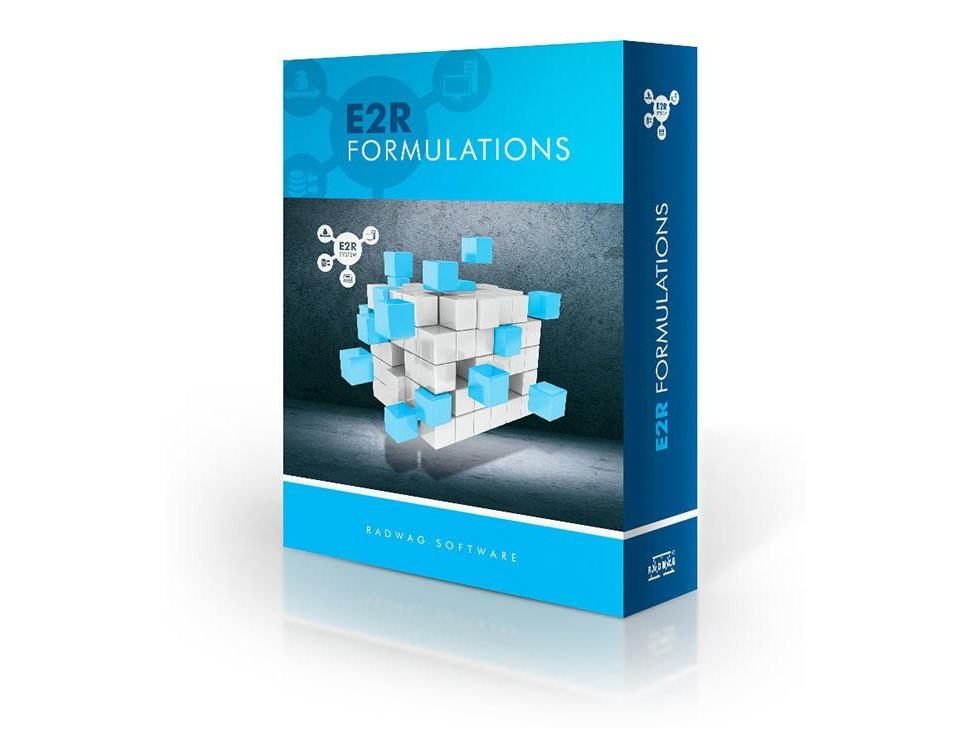
Ser capaz de analisá-los e corrigi-los em tempo real? Afinal, é a chave para aumentar a eficiência da linha de produção! Nossos clientes, os donos…
A RADWAG RTP-RU80 é uma moderna impressora de recibos desenvolvida para trabalhar em conjunto com balanças laboratoriais e industriais. Equipada com…
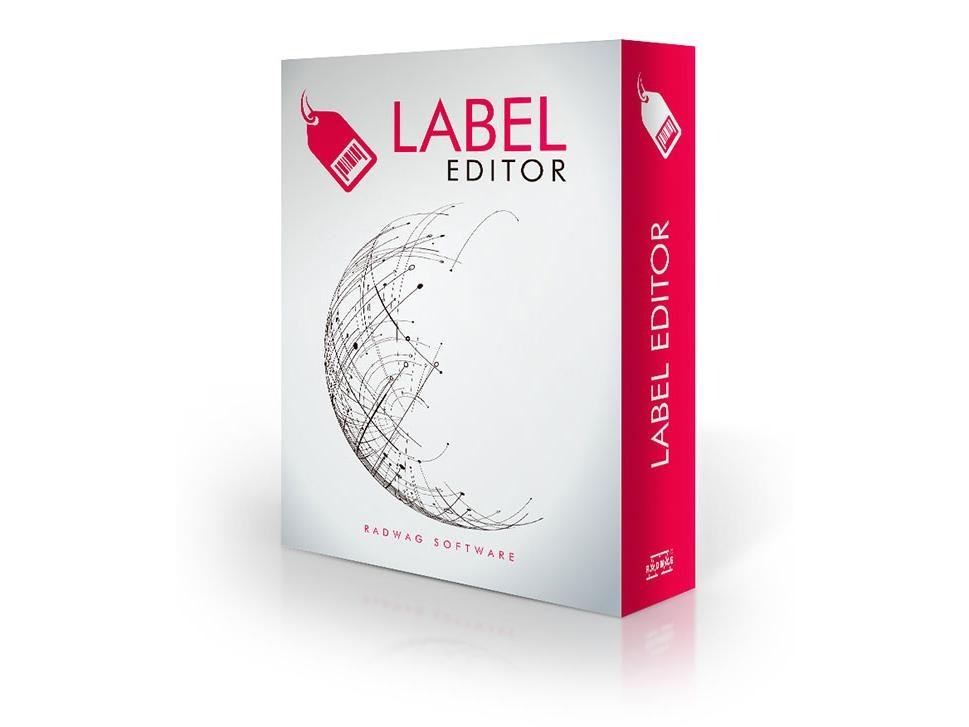
O R02 Label Editor é um aplicativo proprietário da RADWAG que permite aos usuários criar etiquetas parabalanças industriais, balanças para áreas EX…
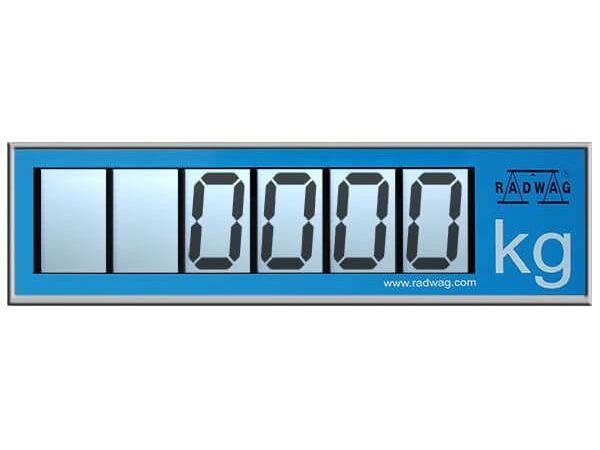
O visor adicional de grande porte é um acessório das balanças de células de carga.
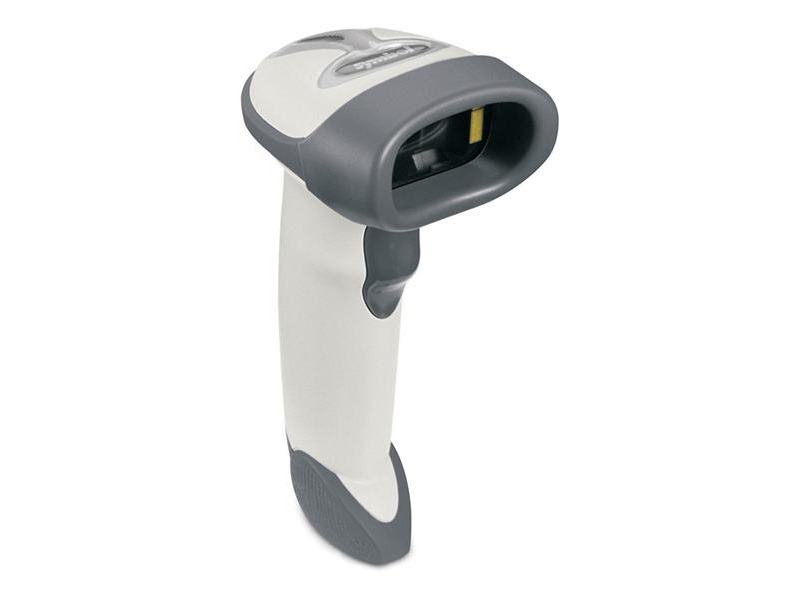
Permite coletar, apresentar e realizar análises estatísticas de medições enviadas das balanças RADWAG para um computador. O software opera com no…
Ser capaz de analisá-los e corrigi-los em tempo real? Afinal, é a chave para aumentar a eficiência da linha de produção! Nossos clientes, os donos…
Instrumentos para cotar
Ainda não há instrumentos. É possível escrever mesmo assim: um especialista responde.