

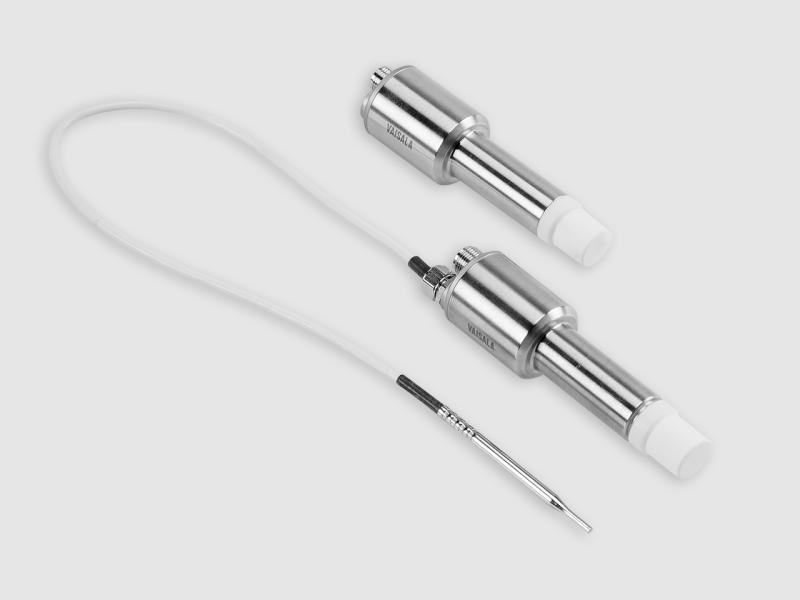
Medidor HPP272 de peróxido de hidrógeno vaporizado, humedad y temperatura
para procesos de bio-descontaminación
Nota técnica
In the world of bio-decontamination and sterilization technologies, vaporized hydrogen peroxide has emerged as a fascinating subject, sparking numerous questions and discussions. Vaporized hydrogen peroxide is receiving more attention, partly because of it is an environmentally friendly sterilization method, but also because of wider acceptability from regulators.
In early 2024, this agency press release “FDA Facilitates Broader Adoption of Vaporized Hydrogen Peroxide for Medical Device Sterilization” established VHP as a Category A method of sterilization. In its newly revised guidance, "Submission and Review of Sterility Information in Premarket Notification (510(k)) Submissions for Devices Labeled as Sterile" the FDA supported using VHP as a sterilization method in the medical device industry.
However, with increasing use of VHP to bio-decontaminate GxP-regulated applications, the regulatory expectations of documenting processes will likely also increase. One of the key parameters to monitor when developing a VHP cycle is Relative Saturation. But what is this parameter and how does it impact bio-decontamination cycles?
In our webinar, Relative Saturation: The key to better vH2O2 Bio-decontamination, we received several intriguing queries that delve into the complexities of bio-decontamination. For many of the questions, the Vaisala vH2O2 calculator could have provided insights with full data visualization.
In this blog, we share some of the questions from the webinar and explore how, for some of the questions, the Vaisala calculator can provide answers.
Question: "Why does the background H2O level help for the saturation of H2O2 concentration in the chamber?"
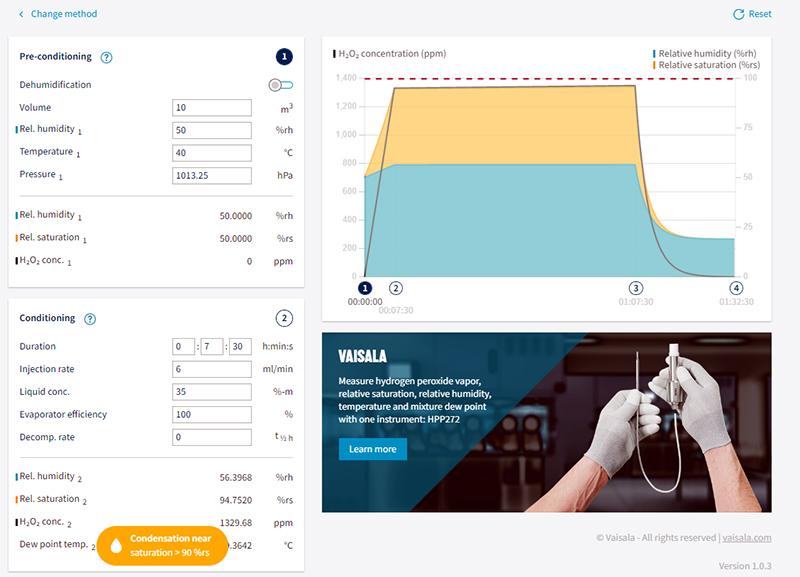
Joni: Background humidity prior to bio-decontamination dictates how much capacity is left in the air for the injected H2O2+H2O vapor. One way to see this effect is to use our H2O2 calculator. This tool allows you to input different parameters and see how they affect the result.
Question: “Is there any possibility for detection of conversion rate of vaporized hydrogen peroxide to H20? If so, how?”
Joni: The rate of decomposition can be detected by monitoring the vH2O2 concentration with a probe such as the HPP270. Vaporized hydrogen peroxide naturally begins to decompose during a cycle. This is typically compensated for by injecting more hydrogen peroxide vapor into the environment. In a closed system this will accumulate humidity. If you are trying to avoid condensation, you will need to leave some safety margin before the dwell phase in order to get all the vapor to fit in the space.
Question: “Is sensor purge done between the bio-decontamination cycles? If so, what should be the time between the cycles?”
You can run as many cycles per day as needed. The probe performs the purge every time it is powered on, or in intervals of every 24 hours. The best performance and long-term stability of the HPP272 is achieved by performing a purge before each cycle. There are several ways to control the purge triggering. More information can be found in the Quick Guide.
Question: “What is the holding capacity of vHP in air when there is T=40 deg and more RH = ~50%?”
Joni: I used our H2O2 calculator to answer this question. It is important to know the liquid H2O2 concentration used. Using our calculator, I estimated 35% liquid concentration and that yielded a simulated value of 1330 ppm in 95% relative humidity.
This webinar showcased the dynamic nature of the critical process parameters in vaporized hydrogen peroxide bio-decontamination. As the method gains wider use, the need to monitor and analyze processes will likely increase. Tools such as the HPP270 series probes, which can combine multiple parameters into a single unit, as well as the remains at the forefront, driving scientists, researchers, and practitioners to explore new frontiers in bio-decontamination.
para procesos de bio-descontaminación
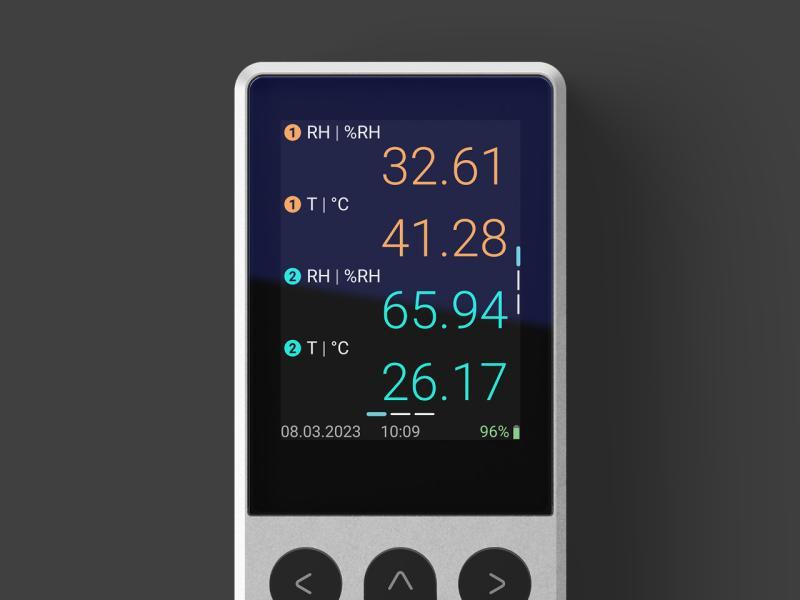
La última incorporación a la familia Indigo de transmisores y sondas, el Indigo80 es un indicador y registrador de datos compacto y portátil. Ideal…
La última incorporación a la familia Indigo de transmisores y sondas, el Indigo80 es un indicador y registrador de datos compacto y portátil. Ideal…
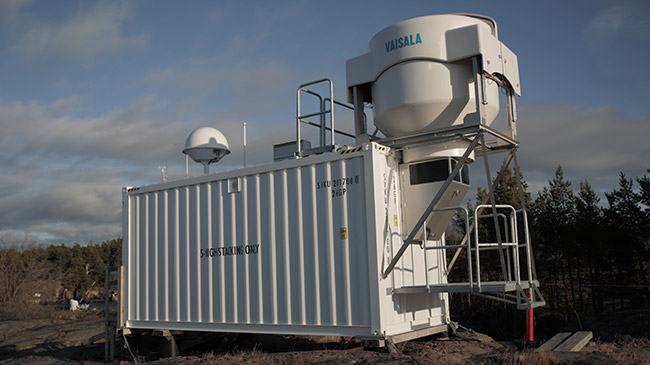
Upper air soundings provide the crucial data necessary for a complete atmospheric weather profile that leads to accurate forecasting. However…
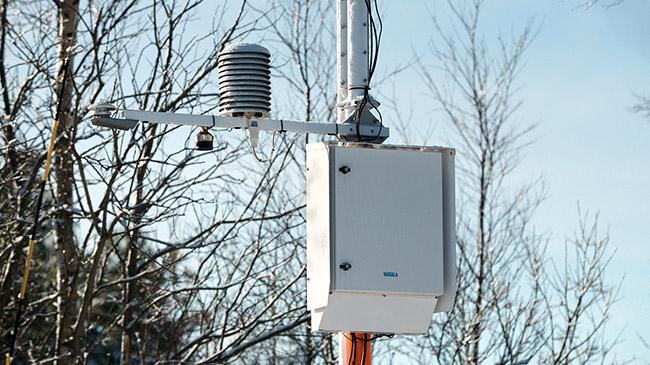
Vaisala Automatic Weather Station AWS310 is a complete communication and weather observation solution that can be used as a standalone unit, or as…
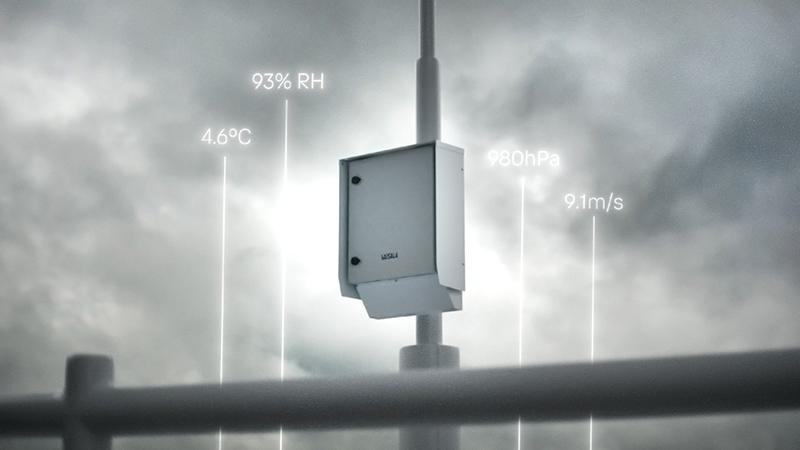
Our next-generation, cyber secure and modular Maritime Automatic Weather Station AWS830 is engineered for harsh marine environments and compliant…

La Punto de Rocío y Temperatura DMP5 Vaisala DRYCAP® está diseñada para la medición de humedad en línea en aplicaciones de secado industrial con…

El Dr. Lauri Reuter es una experta en el futuro de los alimentos y la persona a quien preguntar si alguna vez te has preguntado qué vamos a comer en…

Las empresas industriales continúan tomando medidas para minimizar sus emisiones de carbono. Muchos están reduciendo el uso de combustibles fósiles y…

En el proceso de caustificación, los químicos pasivos se convierten en químicos de cocina activos para producir licor blanco. Se utiliza en el…
Un especialista responde con la solución, el instrumento y el servicio que corresponden.
Productos para cotizar
Todavía no hay productos. Se puede escribir igual: un especialista responde.