


Resaltando la belleza de la madera: secado de chapa con control de humedad
La Punto de Rocío y Temperatura DMP5 Vaisala DRYCAP® está diseñada para la medición de humedad en línea en aplicaciones de secado industrial con…
Nota técnica
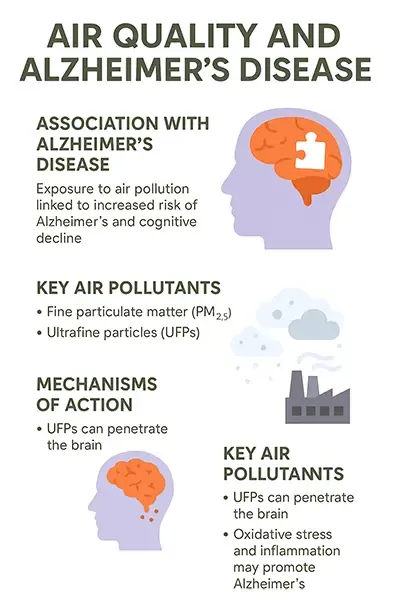
If you’ve ever wondered how the air you breathe might affect your brain, you’re not alone. Air pollution is now being recognized as a contributor to neurological diseases, including Alzheimer’s disease. Recent research shows a strong association between poor air quality and increased risk of Alzheimer’s, especially when it comes to ultrafine particles (UFPs) and fine particulate matter (PM2.5).
Ultrafine particles, or UFPs, are smaller than 0.1 microns—so tiny that they can bypass your body’s natural defenses and slip right past the blood-brain barrier. Once inside your brain tissue, these particles can trigger inflammation and oxidative stress, which are two key drivers behind the development of Alzheimer’s disease. Scientists have found that these particles are linked to the formation of amyloid plaques and neurofibrillary tangles, both of which are classic hallmarks of Alzheimer’s.
Traffic-related air pollution is a major source of UFPs. Living near busy roads isn’t just noisy and stressful—it’s also risky for your cognitive health. According to a study published in The Lancet Neurology, your risk of dementia goes up by 7% for every 50 meters closer you live to a major roadway. That’s a pretty big deal if you’re in an urban area or near highways.
You might think you’re safe inside, but indoor air quality can sometimes be just as bad as what’s outside. Everyday activities like cooking, cleaning, or burning candles can fill your home with fine particles.
If you’re looking for practical ways to improve indoor air quality and protect your cognitive health, here are some tips:
Poor air quality is a modifiable environmental factor linked to Alzheimer’s disease. The science is clear: exposure to UFPs, PM2.5, ozone, and nitrogen dioxide can all contribute to brain inflammation and accelerate cognitive decline. By taking steps to reduce both personal and community-level exposure, you can help protect your brain health and lower your risk of Alzheimer’s.
Air pollution and Alzheimer’s disease are more connected than most people realize. The good news? You have the power to make changes—both at home and in your community—to help protect your brain. Whether it’s supporting clean energy policies, using an air purifier, or simply checking the AQI before a walk, every step counts.
What changes have you made at home to improve your air quality? Have you noticed a difference in how you feel on days with better air?
La Punto de Rocío y Temperatura DMP5 Vaisala DRYCAP® está diseñada para la medición de humedad en línea en aplicaciones de secado industrial con…

El Dr. Lauri Reuter es una experta en el futuro de los alimentos y la persona a quien preguntar si alguna vez te has preguntado qué vamos a comer en…

Las empresas industriales continúan tomando medidas para minimizar sus emisiones de carbono. Muchos están reduciendo el uso de combustibles fósiles y…

En el proceso de caustificación, los químicos pasivos se convierten en químicos de cocina activos para producir licor blanco. Se utiliza en el…
Un especialista responde con la solución, el instrumento y el servicio que corresponden.
Productos para cotizar
Todavía no hay productos. Se puede escribir igual: un especialista responde.