

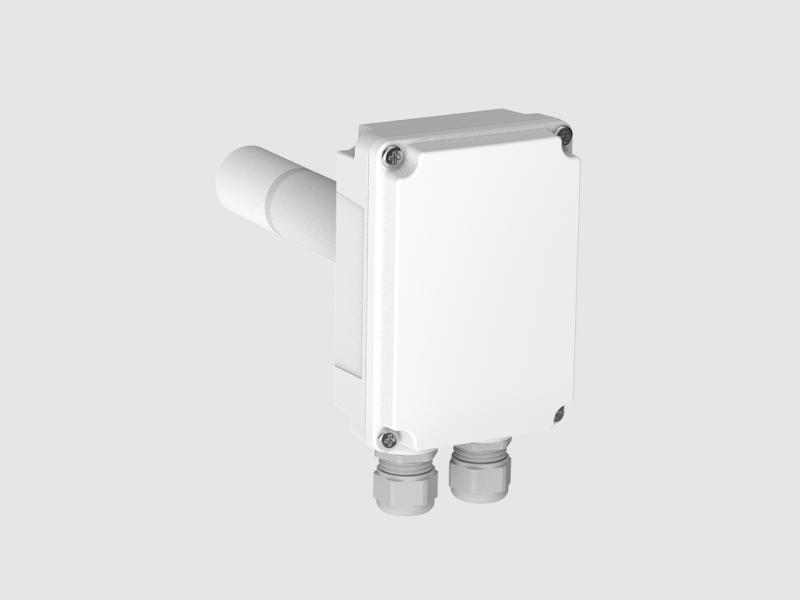
Transmissor de CO2 de duto GMD110
Para medições de alta precisão em aplicações HVAC
Nota técnica
The environment in which you’re measuring CO2 plays an important role in determining the best choice of sensor for your application. In this post we take a look at how the demands on sensors vary depending on the measurement environment.
If you’re measuring in a laboratory environment you’ll need accurate and traceable measurement, and it’s also worthwhile to think about how traceability will be maintained. In these environments it makes sense to invest in a device with exchangeable measurement probes or modules. Other options could include field adjustment against a calibrated handheld device or with calibration gases. Labs are also home to a variety of different chemicals, so chemical durability for both the sensor and the enclosure is important. In life science labs in particular, decontamination might also be a factor that needs to be addressed. Vaisala Indigo series transmitters have an exchangeable GMP252 CO2 measurement probe and come with a calibration certificate and IP65-rated housing. The unit can tolerate most common disinfectants as well as hydrogen peroxide, which is commonly used for decontamination procedures. The exchangeable probe helps to maintain traceability by minimizing calibration downtime.
In public spaces you need sensors that require minimal maintenance and are capable of operating in environments that are occupied 24/7. Any servicing should be straightforward as trained personnel may not be available. The products should also be unobtrusive and have tamper-proof enclosures. Vaisala GMW80-series transmitters meet all these requirements. Key features include:
Accurate CO2 measurement in spaces that are occupied 24/7 Long operational lifespan of over 15 years Long-term stability:
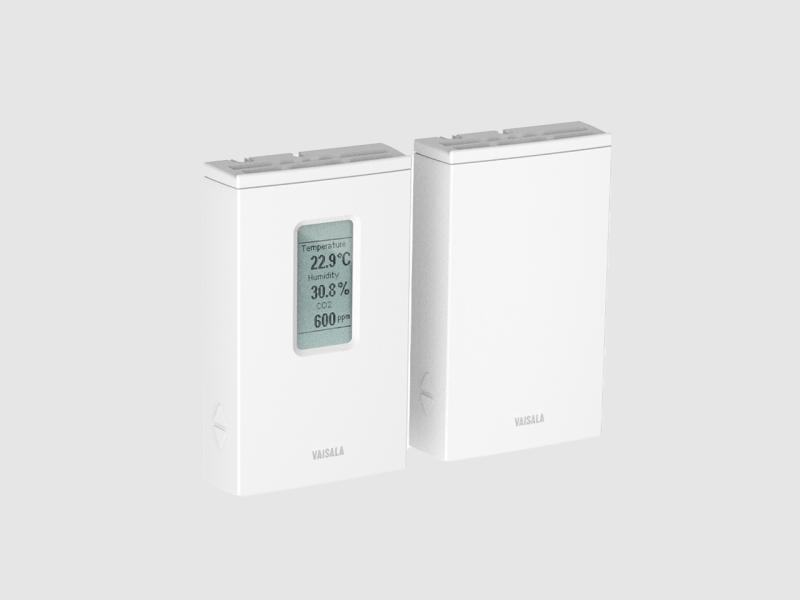
For green buildings and other demanding environments where high measurement accuracy is required we offer the Vaisala GMW90 series, which features:
Accuracy up to ±50 ppm at 1000 ppm of CO2, meeting the demands of LEED requirements A five-year calibration interval and three different options for calibration Easy adjustment against reference gases or a Vaisala GM70 handheld unit User-friendly display shows you what you are doing during service Sliding front cover for easy maintenance
The sensor chosen for measuring CO2 concentration in outdoor environments is one of the most important for the entire building, because the measurements it takes are used to control the building’s fresh air intake. For this type of application Vaisala offers the GMP252 transmitter, which is designed for demanding high-humidity environments.
Wall-mounted sensors should be installed at head height in a representative location and not behind a cupboard, in the ceiling, or close to an air inlet duct. It also pays to think about what’s behind the wall too. For example, if there’s underpressure in the room the sensor will be pulling in air from within the building’s construction, meaning you’ll end up measuring something completely different than the room conditions. In these cases, if there are leaks you may need to seal the cable feedthroughs.
Another common mistake is to install two measurement devices on top of each other. This is not actually a problem for CO2 sensors, but if you install a humidity or temperature sensor on top of a CO2 sensor, the heat from the CO2 sensor’s light source will distort the measurement results.
When it comes to maintaining your transmitter equipment, a handheld reference instrument like the Vaisala MI70 can be extremely useful because it makes adjusting the transmitter quicker and easier: simply plug in the service cable and with a single button push you can adjust the transmitter to read the same as the reference instrument. Remember that people are the biggest source of CO2, so don’t breathe directly onto the reference probe or sensor you want to calibrate. This may sound pretty obvious, but it happens all the time!
It’s also important to adjust the pressure settings of your instrument. Because CO2 is measured in parts per million, sensors are calibrated to a certain barometric pressure level or elevation. When you’re installing an instrument make sure that you have entered the correct elevation to ensure accurate measurement. Even more importantly, if you’re performing field adjustments by adjusting your fixed instrument against a handheld device you should make sure that both devices have the same pressure or elevation setting.
Learn more on how we can help you with your HVAC measurements or contact us for more information.
Para medições de alta precisão em aplicações HVAC
para projetos de construção verde
para projetos de construção verde
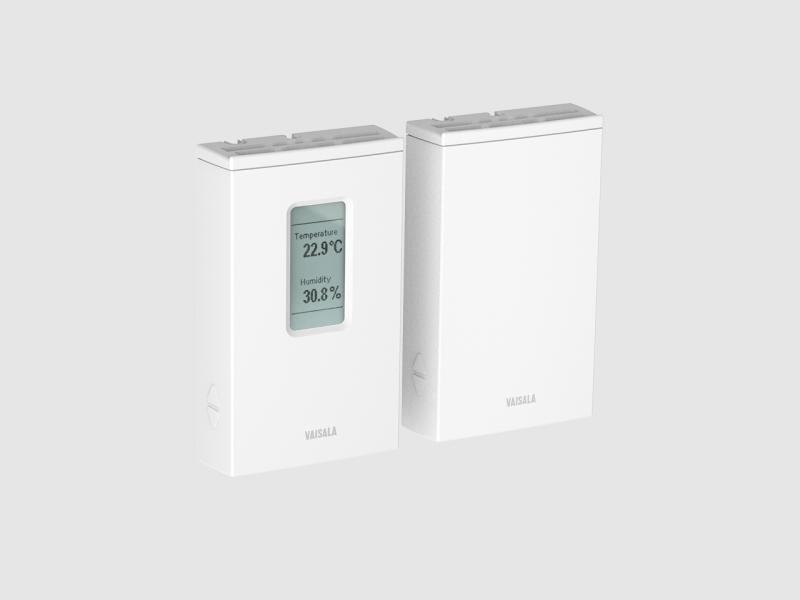
Transmissores de parede de ±1.7% de umidade relativa com um certificado para HVAC exigente
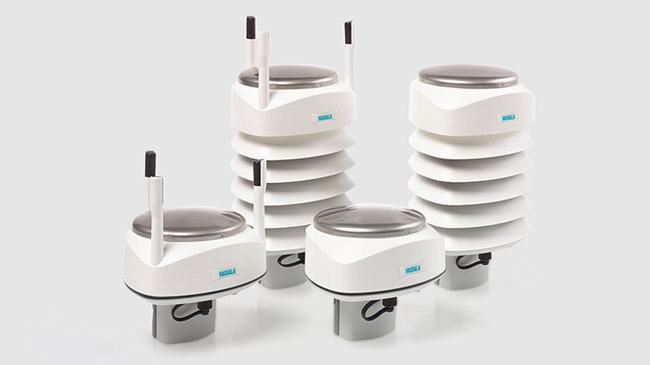
Vaisala Weather Transmitter WXT530 series is a unique collection of cost-effective sensors that accurately and reliably measure weather conditions…

para inspeções rápidas e verificação do local

O que são umidade relativa, ponto de orvalho, umidade absoluta e razão de mistura, como a temperatura e a pressão distorcem a leitura, e por que o…

Como a umidade se comporta em condições reais, os três problemas de medição mais frequentes, e dois cenários práticos —ar aquecido e ar comprimido—…

Quando medir umidade relativa e quando ponto de orvalho, o que exigem a alta e a baixa umidade, como influem temperatura e pressão, e quando convém…

A climatização representa até 40 % da demanda energética de um data center. Este guia da Vaisala explica como a exatidão de medição reduz custos e…
Um especialista responde com a solução, o instrumento e o serviço adequados.
Instrumentos para cotar
Ainda não há instrumentos. É possível escrever mesmo assim: um especialista responde.