


Medidor de punto de rocío DMT132
para secadores refrigerantes
Nota técnica
Ensuring dry compressed air isn't about dew-point values alone. High-quality compressed air requires three things: good measurement practice, best-practice sensor installation, and smart sensor placement. Get these factors right, and you’ll maintain product quality, protect equipment, and increase energy efficiency.
The compressed air used in many industrial applications needs to be kept dry. This is because moisture in compressed air can cause corrosion, blocked valves, frozen lines, product contamination, and microbial growth. If compressed air isn’t dry, it can quickly move from being a clean and reliable ‘fourth utility’ into posing a quality and maintenance risk.
There are different ways to measure the dryness of compressed air, but not all methods are equal.
Relative humidity (RH), for example, tells you the percentage of water relative to what the air can hold at that temperature. However, RH changes with temperature, so it doesn’t give a meaningful indication of condensation risk in a compressed air system.
Dew point, on the other hand, tells us the exact temperature at which moisture will condense into liquid water or ice. It is pressure dependent and shows us where and when in the process there could be a risk of moisture forming in the compressed air. This makes it the ideal control variable: if the dew point is above 0°C there is a risk of condensation and corrosion in your process. The lower the dew point, the safer it is.
Typical dew-point targets by dryer type include:
Because dew point is pressure dependent, compressing air makes a difference to the measurement. It is important to take this into account if you are bleeding air to the atmosphere before measuring, as the dew point at the measurement point will be different from the dew point in the process. When pressure dew point is needed, either measure at process pressure or make sure you correct the measurement carefully.
A low dew point reading isn’t helpful if the measurement doesn’t reflect your actual process conditions.
Sensor placement matters when measuring dew point. If you just install a sensor after the dryer and nowhere else, the measurements will only confirm that the dryer output is within parameters. It’s best to also place sensors at critical use and end-of-line points. This will reveal any leaks as well as losses from cooling and distribution.
For example, Walki Oy Valkeakoski uses a monitoring setup with sensors post-dryer and at the end of the compressed air network. This enabled real-time alerts when a dryer malfunction caused a rise in moisture levels. The system triggered an automatic alarm when the dew point in the compressed air network reached -25°C. This alarm meant Walki could respond quickly to the problem, preventing the issue from negatively impacting their production process.
Even the best dew point sensor will only be as accurate as the installation allows. Here is a handy checklist of five installation essentials to make sure your dew point measurements are as accurate as possible.
Both methods have a purpose – spot checks can help solve issues, while continuous monitoring helps prevent them.
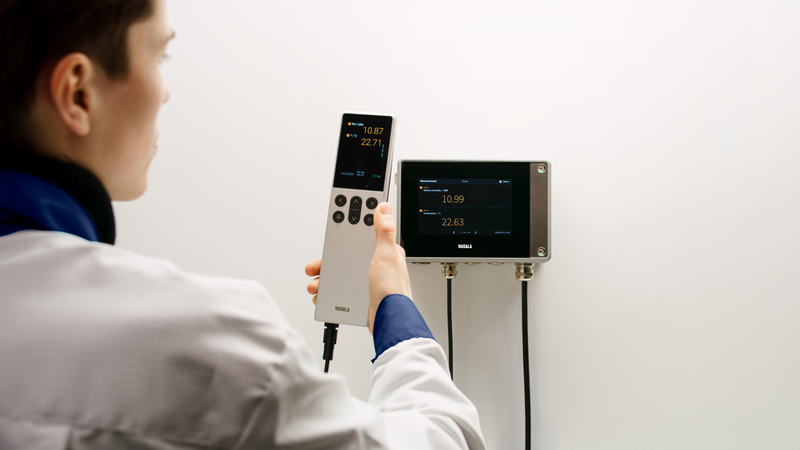
Spot checking using a portable dew-point probe and logger is ideal for performing audits, troubleshooting, and calibration checks. Energy savings can often come from finding and fixing leaks and right-sizing drying. For example, SmartAir and Energy Oy uses the Vaisala Indigo80 to generate energy and cost savings for customers that use compressed air.
Continuous monitoring gives you real-time situational awareness and enables automatic alarms if the dew point drifts or spikes. Drifts or spikes can be a sign of a dryer malfunction, tower switching, or a sudden load change. For example, at Walki’s Valkeakoski plant, sensors triggered an alarm when the dew point climbed to –25°C. This enabled quick corrective action before the change affected product quality. Continuous monitoring also provides useful trend data that you can use for maintenance and investment planning.
The main ISO standard for measuring the purity of compressed air is ISO 8573, which divides compressed-air quality into classes for particles, water, and oil. The standard covers nine areas, including contaminants and purity classes, as well as the actual test methods for a wide range of variables including oil, gases, water, and humidity. Dew point measurement is how you prove compliance with the water component of the standard.
For hygiene-critical industries where there is a microbial growth risk, ISO 8573-7 covers viable contaminants. The dryness and cleanliness of compressed air is one of the primary barriers against microbial growth.
Modern dew point instruments differ significantly from older chilled-mirror hygrometers or slow capacitive probes. Vaisala’s DRYCAP® sensors have a highly sensitive thin-film polymer that provides:
For engineers who need to convert between atmospheric dew point and pressure dew point or make other complex humidity calculations or conversions, Vaisala offers a free and easy-to-use humidity calculator.
Want to find out more about compressed air and dew point measurement? Download the Compressed Air eGuide or watch The essentials with compressed air dew point webinar.
✔ Choose the right places to measure, for example post-dryer and point-of-use
✔ Measure at the right process pressure, or correct properly
✔ Use stainless steel sampling lines and cells
✔ Ensure leak-tight fittings
✔ Maintain a slight, steady airflow across the sensor
✔ Avoid dead legs and purge sampling lines before measuring
✔ Keep sampling lines above dew point – use heat tracing if needed
✔ Decide when spot checking is enough and when continuous monitoring is essential
para secadores refrigerantes

para aplicaciones de fabricantes de equipos originales

La última incorporación a la familia Indigo de transmisores y sondas, el Indigo80 es un indicador y registrador de datos compacto y portátil. Ideal…
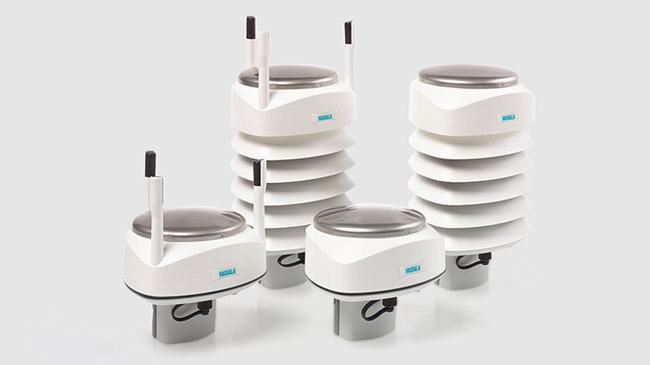
Vaisala Weather Transmitter WXT530 series is a unique collection of cost-effective sensors that accurately and reliably measure weather conditions…

for cleanrooms and industrial settings
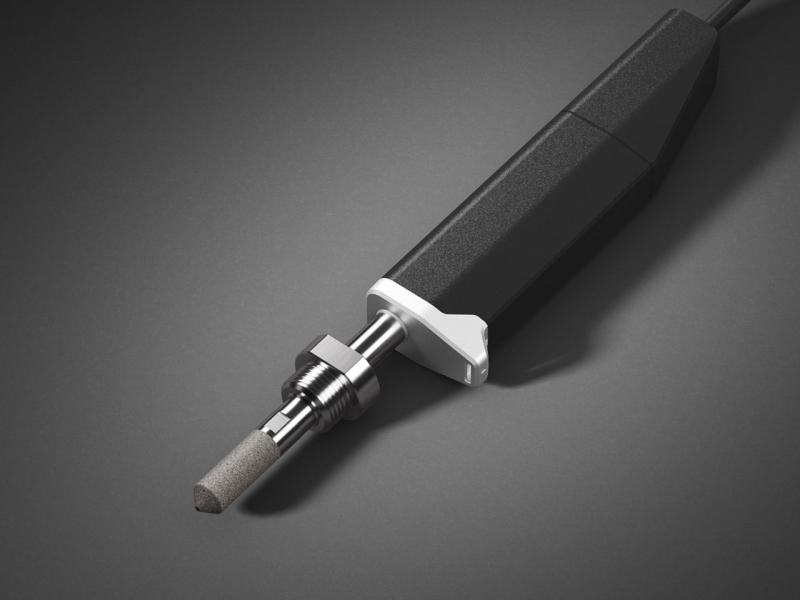
Para verificación puntual y calibración de mediciones del punto de rocío

Qué son la humedad relativa, el punto de rocío, la humedad absoluta y la razón de mezcla, cómo la temperatura y la presión distorsionan la lectura, y…

Cómo se comporta la humedad en condiciones reales, los tres problemas de medición más frecuentes, y dos escenarios prácticos —aire calentado y aire…

Cuándo medir humedad relativa y cuándo punto de rocío, qué exige la alta y la baja humedad, cómo influyen temperatura y presión, y cuándo conviene…

La climatización representa hasta el 40 % de la demanda energética de un centro de datos. Esta guía de Vaisala explica cómo la exactitud de medición…
Un especialista responde con la solución, el instrumento y el servicio que corresponden.
Instrumentos para cotizar
Todavía no hay instrumentos. Se puede escribir igual: un especialista responde.