


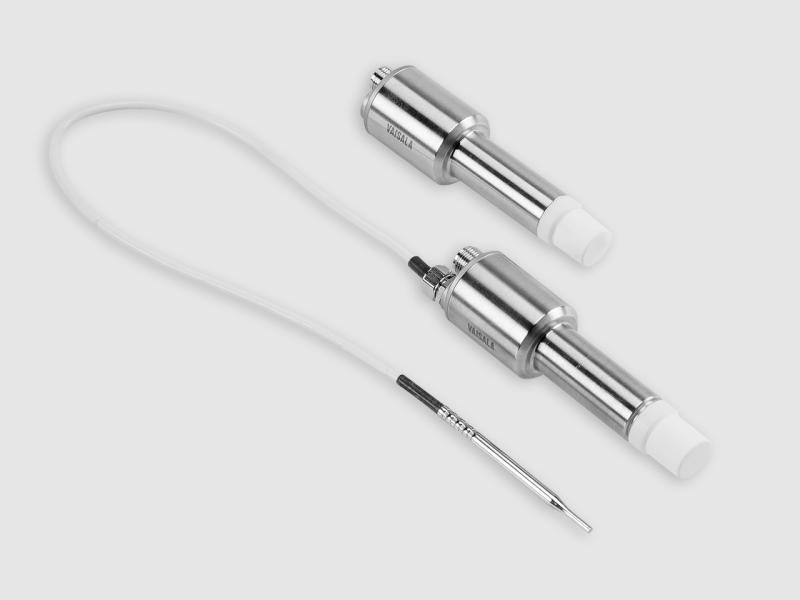
Transmisor de Punto de Rocío en miniatura DMT143 y DMT143L (largo)
para aplicaciones de fabricantes de equipos originales
Nota técnica
Chemical mechanical polishing (CMP) is used to smooth the surface of semiconductor wafers and remove excess material. The slurry used in the CMP process has both mechanical (abrasive) and chemical properties. If the slurry composition isn’t consistent, wafer quality is affected. Vaisala’s inline process refractometers are uniquely suited to slurry monitoring, controlling batch-to-batch variation, dilution, and blending and ensuring optimal wafer quality and yield.
Slurry density and composition is a critical parameter for CMP process quality, but it’s not as simple as just always using the same slurry mix. Slurry is delivered from the manufacturer in concentrated form and can vary from batch to batch. The semiconductor fabrication plant (fab) dilutes the concentrated slurry with deionized water and adds an oxidizing agent, usually hydrogen peroxide (H2O2). This needs to be done just before the CMP process because H2O2 degrades into water and oxygen over time.
This degradation introduces a limited time window where maintaining a consistent surface planarization quality and minimizing wafer defects and scrappage is possible. To ensure wafer quality, fabs need to be able to continuously monitor slurry composition throughout the day. Inline process refractometers offer a simple and cost-effective way to perform this monitoring. Refractometers can be installed in the following locations:
Process refractometers work by measuring the RI of the slurry. Every blend has a unique composition and therefore a unique RI, which can be validated and characterized using the refractometer. Real-time measurement using an inline refractometer provides a more accurate picture of variations in slurry composition than any discrete sampling method. Furthermore, measurement is virtually drift-free, does not depend on the flow rate, and accuracy not affected by bubbles in the slurry.
Once calibrated to a specific slurry’s refractive index and temperature characteristics, RI measurements can achieve excellent repeatability when used to measure, for example, copper and tungsten slurries. Inline measurements are superior to lab-based methods because they remove any uncertainty introduced in sampling and sample handling such as H2O2 deterioration or temperature changes.
The Vaisala PR-33-S Semicon Refractometer is specifically designed for in-line, real-time measurement in semiconductor manufacturing environments. It has a small footprint and metal-free Teflon and sapphire-wetted parts and surfaces, making it ideal for measuring slurries and harsh chemicals. The robust design promises long-term stability and a long lifespan, and the built-in diagnostics give an instant overview of measurement performance.
The PR-33-S offers direct slurry density measurement and the integrated temperature sensor ensures highly accurate RI measurement, tolerating process vibrations with no measurement errors. Thanks to the unique optical measurement principle and robust design, there is no measurement drift and the device is virtually maintenance-free. The device requires no consumables and does not generate chemical waste, providing a cost-efficient, reliable, and sustainable alternative to laboratory sampling and titration. Studies have proven Vaisala refractometers to have excellent agreement with reference titration – but with the advantage of real-time results, direct and repeatable from the process.
Inline RI measurement has become the industry standard for fast, accurate, real-time slurry monitoring. Refractometers are a safe, cost-effective, and low-maintenance method for monitoring slurry density and composition. They are also the tool of choice for leading fabs to detect faults in slurry blending and dispense systems. By verifying that slurries consistently meet requirements, refractometers allow fabs to ensure optimal wafer quality and yield while reducing waste.
para aplicaciones de fabricantes de equipos originales
para procesos de bio-descontaminación

La última incorporación a la familia Indigo de transmisores y sondas, el Indigo80 es un indicador y registrador de datos compacto y portátil. Ideal…

for cleanrooms and industrial settings

para secadores refrigerantes
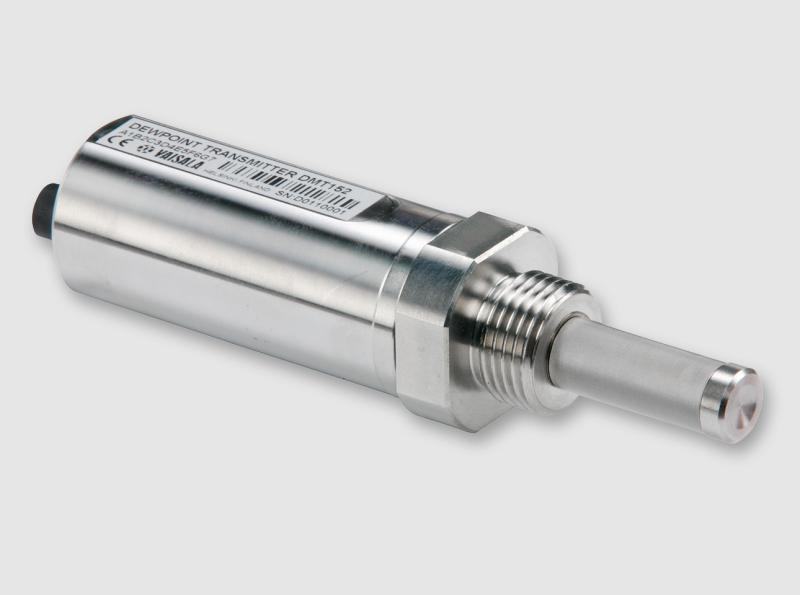
Tenga en cuenta que el DMT152 se está descontinuando y no debe especificarse para nuevos proyectos. Conozca el nuevo DMT153 aquí.

Qué son la humedad relativa, el punto de rocío, la humedad absoluta y la razón de mezcla, cómo la temperatura y la presión distorsionan la lectura, y…

Cómo se comporta la humedad en condiciones reales, los tres problemas de medición más frecuentes, y dos escenarios prácticos —aire calentado y aire…

Cuándo medir humedad relativa y cuándo punto de rocío, qué exige la alta y la baja humedad, cómo influyen temperatura y presión, y cuándo conviene…

La climatización representa hasta el 40 % de la demanda energética de un centro de datos. Esta guía de Vaisala explica cómo la exactitud de medición…
Un especialista responde con la solución, el instrumento y el servicio que corresponden.
Instrumentos para cotizar
Todavía no hay instrumentos. Se puede escribir igual: un especialista responde.