

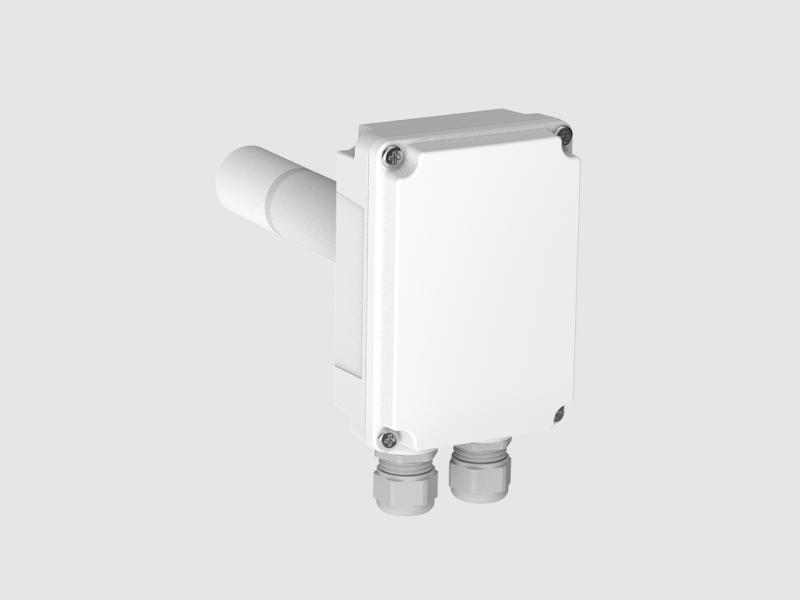
Transmisor GMD110 para CO2 en ducto
Para mediciones de alta precisión en aplicaciones de HVAC
Nota técnica
Data centers are a major consumer of energy, accounting for at least 1% of global usage. As data center operators seek to minimize their carbon footprint while ensuring high reliability and uptime, selecting the right sensors can play a crucial role in optimizing energy efficiency and reducing CO2 emissions.
Data center operators face a tricky balancing act between maximizing uptime and optimizing energy use. You need to optimize the environment to keep your servers working efficiently at all times, but you don’t want to use more energy than you need to on cooling. Sensors are small devices that can have a really big impact in this regard. High-quality sensors mean you can accurately control the environment, reducing your energy costs and your CO2 emissions.
Control of your HVAC systems is only as precise as your measurements. If the measurements are inaccurate, then the output of the building management system (BMS) controller will also be inaccurate. If a poor-quality sensor gives you a falsely high temperature reading, your controller will react by over cooling your facilities, increasing energy costs and emissions. If the same sensor gives you a falsely low reading you might be under cooling, which can lead to IT equipment working inefficiently or even breaking down.
It's important to remember that measurement precision it isn’t just about accuracy at the time of installation. It is quite typical for sensors to drift over time, so measurement stability is just as important. Some sensors that claim very high accuracy will not have high stability, meaning their measurements are worthless even after a short period. Good-quality sensors provide accurate measurements you can trust, even in the long term. By ensuring the controller has accurate input you can precisely control your indoor conditions and optimize energy efficiency. This will reduce both your energy costs and your CO2 emissions.
Up to 40% of the energy used in data centers is used for cooling and air conditioning, so there are large energy savings to be made by investing in good-quality measurement technology. A simulation based on three real data centers in Europe found that just a 1°C difference in temperature setpoint due to imprecise sensors could increase annual energy usage by up to 8.5%. Investing in reliable, accurate sensors that maintain measurement stability over many years is a smart choice that can substantially cut energy consumption, costs, and emissions.
Utilizing weather forecasts is another way in which sensors can enable more efficient cooling. By anticipating upcoming hot weather, data centers can use predictive cooling to avoid early chiller startup, make optimal use of free cooling, and reduce chiller operating hours. This proactive approach translates into further energy savings and a lower carbon footprint.
Another thing you can do to reduce CO2 emissions is to change your sensor setup. Typically there will be hundreds or even thousands of sensors in a data center and each instrument needs a connection with the BMS controller so it can report the measurement value. If you are using an analog signal there will be a dedicated signal cable coming from each sensor to the controller. If you can switch to a fieldbus connection it becomes possible to daisy-chain the instruments so that only one cable is needed.
It's perhaps clearest to see the benefit through an example. Let’s imagine we have a 100-meter aisle with 30 instruments spaced three meters apart, and a three-meter cable coming down. In a setup with dedicated signal cables that would equal 1695 meters of cable weighing 110 kg. For 3000 racks that’s approximately three tons of cable.
What if you switch to fieldbus and daisy-chain your sensors? Then you’d only need 187 meters of cable, weighing just 12 kg – that’s 89% less cabling compared to using dedicated signal cables. Less cabling leads to more efficient power distribution and lower energy losses, reducing energy consumption and CO2 emissions.
When you are choosing your sensors, if you are looking to reduce CO2 emissions you should look for a sensor provider with a sustainability focus in their own business. For example, Vaisala's instruments are produced using renewable electricity and the company has set science-based targets for reducing emissions. Vaisala products are designed to be energy efficient with long lifetimes as well as being easy to maintain, recycle, and ensure compliance with environmental regulations. This all brings CO2 emissions down throughout the supply chain and the sensor’s lifetime.
Vaisala’s starting point is to help our customers to increase energy efficiency and reduce emissions. While often overlooked, sensor selection is an important consideration in the drive to decarbonize data centers. Accurate, stable sensors, weather forecast utilization, daisy chaining with fieldbus connectivity, and sustainability-focused suppliers all contribute to minimizing CO2 emissions. Vaisala are the global leader in measurement instruments and intelligence – by working together we can take every measure for the planet.
If you have a data center and you’d like to know more about reducing CO2 emissions through sensor selection, get in touch.
Para mediciones de alta precisión en aplicaciones de HVAC
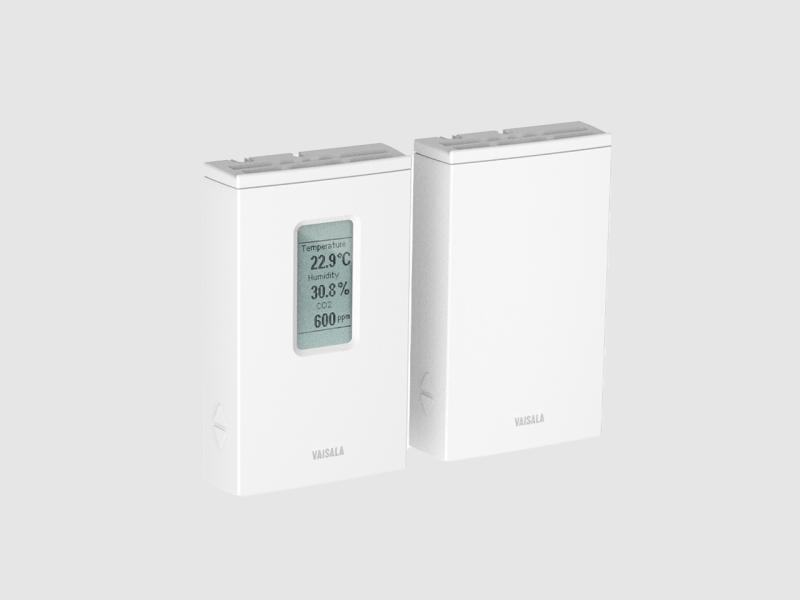
para proyectos de edificios ecológicos
para proyectos de edificios ecológicos
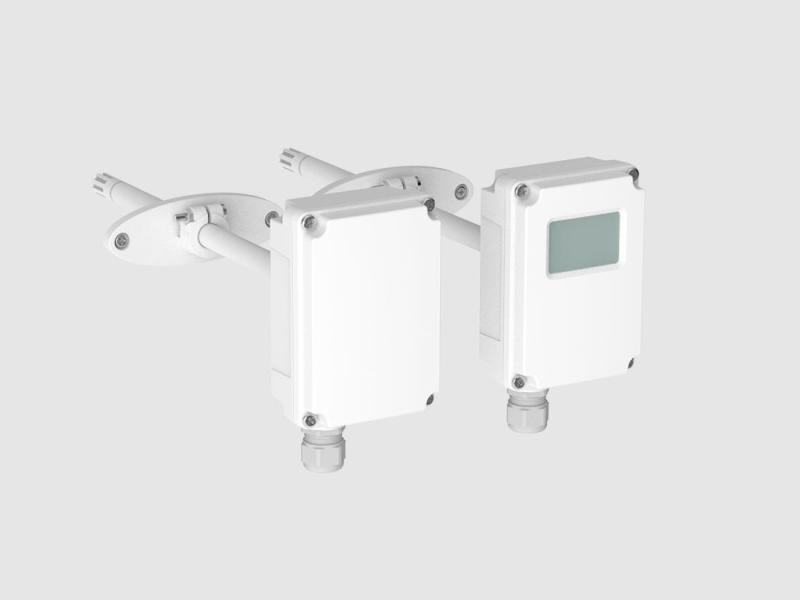
For high-precision measurements in HVAC applications
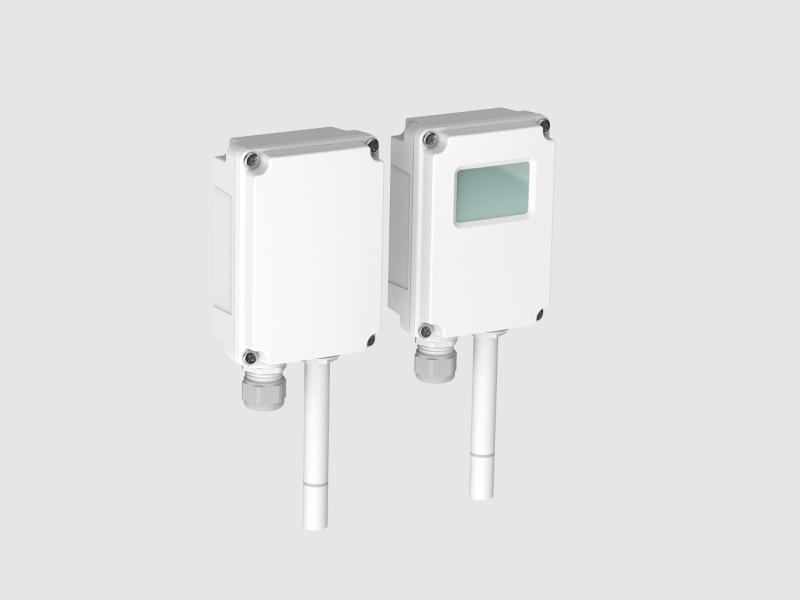
For high-precision measurements in HVAC applications
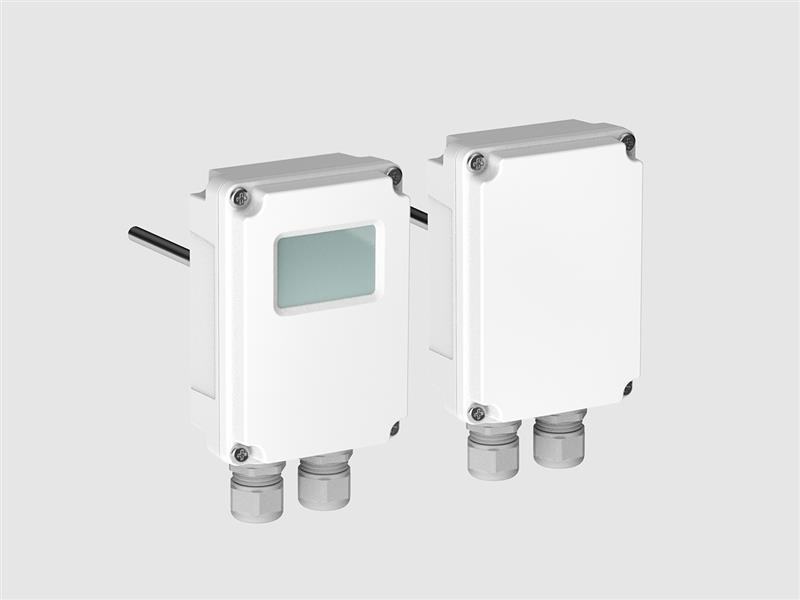
Para mediciones de alta precisión en aplicaciones HVAC

Qué son la humedad relativa, el punto de rocío, la humedad absoluta y la razón de mezcla, cómo la temperatura y la presión distorsionan la lectura, y…

Cómo se comporta la humedad en condiciones reales, los tres problemas de medición más frecuentes, y dos escenarios prácticos —aire calentado y aire…

Cuándo medir humedad relativa y cuándo punto de rocío, qué exige la alta y la baja humedad, cómo influyen temperatura y presión, y cuándo conviene…

La climatización representa hasta el 40 % de la demanda energética de un centro de datos. Esta guía de Vaisala explica cómo la exactitud de medición…
Un especialista responde con la solución, el instrumento y el servicio que corresponden.
Instrumentos para cotizar
Todavía no hay instrumentos. Se puede escribir igual: un especialista responde.