


Medidor portátil de humedad y temperatura HM40
para inspecciones rápidas y comprobación de errores
Nota técnica
Rapidly changing environments are always a challenge for humidity control. This is especially true in applications where relative humidity is the preferred control parameter. Relative humidity is the most commonly specified control parameter in many industries and standards. It is a good choice for example in drying, moistening, or storage applications such as food drying, where the equilibrium moisture content (EMC) of an end-product is closely related to the relative humidity. The downside of relative humidity as a control parameter is that it’s relative to temperature, which means that accurate measurement requires representative readings from both humidity and a temperature sensor.
Measuring in slowly changing environment vs. rapidly changing temperatures
A good-quality capacitive humidity sensor can accurately measure relative humidity in a stable or slowly changing environment, but as relative humidity depends on temperature, rapidly changing temperatures may be challenging for accurate relative humidity measurements. Humidity sensors measure from inside a filter, which is attached to a sensor head. In industrial applications, the sensor head is usually made out of metal and has a significant thermal mass, which becomes a problem if there is a rapid change in the surrounding environment.
Let’s imagine, that the temperature drops suddenly; it takes some time for the probe head mass to stabilize to the new temperature. Meanwhile, the conditions inside the probe filter are not the same as on the outside: it’s still warmer in the microclimate created by the filter and the probe body while it’s cooling down. The rapid change in the environment can’t be detected accurately because of the sluggishness of the thermal mass, and this sluggishness may be a challenge for responsive humidity control.
Solution: a lighter probe body can adapt to the changing environment faster, improving the response time
The solution to this problem is to reduce the thermal mass of the probe. A lighter probe body can adapt to the changing environment faster, improving the response time of the temperature measurement. The Vaisala HMP9 Compact Humidity and Temperature probe has a miniature probe head (5 mm in diameter) with a low thermal mass providing a superior response time. The probe contains a HUMICAP® sensor that provides industry-standard humidity measurement performance, and its small size enables installation in tight spaces. This allows measurements to be made in locations where traditional 12 mm diameter probes simply can’t fit.
Read more of Compact Humidity and Temperature Probe HMP9 for Rapidly Changing Environments
para inspecciones rápidas y comprobación de errores

Transmisores de ±1,5 % HR para HVAC exigentes, con certificado
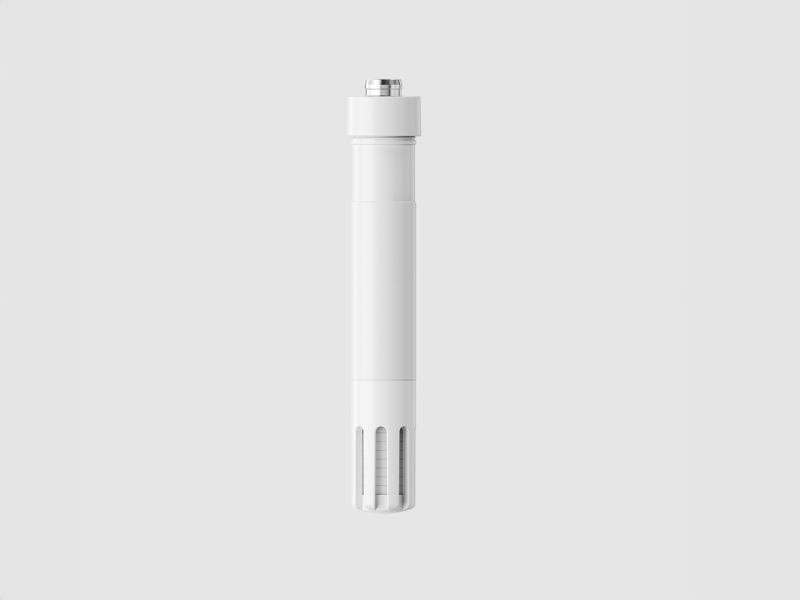
La sonda de humedad HMP113 con gabinete de plástico tiene una confiabilidad excelente y una tolerancia química, y es apta para ambientes sin…
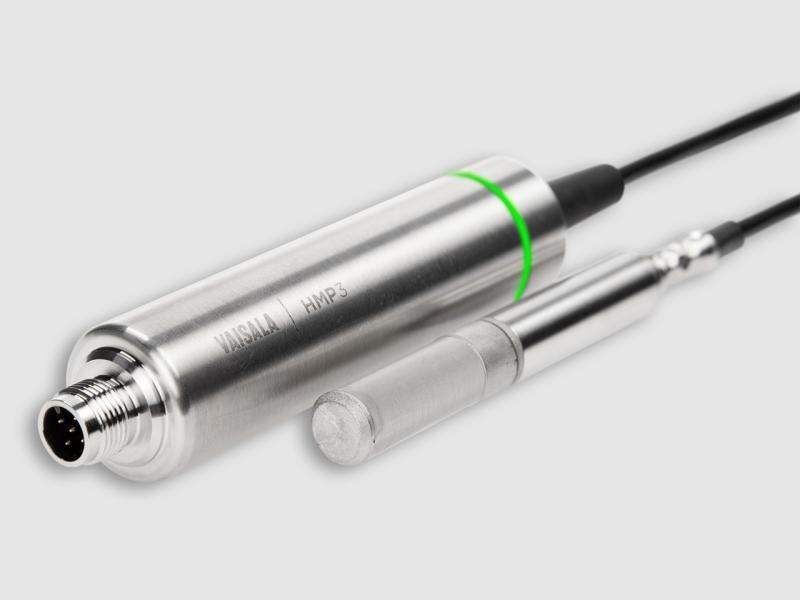
para aplicaciones de humedad y temperatura de uso general con sensor intercambiable
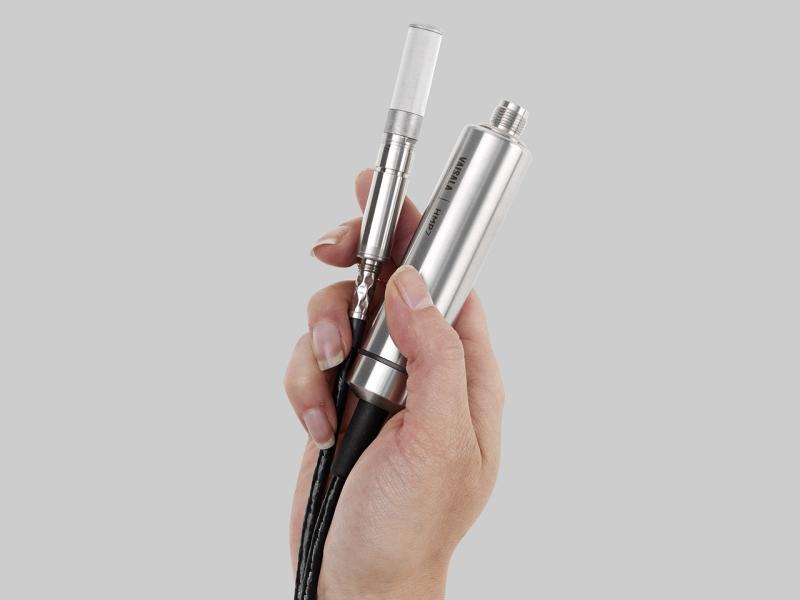
para altas humedades
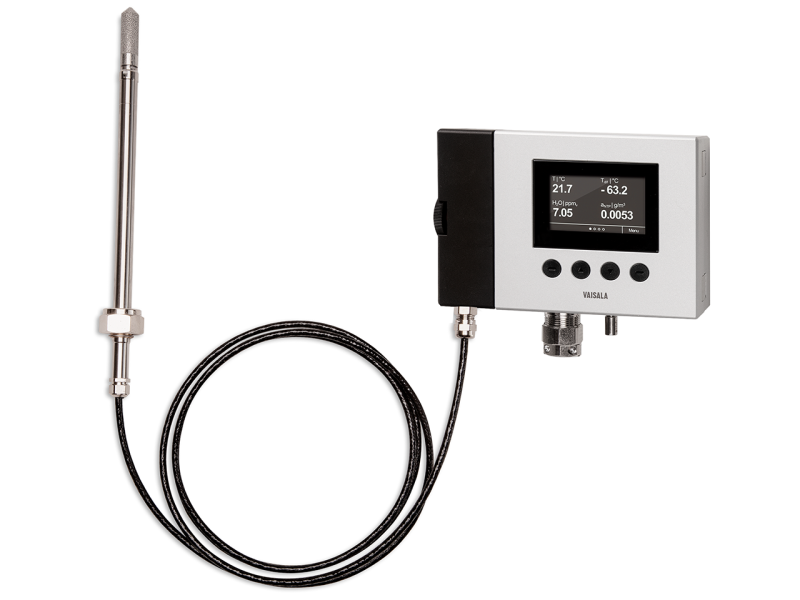
Para usar en las zonas con clasificación hasta 0 y 20

Qué son la humedad relativa, el punto de rocío, la humedad absoluta y la razón de mezcla, cómo la temperatura y la presión distorsionan la lectura, y…

Cómo se comporta la humedad en condiciones reales, los tres problemas de medición más frecuentes, y dos escenarios prácticos —aire calentado y aire…

Cuándo medir humedad relativa y cuándo punto de rocío, qué exige la alta y la baja humedad, cómo influyen temperatura y presión, y cuándo conviene…

La climatización representa hasta el 40 % de la demanda energética de un centro de datos. Esta guía de Vaisala explica cómo la exactitud de medición…
Un especialista responde con la solución, el instrumento y el servicio que corresponden.
Instrumentos para cotizar
Todavía no hay instrumentos. Se puede escribir igual: un especialista responde.