

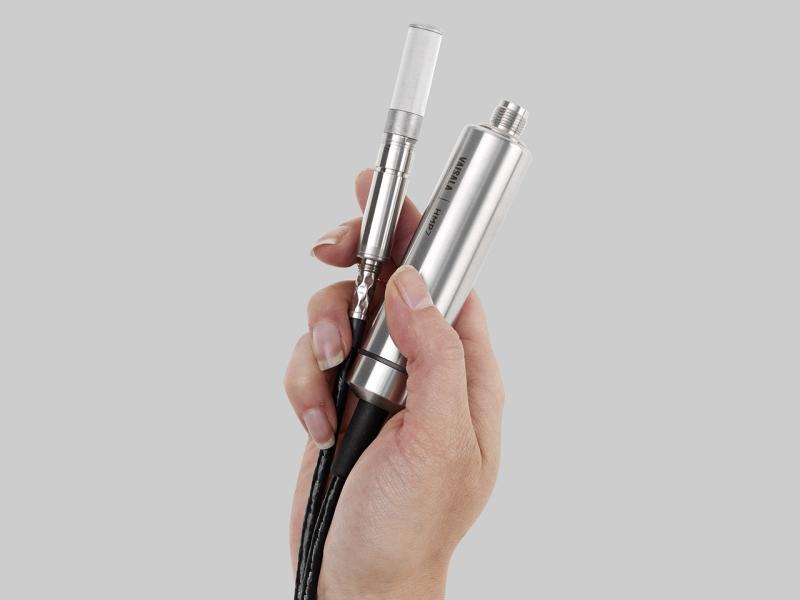
Sonda HMP7 de Humedad Relativa y Temperatura
para altas humedades
Nota técnica
Although fossil fuels still dominate the world’s energy markets, things are slowly starting to change as the demand for lower-carbon energy sources increases. The hydrogen economy has a big part to play in the future low-carbon economy – and fuel cell technology is an essential part of the hydrogen economy. Fuel cells are an efficient and clean way to produce electricity when and where it is needed, and can be used to power everything from vehicles and homes to large installations. Accurate humidity measurement plays a big role in optimizing the efficiency and lifetime of a fuel cell. Vaisala has been fulfilling demanding humidity measurement needs of fuel cell research projects for years.
Hydrogen production is a growing industry. While the increasing demand for hydrogen in fuel cells is driving growth in this market, the main application area is still the refining industry. Today hydrogen is still mostly produced from fossil fuels. The natural gas steam reformer (NGSR) process is currently the most economical way of producing hydrogen, but as it’s a fossil fuel-based method it is not a sustainable solution in the long term.
One of the biggest challenges facing the modern energy market is how to store electrical energy. Electricity production is a demand-driven process; all the produced energy must be consumed at the same time. Consumption varies constantly depending on several factors including weather and daylight. These same factors also affect renewable energy sources such as wind and solar power, limiting the possibilities to use these sources in an optimal way.
Currently, energy can be stored in batteries or turned into potential energy by pumping water into hydropower reserve for example. There is next-generation research in progress that is especially interesting from the perspective of the hydrogen economy in the form of the Balance project, funded by European Union and coordinated by VTT Technical Research Centre of Finland. VTT’s main strength is their multi-technological experience, which is especially beneficial for projects like the Balance.
The aim of the Balance project is to find solutions for the following issues:
How to reduce greenhouse gas emissions generated by our energy system How to integrate the rapidly growing fraction of wind and solar electricity sources into the grid despite the mismatch between weather-based electricity production and consumption patterns How to produce synthetic fuels from renewable sources for our transportation needs
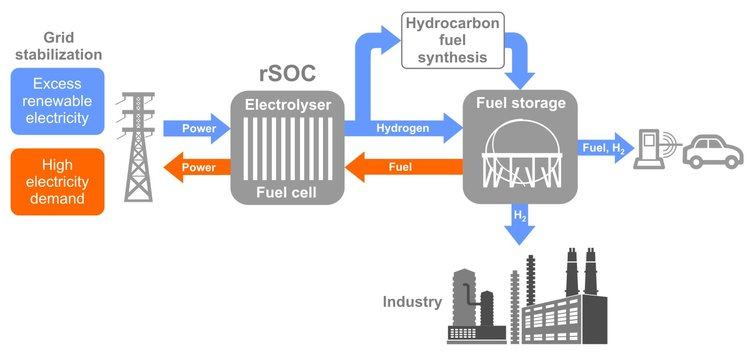
Reversible solid oxide cells, labeled rSOC in the graphic, can use excess renewable energy to produce hydrogen. They are also capable of converting this hydrogen back into electricity, meaning they can store electrical energy in the form of a chemical fuel that can be used in applications such as vehicles, homes, and industry. This technology is not yet mature, but the goals for this project are ambitious. We are proud that VTT has been using Vaisala’s measurement instruments in their research projects for years, and the Balance project is not an exception.
Mikko Kotisaari from VTT chose Vaisala HUMICAP® Humidity and Temperature Probe HMP7 for the new rSOC prototype because the probe is easy to integrate in a compact rSOC system. The small size of the probe and Modbus RTU communication combined with excellent measurement performance were some of the main factors in decision-making.
Contact us to hear more about Vaisala's humidity measurement options for the fuel cell industry.
para altas humedades
Para usar en las zonas con clasificación hasta 0 y 20

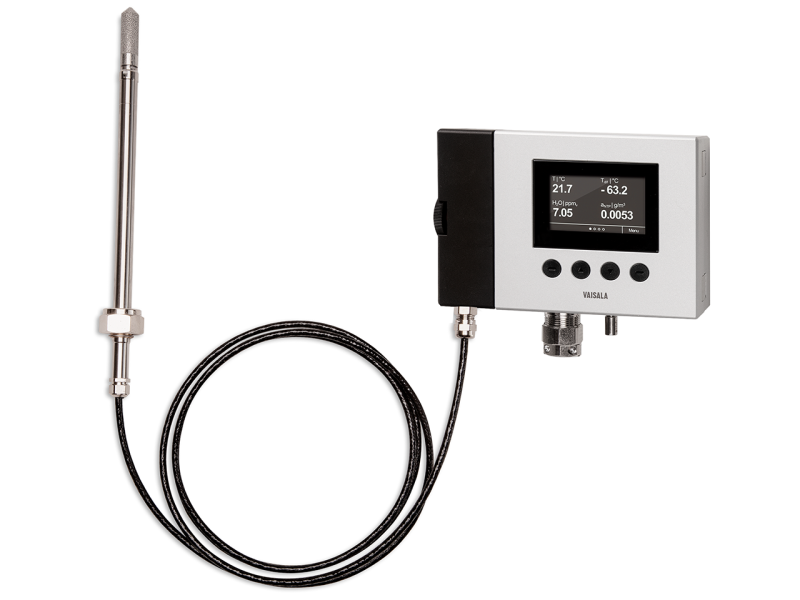
La última incorporación a la familia Indigo de transmisores y sondas, el Indigo80 es un indicador y registrador de datos compacto y portátil. Ideal…
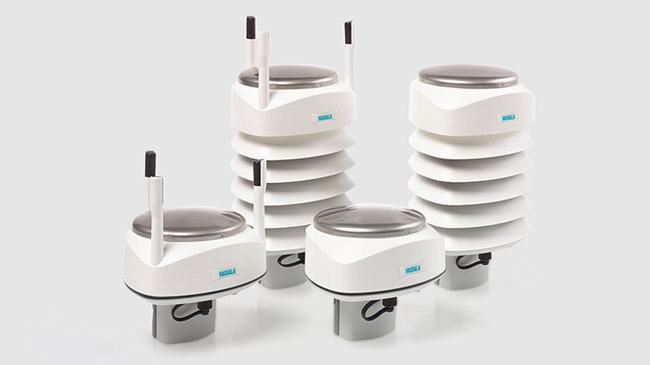
Vaisala Weather Transmitter WXT530 series is a unique collection of cost-effective sensors that accurately and reliably measure weather conditions…

para inspecciones rápidas y comprobación de errores

Transmisores de ±1,5 % HR para HVAC exigentes, con certificado

Qué son la humedad relativa, el punto de rocío, la humedad absoluta y la razón de mezcla, cómo la temperatura y la presión distorsionan la lectura, y…

Cómo se comporta la humedad en condiciones reales, los tres problemas de medición más frecuentes, y dos escenarios prácticos —aire calentado y aire…

Cuándo medir humedad relativa y cuándo punto de rocío, qué exige la alta y la baja humedad, cómo influyen temperatura y presión, y cuándo conviene…

La climatización representa hasta el 40 % de la demanda energética de un centro de datos. Esta guía de Vaisala explica cómo la exactitud de medición…
Un especialista responde con la solución, el instrumento y el servicio que corresponden.
Instrumentos para cotizar
Todavía no hay instrumentos. Se puede escribir igual: un especialista responde.