

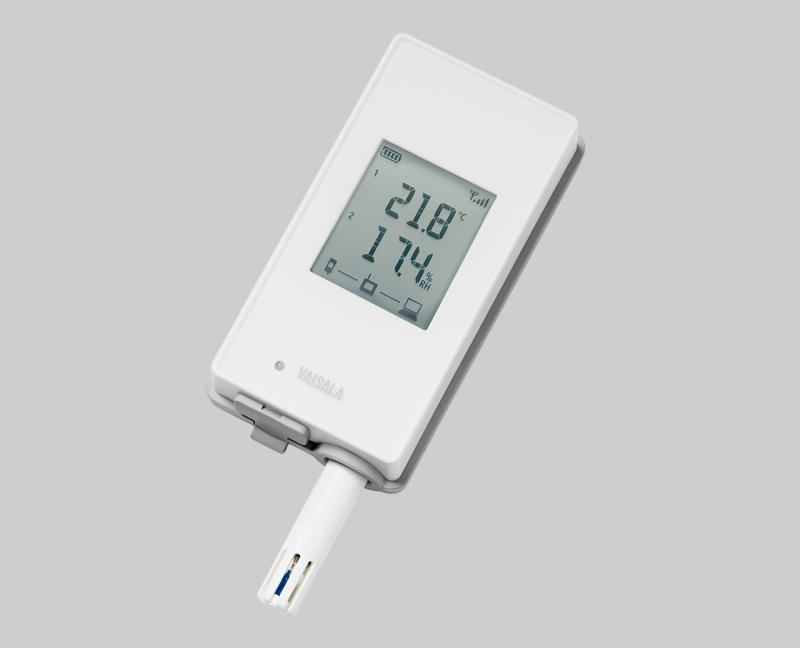
Registrador de datos inalámbrico VaiNet RFL100
Para monitoreo inalámbrico de áreas controladas
Nota técnica
Temperature mapping is a critical aspect of Good Distribution Practices (GDP), ensuring that pharmaceutical and medical products are stored within safe temperature ranges. However, not all distribution centers operate under the same controlled conditions as pharmaceutical manufacturing facilities. This reality often leads to complex questions about mapping methodologies, validation requirements, and monitoring strategies. During our recent Mapping Webinar, a manager overseeing temperature mapping at a distribution center raised key concerns about managing lost data loggers and mapping in an environment with limited temperature control.
One of the primary concerns raised was whether an area needs to be remapped if a data logger is lost during the process, especially when no failure criteria are outlined in the protocol. Remapping is not necessarily required but this depends on the Quality Management System (QMS) of the distribution center, as well as other policies and procedures (SOPs). The first step should be consulting the Quality Assurance (QA) team to assess whether the missing data significantly impacts the study’s validity.
• What was the total number of data loggers used initially? If the study had a high density of loggers, losing one may not compromise the conclusions.
• That said, if the logger density was minimal, it might be harder to argue that the lost data does not impact the study’s integrity.
• Will you be able to justify the missing data through a deviation process? You will need to document a defense of why the remaining data is still sufficient.
How valid is a mapping study in a facility with only heat control? The question includes the possibility of heaters requiring Installation Qualification (IQ), Operational Qualification (OQ), and Performance Qualification (PQ) before mapping.
This shows the practical limitations faced by many distribution centers. Unlike pharmaceutical manufacturing sites, distributors often operate with centralized quality oversight and constrained validation budgets. This leads to variations in environmental control and mapping approaches.
• Terminology Matters: In uncontrolled environments (such as heat-only warehouses), the process is often referred to as “temperature profiling” rather than “temperature mapping.” This distinction, drawn from USP 1079 guidelines, recognizes that while mapping is still valuable, the lack of control in a typical HVAC system means it serves a different purpose.
• Value of Temperature Profiling: Even without IQ/OQ/PQ-validated heating systems, temperature profiling remains useful. It provides valuable data on how the environment behaves, identifies potential risk areas, and informs decisions about monitoring placement.
• Compensating for Lack of Control: Since these spaces are less regulated, organizations should consider increasing the number of monitoring probes to capture more detailed temperature variations over time.
Even in a regulated warehouse, there is often a lack of standardized validation and the minimal number of loggers available for mapping studies. We have seen a 168,000-square-foot warehouse application that used only eight loggers, with inconsistent placement strategies for mapping.
A structured approach to improving monitoring strategy:
1. Temperature Profiling First: Conduct a temperature profiling study to assess the warehouse’s ability to maintain required specifications. Use this data to identify hot and cold spots.
2. Strategic Probe Placement: Unlike a controlled facility where hot and cold spots may be less critical, in an uncontrolled space, monitoring should prioritize these areas to detect fluctuations.
3. Increasing Sensor Density: While it may not be necessary to use the same number of loggers for routine monitoring as for mapping, a higher density of probes can mitigate risks and provide a clearer picture of temperature variations.
4. Developing a Placement Rationale: Since there is no strict standard for data logger placement, organizations should adopt a logical approach. One suggested method is ensuring that no product is more than a set distance (e.g., 10 meters) from a monitoring probe. This approach helps establish a documented policy that can withstand audits.
As shown, there are nuanced challenges of temperature mapping in distribution settings, particularly those with minimal environmental controls. While full validation (IQ/OQ/PQ) may not always be feasible, temperature profiling remains a valuable tool to understand environmental conditions and implement effective monitoring strategies.
By increasing sensor density, strategically placing loggers, and documenting rationale for monitoring approaches, distribution centers can enhance compliance with GDP requirements while operating within practical constraints. Ultimately, the goal is to ensure product integrity by making informed, risk-based decisions tailored to the realities of the distribution industry.
For further insights or support on temperature mapping and monitoring best practices, contact us.
Para monitoreo inalámbrico de áreas controladas

for cleanrooms and industrial settings
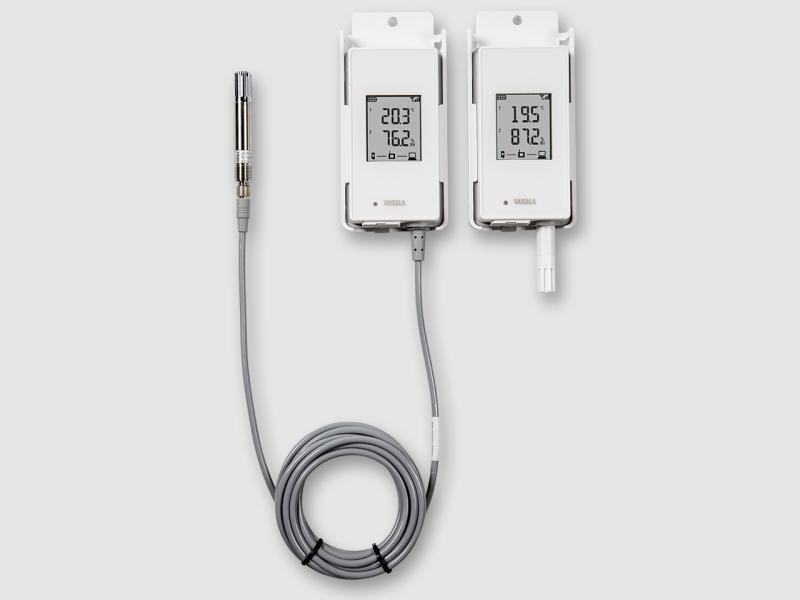
for monitoring humidity and temperature

para secadores refrigerantes

para aplicaciones de fabricantes de equipos originales

para inspecciones rápidas y comprobación de errores

Qué son la humedad relativa, el punto de rocío, la humedad absoluta y la razón de mezcla, cómo la temperatura y la presión distorsionan la lectura, y…

Cómo se comporta la humedad en condiciones reales, los tres problemas de medición más frecuentes, y dos escenarios prácticos —aire calentado y aire…

Cuándo medir humedad relativa y cuándo punto de rocío, qué exige la alta y la baja humedad, cómo influyen temperatura y presión, y cuándo conviene…

La climatización representa hasta el 40 % de la demanda energética de un centro de datos. Esta guía de Vaisala explica cómo la exactitud de medición…
Un especialista responde con la solución, el instrumento y el servicio que corresponden.
Instrumentos para cotizar
Todavía no hay instrumentos. Se puede escribir igual: un especialista responde.