

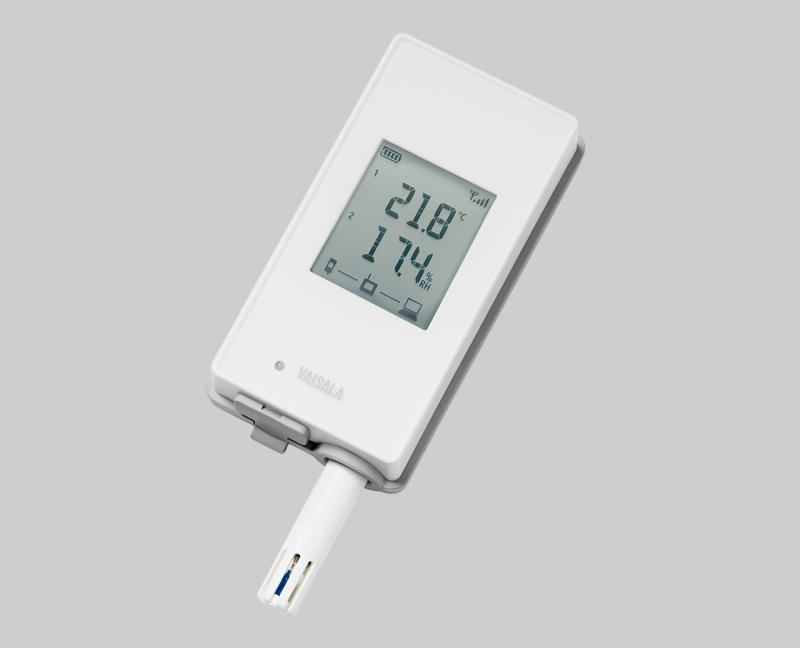
Registrador de datos inalámbrico VaiNet RFL100
Para monitoreo inalámbrico de áreas controladas
Nota técnica
When performing temperature mapping studies in GxP environments, sensor accuracy is a critical factor that can significantly affect the reliability of your results—and ultimately, regulatory compliance. Whether you're qualifying a cold storage warehouse, validating a stability chamber, or mapping incubators, choosing the right sensors means more than just selecting what's convenient or inexpensive.
Let’s explore the key considerations for selecting sensors for GxP mapping studies, including the pros and cons of using disposable temperature dataloggers, and why calibration really matters.
Single-use disposable temperature dataloggers can be appealing due to their low cost and convenience, especially for one-time mapping projects. However, they come with notable limitations:
• Memory constraints: Many disposable loggers have small memory capacity, making data handling and review more cumbersome.
• Accuracy concerns: Most disposable loggers offer around ±0.5°C accuracy. While this may satisfy WHO requirements, it's often not precise enough for pharmaceutical environments with tighter specs—like refrigerators or incubators.
• Calibration gaps: These devices typically come with a “Certificate of Validation,” not a calibration certificate. This might not satisfy GMP requirements or auditor expectations.
Why does this matter? Because under GMP, it's not enough to know a device probably works—you need documented evidence that it meets performance requirements, including calibration traceability.
One of the most common misconceptions is treating a validation certificate as a calibration. The truth is:
Validation certificates rely on statistical sampling—not individual calibration.
A small subset of sensors from a production batch are calibrated, and if they pass, the entire batch is “validated” by extension.
While this approach provides some assurance, it’s not equivalent to calibrating each individual sensor. Some auditors may challenge this, and rightly so—it introduces a level of risk that regulated environments might not tolerate.
If you still prefer to use disposables, you can mitigate risk by creating a pre- and post-calibration procedure. This allows you to:
• Establish the accuracy of the sensor before and after the mapping study.
• Document that the device meets your defined acceptance criteria.
However, this workaround comes with a caveat: you’ll need to develop and validate the calibration process yourself. It’s doable, but requires time, resources, and technical know-how. And don’t forget—calibrating a disposable sensor adds cost. By the time you're done, it may approach the price of a reusable, high-accuracy sensor.
The answer depends on your application:
• For warehouses (15–25°C), a ±0.5°C sensor might be acceptable.
• For refrigerators (e.g., 5±3°C) or incubators (37±2°C), that same sensor might fall short.
When you’re working with tighter temperature ranges, a more accurate sensor—ideally ±0.25°C or better—provides greater confidence and compliance. It also allows for clearer pass/fail decisions without relying on questionable margin adjustments.
You may have heard of the Test Accuracy Ratio (TAR)—the old 10:1 rule suggesting that your reference instrument should be 10 times more accurate than the device under test. While this originated in military standards, it’s increasingly outdated in today’s world of precise commercial sensors.
A more modern approach is the Test Uncertainty Ratio (TUR), typically aiming for 4:1. Even then, achieving this ratio can be difficult—especially for relative humidity calibrations—so the focus has shifted toward applying decision rules that manage false accepts and rejects instead.
The bottom line? When mapping a system like a 37±2°C incubator, using a sensor with ±0.5°C accuracy doesn’t mean you need to tighten your acceptance limits to compensate. What it means is you may be using the wrong tool for the job.
In mapping studies, the sensor you choose impacts not just the quality of your data, but your ability to defend that data during audits. While disposable dataloggers can be convenient, they often introduce risks that outweigh the savings.
Choose sensors with:
• Accuracy that matches or exceeds your application’s needs.
• Proper, documented calibration traceable to national or international standards.
• A supportable calibration or verification method if you plan to qualify the device yourself.
If your mapping application involves tight specs, err on the side of accuracy and reliability. It’s not just good science—it’s good compliance.
Para monitoreo inalámbrico de áreas controladas

for cleanrooms and industrial settings
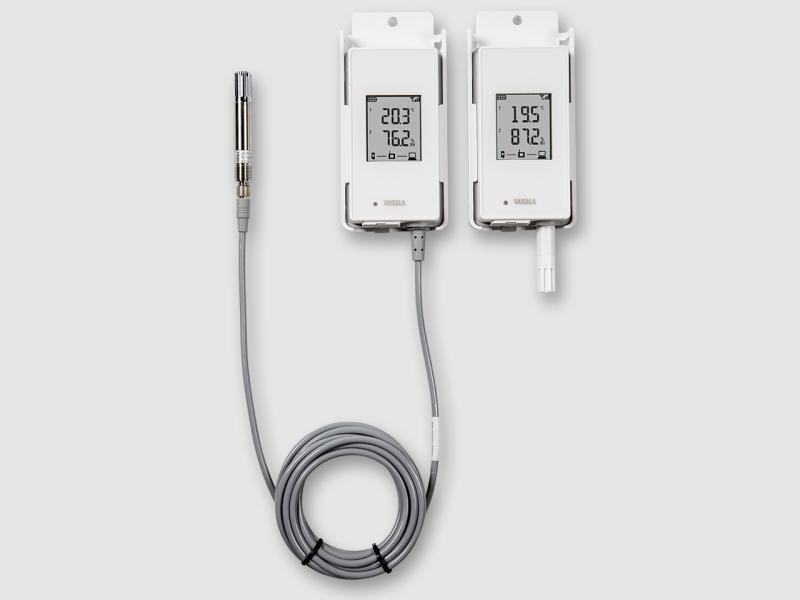
for monitoring humidity and temperature

para secadores refrigerantes

para aplicaciones de fabricantes de equipos originales

para inspecciones rápidas y comprobación de errores

Qué son la humedad relativa, el punto de rocío, la humedad absoluta y la razón de mezcla, cómo la temperatura y la presión distorsionan la lectura, y…

Cómo se comporta la humedad en condiciones reales, los tres problemas de medición más frecuentes, y dos escenarios prácticos —aire calentado y aire…

Cuándo medir humedad relativa y cuándo punto de rocío, qué exige la alta y la baja humedad, cómo influyen temperatura y presión, y cuándo conviene…

La climatización representa hasta el 40 % de la demanda energética de un centro de datos. Esta guía de Vaisala explica cómo la exactitud de medición…
Un especialista responde con la solución, el instrumento y el servicio que corresponden.
Instrumentos para cotizar
Todavía no hay instrumentos. Se puede escribir igual: un especialista responde.