

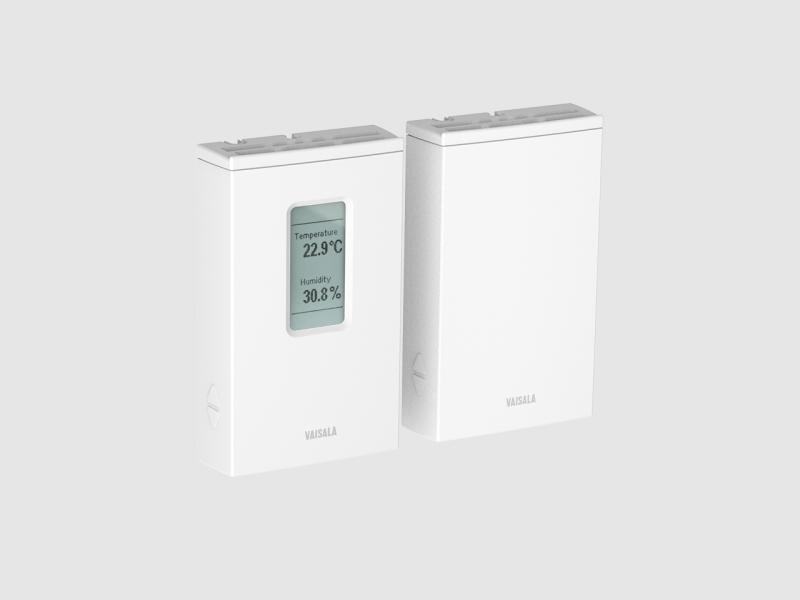
Humidity and Temperature Transmitter Series HMW90
±1.7%RH wall transmitters with a certificate for demanding HVAC
Technical note
In the past, a psychrometer was a convenient device to measure humidity in an environment. In the modern world, the requirements for measurement accuracy and overall usability have changed. Using the psychrometer requires high professionalism and manual work and no matter how skilled one is, the psychrometer can't any longer compete with the modern measurement technology, like Vaisala’s HUMICAP®. To illustrate this point, you can make a simple test. First, take two thermometers and place them side by side in a room. Observe the readings. Here is an example from my test setup:
T1 = 22.62 °C (72.72 °F)
T2 = 22.71 °C (72.88 °F)
At this point, both sensors are measuring the room’s dry-bulb temperature. When I then covered one of the thermometers, T2, with a damp fabric, I could see its temperature reading beginning to fall. This is because the thermometer was cooled by the evaporation of the moisture in the fabric. In order to ensure effective evaporation, it’s also important to have proper air circulation, so I used a fan.
I then waited until a stable temperature reading could be observed, at which point the readings were:
T1 = 22.84 °C (73.11 °F)
T2 = 16.56 °C (61.81 °F)
In the new readings, T1 was still showing the room’s dry-bulb temperature, while T2 was now measuring the wet-bulb temperature, meaning that the effect of evaporation on the temperature was more than 6 °C (40.8 °F). The difference between these temperatures indicates the amount of humidity in the environment; the higher the humidity in the room, the lower the difference between the wet-bulb and dry-bulb temperature measurements, and vice-versa.
If we enter these temperature readings into a humidity calculator, we can obtain a relative humidity value – in this case, 52.63% RH. To compare the results from this simple psychrometer I built, I used a factory-calibrated Vaisala HUMICAP sensor, which displayed a reading of 42.80% RH. This primitive psychrometric test arrangement was around 10% RH out from the calibrated reference reading. A commercial-grade psychrometer will most likely achieve a better performance than this test arrangement, but all psychrometers are prone to the same error sources:
• A psychrometer always requires sufficient air flow
• The wet wick needs a water reservoir that is constantly monitored and refilled
• Psychrometers are sensitive to impurities, such as salts and solids.
Historically, a key advantage of psychrometers is that they can withstand high humidity levels and a condensing environment. The simple measuring principle and low acquisition costs have also made this technology appealing. Times have changed however, and modern industrial applications often require more accurate performance along with ease of use. Sacrificing these aspects when selecting equipment can have a significant effect on the overall cost of ownership, in the sense that a more affordable psychrometer can prove to be more expensive in the long run.
If you’re still running your application with a psychrometer, now is a good time to look at Vaisala’s HUMICAP offering. Our warmed probe sensor technology can measure reliably even in condensing environments and requires little or no maintenance.
A psychrometer uses measurement technology that belongs to the past but what does wet-bulb temperature tell us?
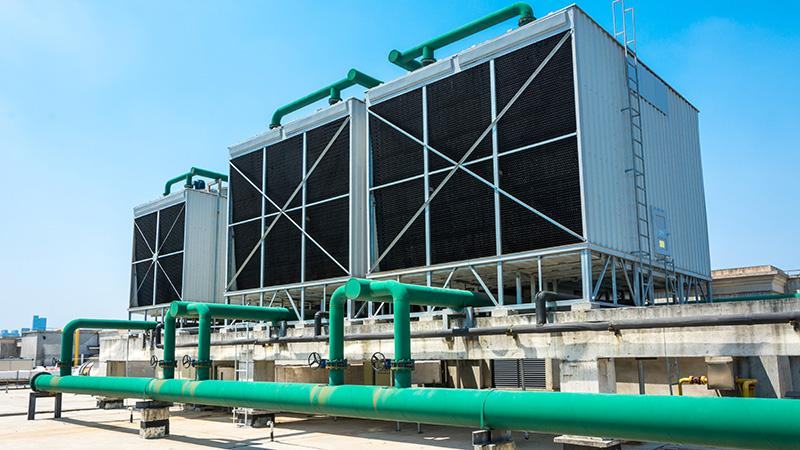
The wet-bulb temperature of a space indicates the temperature to which a wet surface can be cooled by evaporation. This cooling effect varies depending on the relative humidity of the ambient air: when the air is saturated with water there is no evaporation and therefore cooling cannot take place. Wet-bulb temperature can therefore be used, for instance, to control cooling towers that provide low-cost cooling, especially in hot and dry climates. If the humidity is too high and the wet-bulb temperature approaches the ambient temperature, it tells us that there’s no sense in running the cooling towers as their cooling effect will be negligible.
Another use case for this parameter is in frost protection, as the wet surface can become colder than the environment due to evaporative cooling. One application example is a sprinkler-based frost protection of crop. As long as the wet bulb temperature stays above 0 °C (32 °F), there is less risk of frost damage.
Wet-bulb temperature and other calculated humidity variables can be measured using several different Vaisala HUMICAP products.
±1.7%RH wall transmitters with a certificate for demanding HVAC

Upper air soundings provide the crucial data necessary for a complete atmospheric weather profile that leads to accurate forecasting. However…
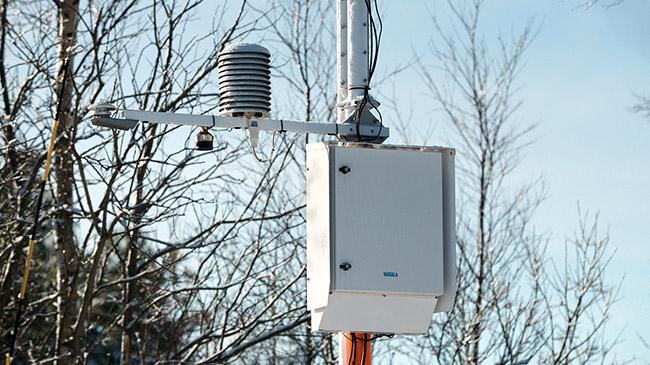
Vaisala Automatic Weather Station AWS310 is a complete communication and weather observation solution that can be used as a standalone unit, or as…
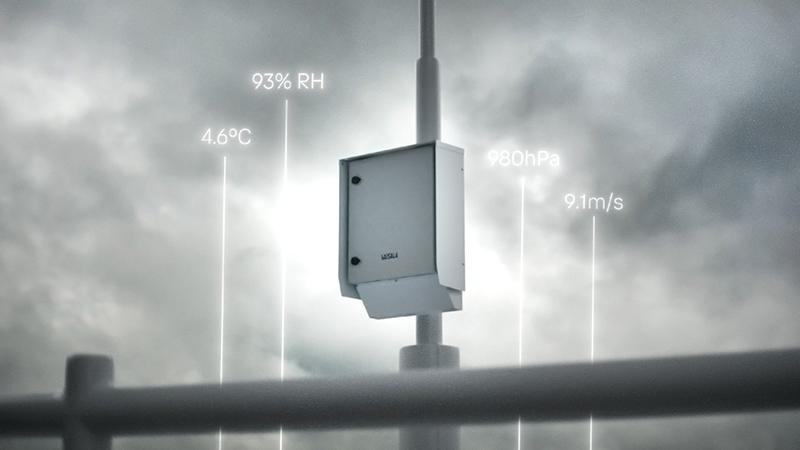
Our next-generation, cyber secure and modular Maritime Automatic Weather Station AWS830 is engineered for harsh marine environments and compliant…
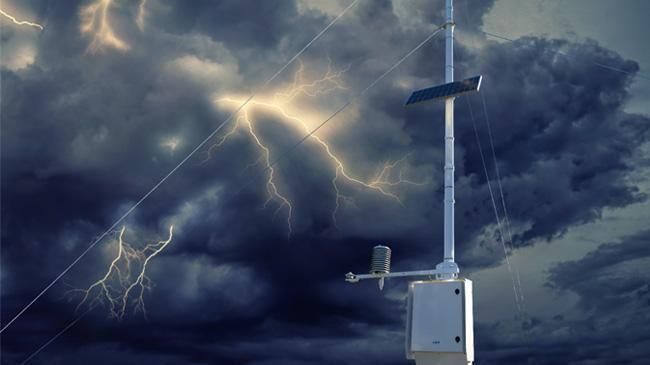
The Vaisala Automatic Weather Station AWS810 enables modern, high-quality surface weather observation networks anywhere in the world.
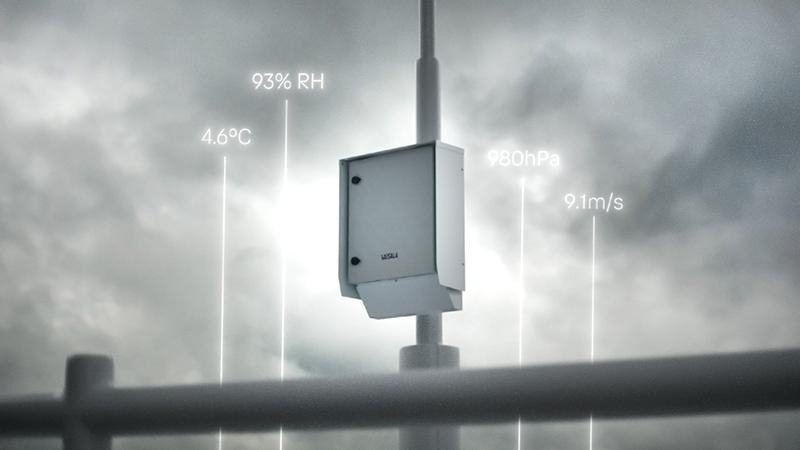
Vaisala Maritime Automatic Weather Station AWS830 delivers accurate, always‑on weather, environmental, oceanographic, and motion data for demanding…

Vaisala DRYCAP® Dew Point and Temperature Probe DMP5 is designed for in-line humidity measurement in industrial drying applications with high…

Dr. Lauri Reuter is an expert in the future of food, and the person to ask if you’ve ever wondered what we are going to eat in the future, and how…

Industrial companies are continuing to take action to minimize their carbon emissions. Many are reducing their use of fossil fuels and switching to…

In the causticizing process, passive chemicals are converted into active cooking chemicals to make white liquor. This is used in the digester as a…
A specialist replies with the solution, the instrument and the service that fit.
Products to quote
No products yet. An enquiry can be sent anyway: a specialist answers.