


Autosonde AS41
Upper air soundings provide the crucial data necessary for a complete atmospheric weather profile that leads to accurate forecasting. However…
Technical note
Hannu Sairanen, D. Sc.

Although the word metrology means measurement science, there is much more behind it than just science. In many cases, people who perform measurements follow best practices without even thinking about it. For example, they instinctively know that measuring the outside temperature in direct sunlight will not give an accurate result.
A metrologist may realize International System of Units (SI) (create SI units into reality), calibrate measurement instruments, evaluate the reliability of measurements by determining the measurement uncertainty, or carry out research that enables improved measurement performance.
Traceability chain of calibrationsThe length of this “chain of calibrations” varies as some industries calibrate instruments directly at an NMI while others may use several intermediaries. The rule of thumb is that the longer the traceability chain, the greater the measurement uncertainty. Greater measurement uncertainty means less-reliable measurements and therefore increased inaccuracy.
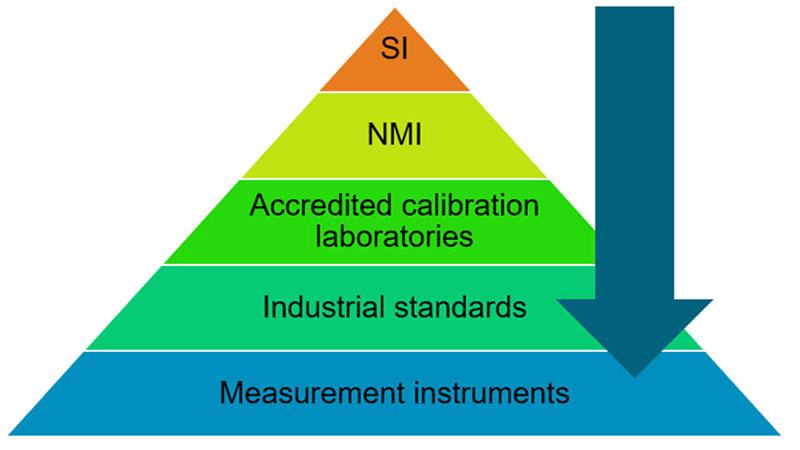
Measurement uncertainty
Measurement uncertainty, meaning the reliability of a measured value, is affected by several factors. It is often thought, wrongly, that calibration uncertainty alone affects measurement accuracy. However, there are always other sources of uncertainty as well, and recognizing them is probably the most challenging task that metrologists have to deal with. Once the sources are identified, calculating the combined uncertainty for a measurement is a simple case of mathematics.
The greatest source of uncertainty in industrial processes or environmental measurements (e.g. pressure, temperature, humidity, flow) is typically related to sampling errors caused by the positioning of the measurement instrument – i.e. the representativity of the measurement. If the measured environment does not represent the targeted environment this results in a significant error. For example, if a gas sample is taken from a gas line the temperature of the gas may increase or decrease, making the relative humidity of the sample different from the relative humidity in the targeted gas line. Similar errors can be caused by temperature gradients inside a climatic chamber.
Measurement technology vs. metrology
Does buying the best or most complex measurement instrument available mean you no longer have to worry about metrology? The answer is a firm no. There is always some degree of uncertainty regardless of the instrument you are using – even the best technologies have weaknesses that could ruin the measurement performance if uncertainty isn’t taken into account. Understanding the sources of uncertainty is the key as this will enable more reliable measurements, better measurement values, and most likely also some slight improvements in the measurement set-up such as instrument positioning or type.
In industry, metrology provides tools to understand and characterize the measurement instrument being used and the measurement location. For example, a humidity sensor is typically delivered with a calibration certificate that only indicates calibration corrections at room temperature – meaning the corrections in actual measurement environments may not be accounted for and may even be misleading or useless. Pressure sensors on the other hand are typically dependent on temperature, and without proven data on temperature dependency the specified temperature correction may be insufficient.
Metrology at Vaisala
Vaisala recognized the importance of metrology a long time ago; our customers rely on us to provide high-quality measurement instruments and technologies backed by the latest metrology know-how. Our ISO 17025 accredited Measurement Standards Laboratory helps to minimize the measurement uncertainty of Vaisala products and ensure the continuous development of our in-house testing capability. Vaisala provides SI traceable calibrations, in which the sources of uncertainty are taken into account according to the GUM (Guide to the expression of uncertainty in measurement). Similarly, the uncertainties are determined across Vaisala covering from manufacturing to R&D and from a single measurement instrument to complex test stations. By maintaining and developing test environments both on the factory side and in R&D along with the detailed uncertainty analysis we ensure better and more reliable measurements now and in the future.
Hannu Sairanen works as a scientist at Vaisala, specializing in humidity measurement and applications as well as humidity metrology. He has over 10 years of experience in humidity metrology, humidity measurements, and humidity-dependent processes, with many scientific articles and several presentations to his name. He holds a doctorate from Aalto University in Finland, with a major in applied thermodynamics.
How can you prepare for the future?
Download Vaisala's eGuide and learn about Industry 5.0.
Upper air soundings provide the crucial data necessary for a complete atmospheric weather profile that leads to accurate forecasting. However…
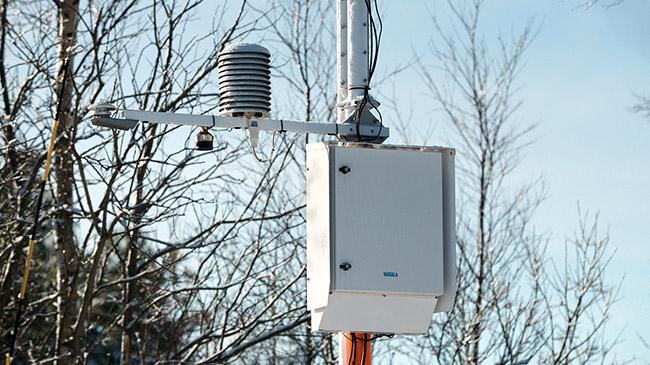
Vaisala Automatic Weather Station AWS310 is a complete communication and weather observation solution that can be used as a standalone unit, or as…
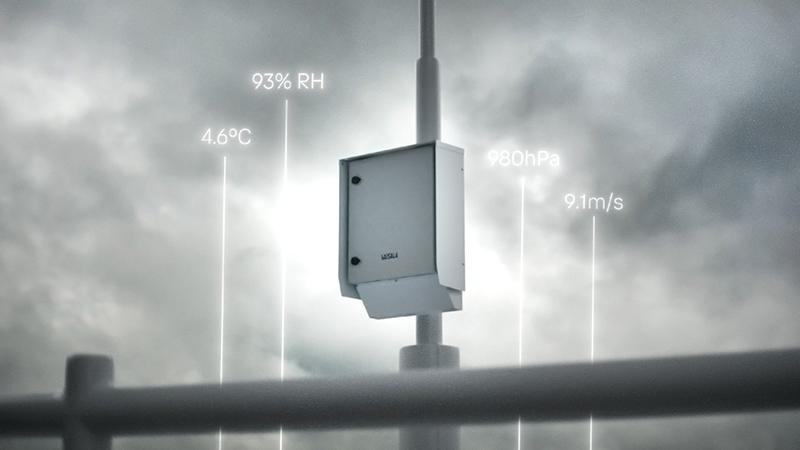
Our next-generation, cyber secure and modular Maritime Automatic Weather Station AWS830 is engineered for harsh marine environments and compliant…
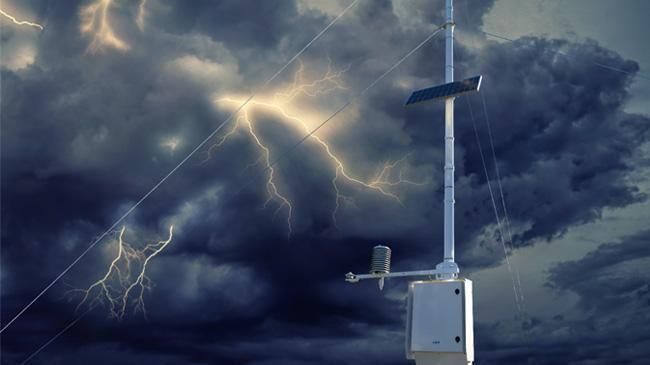
The Vaisala Automatic Weather Station AWS810 enables modern, high-quality surface weather observation networks anywhere in the world.
Vaisala Maritime Automatic Weather Station AWS830 delivers accurate, always‑on weather, environmental, oceanographic, and motion data for demanding…
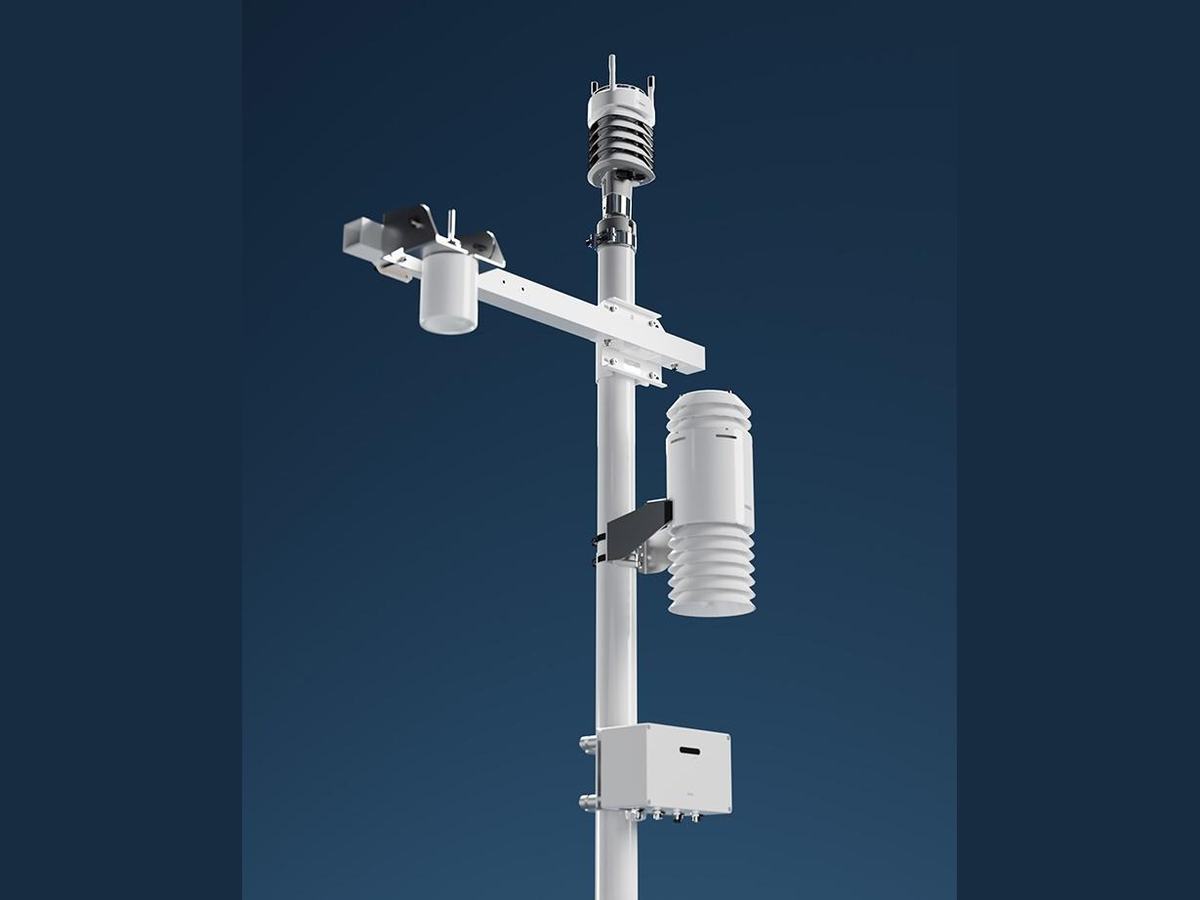
Vaisala Beam Weather Station BWS500 is a compact, scalable station for weather, air quality and road condition data, from a single standalone station…

Vaisala DRYCAP® Dew Point and Temperature Probe DMP5 is designed for in-line humidity measurement in industrial drying applications with high…

Dr. Lauri Reuter is an expert in the future of food, and the person to ask if you’ve ever wondered what we are going to eat in the future, and how…

Industrial companies are continuing to take action to minimize their carbon emissions. Many are reducing their use of fossil fuels and switching to…

In the causticizing process, passive chemicals are converted into active cooking chemicals to make white liquor. This is used in the digester as a…
A specialist replies with the solution, the instrument and the service that fit.
Products to quote
No products yet. An enquiry can be sent anyway: a specialist answers.