

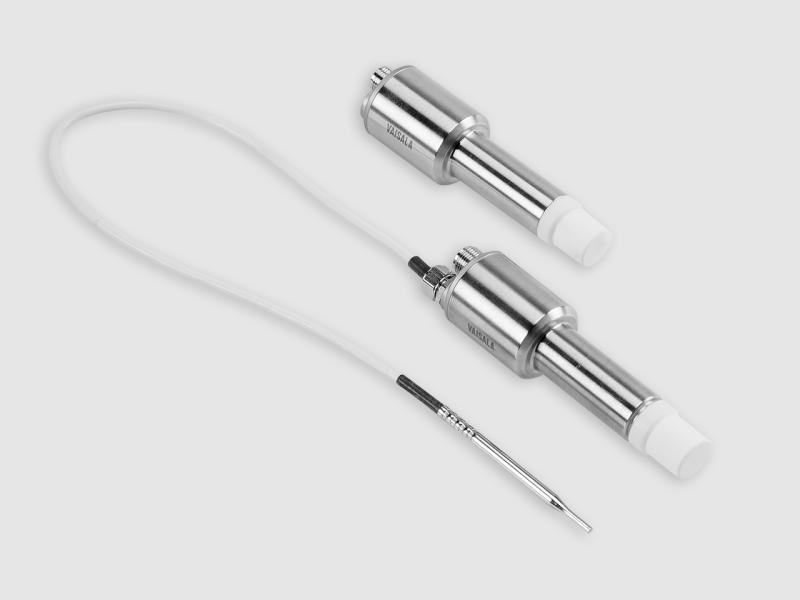
Vaporized Hydrogen Peroxide, Humidity and Temperature Measurement HPP270 Series
for bio-decontamination processes
Technical note
Our application engineers receive a lot of questions on the HPP270 Series probes for vaporized hydrogen peroxide. In this blog we answer several common ones... Get the full FAQ (PDF).
A: Vaisala has a world-class H2O2 vapor calibration station. The calibration station’s H2O2 ppm value can be traced to International Standards. This means we can rely on the ppm concentration value it generates. Traceability: a traceable measurement can be related to appropriate national or international standards through a documented, unbroken chain of comparisons.
A: The HPP270 probes do not have a specified calibration interval. The need for calibration is based upon the duration and concentration of H2O2 exposure. To aid in this determination, the Vaisala Insight software allows you to perform sensor diagnostics, and view the sensor vitality information. Sensor vitality is displayed as a convenient percentage, and it is recommended that calibration service be arranged when the value reaches 40%.
A: Due to the stresses of the H2O2 measurement environment, the PEROXCAP® sensor will lose its functionality over time. In less demanding conditions, the sensor can remain functional for a considerable number of years. In environments with higher H2O2 concentrations and longer exposure periods, it is recommended to monitor the condition of the sensor regularly. The status of the sensor can be reviewed from the Diagnostics Data view in Vaisala Insight PC software (Devices > [probe name] > Diagnostics). In the Diagnostics Data view, the condition of the sensor is shown as a percentage (0 … 100 %) on the Sensor vitality row. A new sensor will have a sensor vitality of 100 %, and a sensor at the end of its life cycle will have a sensor vitality of 0 %. If you are using the probe in a demanding environment, contact Vaisala to arrange sensor maintenance or replacement once the sensor vitality value reaches 40 %.
A: We have run long-term tests on the catalytic layer under H2O2 environment and these tests show that the catalytic layer is durable. You can check the catalytic layer by comparing the H2O2 ppm values between two adjusted probes.
A: The HPP272 withstands higher concentrations than 2000 ppm, but higher H2O2 concentrations will negatively impact the sensor's lifetime, increasing drift and decreasing sensor vitality.
A: No, users cannot replace the sensors. They not sold separately and a factory-level calibration and adjustment needs to be performed after the sensor replacement.
A: Yes, you can replace the filter. Use product code DRW246363SP to order.
A: The PEROXCAP® sensor contains two different HUMICAP sensors: A standard HUMICAPR2 and a HUMICAPR2 with a catalytic layer. The catalytic layer on the HUMICAPR2 catalyzes the H2O2 vapor into water and oxygen and prevents H2O2 measurement. Therefore, the sensor only sees water vapor and measures RH. Because there is extra H2O from the catalytic layer, the measured Relative Humidity is corrected. Relative Saturation is a calculated parameter from the different measurements (RH, ppm and temperature) of both sensors.
A: The PEROXCAP® sensor consists of two humidity sensors that have a minor difference in behavior when the humidity level changes. Because of this difference, the H2O2 concentration reading may vary slightly (typically 0 … 3 ppm) when the probe is not exposed to H2O2. If necessary, the variation in low level output can be hidden by enabling the low H2O2 threshold feature that forces the output to 0 when the measurement falls below a set level (for example, 3 ppm), and the configured activation delay ends. The output returns to normal operation after the measurement has remained above the set deactivation level (for example, 10 ppm) for a set time. You can configure the low H2O2 threshold activation and deactivation levels and the activation and deactivation delays with Vaisala Insight PC software and Modbus registers.
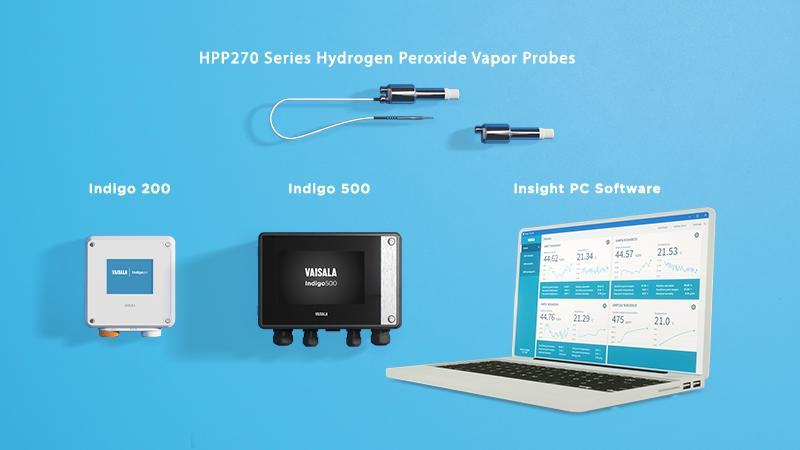
A: Yes, the analog output scale can be customized for all of the available parameters. This can be performed using the Insight software, Modbus registers, or through the Indigo200/500 configuration interface.
A: Yes, changes to the output parameters, output scaling, and chemical purge can be made in the field. This can be performed using the Insight software, Modbus registers, or through the Indigo200/500 configuration interface.
A: Find your local Vaisala representative, or send us a question in this form.
for bio-decontamination processes
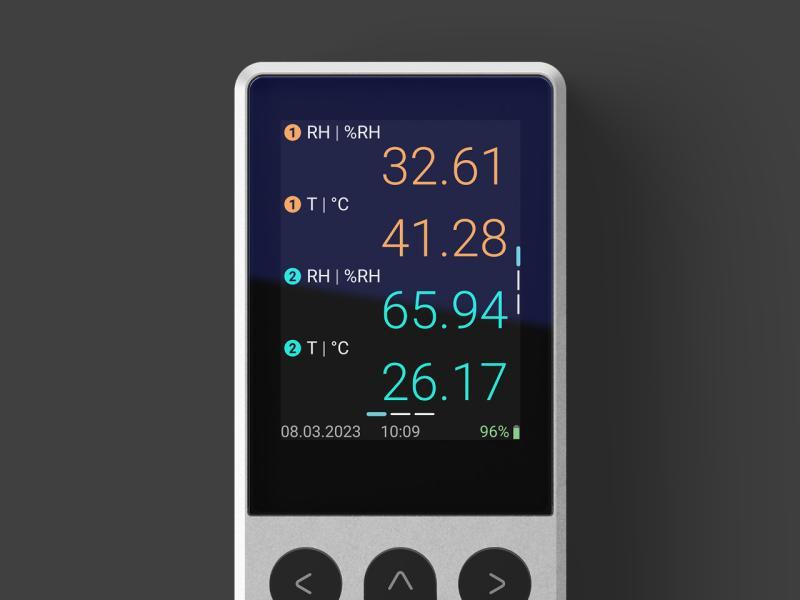
The latest addition to the Indigo family of transmitters and probes, the Indigo80 is a compact, handheld indicator and data logger. Ideal for field…
The latest addition to the Indigo family of transmitters and probes, the Indigo80 is a compact, handheld indicator and data logger. Ideal for field…

Upper air soundings provide the crucial data necessary for a complete atmospheric weather profile that leads to accurate forecasting. However…
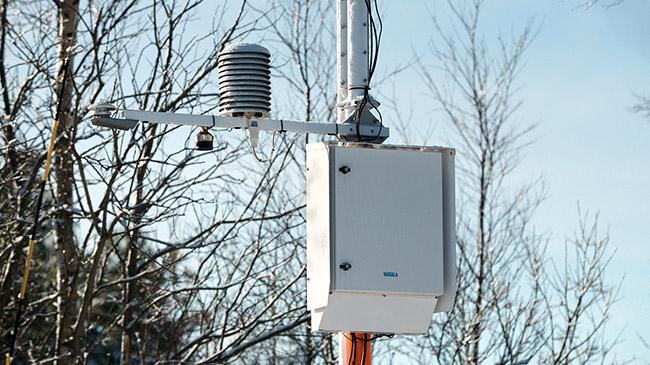
Vaisala Automatic Weather Station AWS310 is a complete communication and weather observation solution that can be used as a standalone unit, or as…
Our next-generation, cyber secure and modular Maritime Automatic Weather Station AWS830 is engineered for harsh marine environments and compliant…

Vaisala DRYCAP® Dew Point and Temperature Probe DMP5 is designed for in-line humidity measurement in industrial drying applications with high…

Dr. Lauri Reuter is an expert in the future of food, and the person to ask if you’ve ever wondered what we are going to eat in the future, and how…

Industrial companies are continuing to take action to minimize their carbon emissions. Many are reducing their use of fossil fuels and switching to…

In the causticizing process, passive chemicals are converted into active cooking chemicals to make white liquor. This is used in the digester as a…
A specialist replies with the solution, the instrument and the service that fit.
Products to quote
No products yet. An enquiry can be sent anyway: a specialist answers.