


Autosonde AS41
Upper air soundings provide the crucial data necessary for a complete atmospheric weather profile that leads to accurate forecasting. However…
Technical note

In a recent webinar, “How Continuous Monitoring & Building Management Systems Support Monitoring, Compliance, & Control” we received several questions on monitoring clean room applications. In this blog, Senior Project Sales Engineer John Coen and Senior GxP Regulatory Expert Paul Daniel answer the questions they did not have time to answer during their presentation.
Question: From a validation perspective, when we validate the CMS should the BMS for the cleanroom be qualified as a baseline?
Answer: To be clear on terms, let’s agree that validation is for a process, and qualification is for the equipment used for the process. A clean room is a great example, because clean rooms definitely need monitoring beyond the Building Management System for differential pressure and particles, so some sort of validated monitoring solution is required. Clean rooms also need the BMS that controls the HVAC that maintains the temperature, relative humidity, and air pressure. Since I need a monitoring system anyway, I would validate my monitoring system.
But what level of control do we need for the BMS? We can all agree that the BMS needs some level of control, according to GEP (Good Engineering Practice) as a minimum. But do we validate it?
I have a lot of confidence saying that for the HVAC control in a simpler space, like a warehouse, that the BMS doesn’t need to be validated. But that is harder to say with a more complicated space like a clean room. Clean room validation may be a case-by-case scenario, but with the hopeful goal of a system organization that allows the BMS to remain un-validated but controlled (per GEP).
Some define “qualified” as simply meaning controlled. I think it should be clearly stated if the BMS is a GxP system and therefore qualified/validated and incorporated into your Quality Management System, or if the BMS is a non-GxP system, and therefore controlled and not part of your QMS.
Perhaps posing the question another way gives the answer: Do you intend to make your Building Management System SOPs into GxP Documents and maintain the training of your BMS Operators as GxP Records? Do you intend to go through a GxP Change Control process when you update the BMS server, or if you want to change a setpoint for better efficiency? If you think that level of control of the BMS is not necessary, then you are not intending the treat the BMS a GxP system, so you may not need to qualify the equipment or validate the processes.
Question: Does the EU GMP Annex 1 require monitoring humidity in clean room classes C and D?
Answer: There may not actually be a specific regulatory requirement to control or monitor humidity in any clean room, unless your company has approved a procedure stating that you will control and monitor humidity. It’s one of those things where if you said you would do it in a GxP document, then now it is a GxP requirement that you do what you said you would do.
However, there are some practical reasons to monitor and control humidity in clean rooms that are under regulatory control. The room must be operated in a way that will safeguard product and the health of your employees. A clean room that is too dry, or too humid, can have knock-on effects.
For example, if too humid, operators will sweat and contaminate the clean room; if too dry, static charge can build up, labels might not stick correctly, and you can cause health problems for employees, again creating conditions for contamination. So, while there is no direct regulatory requirement to control or monitor humidity in a clean room, failing to do so could create other problems that can affect product quality, and could become apparent during a regulatory inspection or survey.
Question: What is your recommendation for recording intervals for temperature/humidity in clean rooms?
Answer: There was a historical issue with collecting too much data, because storage can become costly. This led to longer recording intervals, such as 15 minutes. Now that storage is cheaper, we can collect as much as we want and think about what is ideal. Five minutes can be a happy medium, because temperatures are unlikely to change drastically within that time frame.
That said, Vaisala’s RFL100 data loggers collect data at one-minute intervals by default. This interval is for applications where more frequent data is desired, and we wanted to remove the difficulty of having to configure sample intervals for multiple applications. Report data in viewLinc can be filtered to present data in five- or 15-minute intervals as desired.
Upper air soundings provide the crucial data necessary for a complete atmospheric weather profile that leads to accurate forecasting. However…
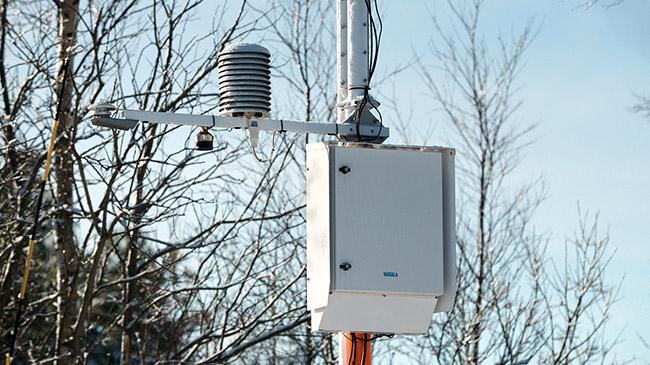
Vaisala Automatic Weather Station AWS310 is a complete communication and weather observation solution that can be used as a standalone unit, or as…
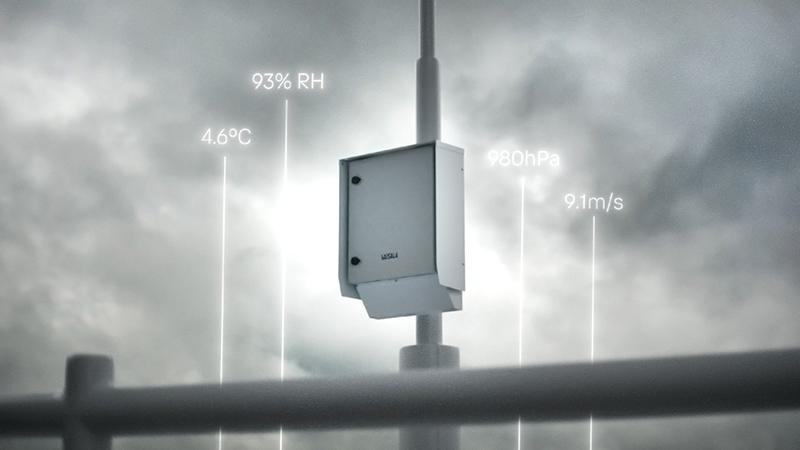
Our next-generation, cyber secure and modular Maritime Automatic Weather Station AWS830 is engineered for harsh marine environments and compliant…

The Vaisala Automatic Weather Station AWS810 enables modern, high-quality surface weather observation networks anywhere in the world.
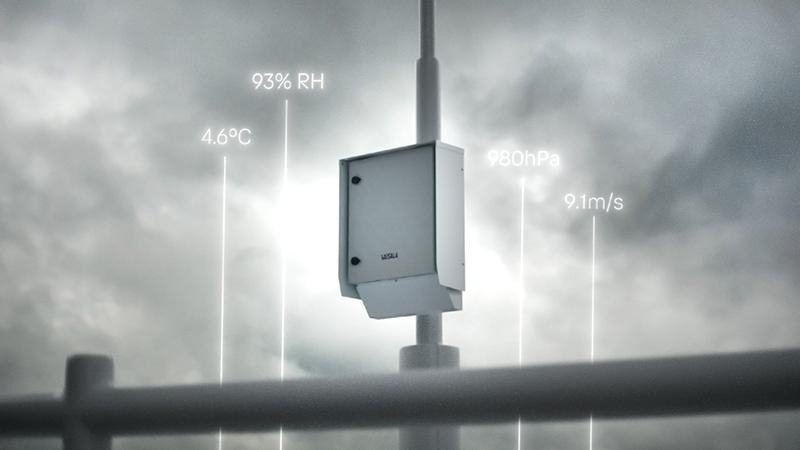
Vaisala Maritime Automatic Weather Station AWS830 delivers accurate, always‑on weather, environmental, oceanographic, and motion data for demanding…
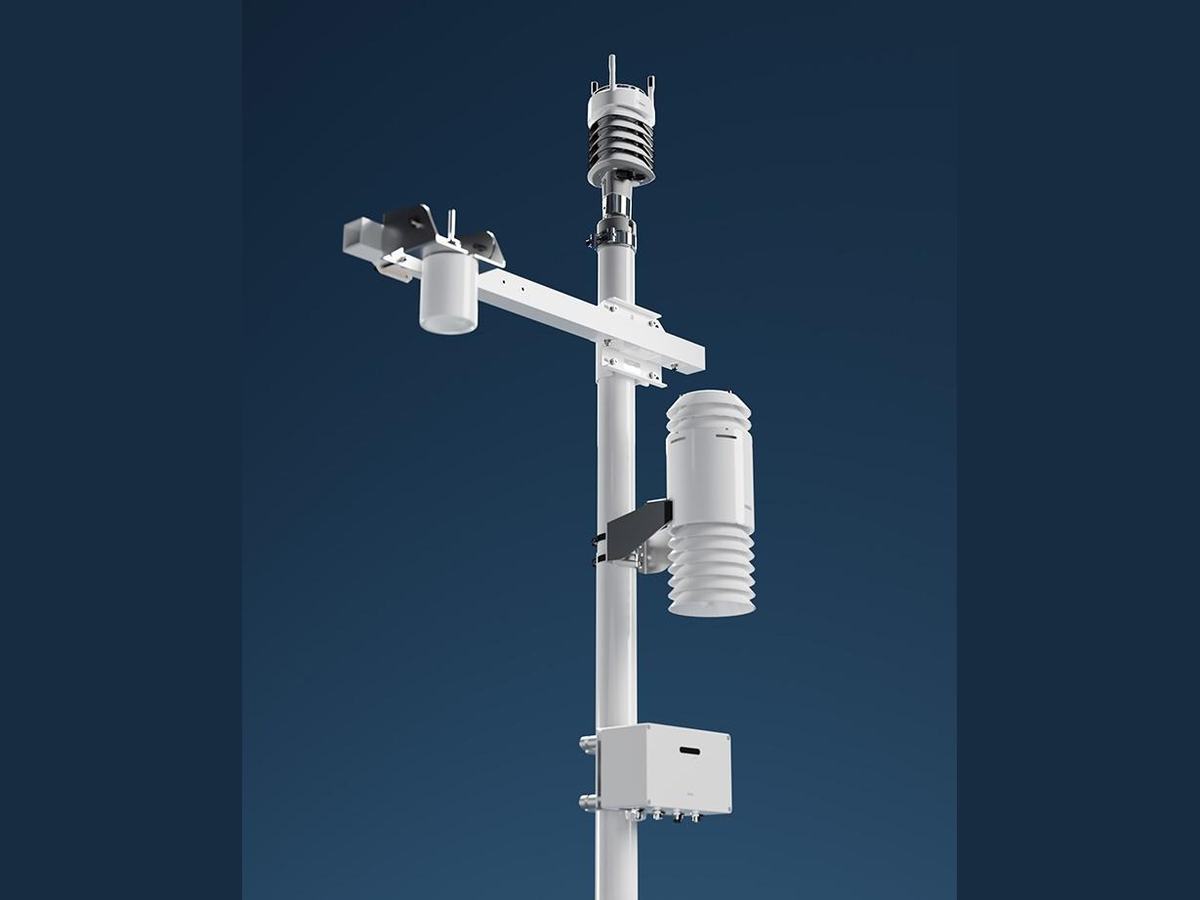
Vaisala Beam Weather Station BWS500 is a compact, scalable station for weather, air quality and road condition data, from a single standalone station…

Vaisala DRYCAP® Dew Point and Temperature Probe DMP5 is designed for in-line humidity measurement in industrial drying applications with high…

Dr. Lauri Reuter is an expert in the future of food, and the person to ask if you’ve ever wondered what we are going to eat in the future, and how…

Industrial companies are continuing to take action to minimize their carbon emissions. Many are reducing their use of fossil fuels and switching to…

In the causticizing process, passive chemicals are converted into active cooking chemicals to make white liquor. This is used in the digester as a…
A specialist replies with the solution, the instrument and the service that fit.
Products to quote
No products yet. An enquiry can be sent anyway: a specialist answers.