


Bringing out the beauty of wood: Veneer drying with humidity control
Vaisala DRYCAP® Dew Point and Temperature Probe DMP5 is designed for in-line humidity measurement in industrial drying applications with high…
Technical note
Listen also to the Produal SenseAI podcasts:
Produal SenseAI-pod Part 1:
Deep dive into the EPBD directive
Produal SenseAI-pod Part 2:
Produal’s approach to sustainable building solutions
Produal SenseAI-pod Part 3:
A bigger picture of greener buildings
It’s a societal message you couldn’t have missed: there’s an urgent need for a green transition if we want to keep our planet viable in the future.
A real awakening to this urgency is gradually being seen as concrete actions. The importance of building automation in combating climate change is constantly growing, as buildings are estimated to consume about 40% of the EU’s energy and cause over a third of greenhouse gas emissions.
In April 2024, the revised EPBD directive (Energy Performance of Buildings Directive) came into force in the EU, supporting smart energy management systems to promote the green transition.
Efficiency requirements for the current building stock are being expanded and new construction will require zero emissions in the future. Reporting obligations and inspections are also being increased based on now defined assessment methods.
Pekka Keskiaho considers the directive, which will affect the legislation of EU Member States from 2026 onwards, to be significant and supportive of the importance of building automation.
– Automation can be thought of as the ‘brains’ of a building, controlling energy-consuming functions such as heating, cooling, and ventilation, describes Keskiaho. Energy renovations are generally viewed positively due to their efficiency and short payback periods.
– The share of the building automation contract in the total cost of a building is minimal, but it can affect up to 40% of a building’s energy consumption. When the measurement data connected to automation is accurate and reliable, intelligent and demand-based actions can be implemented in the building without wasting energy. Even a one-degree temperature change affects up to 5% of a building’s energy consumption.

Pekka Keskiaho,
Director of Sales and Marketing
The next-generation Produal
room transmitters set a new level
for accuracy ±0.3 °C
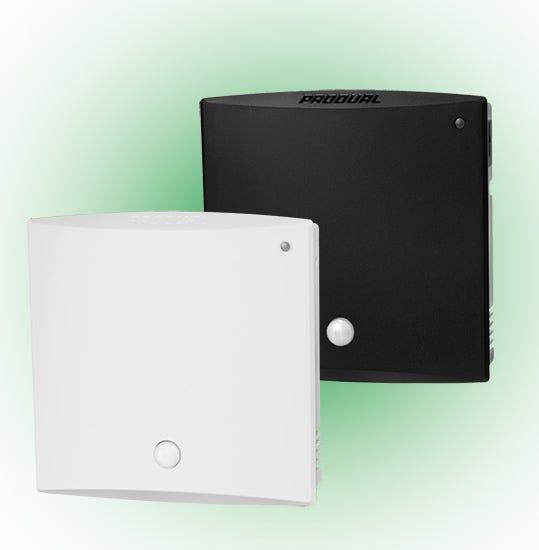
– Our patented temperature compensation technology in new room transmitters ensures accuracy over a wide room temperature range. In addition, the IQS index can be used to analyze the quality of the device’s installation environment and address factors that disrupt measurement accuracy during its life cycle.
Automation and control systems will be required not only in large non-residential buildings but also in smaller ones. In addition, with the EPBD, the role of energy certificates is strengthened as a clear, reliable, and standardized way to transparently compare the energy efficiency of buildings. Buildings in the worst energy class G must improve their energy efficiency to class F by 2027 and to class E by 2030. These requirements will significantly accelerate energy renovations in Europe, and the directive also encourages to organise EU-wide and national support to assist them.
– For example, with our reliable wireless network, measurement solutions can easily be implemented for renovation projects and flexibly in new constructions. Wireless implementations also reduce the need for cables, which reduces the power loss of systems.
While the original focus of the EPBD is on reducing energy consumption and greenhouse gas emissions, the EU wants to ensure that energy savings are not made at the expense of building users.
For the first time, Member States will now have to set national standards for healthy indoor air quality and air quality assessment will also be included in the Energy Performance Certificates (EPCs). This will give an overall picture of the sustainability of buildings. The EPBD is a coherent part of wider EU regulation and will also support green building certifications. For example, BREEAM, LEED and WELL include indoor air quality as a key criterion.
– Our transmitters allow comprehensive monitoring and control of indoor air quality. For example, we offer the most accurate temperature-CO2 room transmitters on the market, which meet the most stringent measurement requirements of building certification and classification systems, says Keskiaho.
EU Member States are responsible for defining and implementing indoor air quality limit values and assessment methods for ventilation efficiency, indoor humidity, CO2, VOC and particulate matter, for example, based on national building types and local climate.
It is therefore gratifying to say that the EPBD revision will benefit not only the climate and the economy, but also the users of the buildings are better off.
Vaisala DRYCAP® Dew Point and Temperature Probe DMP5 is designed for in-line humidity measurement in industrial drying applications with high…

Dr. Lauri Reuter is an expert in the future of food, and the person to ask if you’ve ever wondered what we are going to eat in the future, and how…

Industrial companies are continuing to take action to minimize their carbon emissions. Many are reducing their use of fossil fuels and switching to…

In the causticizing process, passive chemicals are converted into active cooking chemicals to make white liquor. This is used in the digester as a…
A specialist replies with the solution, the instrument and the service that fit.
Products to quote
No products yet. An enquiry can be sent anyway: a specialist answers.