

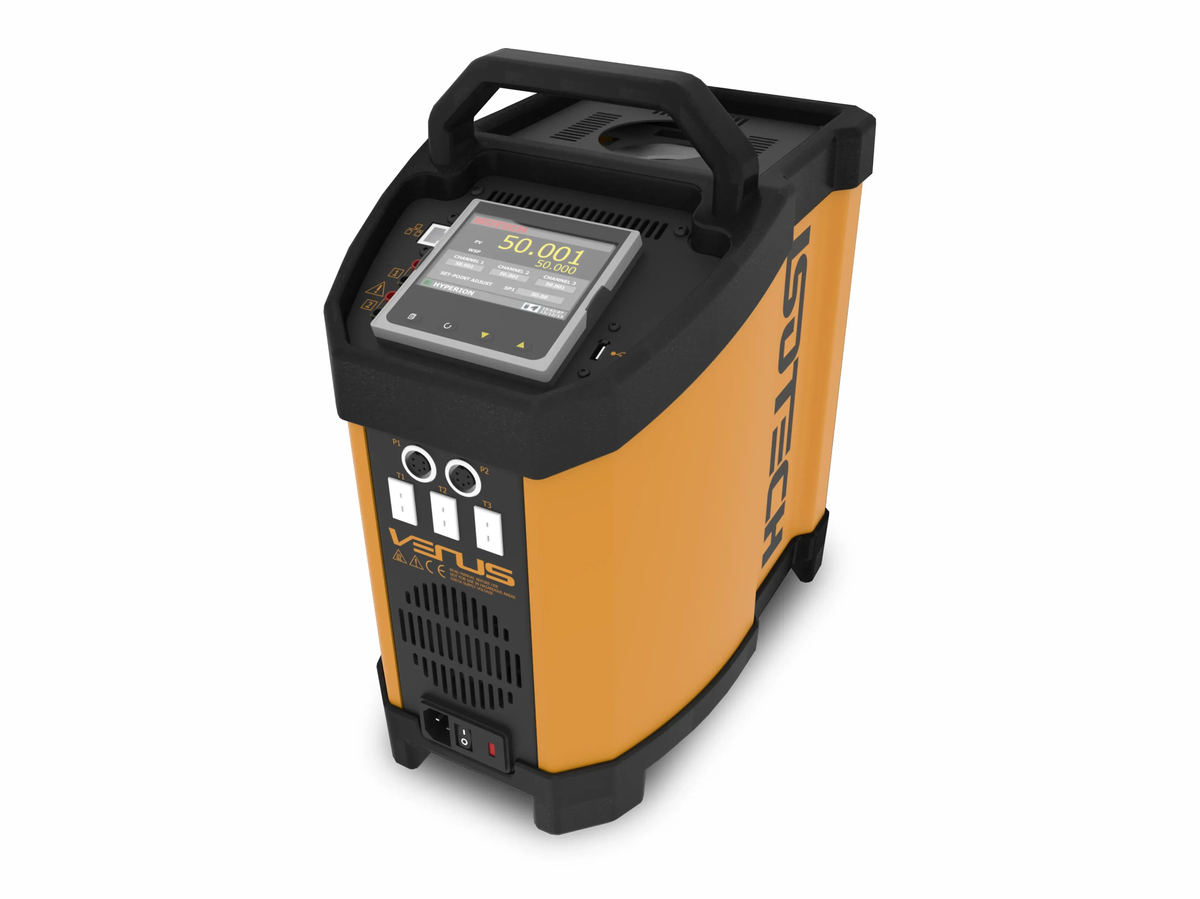
Venus 4951
Need advice on which model? Dry Block Selection Guide
Technical note
Dry block calibrators are vital tools in temperature calibration, offering convenient and fast calibration of sensors. However, when evaluating performance, users often place undue emphasis on display resolution. This article explores the limitations of resolution as a performance indicator, identifies the key contributors to uncertainty, and uses a practical example to show how little resolution influences the result when properly evaluated.
Display resolution ≠ accuracy
Main uncertainty sources: gradients, loading, immersion depth
Real-world accuracy depends on design, not just digits
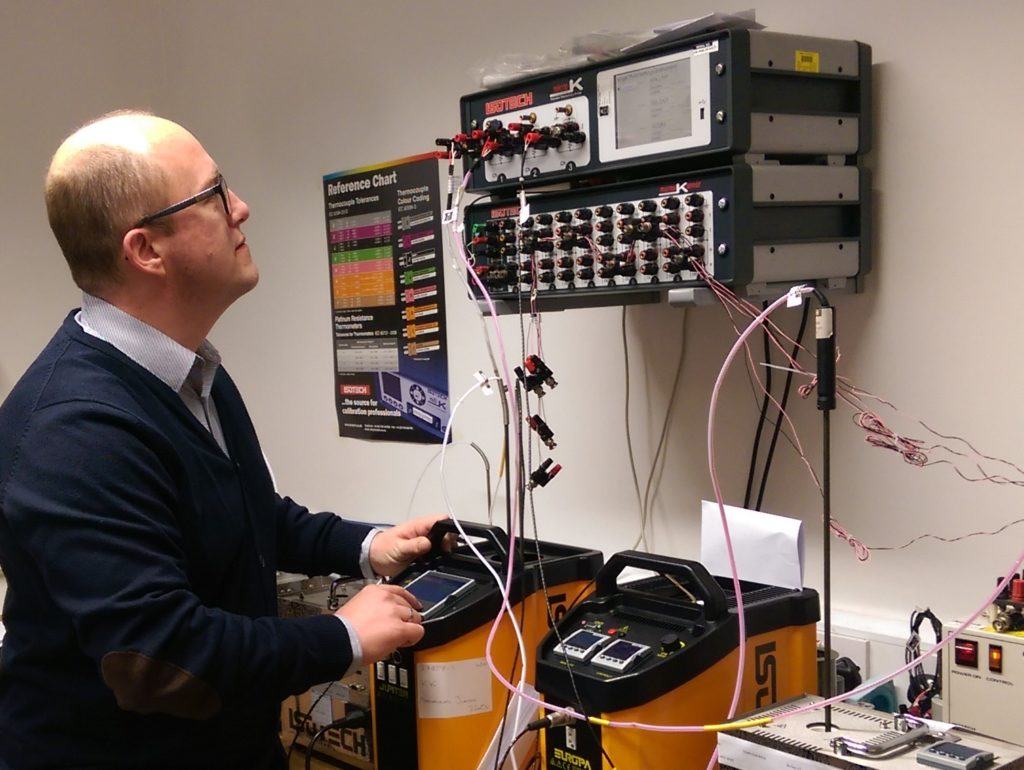
It is essential to differentiate between resolution and accuracy when evaluating a calibrator:
While higher resolution may improve readability, it often has minimal impact on overall calibration uncertainty, as other sources, such as thermal gradients and probe loading, typically contribute far more significantly.
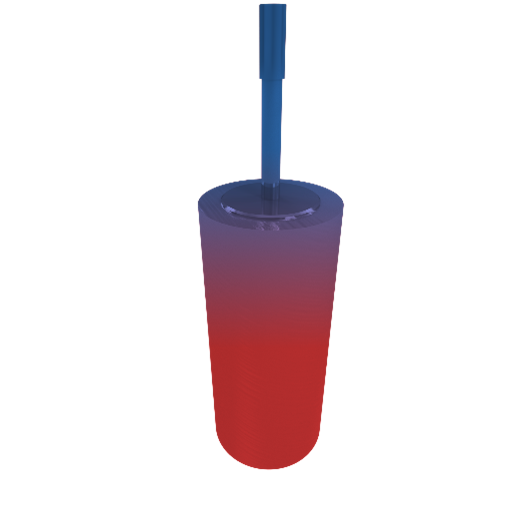
According to internationally recognised guidance documents such as EURAMET cg-13 and ASTM E3186-19, the following factors typically dominate the uncertainty budget in dry block calibration:
These are thermal and practical factors that significantly impact real-world performance and compliance with ISO/IEC 17025.
To demonstrate the limited influence of display resolution, consider a simplified uncertainty budget for a dry block calibrator at 100 °C. All uncertainty sources are treated as independent and follow a rectangular (uniform) distribution. Two scenarios are compared:
When a digital instrument shows values with fixed resolution, the actual temperature could fall anywhere within the smallest displayed step. Because we can’t know its exact position within that interval, it’s standard practice to assume the error is evenly spread across it, so we use half the least significant digit (LSD) as the uncertainty contribution.
Note: Uncertainty from the reference thermometer is not included.
| Source of Uncertainty | Value ± | Distribution | Divisor | ci | Standard Uncertainty (ui) |
|---|---|---|---|---|---|
| Radial non-uniformity | 0.010 | Rectangular | 1.73 | 1 | 0.0058 |
| Axial non-uniformity | 0.100 | Rectangular | 1.73 | 1 | 0.0578 |
| Loading effects | 0.050 | Rectangular | 1.73 | 1 | 0.0289 |
| Stability | 0.030 | Rectangular | 1.73 | 1 | 0.0173 |
| Display resolution (A) | 0.005 | Rectangular | 1.73 | 1 | 0.0029 |
| Display resolution (B) | 0.0005 | Rectangular | 1.73 | 1 | 0.0003 |
| Display Resolution | Standard Uncertainty (°C) | Expanded Uncertainty (°C) |
|---|---|---|
| 0.01 °C | 0.0672 | ±0.1344 |
| 0.001 °C | 0.0672 | ±0.1344 |
Therefore, the difference in expanded uncertainty (k = 2) between using a display resolution of 0.01 °C and 0.001 °C is negligible, effectively buried within numerical resolution and rounding, with no practical impact on calibration outcomes.
Conclusion
While display resolution is a highly visible specification and may improve readability, it is a minor contributor to the actual performance of a dry block calibrator. As demonstrated in the comparative example, gains from higher resolution are dominated by thermal effects such as axial gradients and probe loading.
Successful calibration depends not on the smallest displayed increment, but on:
For compliance with standards such as ISO/IEC 17025, calibration systems must be evaluated based on total measurement uncertainty – not marketing-driven resolution claims.
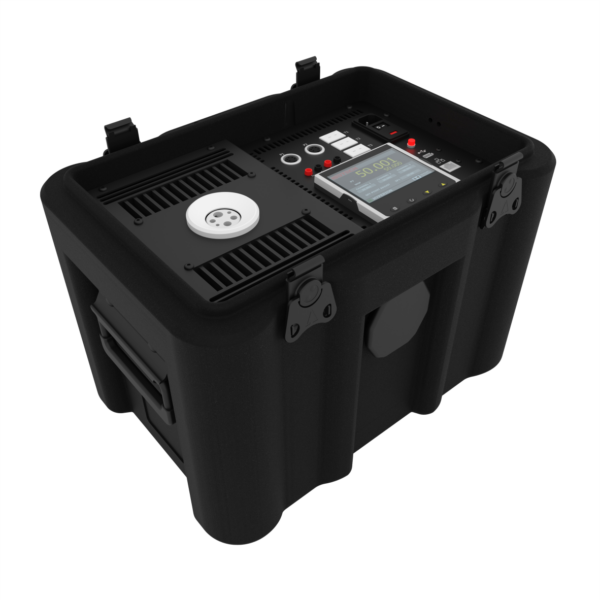
-40°C to +140°C
Product Spec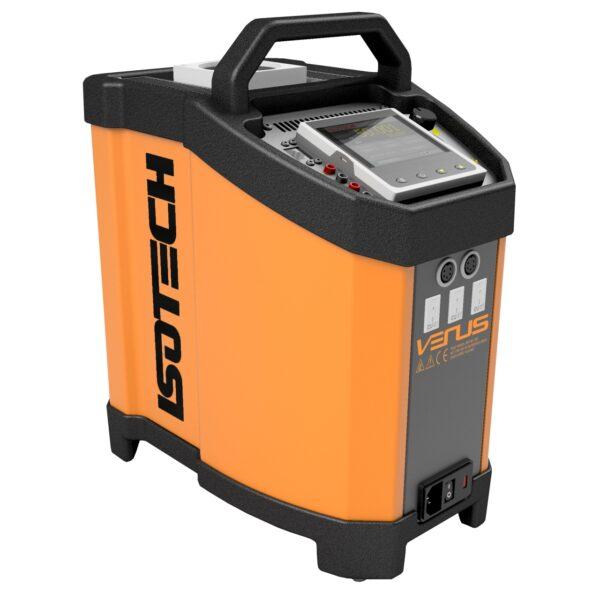
-35°C to 140°C
Product Spec
-35°C to 140°C
Product Spec
35°C to 350°C
Product SpecNeed advice on which model? Dry Block Selection Guide
Need advice on which model? Dry Block Selection Guide
Need advice on which model? Dry Block Selection Guide
Need advice on which model? Dry Block Selection Guide
Need advice on which model? Dry Block Selection Guide
Need advice on which model? Dry Block Selection Guide

Vaisala DRYCAP® Dew Point and Temperature Probe DMP5 is designed for in-line humidity measurement in industrial drying applications with high…

Dr. Lauri Reuter is an expert in the future of food, and the person to ask if you’ve ever wondered what we are going to eat in the future, and how…

Industrial companies are continuing to take action to minimize their carbon emissions. Many are reducing their use of fossil fuels and switching to…

In the causticizing process, passive chemicals are converted into active cooking chemicals to make white liquor. This is used in the digester as a…
A specialist replies with the solution, the instrument and the service that fit.
Products to quote
No products yet. An enquiry can be sent anyway: a specialist answers.