


Bringing out the beauty of wood: Veneer drying with humidity control
Vaisala DRYCAP® Dew Point and Temperature Probe DMP5 is designed for in-line humidity measurement in industrial drying applications with high…
Technical note
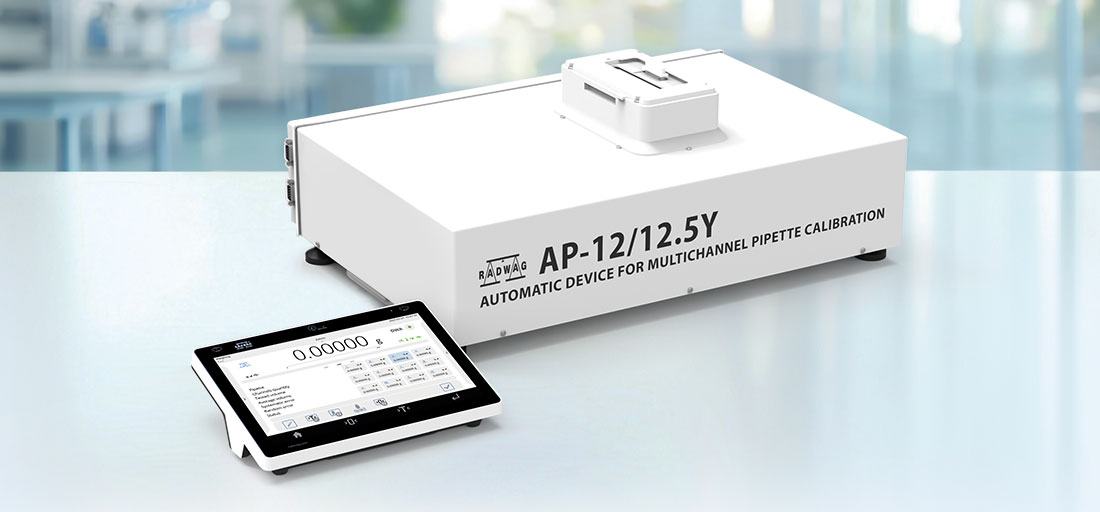
In a modern laboratory, time is one of the most valuable resources. Although we often focus on the costs of equipment or materials, it is the laboratory technician’s time which, in many cases, generates the highest – and often underestimated – expenses. This is particularly evident in processes such as pipette calibration.
Manual pipette calibration, although still common, is a time-consuming and error-prone process. It requires the full attention of a qualified member of staff, who must:
· Prepare the workstation and samples
· Conduct measurements
· Record results
· Analyse data and prepare reports.
Each of these stages involves not only time but also the risk of human error. Errors translate into repeated measurements, additional costs and delays. In practice, this means that the real cost of a single calibration is significantly higher than just the employee’s hourly rate.
This is felt most keenly by:
· Accredited calibration laboratories, where compliance with standards and efficiency are paramount
· Pipette manufacturers – for whom calibration is a key element of quality control
· Large R&D centres (pharmaceuticals, biotechnology), where the scale of operations is enormous.
In these environments, even a slight reduction in the time taken for a single process translates into significant savings over a month or a year.
Automation is the solution to the problem – it not only speeds up work, but also reduces errors and eases the workload on staff. Modern systems, such as pipette calibration stations equipped with the AP-12/12.5Y automated unit, are transforming the way laboratories operate.
Thanks to 12 weighing modules, it is possible to perform as many as 12 measurements in just 5 seconds. This is a huge difference compared to the manual method.
Simultaneous measurements eliminate downtime and increase laboratory throughput.
Automatic data recording and report generation reduce the risk of errors.
An ergonomic workstation, automatic liquid disposal and intuitive operation limit the workload on staff.
In regulated environments, compliance with standards is essential. The AP-12/12.5Y
Automatic Device for Multichannel Pipette Calibration meets the requirements of:
· ISO 8655 (pipette calibration)
· 21 CFR Part 11 (data integrity and security).
This means that the laboratory not only works faster, but also more securely and in accordance with audit requirements.
Let’s ask a simple question: how much does an hour of a laboratory technician’s work cost, and how many such hours can be saved each month? In many cases, it turns out that:
· The investment in automation pays for itself faster than anticipated
· Laboratory technicians can focus on other tasks
· Overall productivity and work quality improve.
Manual calibration is often a hidden cost which reduces laboratory efficiency. Automation, for example through the implementation of systems such as the AP-12/12.5Y Automatic Device for Multichannel Pipette Calibration, allows this cost to be significantly reduced.
Manual pipette calibration is a time-consuming and error-prone process that requires significant staff attention. The hidden costs include the time spent on preparing samples, conducting measurements, recording results, and analyzing data, all of which carry the risk of human error leading to repeated measurements and delays. Accredited calibration laboratories, pipette manufacturers, and large R&D centers in pharmaceuticals and biotechnology are most affected. In these environments, even small reductions in process time can lead to substantial savings over time due to the scale of operations. The AP-12/12.5Y unit enables 12 measurements in just 5 seconds, significantly reducing working time. It also allows for parallel processing, eliminates human error through automatic data recording and report generation, and improves laboratory technician comfort. The AP-12/12.5Y Automatic Device for Multichannel Pipette Calibration meets the requirements of ISO 8655 for pipette calibration and 21 CFR Part 11 for data integrity and security. Investing in automation allows the cost of manual calibration to be significantly reduced, leading to faster payback than anticipated. It also frees up laboratory technicians to focus on other tasks, improving overall productivity and work quality.What are the hidden costs associated with manual pipette calibration?
Which types of laboratories experience the most significant impact from the cost of technician time?
How does automation, specifically the AP-12/12.5Y unit, improve laboratory efficiency?
What compliance standards does the AP-12/12.5Y Automatic Device for Multichannel Pipette Calibration meet?
Check out professional precision balances at our distributor in your country.What are the benefits of investing in automation for pipette calibration?
Vaisala DRYCAP® Dew Point and Temperature Probe DMP5 is designed for in-line humidity measurement in industrial drying applications with high…

Dr. Lauri Reuter is an expert in the future of food, and the person to ask if you’ve ever wondered what we are going to eat in the future, and how…

Industrial companies are continuing to take action to minimize their carbon emissions. Many are reducing their use of fossil fuels and switching to…

In the causticizing process, passive chemicals are converted into active cooking chemicals to make white liquor. This is used in the digester as a…
A specialist replies with the solution, the instrument and the service that fit.
Products to quote
No products yet. An enquiry can be sent anyway: a specialist answers.