


Bringing out the beauty of wood: Veneer drying with humidity control
Vaisala DRYCAP® Dew Point and Temperature Probe DMP5 is designed for in-line humidity measurement in industrial drying applications with high…
Technical note
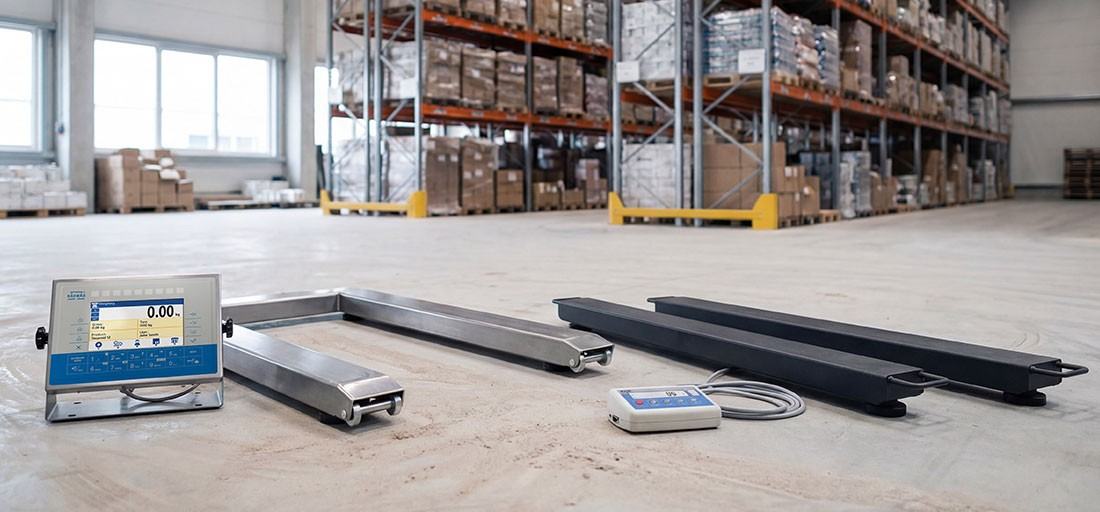
Pallet scales and beam scales are indispensable in warehouses, production halls and logistics centres where fast and accurate weighing of heavy loads is essential. Their design allows pallets, barrels and other non-standard goods to be weighed without the need for additional lifting equipment or complex machinery. Choosing the right type of scale – pallet or beam – allows you to optimise warehouse processes, increase work efficiency and reduce the risk of errors in the transport and storage of goods. How does a U-type pallet scale differ from a beam scale? Are beam scales suitable for weighing machines and tanks? Why is it worth buying a pallet scale directly from the manufacturer? You will find answers to these and other questions in this article.
Both are used to weigh pallets, but they work slightly differently. The difference mainly concerns their design, the way the pallet is positioned and their application.
A U-type pallet scale has a U-shaped design which forms a frame open on one side. The user places the pallet in the space between the arms of the scale and usually drives the pallet truck directly onto its surface. Strain gauge sensors located in the structure measure the pressure exerted by the load and then convert it into a weight result displayed on the terminal. This solution makes weighing standard pallets, especially Euro pallets, quick and convenient, as it does not require precise positioning of separate elements.
The beam scale consists of two separate weighing beams which are placed parallel under the pallet or load. The distance between the beams can be adjusted to the width of the object being weighed, allowing for greater flexibility of use. During weighing, the weight is distributed over both skids, and built-in strain gauge sensors record the pressure and transmit the signal to the weighing terminal, which calculates and displays the weight. This solution is particularly suitable for non-standard pallets or loads of different sizes, where it is necessary to be able to adjust the spacing of the weighing elements.
Pallet scale mobility is crucial in a warehouse because it allows the device to be quickly moved to the place where goods are currently being received or shipped, which improves work organisation. Transport rollers allow the scale to be easily moved without the need for additional equipment. Ergonomic handles ensure a comfortable and secure grip, enabling the operator to manoeuvre the device efficiently even in confined spaces.
Yes. If the scale is used to determine the weight of goods for pricing purposes, legalization (conformity assessment) is required by law.
Scales which are subject to legalization are those used:
In dry warehouses, IP65 protection is sufficient. In areas with high dust or humidity levels, as well as in the food industry, scales made of stainless steel with IP67 or IP68 protection are recommended. RADWAG stainless steel pallet scales have a terminal with IP 66 / 67 / 69, and RADWAG stainless steel multifunctional beam scales have IP 66 / 68.
U-type pallet scales, including stainless steel pallet scales, have a maximum capacity of 3,000 kg, or 3 tonnes. Beam scales, including stainless steel beam scales, have a maximum capacity [Max] of 6,000 kg, or 6 tonnes.
Yes, RADWAG weighing terminals support interfaces such as RS232, USB, Ethernet and Wi-Fi®, which allows for automatic data transfer to SAP or warehouse systems and to the cloud.
Readability, or division, determines the smallest change in weight which the scale will show. In standard pallet scales with a capacity of 1500 kg, it is usually 500 g.
Definitely yes. Thanks to the possibility of freely spacing the skids, Beam Scales can be placed under the support points of heavy structures, machines or large crates that do not fit on a standard platform.
It is recommended to calibrate the scale periodically (for example, once a year) to confirm its traceability and maintain compliance with ISO quality standards.
Purchasing directly from RADWAG guarantees the lowest price without margins and intermediaries, quick access to factory service and the certainty of purchasing original spare parts.
__________
Wi-Fi® is a registered trademark of Wi-Fi Alliance®.
A U-type pallet scale has a U-shaped frame for easy pallet placement, ideal for standard pallets like Euro pallets. Beam scales consist of two adjustable parallel beams, offering flexibility for non-standard or differently sized loads by allowing the spacing between beams to be adjusted. Pallet scale mobility is crucial for efficient warehouse operations as it allows the scale to be quickly moved to where goods are being received or shipped. This improves work organisation and facilitates easy movement, even in tight spaces, thanks to features like transport rollers and ergonomic handles. A legalized pallet scale is legally required when the scale is used to determine the weight of goods for pricing purposes. This includes applications in trade, medical facilities, analytical laboratories, and for calculating market fees, taxes, bonuses, penalties, discounts, or compensation. In dry warehouses, an IP65 protection rating is sufficient for industrial scales. However, in areas with high dust or humidity levels, or within the food industry, scales made of stainless steel with an IP67 or IP68 protection rating are recommended. U-type pallet scales, including stainless steel models, have a maximum capacity of 3,000 kg (3 tonnes). Beam scales, also including stainless steel versions, offer a higher maximum capacity of 6,000 kg (6 tonnes). Yes, beam scales are definitely suitable for weighing machines and tanks. Their design allows the weighing skids to be freely spaced, enabling them to be positioned under the support points of heavy structures or large crates that would not fit on a standard scale platform.How does a U-type pallet scale differ from a beam scale in terms of design and application?
Why is mobility important for pallet scales in a warehouse setting?
When is a legalized pallet scale legally required for shipping goods?
What IP rating is recommended for industrial scales in different warehouse environments?
What is the maximum weight capacity for U-type pallet scales and beam scales?
Check out professional precision balances at our distributor in your country.Are beam scales suitable for weighing large, non-standard items like machines or tanks?
Vaisala DRYCAP® Dew Point and Temperature Probe DMP5 is designed for in-line humidity measurement in industrial drying applications with high…

Dr. Lauri Reuter is an expert in the future of food, and the person to ask if you’ve ever wondered what we are going to eat in the future, and how…

Industrial companies are continuing to take action to minimize their carbon emissions. Many are reducing their use of fossil fuels and switching to…

In the causticizing process, passive chemicals are converted into active cooking chemicals to make white liquor. This is used in the digester as a…
A specialist replies with the solution, the instrument and the service that fit.
Products to quote
No products yet. An enquiry can be sent anyway: a specialist answers.