


Bringing out the beauty of wood: Veneer drying with humidity control
Vaisala DRYCAP® Dew Point and Temperature Probe DMP5 is designed for in-line humidity measurement in industrial drying applications with high…
Technical note
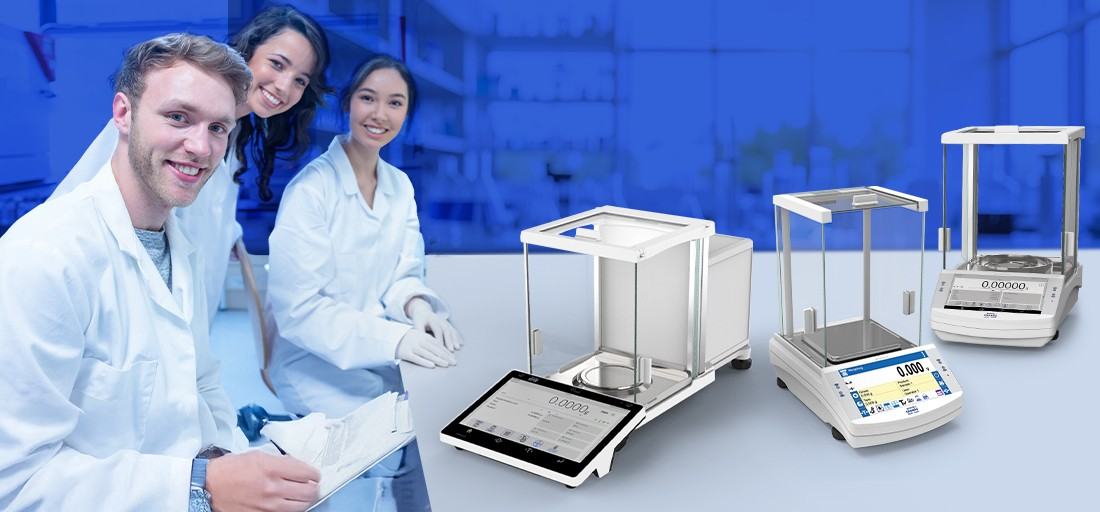
The university laboratory is a place where future chemists, biotechnologists, pharmacists and engineers learn basic laboratory skills. One of these is accurate weighing. Although this seems simple, in practice it is at the weighing stage that students make the most mistakes, which later affect the entire experiment – from unsuccessful titration to incorrect solution concentration values. Therefore, a well-thought-out method of teaching this skill, as well as equipping laboratories with reliable balances, are of great importance.
At RADWAG, we have been observing for years how important our devices are in educating future generations of specialists. In this article, we suggest how to effectively teach weighing and select the optimal balance for a teaching laboratory.
High measurement accuracy is the foundation of chemical analysis. In university laboratories, weighing errors lead to:
· Incorrect preparation of solutions
· Wrong stoichiometric calculations
· Non-reproducible experimental results
· Difficulties in further laboratory classes.
Students begin to understand the importance of precision only when they see how a minor oversight, such as touching a sample with their fingers or weighing a hot vessel, can distort the results. From a didactic perspective, a precision balance therefore becomes not only a measuring tool, but also an important element in teaching responsibility for the experiments carried out.
Thanks to years of cooperation with lecturers and laboratory staff, we have been able to identify a group of errors which recur in almost every laboratory:
Even a slightly heated sample causes air to rise and appears to have a lower mass. This is one of the most common mistakes made by beginners.
The grease and moisture on your fingers change the mass and destabilise the readings.
c) Incorrect use of tare
Sometimes students tare:
· After pouring in part of the sample
· Each time instead of working with the weighing vessel.
This leads to a lack of control over the actual amount of material being weighed.
Opening a window, quick hand movements or significant ventilation near the balance lead to fluctuations in the reading.
Some students want to complete the task quickly, so they read the mass before the result has stabilised.
Particles of substance, dust or liquid traces left on the weighing pan cause systematic errors. It is worth teaching not only the technique, but also understanding why attention to procedure has a real impact on measurements.
Laboratory equipment for students differs from research laboratory equipment. In teaching, apart from accuracy, the following factors are important:
In a student laboratory, a balance can be used for several hours a day and operated by hundreds of people. For this reason, its design should be resistant to:
· Accidental movements
· Light impacts
· Frequent cleaning
· Spilled samples.
An intuitive interface and a limited number of functions in balances designed for teaching purposes help to avoid errors resulting from incorrect settings.
c) Stability of readings and short stabilisation time
With a large number of students in class, it is important that the device works quickly and reliably.
For example:
· User guidance messages
· Unstable reading indication
· Ability to work with vessels, filters or pipettes
· Reports.
Not every laboratory needs an analytical accuracy of 0.002 mg. Sometimes precision balances with an accuracy of 1 mg or 10 mg are sufficient, especially in the first years of study. It is worth choosing a device which matches the level of advancement of the students.
Many university laboratories use balances which serve educational, demonstration and measurement purposes. In practice, this means that RADWAG balances are used, among other things, for:
· Exercises in preparing solutions
· Calibrating pipetting equipment
· Teaching precise dosing of substances
· Demonstrating physical phenomena (e.g. the effect of temperature or air movement on measurement stability)
· Demonstrating the operation of weighing chambers, filters or calibration procedures.
It is worth mentioning that universities often create demonstration kits, such as stations equipped with balances, sets of vessels, exercise materials and instructions. This allows lecturers to conduct classes more efficiently and students to master the basics of laboratory work more quickly.
Learning how to weigh accurately is one of the foundations of laboratory education. High-quality analytical balances and precision balances – durable, easy to use and resistant to errors made by novice users – significantly improve the quality of education. RADWAG has been supporting universities for years by supplying precision balances, while helping lecturers teach students how to work accurately in the laboratory.
Students commonly make mistakes such as weighing warm samples or vessels, touching equipment with bare hands, incorrectly using the tare function, being affected by draughts, lacking patience to wait for stable readings, and failing to clean the balance pan. Weighing a warm sample or vessel causes air to rise, making the sample appear to have a lower mass than it actually does. This is a frequent error among beginner students. When selecting a balance for teaching, consider its durability and resistance to intensive use, ease of use with an intuitive interface, stability of readings and short stabilization time, learning support functions, and appropriate accuracy class for the students' level. Teaching balances are used intensively by many students daily and must withstand accidental movements, light impacts, frequent cleaning, and spilled samples. An intuitive interface helps prevent errors from incorrect settings. RADWAG balances are used for exercises in preparing solutions, calibrating pipetting equipment, teaching precise dosing of substances, demonstrating physical phenomena like the effect of temperature on measurements, and showing the operation of weighing chambers or filters.What are the common weighing mistakes students make in a university laboratory?
How do warm samples or vessels affect weighing results?
What factors should be considered when choosing a balance for a teaching laboratory?
Why is it important for a teaching balance to be durable and easy to use?
Check out professional precision balances at our distributor in your country.What are some examples of how RADWAG balances are used in university laboratories for teaching?
Vaisala DRYCAP® Dew Point and Temperature Probe DMP5 is designed for in-line humidity measurement in industrial drying applications with high…

Dr. Lauri Reuter is an expert in the future of food, and the person to ask if you’ve ever wondered what we are going to eat in the future, and how…

Industrial companies are continuing to take action to minimize their carbon emissions. Many are reducing their use of fossil fuels and switching to…

In the causticizing process, passive chemicals are converted into active cooking chemicals to make white liquor. This is used in the digester as a…
A specialist replies with the solution, the instrument and the service that fit.
Products to quote
No products yet. An enquiry can be sent anyway: a specialist answers.