


Bringing out the beauty of wood: Veneer drying with humidity control
Vaisala DRYCAP® Dew Point and Temperature Probe DMP5 is designed for in-line humidity measurement in industrial drying applications with high…
Technical note







1 University of Technology and Humanities, Faculty of Mechanical Engineering, Department of Physics, 26-600 Radom, Stasieckiego 54 Str., Poland
2 Institute of Environmental Engineering, Polish Academy of Sciences, M. Skłodowskiej-Curie 34 Str., Zabrze, Poland

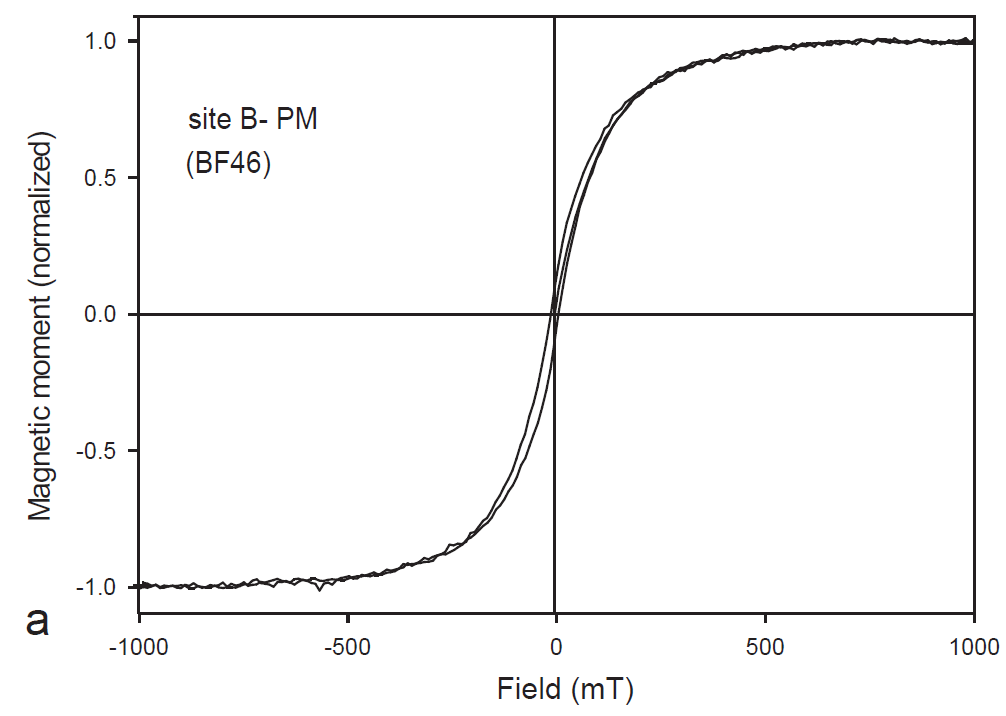
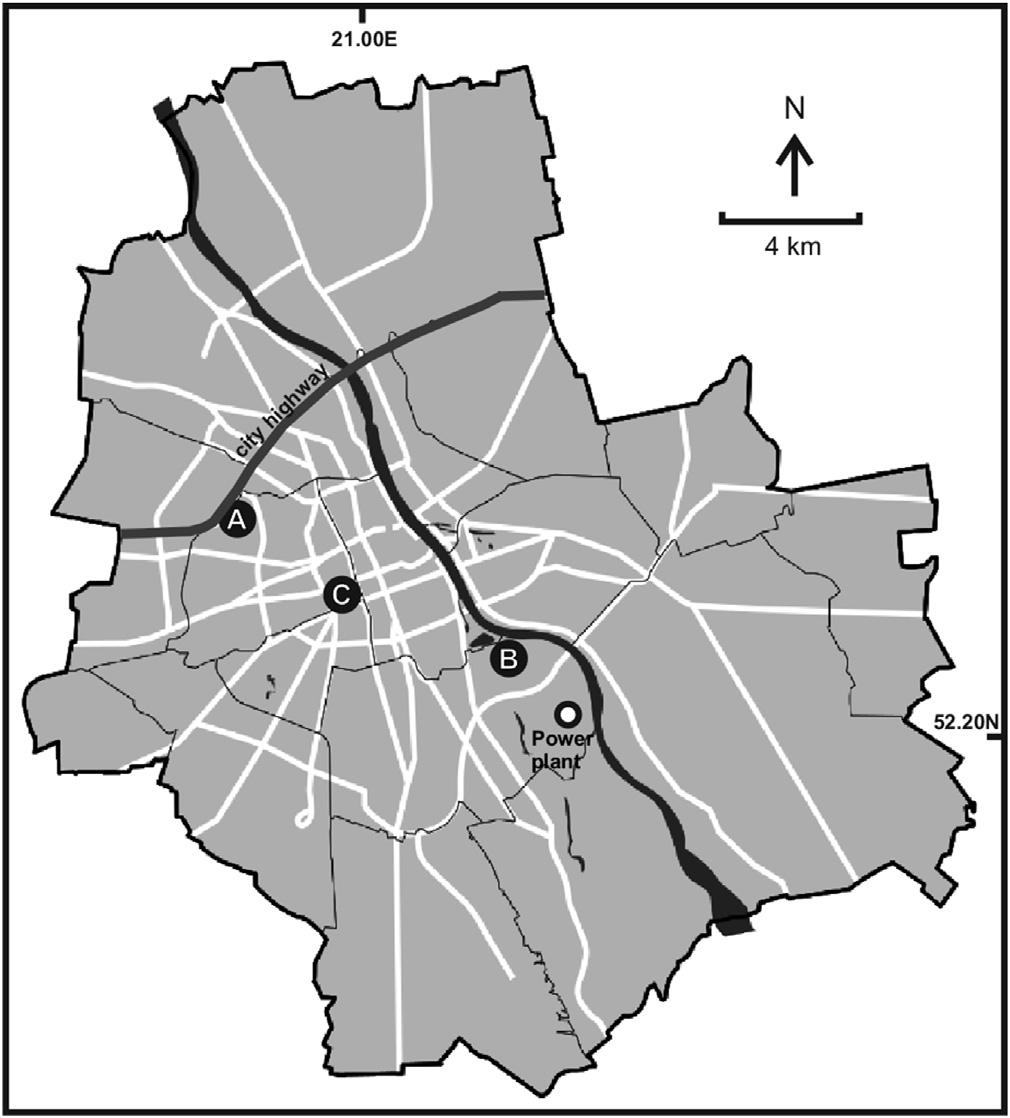
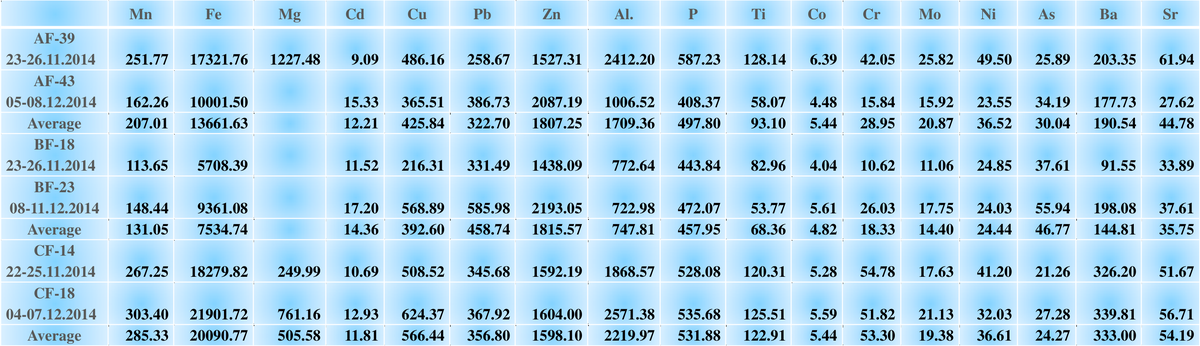
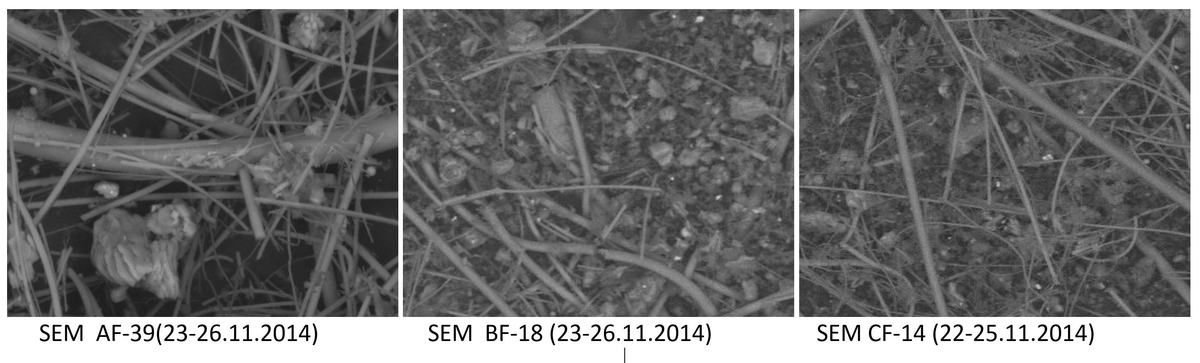
The particulate matter (PM) is collected on the borosilicate filters in the low-volume air samplers PNS-15 (Atmoservice, Poland) operating outside the three buildings in Warsaw (Poland) since 2014. The whole collection comprises of 407 filters. Each filter was exposed to total PM for 72 hours (3 days) with the effective air-flow volume of 2.32 m 3 per hour and accumulated the dust with grain-size significantly less than 100 µm. The mass of filters was precisely measured using a laboratory balance WAX 62 (RADWAG, Poland) with internal calibration and accuracy of 2·10 -2 mg. In order to obtain the mass of PM, the mass of filter with PM was measured and then mass of the clean filter was subtracted. The PM masses were in the range of 2-15 mg. The concentration-dependent magnetic parameter – magnetic susceptibility (χ) was normalized on mass and calculated for individual filters. In order to identify mineralogical phases of PM (magnetically soft and hard) the variety of experimental methods [1] has been applied (thermomagnetic measurements, Day plot analysis of parameters of magnetic hysteresis loop and scanning electron microscopy). The Day plot [1], relating the ratio M rs /M s to the ratio H cr /H c , has allowed to estimate the average size of magnetic grains (M s - saturation magnetization, M rs - saturation remanence, H c - coercivity and H cr - remanence coercivity). Moreover, a speciation of Fe in the iron-bearing minerals has been determined with transmission Mössbauer spectrometry [2,3].
χ CF8 = 1598 10 -8 m 3 /kg = = 1.598 10 -5 m 3 /kg ρ Fe3O4 = 5.2 g/cm 3
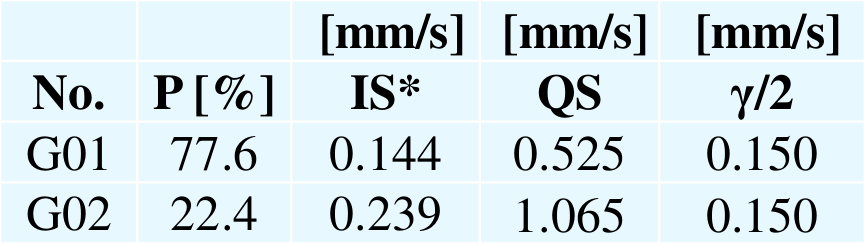
P – Fe percentage contribution IS* – isomer shift (rel. to α-Fe) QS – quadrupole splitting γ/2 – line half-width
κ Fe3O4 MD = 2.8 χ Fe3O4 MD = = κ Fe3O4 MD /ρ Fe3O4 = = 5.38 10 -4 m 3 /kg
G01 – doublet corresponding to traces of paramagnetic Fe in Be windows of γ quanta counter (diluted alloy addition) / P FeBe contribution /
Exp.
G02 – doublet attributed to paramagnetic Fe 3+ ions – presumable in dominating aluminosicate phase in PM on deposited in filter (or in glassy phase – eg. in fly ashes from power plant [4]). / P AlSi contribution /
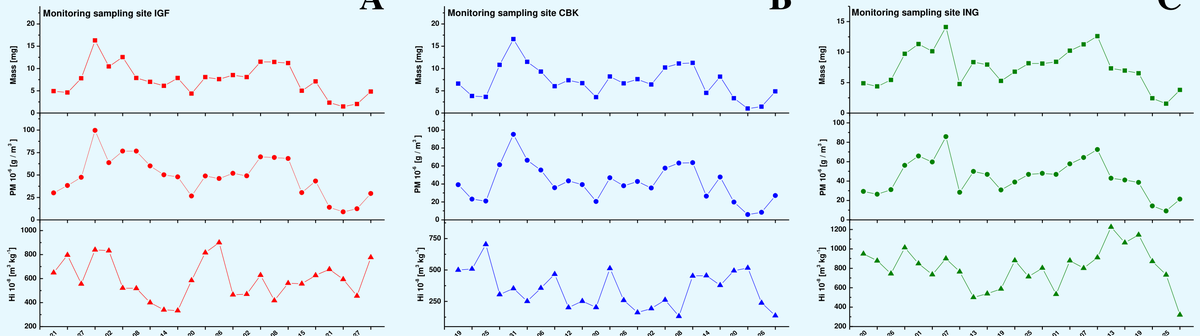
The thermomagnetic analysis supplemented by SEM observations demonstrated the in PM the spherical and irregular-shaped magnetite particles in size of a few m are present. No metallic iron is visible for any site (A, B, C) in PM. On Day-Dunlop diagram PM data are located in the area for PSD (pseudo-single-domain) magnetite and ultra-fine SP (superparamagnetic) grains. The magnetically hardest PM is observed for B site. The fluctuations of PM mass are strong ( 50%; weather conditions) - not correlated with smaller susceptibility changes ( 30%; human activity). The temporal variations of magnetic susceptibility differ between the localities, with the lowest for site B and higher for sites A and C (apparently, not a vicinity of power plant but a road traffic increases the magnetic susceptibility). The application of the Mössbauer spectroscopy faces a lot of problems due to a small amount of PM in filter (σ PM 1 mg/cm 2 ). The traces of Fe in Be windows of counter (d Be 200 m) is visible (absorption A BeFe 0.16%). Comparing this with α-Fe callibration foil (d Fe 20 m, and absorption A Fe 20%) the content of iron in beryllium has been estimated as Cp FeInBe = (A BeFe /d Be )/(A Fe /d Fe ) 0.08% (like in high purity technical Be). The estimation of Fe amount of in aluminosilicates dominating phase can be done as follows: σ Fe_AlSi /σ Fe = (A BeFe / A Fe ) * (P AlSi /P FeBe ) 0.2% (where σ Fe = 16 mg/cm 2 ). Thus σ Fe_AlSi 32 g/cm 2 and σ Fe_AlSi / σ PM 3% (in good agreement with the results of chemical elem. analysis 2 %). In the Mössbauer spectra no magnetite is visible (because of small relative content, like in [2]) although it has been detected with magnetic methods (due to high susceptibility an magnetization values). The simple calculation of magnetite content m Fe3O4 /m PM χ PM /χ Fe3O4 3% probably leads to significant overestimation (due to the mixture of phases). On the other hand, the G02 component can originate not only from aluminosilicates but also from very fine particles of magnetite of significantly reduced hyperfine field due to the superparamagnetic effects and surface defects.
[1] M. Jeleńska, B. Górka-Kostrubiec, et al. , Atmospheric Pollution Research 8, 754-766 (2017). [2] B. Mahieu, et al. , J. de Physique Colloques 37, C6-837-C6-840 (1976). [3] E. Petrovský, et al. , Stud. Geophys. Geod. 57, 755-770 (2013). [4] T. Szumiata et al. , Nukleonika 60, 151-154 (2015 Acknowledgements to M. Jeleńska, T. Werner, M. Kądziałko-Hofmokl, I. Szczepaniak-Wnuk (Institute of Geophysics, PAS), T. Gonet (Faculty of Geology, University of Warsaw), P. Szwarczewski (Faculty of Geography and Regional Studies, University of Warsaw) for great impact and contribution to the presented work. This study was partially supported by National Science Centre, Poland (grant number NCN: 2013/09/B/ST10/02780) and by RADWAG – Balances and Scales Co. – Advanced Weighing Technologies.
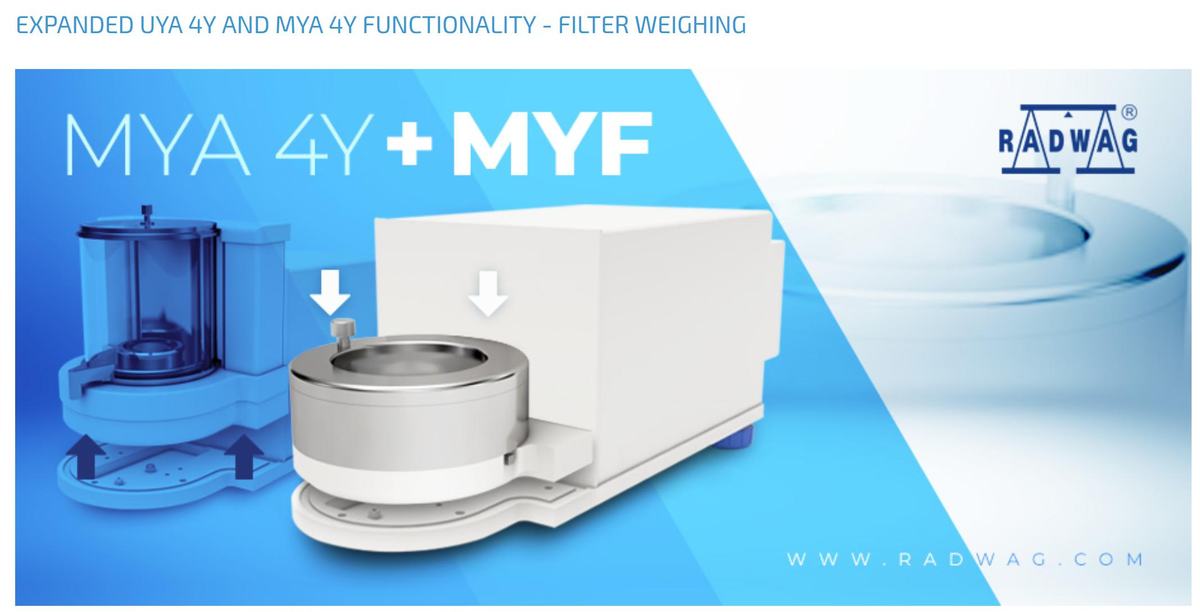
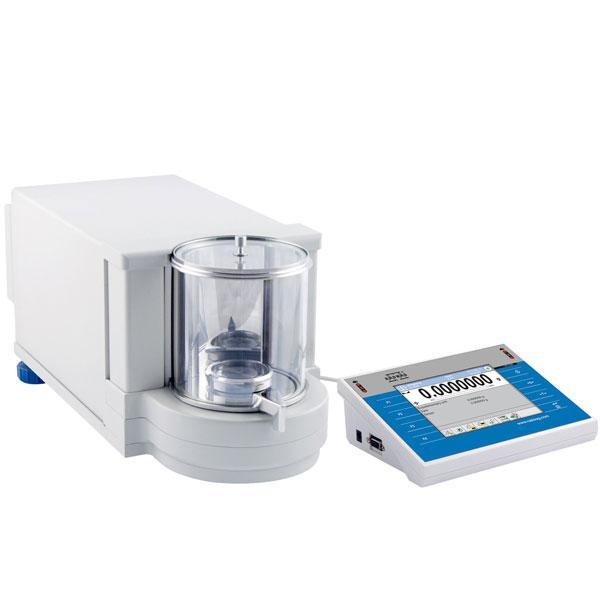
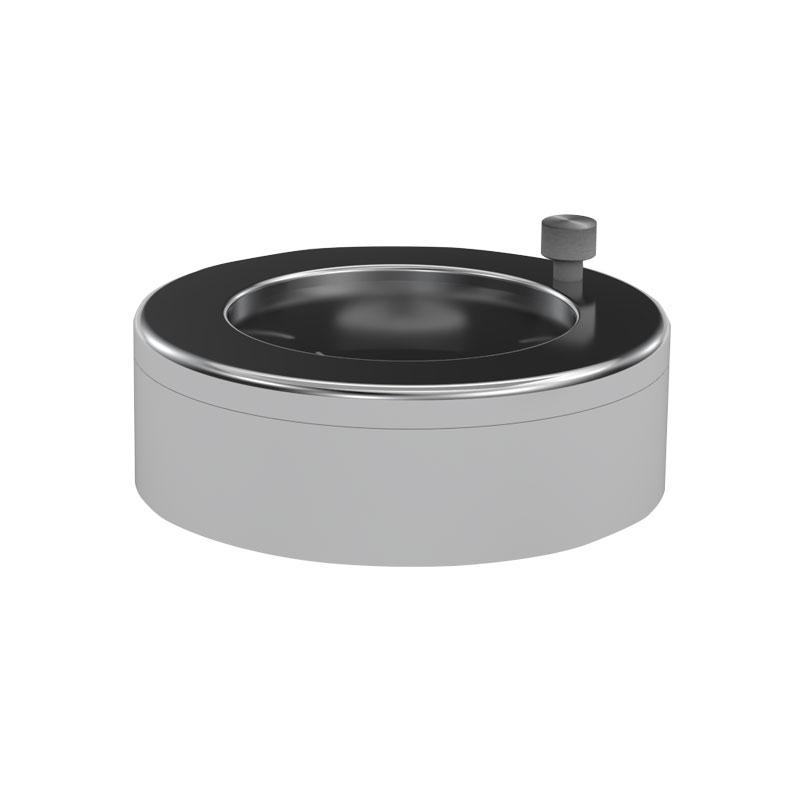

MYA 4Y microbalance has been expanded by filter weighing option. This new operation is possible to be
design chamber for filter weighing. The filter weighing chamber is characterized by high ingress protection. Large open-work weighing pan allows precise weighing of filters of various dimensions (max ø100). The chamber is made of stainless steel which makes it resistant to influence of chemicals, prevents colour change and scratches.
Vaisala DRYCAP® Dew Point and Temperature Probe DMP5 is designed for in-line humidity measurement in industrial drying applications with high…

Dr. Lauri Reuter is an expert in the future of food, and the person to ask if you’ve ever wondered what we are going to eat in the future, and how…

Industrial companies are continuing to take action to minimize their carbon emissions. Many are reducing their use of fossil fuels and switching to…

In the causticizing process, passive chemicals are converted into active cooking chemicals to make white liquor. This is used in the digester as a…
A specialist replies with the solution, the instrument and the service that fit.
Products to quote
No products yet. An enquiry can be sent anyway: a specialist answers.