

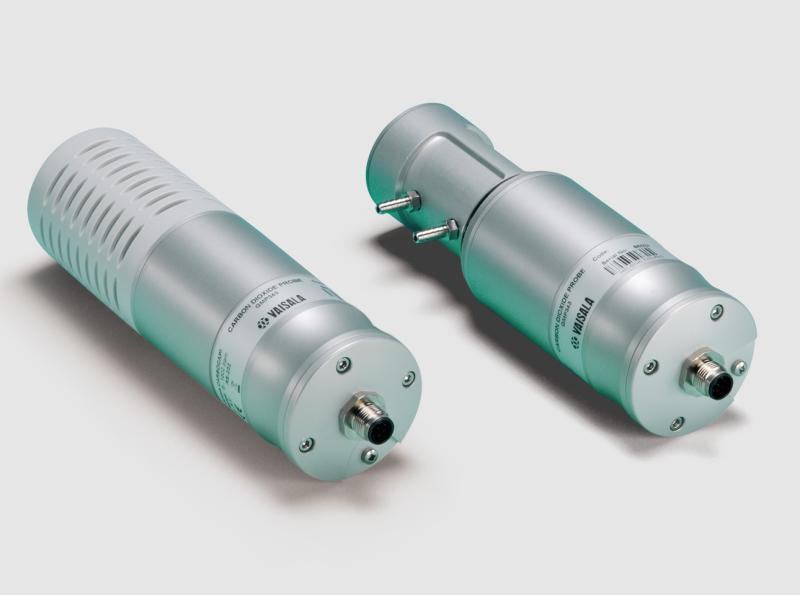
Sonda de CO₂ GMP343
para mediciones exigentes
Nota técnica
Making biogas production profitable as quickly as possible is typically one of the most important factors when starting up or developing a biogas plant. Subsidy payments often require Combined Heat and Power (CHP) efficiency above a certain value. The calculated methane production (expressed in cubic meters per hour) represents the energy input to the CHP engine, which is the starting point for the efficiency calculation. Overestimating the energy input makes it more difficult to achieve the efficiency required for claiming the subsidy, which can have significant consequences for the plant.
In order to achieve the required efficiency level it is critical that your methane measurements are not wrong due to incorrect compensation. Biogas plants typically calculate methane volume by multiplying dry methane concentration (extractive measurement) with wet flow rate (in-situ measurement), which results in an error in the calculated volume that is proportional to the humidity of the gas.
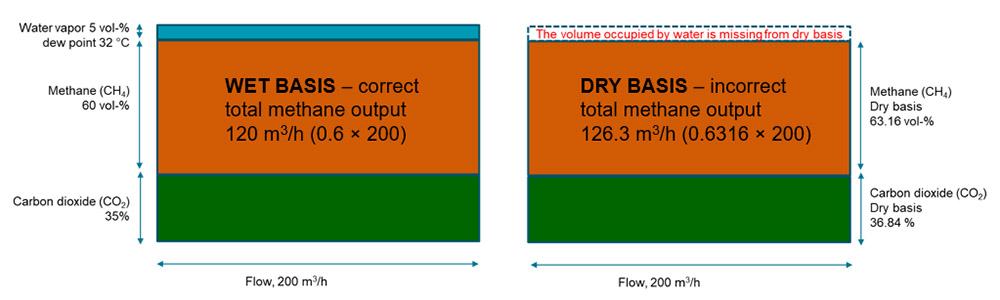
The image above explains the error resulting from mixing dry-basis and wet-basis measurements together. The total methane output is incorrect because the volume occupied by water is missing.
The good news is that you can easily avoid any incorrect data by measuring methane, humidity, and carbon dioxide directly on a wet basis with an on-line instrument. This enables accurate methane volume flow calculation.
The Vaisala CARBOCAP® MGP261 Multigas Probe for Methane, Carbon Dioxide, and Humidity helps to improve your process and ensure correct data. It is a low-maintenance device that is installed directly into the process line. Read more at www.vaisala.com/MGP261.
para mediciones exigentes

para inspecciones rápidas y comprobación de errores

Transmisores de ±1,5 % HR para HVAC exigentes, con certificado
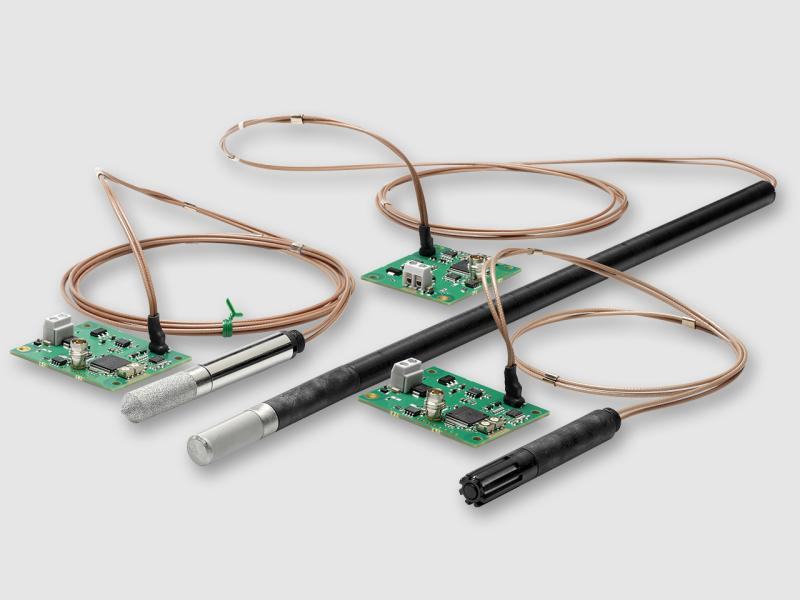
para cámaras ambientales
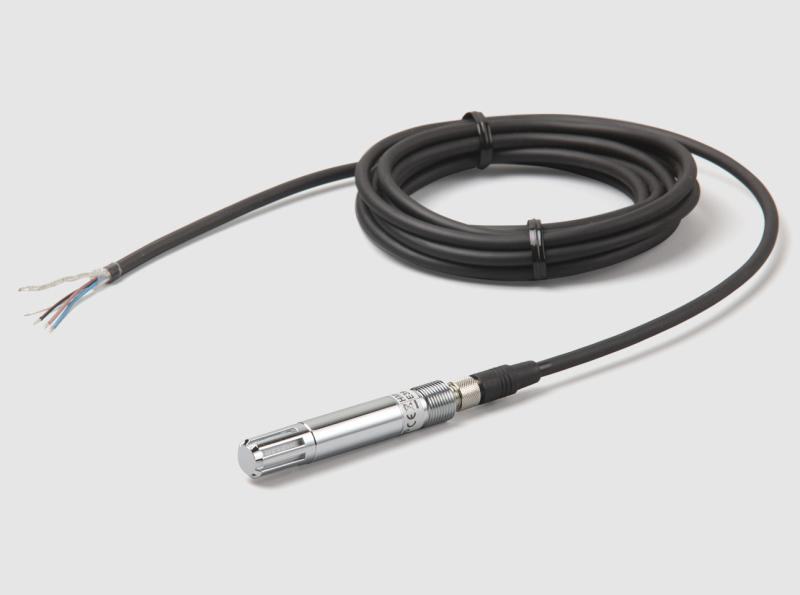
con ±1,5 % HR Precisión para aplicaciones de volumen exigentes
con ±1,5 % HR Precisión para aplicaciones de volumen exigentes

Qué son la humedad relativa, el punto de rocío, la humedad absoluta y la razón de mezcla, cómo la temperatura y la presión distorsionan la lectura, y…

Cómo se comporta la humedad en condiciones reales, los tres problemas de medición más frecuentes, y dos escenarios prácticos —aire calentado y aire…

Cuándo medir humedad relativa y cuándo punto de rocío, qué exige la alta y la baja humedad, cómo influyen temperatura y presión, y cuándo conviene…

La climatización representa hasta el 40 % de la demanda energética de un centro de datos. Esta guía de Vaisala explica cómo la exactitud de medición…
Un especialista responde con la solución, el instrumento y el servicio que corresponden.
Instrumentos para cotizar
Todavía no hay instrumentos. Se puede escribir igual: un especialista responde.