

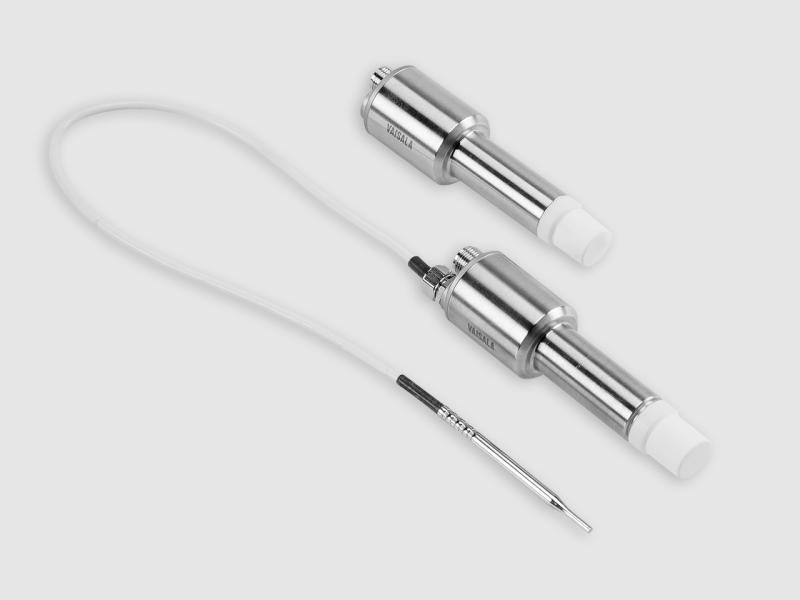
Medidor HPP272 de peróxido de hidrógeno vaporizado, humedad y temperatura
para procesos de bio-descontaminación
Nota técnica
This blog is the fourth in a 4-part series where we describe how process parameters influence vaporized hydrogen peroxide bio-decontamination applications.
First blog: Humidity, condensation point, and maximum achievable vH2O2
Second blog: H2O2 Solution Concentration Ratio, Condensation Point & Maximum Achievable vH2O2
Third blog: Temperature, Condensation Point & Maximum Achievable vH2O2 ppm in Bio-decontamination
In this series, we propose four basic process parameter rules. This blog focuses on the 4th rule:
Increasing the H2O2 vapor concentration decreases the amount of water vapor the air can hold, and therefore, condensation occurs sooner.
In Figure 7 (from our white paper), we can see that increasing the H2O2 vapor concentration decreases the amount of water vapor the air can hold and condensation occurs sooner.
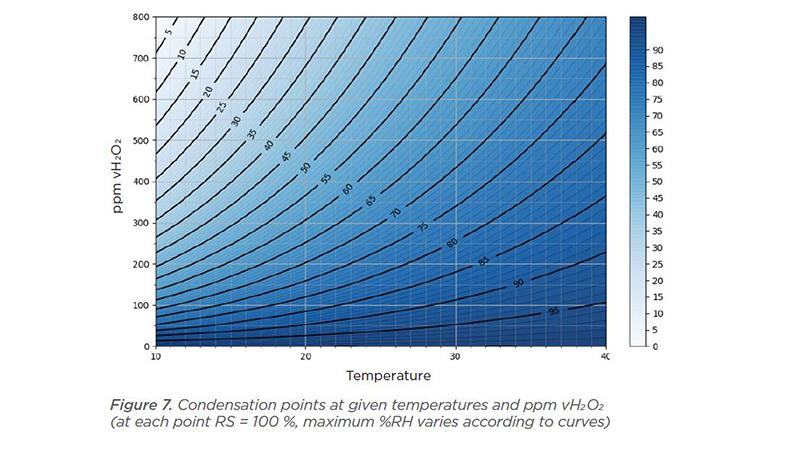
Each point in Figure 7 is a condensation point, meaning that Relative Saturation is 100 %. Temperature is on the x axis and ppm vH2O2 is on the y axis. The curve in the graphs shows the maximum relative humidity at a given temperature and concentration of ppm vH2O2.
As shown, at 20 °C and 300 ppm hydrogen peroxide, relative humidity will be 60% and relative saturation will be 100%. If we increase vH2O2 to 600 ppm at 20 °C, relative humidity is then 39 % and relative saturation is 100 %.
By increasing the air temperature to 40 °C with vH2O2 concentration at 300 ppm, relative humidity will be 87% and relative saturation will be 100%. The higher the temperature, the more water vapor the air can hold; relative humidity is increased.
To summarize our proposed rules for controlling condensation in vaporized hydrogen peroxide bio-decontamination applications:
Over this series of blogs (based on our white paper), we have demonstrated how an in-depth understanding of the relation between critical process parameters allows for the development of effective, repeatable vH2O2 bio-decontamination cycles.
Single-parameter measurement is often insufficient for monitoring and ineffective for process control. We have also shown why relative saturation is an important value in accurately predicting condensation. This is why Vaisala’s unique PEROXCAP® technology measures multiple parameters in a single sensing unit, including: hydrogen peroxide vapor ppm, temperature, dew point, vapor pressure, and humidity as both relative humidity and relative saturation.
Please leave a comment in the fields below, or contact us if you have any questions!
para procesos de bio-descontaminación

La última incorporación a la familia Indigo de transmisores y sondas, el Indigo80 es un indicador y registrador de datos compacto y portátil. Ideal…

para inspecciones rápidas y comprobación de errores

Transmisores de ±1,5 % HR para HVAC exigentes, con certificado
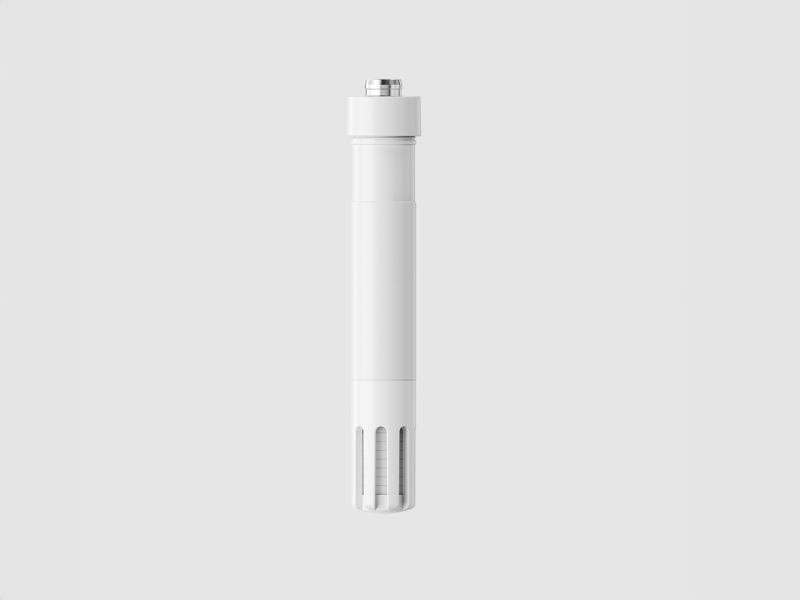
La sonda de humedad HMP113 con gabinete de plástico tiene una confiabilidad excelente y una tolerancia química, y es apta para ambientes sin…
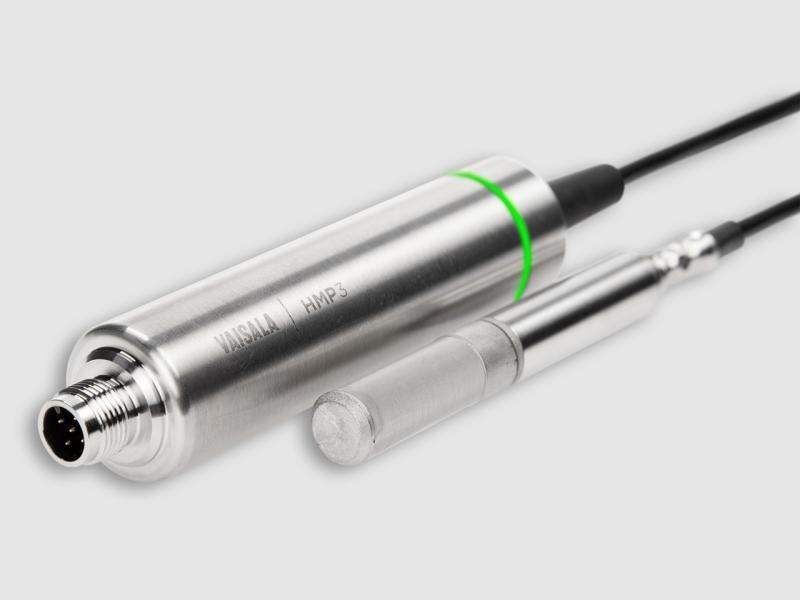
para aplicaciones de humedad y temperatura de uso general con sensor intercambiable

Qué son la humedad relativa, el punto de rocío, la humedad absoluta y la razón de mezcla, cómo la temperatura y la presión distorsionan la lectura, y…

Cómo se comporta la humedad en condiciones reales, los tres problemas de medición más frecuentes, y dos escenarios prácticos —aire calentado y aire…

Cuándo medir humedad relativa y cuándo punto de rocío, qué exige la alta y la baja humedad, cómo influyen temperatura y presión, y cuándo conviene…

La climatización representa hasta el 40 % de la demanda energética de un centro de datos. Esta guía de Vaisala explica cómo la exactitud de medición…
Un especialista responde con la solución, el instrumento y el servicio que corresponden.
Instrumentos para cotizar
Todavía no hay instrumentos. Se puede escribir igual: un especialista responde.