

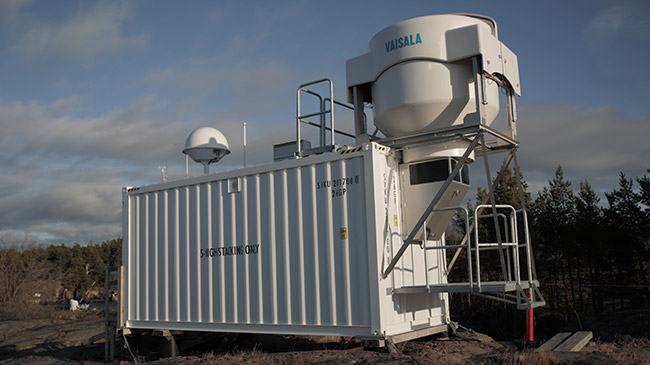
Autosonde AS41
Upper air soundings provide the crucial data necessary for a complete atmospheric weather profile that leads to accurate forecasting. However…
Technical note
Put simply, relative humidity (RH) is a measure of the water vapor content of air. More explicitly, it is the amount of water vapor present in air expressed as a percentage (%RH) of the amount needed to achieve saturation at the same temperature.
RH is strongly proportional to temperature and highly sensitive to temperature changes. This means that if you have a stable temperature in your system, your RH will also be stable. As well as temperature, relative humidity also depends on the pressure of the system in question.
There are some helpful rules of thumb to help us understand how RH works at a basic level, though it’s important to remember that unless you’re in a closed system such as an environmental test chamber, other factors can affect results.
The first rule of thumb is that as temperature increases, air becomes drier (RH decreases) and as temperature decreases, air becomes wetter (RH increases). When thinking about pressure, the rule of thumb is that as pressure decreases, air becomes drier (RH decreases) and as pressure increases, air becomes wetter (RH increases).
By far the biggest reason to monitor relative humidity is to control moisture around a final product. In most cases this means making sure that the RH never rises too high. For example, let’s take a product like chocolate. If the RH in a storage facility rises above a certain level and remains above that level for a sufficiently long period of time, a phenomenon called blooming can occur. This is where moisture forms on the surface of the chocolate, dissolving the sugar. When the moisture evaporates, the sugar forms larger crystals, leading to discoloration.
Humidity can also have a harsh – and expensive – impact on products such as building materials. Say you’re building an extension to your property and you lay a concrete subfloor before putting down hardwood flooring. If the concrete isn’t sufficiently dry before you lay the floor it can cause huge problems because any moisture from the concrete will naturally try to migrate to a drier area – in this case the flooring material. This can cause the floor to swell, blister, or crack – undoing all your hard work and leaving no option except replacement.
Humidity is also a big problem for products with extreme sensitivity to moisture, such as certain pharmaceuticals. This is because it can alter the characteristics of the product until it becomes useless, which is why products like medical pills and dry powders are stored in controlled conditions at precise humidity and temperature levels.
Finally, relative humidity is also an important factor in building automation systems focused on human comfort, such as air conditioning. The ability to measure and control RH not only helps to maintain a comfortable environment inside a building, but it also helps to optimize the efficiency of HVAC systems by providing an indication of how much outside air being taken in needs to be conditioned, depending on the temperature outside.
In this video excerpt from Vaisala's Humidity 201 seminar, Bruce McDuffee discusses humidity and its relationship to temperature and pressure and answers questions like: What is relative humidity? How is relative humidity affected by temperature changes? Can relative humidity go above 100%? How does pressure affect relative humidity?
Want to learn more? Download our Humidity eGuide for Smart Industries to get a handy package with links to a humidity calculator, drying simulation, webinars and other information.
Upper air soundings provide the crucial data necessary for a complete atmospheric weather profile that leads to accurate forecasting. However…
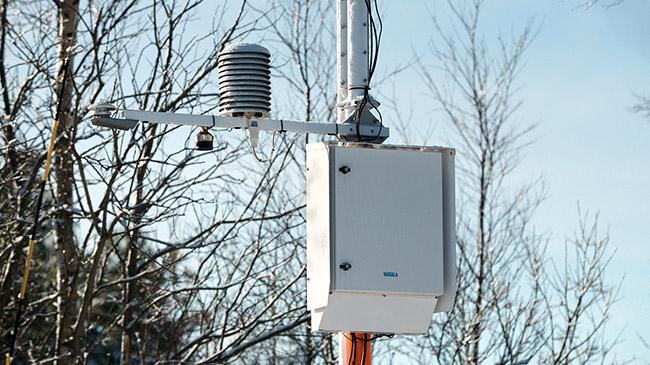
Vaisala Automatic Weather Station AWS310 is a complete communication and weather observation solution that can be used as a standalone unit, or as…
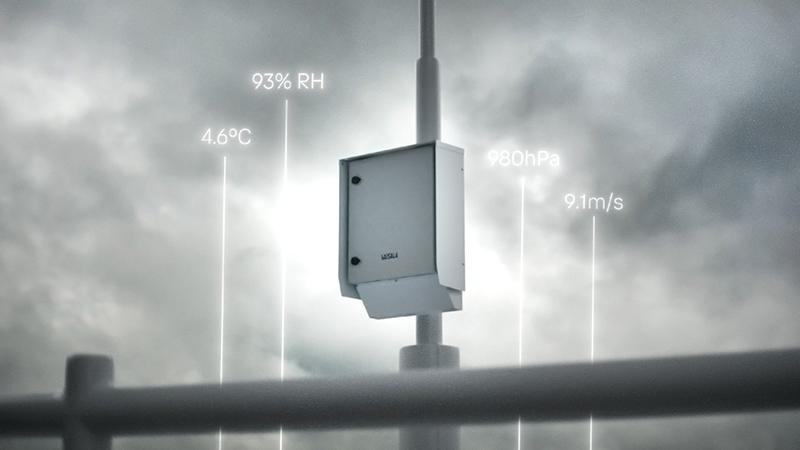
Our next-generation, cyber secure and modular Maritime Automatic Weather Station AWS830 is engineered for harsh marine environments and compliant…

The Vaisala Automatic Weather Station AWS810 enables modern, high-quality surface weather observation networks anywhere in the world.
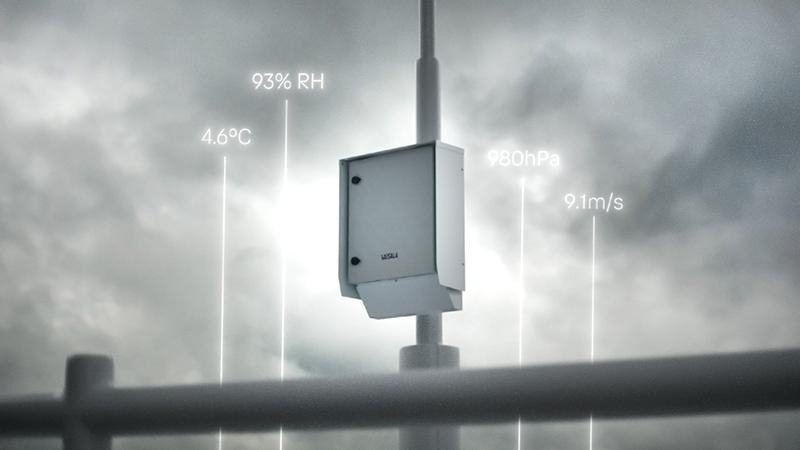
Vaisala Maritime Automatic Weather Station AWS830 delivers accurate, always‑on weather, environmental, oceanographic, and motion data for demanding…
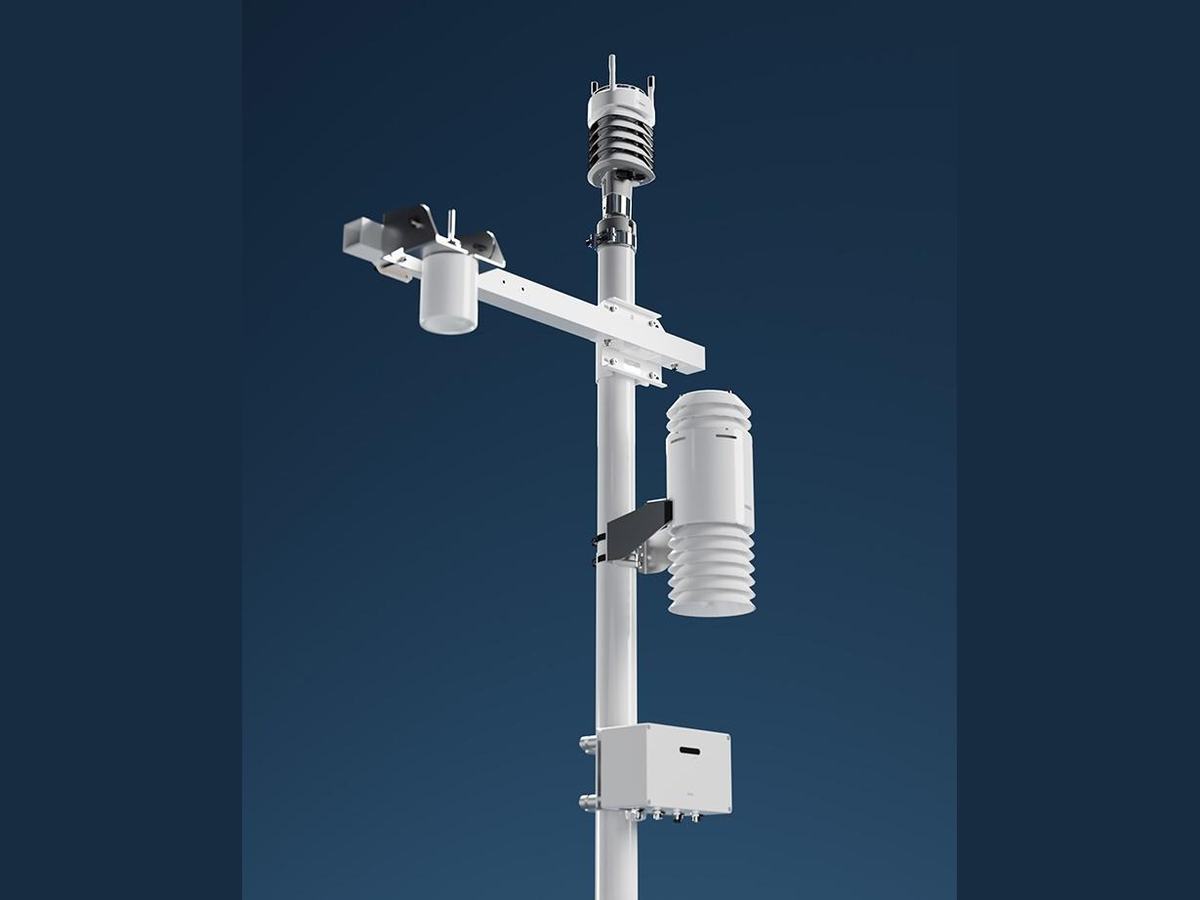
Vaisala Beam Weather Station BWS500 is a compact, scalable station for weather, air quality and road condition data, from a single standalone station…

Wood is an incredible and unique material with stunning visual appearance. Wood as a material is strong and versatile while being renewable and…

Dr. Lauri Reuter is an expert in the future of food, and the person to ask if you’ve ever wondered what we are going to eat in the future, and how…

Industrial companies are continuing to take action to minimize their carbon emissions. Many are reducing their use of fossil fuels and switching to…
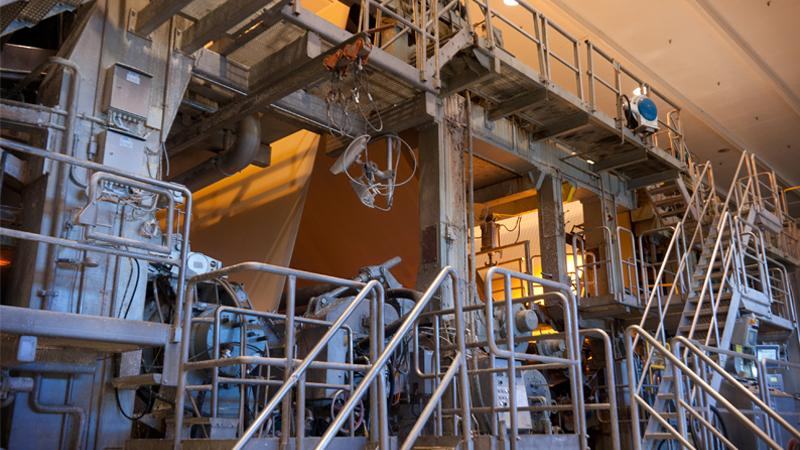
In the causticizing process, passive chemicals are converted into active cooking chemicals to make white liquor. This is used in the digester as a…
A specialist replies with the solution, the instrument and the service that fit.
Products to quote
No products yet. An enquiry can be sent anyway: a specialist answers.