

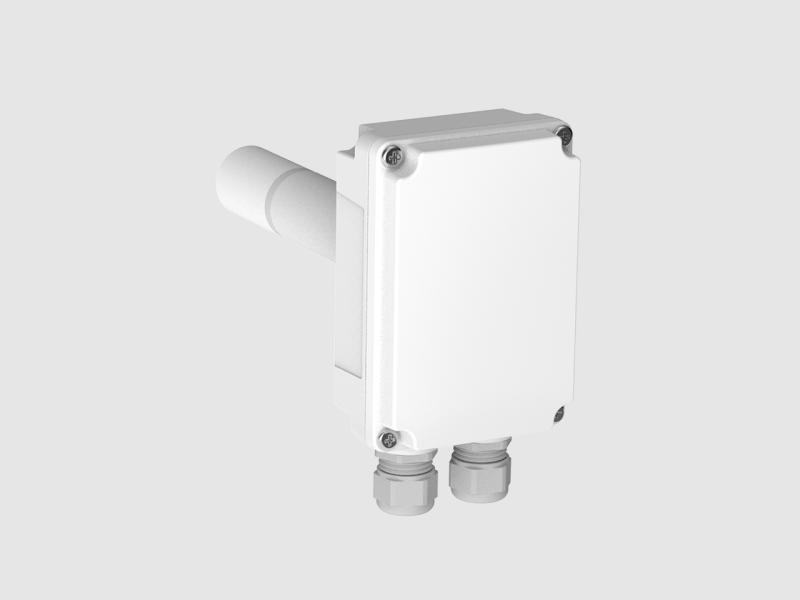
Duct CO2 Transmitter GMD110
For high-accuracy measurements in HVAC applications
Technical note
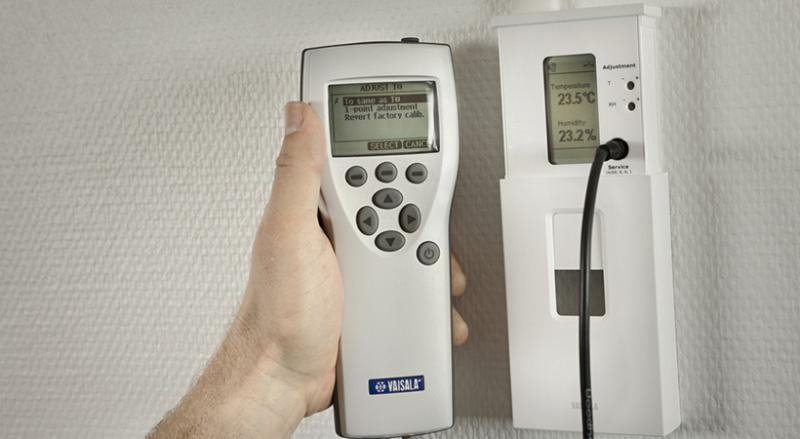
While there’s no single right answer to this question, “never” is always the wrong answer! A good starting point is to ask these two questions
Do not accept automatic drift compensation as a “good-enough” alternative – all sensors have some drift. You can further ask:
Always start with a shorter inspection interval and increase it gradually. Your actual field inspection data is the best way to determine the right inspection interval for your instrument.
A good strategy may be to first perform field checks against the reference instruments, as these are relatively fast to perform. Depending on the observed differences in the field check, a simple guideline for adjustment in HVAC applications could be:
• if the observed difference is 2%RH or less, do nothing;
• if the difference is 2–4%RH, make a one-point field adjustment; and
• if the difference is more than 4%RH, send the device for service or change the measurement module.
In HVAC the measured conditions typically only vary a little, meaning single-point field adjustment is usually the right choice. However, if the whole measurement range of the instrument is used or if the field check indicates a large correction is needed, multi-point adjustment is the right choice as something might be wrong with the instrument. Multi-point adjustment is more time consuming and expensive as it usually requires moving the instrument to a laboratory, but it will tell you if the device is working properly over its intended range.
For many basic applications Vaisala’s HVAC products are essentially maintenance free. The specified long-term stability is usually so good that adjustments are rarely needed, although a field check is always recommended. In more demanding applications, where traceability is required to maintain certifications, you can choose to carry out field checking and any necessary adjustments yourself.
With some of our products you can check or adjust relative humidity or CO2 readings against a handheld instrument or, in the case of carbon dioxide, against gas bottles. The easiest solution is to purchase field-replaceable measurement modules that come with a calibration certificate; these measurement modules can be easily exchanged in minutes.
For high-accuracy measurements in HVAC applications
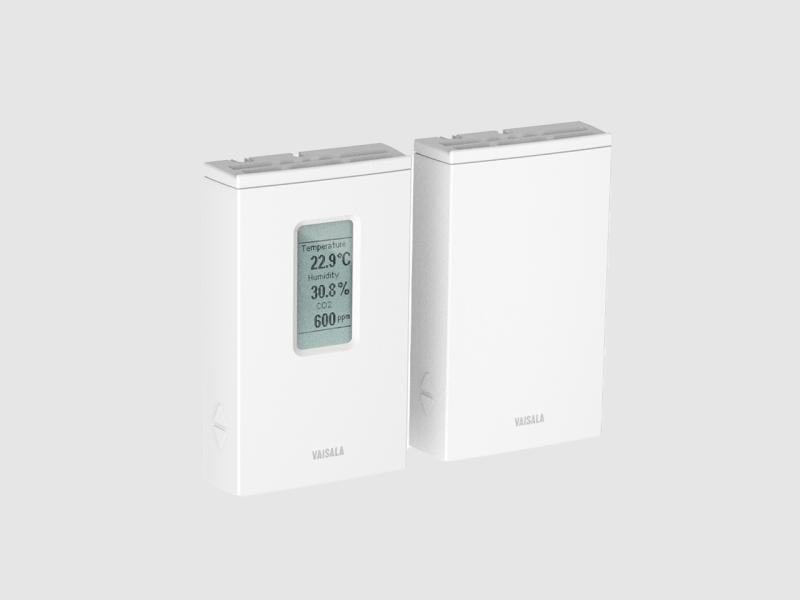
for green building projects
for green building projects
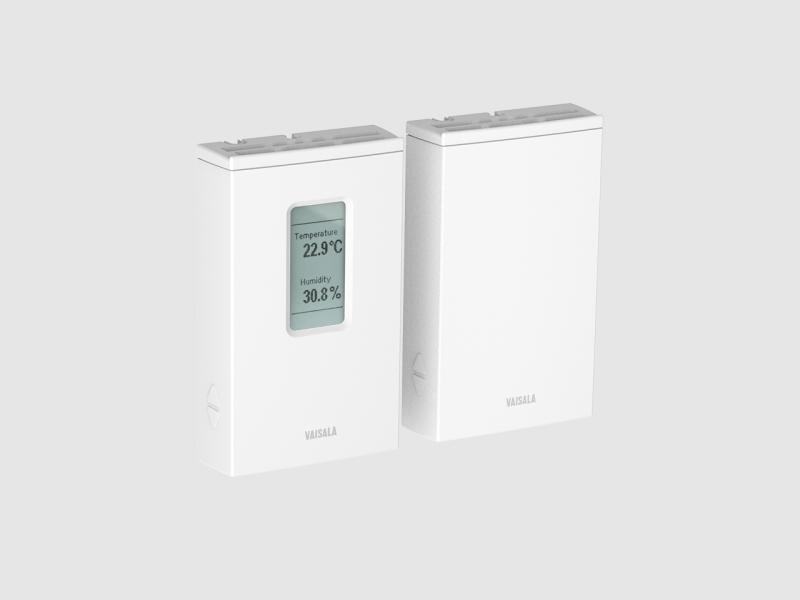
±1.7%RH wall transmitters with a certificate for demanding HVAC
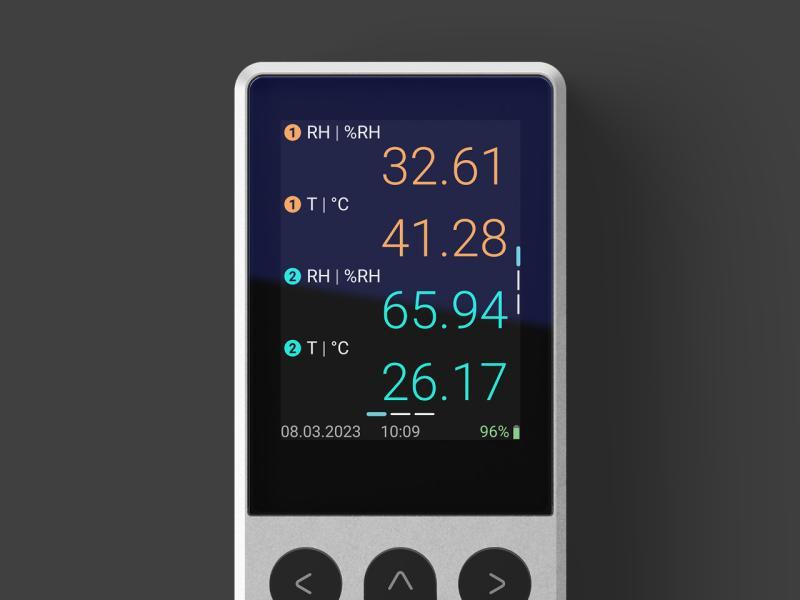
The latest addition to the Indigo family of transmitters and probes, the Indigo80 is a compact, handheld indicator and data logger. Ideal for field…
The latest addition to the Indigo family of transmitters and probes, the Indigo80 is a compact, handheld indicator and data logger. Ideal for field…

Vaisala DRYCAP® Dew Point and Temperature Probe DMP5 is designed for in-line humidity measurement in industrial drying applications with high…

Dr. Lauri Reuter is an expert in the future of food, and the person to ask if you’ve ever wondered what we are going to eat in the future, and how…

Industrial companies are continuing to take action to minimize their carbon emissions. Many are reducing their use of fossil fuels and switching to…

In the causticizing process, passive chemicals are converted into active cooking chemicals to make white liquor. This is used in the digester as a…
A specialist replies with the solution, the instrument and the service that fit.
Products to quote
No products yet. An enquiry can be sent anyway: a specialist answers.