


Dew Point Meter DMT132
for refrigerant dryers
Technical note
Dew point is the temperature to which air must be cooled for water vapor in it to condense into dew or frost. At any temperature there is a maximum amount of water vapor that the air can hold. This maximum amount is called water vapor saturation pressure. Addition of more water vapor results in condensation.
Condensation in pressurized air is problematic because it causes blockages in pipes, machinery breakdowns, contamination and freezing.
Air compression increases water vapor pressure and thus dew point. It is important to take this into consideration if you are bleeding the air to atmosphere before taking a measurement. The dew point at the measurement point will be different from the dew point in the process.
Dew point temperatures in compressed air range from ambient even down to -80 °C (-112 °F) in special cases. Compressor systems without air drying capability tend to produce compressed air that is saturated at ambient temperature. Systems with refrigerant dryers pass the compressed air through a cooled heat exchanger, causing water to condense out of the air stream. These systems typically produce air with a dew point no lower than 5 °C (41°F). Desiccant drying systems absorb water vapor from the air stream and can produce air with a dew point of -40 °C (-40 °F) and drier if required.
Download Vaisala Compressed Air eGuide, browse our compressed air knowledge hub, or contact us for more information.
for refrigerant dryers

for OEM applications

for cleanrooms and industrial settings
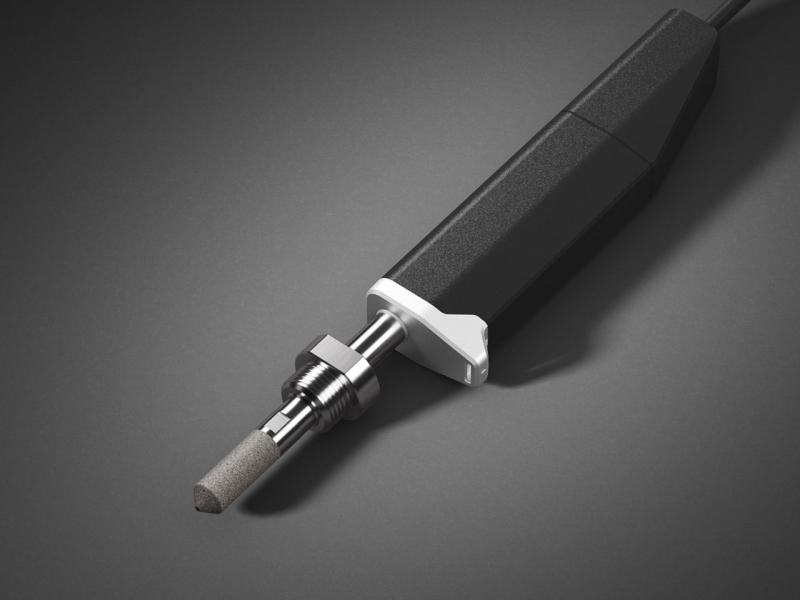
For spot-checking and calibrating dew point measurements

The latest addition to the Indigo family of transmitters and probes, the Indigo80 is a compact, handheld indicator and data logger. Ideal for field…
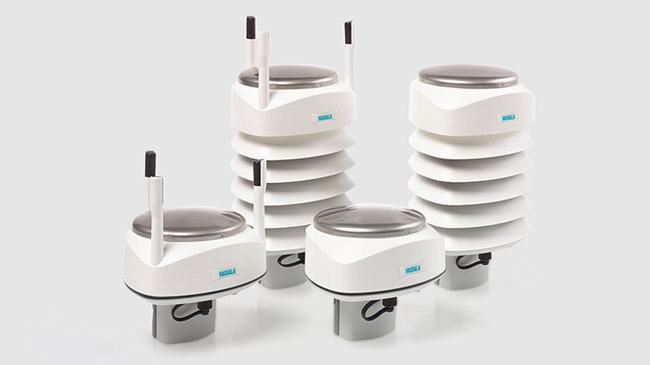
Vaisala Weather Transmitter WXT530 series is a unique collection of cost-effective sensors that accurately and reliably measure weather conditions…

What relative humidity, dew point, absolute humidity and mixing ratio are, how temperature and pressure distort the reading, and why dew point is…

How humidity behaves in real conditions, the three most common measurement problems, and two practical scenarios —heated air and compressed air—…

When to measure relative humidity vs. dew point, what high and low humidity demand, how temperature and pressure factor in, and when a warmed probe…

Cooling accounts for up to 40% of a data center's energy demand. This Vaisala guide explains how measurement accuracy cuts costs and risks, with a…
A specialist replies with the solution, the instrument and the service that fit.
Instruments to quote
No instruments yet. An enquiry can be sent anyway: a specialist answers.