

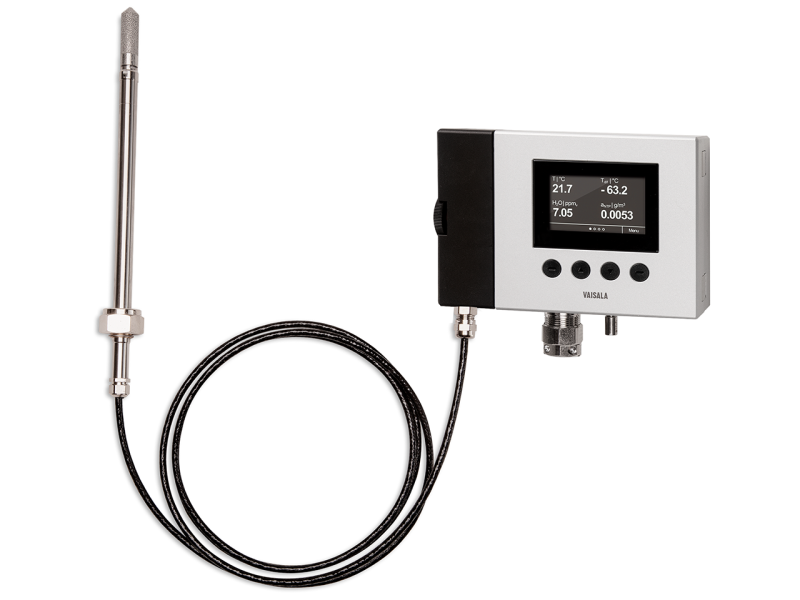
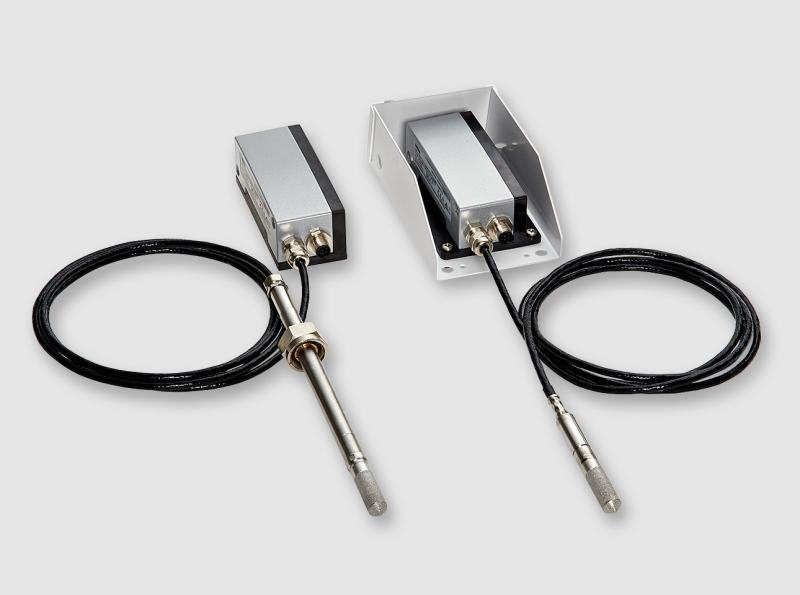
Intrinsically Safe Humidity and Temperature Transmitter Series HMT370EX
For use up to zone 0 and 20
Technical note
Moisture is a known contaminant in a wide variety of applications and processes, but the presence of moisture in industrial use oil can be particularly detrimental. Affecting the quality and performance of the oil, water is known to increase viscosity and cavitation. It also degrades additives and film strength and presents the opportunity for biological contamination and corrosion.
Counter to the old adage, "oil and water do mix," water can coexist with oil in three forms: dissolved, emulsified, and free water. Dissolved water is a natural condition, where individual water molecules are diffused in the oil, much like how we recognize water molecules as humidity in the air. Emulsified and free water are conditions where the oil has become saturated, causing the water to be suspended and separated in the oil. These latter forms present the most harmful conditions and maintenance challenges to hydraulic, lubrication and other industrial systems.
Industrial oils differ in many ways, as do the acceptable levels of absolute moisture in them. Every oil begins with a base stock and then varies based on the additives used to provide different physical and chemical properties. With use, oils age and their condition degrades, contaminants are introduced, and they can begin to oxidize. This allows the oil to hold more water in the dissolved state, varying its saturation point. This variation is important, as it affects which measurement parameters are most relevant for preventative maintenance. Conventional parts per million (ppm) measures become less relevant as oils age, so Vaisala has standardized on the water activity (aw) and percent of relative saturation (%RS) parameters to indicate relevant dissolved moisture levels. The aw and %RS parameters are independent of oil type and account for fluctuating temperatures and saturation points, thus providing a more useful measurement for preventative maintenance.
Knowing the concentration of dissolved water relative to the oil’s saturation point is the best indicator to predict when the oil and water will begin to separate. This information can be used to detect water ingress problems, trigger maintenance events and oil replacement intervals.
Detecting the dangerous accumulation of water in oil begins with reliable and accurate measurement, and there are different methods for measuring the dissolved water in oil. Traditional methods involve sampling and analysis, but only direct inline measurement with a capacitive polymer sensor offers real-time information. These inline measurements provide continuous data that can be acted upon quickly to prevent harmful conditions. Access to this information provides a measurable return on investment with energy savings, preventative maintenance scheduling and fault indication.
Vaisala uses our own HUMICAP® sensor technology for measuring moisture in oil, and the HUMICAP® sensors were the very first that could measure moisture in oil online. The sensor materials are specifically developed to measure very low moisture levels in hydrocarbons, and the measurement also considers the temperature of the oil. With almost 50 years of experience developing and manufacturing capacitive moisture sensors for air and oil, Vaisala has become the market leader for this application across multiple industries including lubrication systems, maritime and the paper industry. Built in our own cleanrooms, these sensors offer long-term stable and precise measurements that you can trust, no matter how robust the application.
Moisture removal is another key component to oil maintenance, and common methods for high-quality oils include vacuum dehydration and different forms of filtration with a water absorbing media. Online drying delivers a rapid improvement in oil quality, but this improvement may not be permanent. Subsequent monitoring is prudent and can often result in another drying cycle. Effective on-line drying requires a sustained effort and consistent moisture measurement for quality control, which sampling cannot match.
Vaisala offers its HUMICAP® technology in a number of flexible installation and integration options. From portable meters and smart probes, to advanced transmitters and OEM solutions, Vaisala Moisture in Oil instruments are designed to protect your capital equipment investment.
For use up to zone 0 and 20
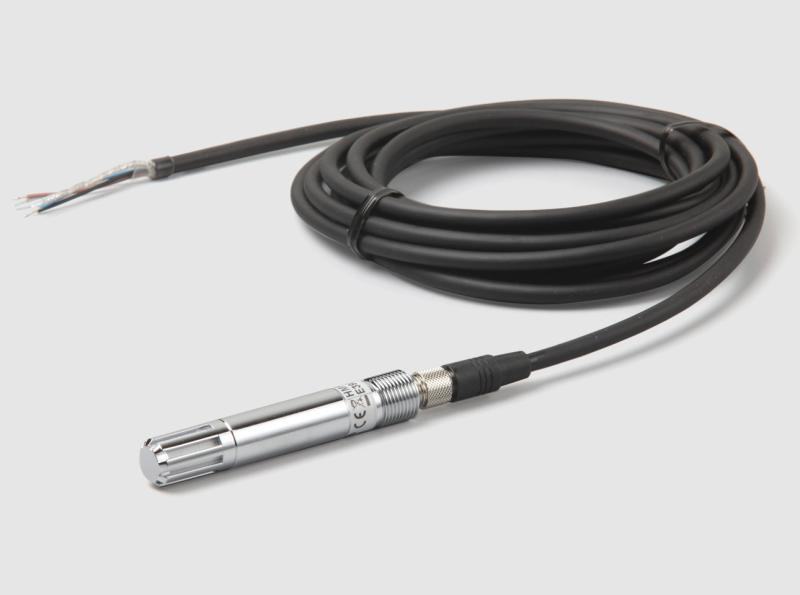
for volume applications
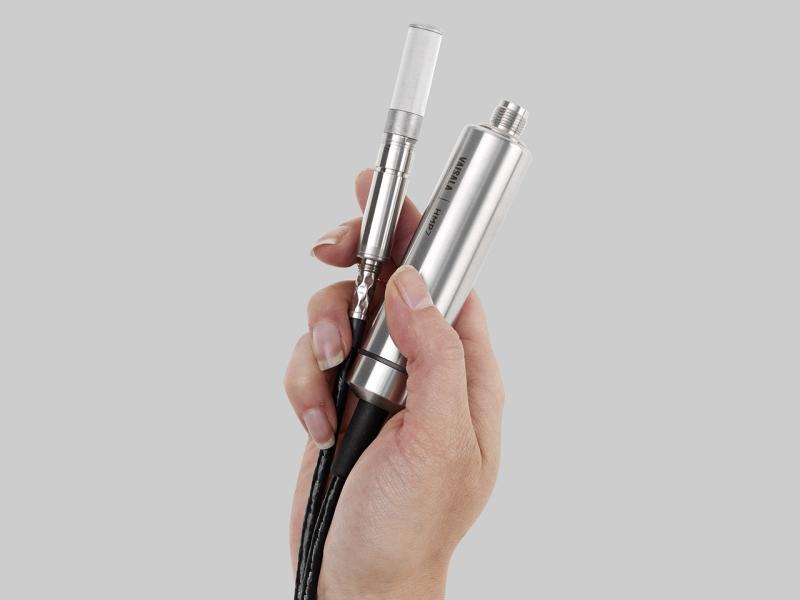
for high humidities

The latest addition to the Indigo family of transmitters and probes, the Indigo80 is a compact, handheld indicator and data logger. Ideal for field…
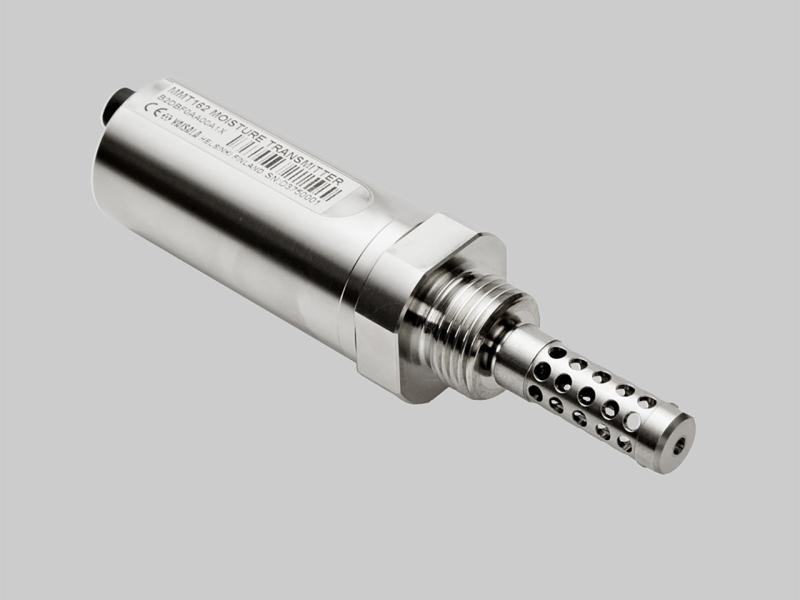
for transformer applications and OEM systems
for transformer oil, hydraulic and lubrication systems in marine and paper industry

What relative humidity, dew point, absolute humidity and mixing ratio are, how temperature and pressure distort the reading, and why dew point is…

How humidity behaves in real conditions, the three most common measurement problems, and two practical scenarios —heated air and compressed air—…

When to measure relative humidity vs. dew point, what high and low humidity demand, how temperature and pressure factor in, and when a warmed probe…

Cooling accounts for up to 40% of a data center's energy demand. This Vaisala guide explains how measurement accuracy cuts costs and risks, with a…
A specialist replies with the solution, the instrument and the service that fit.
Instruments to quote
No instruments yet. An enquiry can be sent anyway: a specialist answers.