

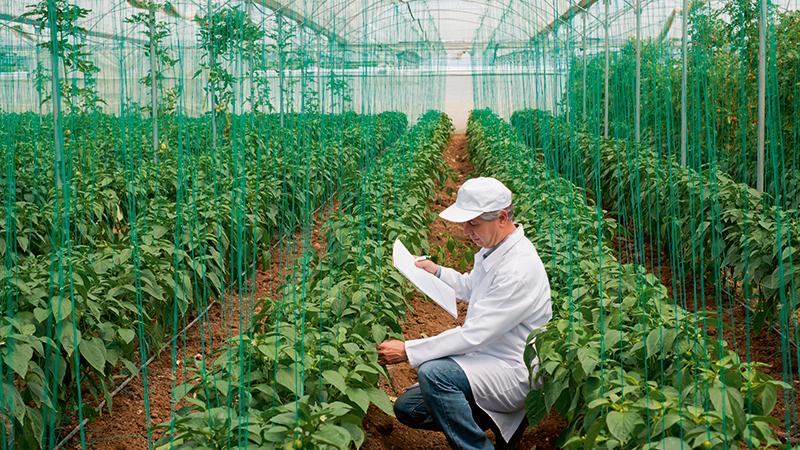
How to Measure Carbon Dioxide (CO₂)
How infrared sensors work, temperature/pressure/humidity compensation, and transmitter placement.
Application note
Power transformers are among the most critical assets of the energy industry: they represent around 60% of a substation's capital cost, and their unplanned outage drags penalties, undelivered energy and safety risks along with it. That is why their condition is not supervised indirectly: it is measured in the insulating oil itself, where every developing fault leaves a chemical signature.
That signature is what dissolved gas analysis (DGA) interprets. For the general context of the magnitude — what is measured and with which instruments —, see the dissolved gas in oil instrumentation landing.
When a transformer's insulating oil and paper degrade due to overheating, partial discharges or internal arcing, they release gases that remain dissolved in the oil. The seven key DGA gases are hydrogen, methane, ethane, ethylene, acetylene, carbon monoxide and carbon dioxide.
Which gases form depends on the fault's location, the temperature it reaches and the materials present at that point in the transformer. That is why the gas combination identifies the type of fault in progress — thermal in oil, thermal involving paper, partial discharges or arcing —, while the quantity and rate of change of the concentrations indicate its severity.
Traditional DGA is done by sampling: oil is drawn from the transformer and analyzed in a laboratory. It is a proven method, but it delivers a snapshot of transformer health at a particular moment in time. Between samples — weeks or months — a developing fault can start, escalate or change nature without anyone seeing it.
Online DGA monitoring replaces that snapshot with a film: the instrument measures continuously on the oil itself, detects fault gases as soon as they appear and shows whether the trend is stable or accelerating. That difference — seeing the evolution, not just the level — is what makes it possible to anticipate serious faults and plan interventions, as shown in the real case of a transformer operated under online DGA at the end of its service life.
Not all online DGA monitors are equivalent, and the selection criterion is not just the purchase price. The deciding factors are measurement reliability — no false alarms eroding trust in the system —, the ability to operate outdoors across the site's real climatic range, the mechanical robustness of the design and the maintenance it demands over its service life.
Total cost of ownership completes the analysis: installation, consumables, carrier gases and recalibrations weigh more than the initial price difference. Vaisala's DGA monitors measure with in-house-manufactured non-dispersive infrared (NDIR) sensors — a technology distinct from those commonly found in laboratory analysis — precisely to remove consumables and recalibration from the instrument's life cycle.
This technical content is based on the Vaisala article "The Role of Online DGA in Monitoring Power Transformers" by Senja Leivo (Senior Industry Expert). AKRIBIS is an authorized Vaisala partner for distribution and technical support in the region — explore the full Vaisala instrumentation line. To evaluate monitoring for your transformer fleet, consult a specialist.
How infrared sensors work, temperature/pressure/humidity compensation, and transmitter placement.
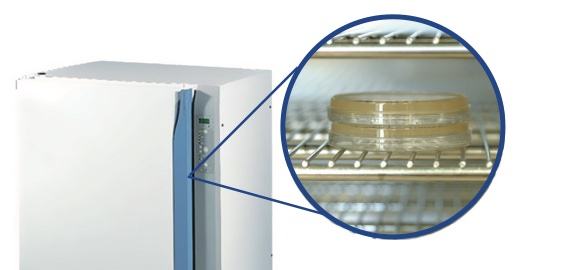
Why CO2 is critical in cell culture, the risk of condensation when measuring in high humidity and temperature, and why sterilization without removing…

Why O2 is lowered and CO2 raised in controlled-atmosphere rooms, and which instruments withstand the cold and high humidity of this environment.

What equilibrium sampling is, why sensor heating can skew field measurements, and what range is needed for deep soil profiles.
A specialist replies with the solution, the instrument and the service that fit.
Instruments to quote
No instruments yet. An enquiry can be sent anyway: a specialist answers.