

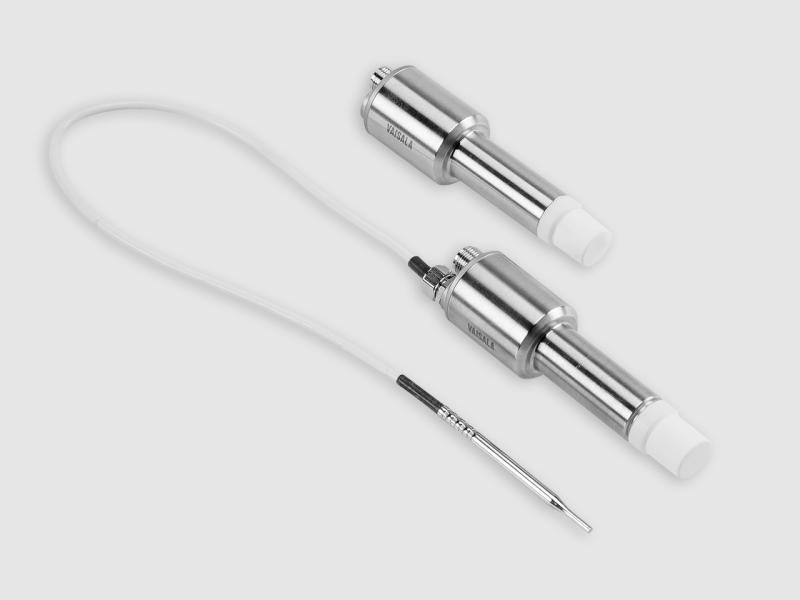
Vaporized Hydrogen Peroxide, Humidity and Temperature Measurement HPP270 Series
for bio-decontamination processes
Application note
An isolator is a device supplied with air meeting a minimum of ISO 5 classification standards that provides uncompromised, continuous isolation of its interior from the external environment. Isolators are used in a variety of life science applications, such as the manufacture of pharmaceuticals and vaccines, aseptic filling, sterility testing, and pharmacy compounding. Isolators must be treated regularly with disinfection agents in order to ensure they are free of microorganisms.
These agents need to be effective against all possible forms of microbes: viruses, bacteria, yeast, mold, and fungi, including highly resistant forms like mycobacteria and bacterial spores. A minimum 6-log bioburden reduction in microorganisms needs to be achieved when treating an isolator with bio-decontamination agents.
Vaporized hydrogen peroxide (H2O2 ) is a commonly used disinfection agent for this purpose. Vaporized H2O2 is non-toxic, works at low temperatures, and destroys the full spectrum of biological contaminants. It is compatible with a wide variety of materials. Because it decomposes to water vapor and oxygen, it leaves no residue on surfaces, meaning they do not have to be wiped down after bio-decontamination.
It is therefore no surprise that vaporized H2O2 is widely used in place of other agents (chlorine dioxide, formaldehydes, and ethylene oxide) to kill microorganisms.
When performing isolator bio-decontamination cycle development studies, accurate, stable, and repeatable measurement values for H2O2 ppm content, humidity (referring to both relative humidity and relative saturation), temperature and time of exposure are crucial.
Theoretically, reproducible cycle development can be divided into seven separate steps (all steps are not mandatory):
Reliable measurements of environmental conditions and their distribution inside an isolator are needed in order to perform all of these steps and to validate biodecontamination cycles quickly and easily.
Once an isolator’s qualification steps have been performed and the bio-decontamination cycle validated, bio-decontamination with vaporized H2O2 is repeated according to the needs of the manufacturing processes. The bio-decontamination cycle interval depends on the product being manufactured and types of processes being performed in an isolator.
Depending on the process in question, bio-decontamination may be performed as often as several times per day, or as infrequently as once per year. Disinfection is a critical process and often a time consuming one.
Bio-decontamination can be divided into four separate steps, all of which must be carefully controlled and monitored. The four steps (see Figure 1) are described below.
Rigorous control and monitoring of the environmental conditions (H2O2 ppm, RH, RS and temperature) helps guarantee the safety of the products produced in the isolator and decreases the amount of time and money spent during decontamination. The Vaisala PEROXCAP® Hydrogen Peroxide, Humidity, and Temperature Probe HPP270 series fulfills several isolator measurement needs.
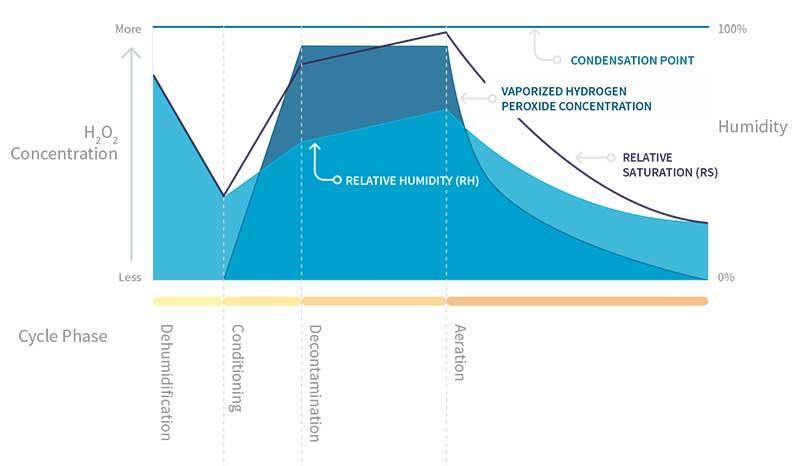
Figure 1. An example of the four steps in a typical non-condensing isolator bio-decontamination process.
for bio-decontamination processes

The latest addition to the Indigo family of transmitters and probes, the Indigo80 is a compact, handheld indicator and data logger. Ideal for field…

for quick inspections and spot-checking

For high precision measurements in demanding HVAC applications
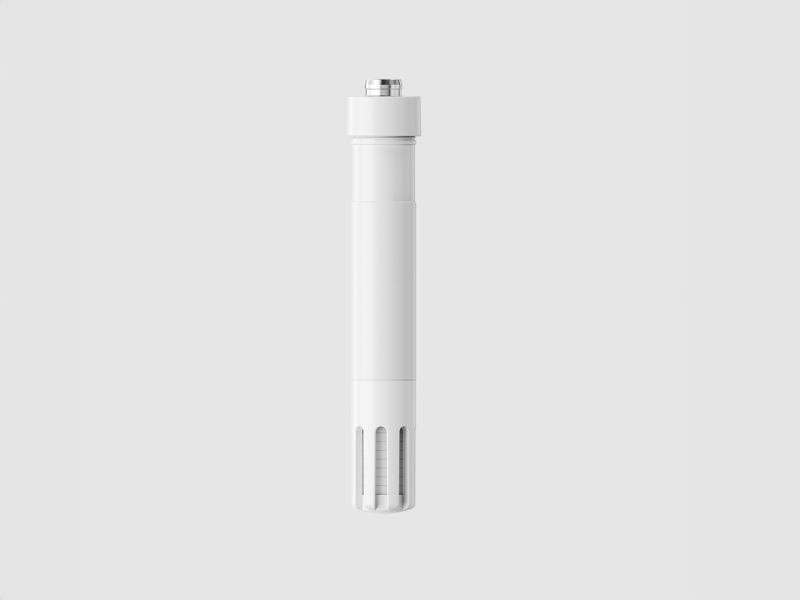
The Vaisala HUMICAP® Humidity and Temperature Probe HMP113 is a highly accurate and cost-effective humidity probe with a plastic enclosure. It has…
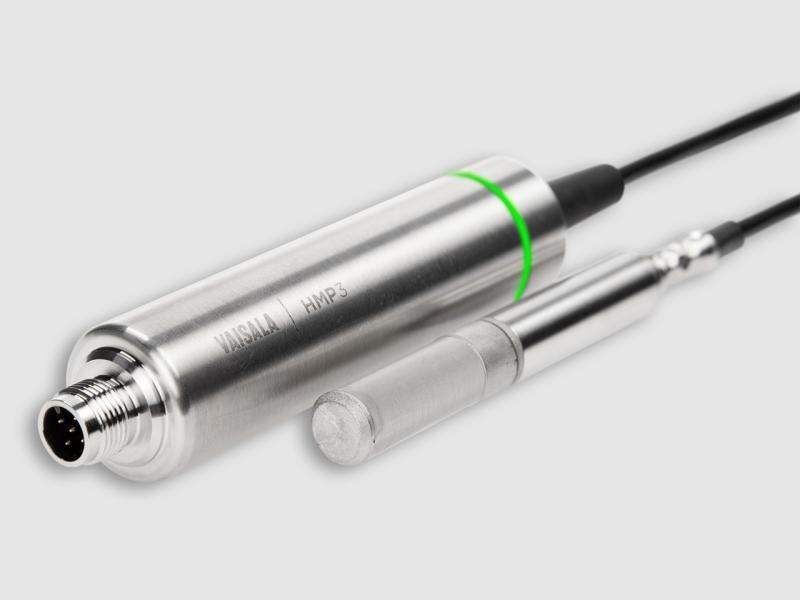
for general purpose humidity and temperature applications with exchangeable sensor
How infrared sensors work, temperature/pressure/humidity compensation, and transmitter placement.
Why CO2 is critical in cell culture, the risk of condensation when measuring in high humidity and temperature, and why sterilization without removing…
Why O2 is lowered and CO2 raised in controlled-atmosphere rooms, and which instruments withstand the cold and high humidity of this environment.

What equilibrium sampling is, why sensor heating can skew field measurements, and what range is needed for deep soil profiles.
A specialist replies with the solution, the instrument and the service that fit.
Instruments to quote
No instruments yet. An enquiry can be sent anyway: a specialist answers.