

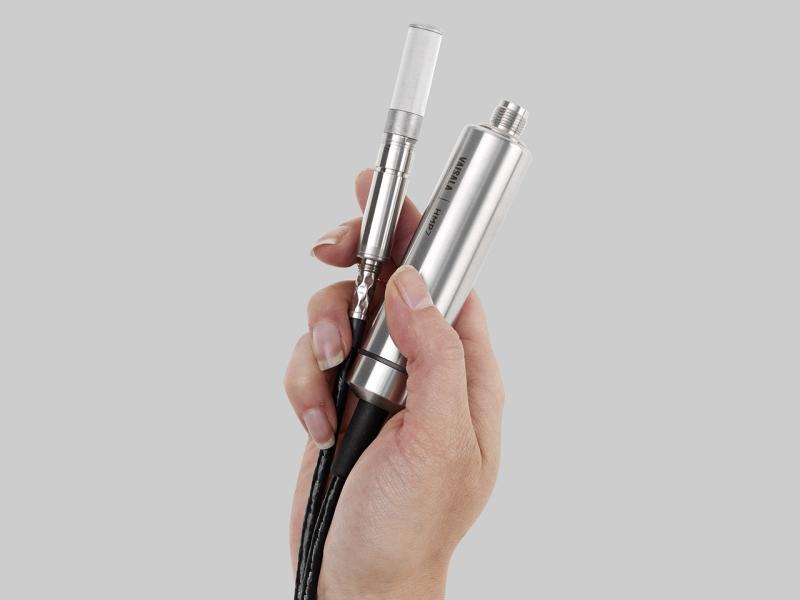
Relative Humidity and Temperature Probe HMP7
for high humidities
Technical note
Proton-exchange membrane (PEM) fuel cells are poised to play a significant role in the hydrogen economy of the future, but optimizing the membrane electrode assembly (MEA) is crucial for improving their performance, durability, and cost-effectiveness. Ulf Groos, Head of the Fuel Cell department at Fraunhofer Institute for Solar Energy Systems ISE, shares how this challenge is being approached.
The MEA is the electrochemical heart of a PEM fuel cell, where hydrogen reacts with oxygen from the air to produce power, heat, and water. Simply put, the more efficiently the MEA works, the more effective the fuel cell.
In the context of a PEM fuel cell, an MEA is a proton-exchange membrane sandwiched between two electrodes that have a catalyst embedded in them. The electrodes are electrically insulated from each other by the membrane, which keeps the hydrogen of the anode separate from the air of the cathode.
The catalyst layers are made of porous carbon support particles with platinum nanoparticles on top, partially covered by a proton-conducting polymer film called an ionomer. Oxygen, hydrogen, and water can all diffuse through the pores in the catalyst layers to react with one another. A subgasket foil is attached to the Catalyst Coated Membrane (CCM) and such a 5-layer MEA is formed. A gas diffusion layer (GDL) on top of both the electrodes facilitates current flow, gas diffusion, and water removal and creates a 7-layer MEA.
Optimizing the MEA improves the performance, durability, and cost-effectiveness of PEM fuel cells.
One of the key challenges in MEA research is optimizing the interactions between the catalyst, catalyst support, ionomer, and membrane and GDL interfaces. Researchers aim to minimize layer thicknesses while optimizing materials and architecture to ensure efficient gas diffusion, low-resistance electron and proton conduction, and efficient product water removal. Heat from the hydrogen reaction also needs to be cooled down effectively. All of these phenomena have to be addressed in significantly different local operating conditions, which can otherwise affect the fuel cell’s power density and lifetime.
Humidity management is another critical aspect of MEA optimization. Adequate humidity is necessary for good reaction conditions, but electrode flooding must be avoided. When humidity is optimized, the PEM exhibits high proton conductivity and low electrical resistance. If it becomes too dry, conductivity drops dramatically, severely limiting the cell’s power output.
Excessive humidity, on the other hand, can cause mechanical damage to the membrane, leading to increased electrical resistance and reduced voltage. System developers often target around 40% gas humidity at the cathode inlet while operating the anode in a recirculation loop without an external humidifier to reduce system complexity and costs.
High-quality measurement instruments and proven, automated test protocols are essential to accurately measure fuel cell performance, given the millivolt-range measurements involved. Equipment has to guarantee low tolerances in gas flows, gas humidities, and temperatures, as well as material degradation. Only high-quality equipment will guarantee reliable measurement results.
Reliable and long-term political decisions, along with a comprehensive regulatory framework, will be essential for accelerating the PEM fuel cell market, increasing investment, and enabling valid business models. The German Hydrogen and Fuel Cell Association (DWV) are doing great work to show what measures are needed in Europe, especially to compete with thriving markets in China and the US.
Hydrogen can be generated worldwide wherever solar and wind power is available, then stored and transported anywhere in the world. This gives hydrogen a powerful role to play in the green energy transition as it makes it possible to decouple where renewable power is produced from where it is used. Hydrogen fuel cells are ideal for transportation applications because they allow fuel to be supplied to filling stations independent of sun or wind in the local area.
As countries worldwide embrace hydrogen strategies and the demand for CO2-neutral logistics grows, PEM fuel cells are expected to play a crucial role in powering trucks, ships, airplanes, buses, and even cars. PEM fuel cells will also be used for stationary applications like data centers and back-up power.
The fuel cell community is a dynamic one, with many complex and interesting scientific questions to be addressed. Fraunhofer ISE is a leading global research service provider, committed to helping industry partners in developing hydrogen-related technologies. With ongoing research and development efforts focused on optimizing MEAs, the future looks bright for PEM fuel cells as a key enabler of the hydrogen economy.

Ulf Groos has worked at Frauhofer ISE since 2000 and was responsible for marketing the Hydrogen Technologies division. Since 2008 he has led the Fuel Cell department, heading around 35 scientists and engineers in researching MEAs and their role in PEM fuel cells.
Fraunhofer ISE, as a globally recognized research service provider, is committed to assisting industry partners in developing and optimizing MEAs for PEM fuel cells. By leveraging their long-term knowledge and expertise, they aim to contribute to the advancement of world-leading hydrogen technologies and the realization of a sustainable energy future.
Photo courtesy of © Fraunhofer ISE
for high humidities
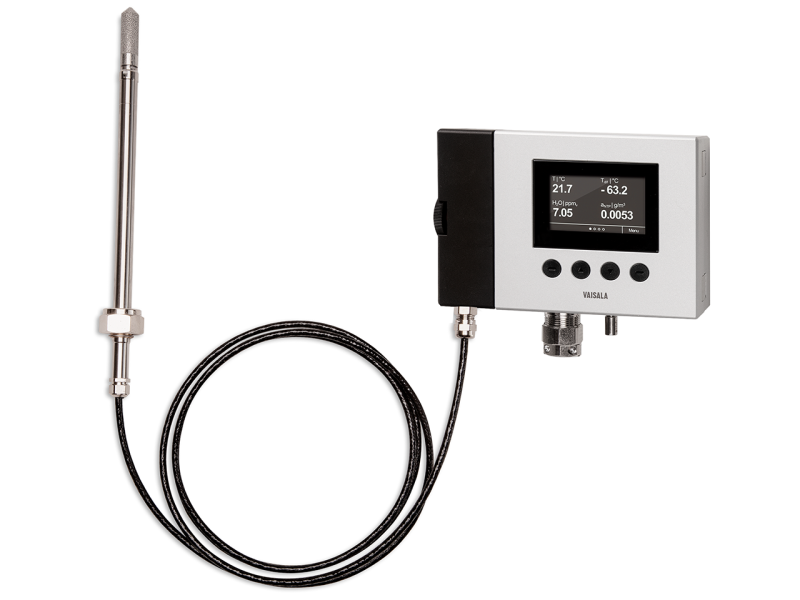
For use up to zone 0 and 20

The latest addition to the Indigo family of transmitters and probes, the Indigo80 is a compact, handheld indicator and data logger. Ideal for field…
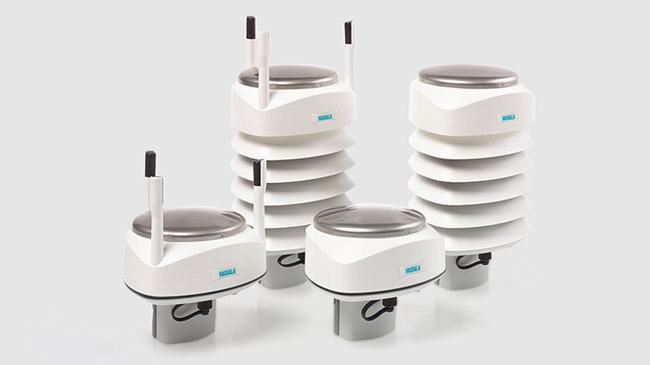
Vaisala Weather Transmitter WXT530 series is a unique collection of cost-effective sensors that accurately and reliably measure weather conditions…

for quick inspections and spot-checking

For high precision measurements in demanding HVAC applications

What relative humidity, dew point, absolute humidity and mixing ratio are, how temperature and pressure distort the reading, and why dew point is…

How humidity behaves in real conditions, the three most common measurement problems, and two practical scenarios —heated air and compressed air—…

When to measure relative humidity vs. dew point, what high and low humidity demand, how temperature and pressure factor in, and when a warmed probe…

Cooling accounts for up to 40% of a data center's energy demand. This Vaisala guide explains how measurement accuracy cuts costs and risks, with a…
A specialist replies with the solution, the instrument and the service that fit.
Instruments to quote
No instruments yet. An enquiry can be sent anyway: a specialist answers.