

Technical note
Technical note
Humidity can be expressed in many ways —relative humidity, dew point, absolute humidity, mixing ratio— and choosing the wrong parameter is one of the most common causes of “strange” readings in a process. This note breaks these concepts down and shows why they matter depending on the application. For the instruments that measure them, see the humidity instrumentation landing.
The core idea is simple: not all parameters describe the same thing. Some depend strongly on temperature, others on pressure, and some are independent of both. Understanding that difference is what makes it possible to interpret a measurement correctly.

Relative humidity (RH) expresses the air's water vapor content as a percentage of the saturation pressure at the current temperature. It is defined as the ratio between the partial pressure of water vapor and the saturation pressure:
RH = (pw / pws) × 100%
The practical consequence of this definition is that RH depends strongly on temperature: a small temperature change produces large RH swings even though the water content doesn't change.
Dew point (Td) is the temperature to which air must be cooled to become saturated with water vapor. Unlike RH, it's independent of ambient temperature and relates directly to the actual water content: it indicates the temperature at which condensation will occur. Below 0°C it's called frost point (Tf).
Absolute humidity (a), in grams per cubic meter, directly measures the amount of water present and depends strongly on gas pressure. Mixing ratio (x) expresses the mass of water vapor per kilogram of dry gas, also pressure-dependent, and is useful in ventilation calculations. Enthalpy (h) represents the total energy content of moist air relative to a reference state and is used mostly in HVAC.
When air is heated, the saturation pressure rises rapidly —warm air can hold much more water vapor than cold air—. Since the partial pressure of the vapor doesn't change, relative humidity falls, even though not a single water molecule has been removed.
A concrete example: outside air at −14°C and 60% RH enters a building heated to +21°C. Keeping the water content constant, RH drops to around 5%, a value usually considered too dry for comfort. Nothing changed in the amount of water; only the temperature changed, and with it the reference against which RH is calculated.
Dalton's law states that the total pressure of a gas mixture is the sum of the partial pressures of each component. As total pressure increases, all partial pressures increase proportionally.
That's why, in a compressed air system, raising the pressure “removes” water from the air: the partial pressure of the vapor rises and reaches the saturation pressure sooner, causing condensation. This effect is key to understanding why dew point measured at system pressure differs from that measured at atmospheric pressure.
In a cleanroom, holding 40% RH (±2%) at 20°C (±1°C) is difficult precisely because RH depends on temperature: every thermal swing moves the RH. In contrast, at 40% RH and 20°C the dew point is 6.0°C, and controlling over a narrow dew point band makes environmental control easier and saves energy.
The extreme case is compressed air: below 1% RH, relative humidity measurement is practically useless due to its poor resolution, while dew point offers meaningful differentiation and enables compliance with compressed air quality standards. In part 2 of this series we look at how all of this translates into practical measurement.
This technical content is based on Vaisala's educational material on humidity measurement fundamentals. AKRIBIS is an authorized Vaisala partner for distribution and technical support in the region — explore the full Vaisala instrumentation line.
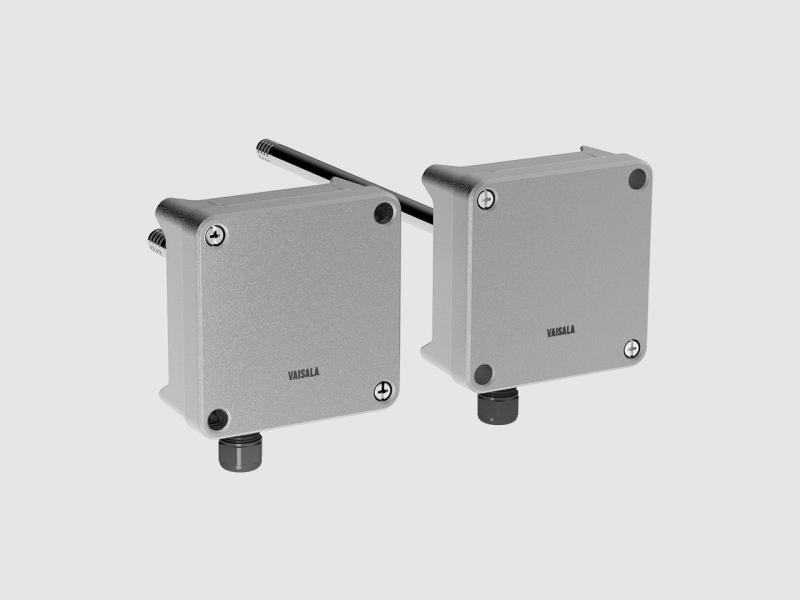
For high precision measurements in demanding HVAC applications

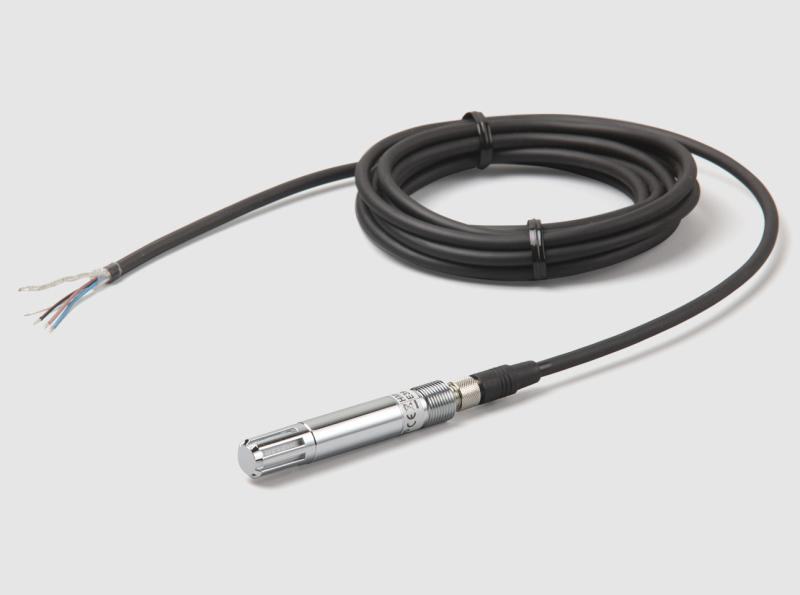
with ±1.5%RH accuracy for demanding volume applications
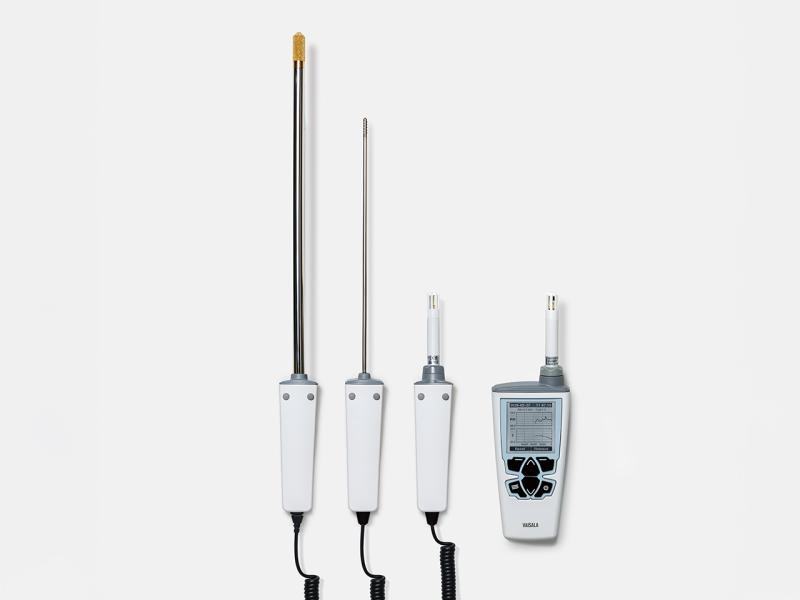
for quick inspections and spot-checking
For high precision measurements in demanding HVAC applications
for environmental chambers
with ±1.5%RH accuracy for demanding volume applications
with ±1.5%RH accuracy for demanding volume applications
with ±1.5%RH accuracy for demanding volume applications

How humidity behaves in real conditions, the three most common measurement problems, and two practical scenarios —heated air and compressed air—…
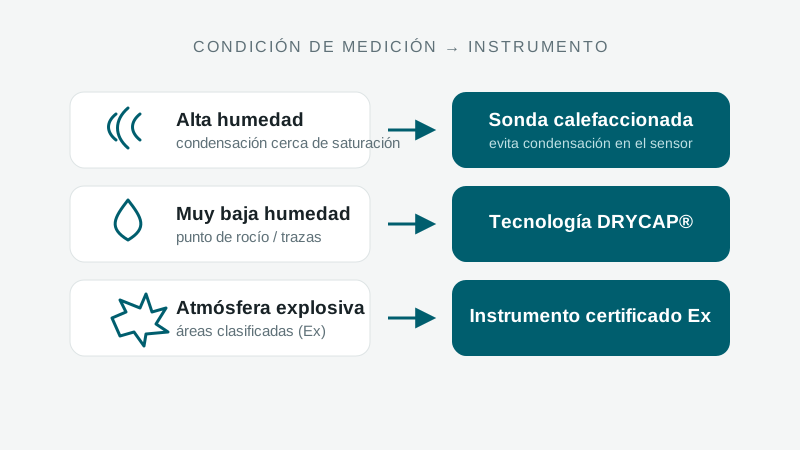
When to measure relative humidity vs. dew point, what high and low humidity demand, how temperature and pressure factor in, and when a warmed probe…

Cooling accounts for up to 40% of a data center's energy demand. This Vaisala guide explains how measurement accuracy cuts costs and risks, with a…

Why measuring oxygen concentration alone is not enough to detect air ingress in sealed transformers, and how total gas pressure turns leak detection…
A specialist replies with the solution, the instrument and the service that fit.
Instruments to quote
No instruments yet. An enquiry can be sent anyway: a specialist answers.