

Technical note
Technical note
Choosing a humidity instrument depends less on the “ideal” sensor and more on matching the parameter to be measured with the real conditions of the process. This note orders the decision factors; for the fundamentals behind each one, see Humidity Fundamentals, Part 1.
A poorly chosen instrument doesn't fail obviously: it delivers data that looks reasonable but doesn't reflect the real condition of the process. That's why the selection criteria matter as much as the sensor's rated accuracy.
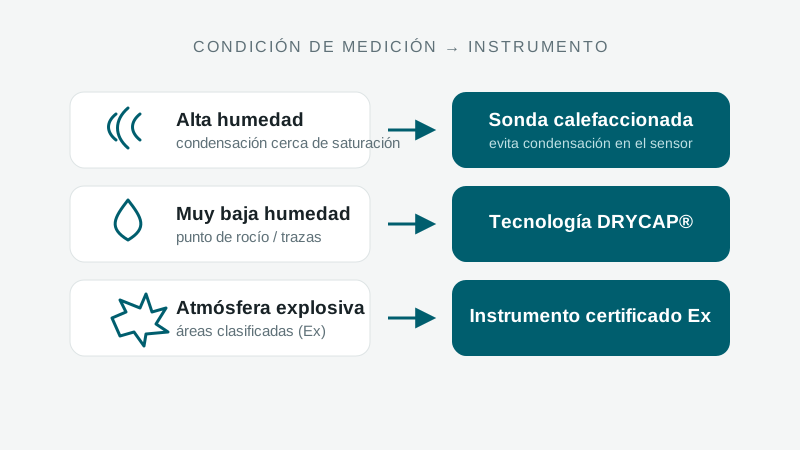
Relative humidity instruments perform best in moderate conditions, but their accuracy degrades in very dry environments: at low humidities, the calibration accuracy of an RH instrument may not be adequate. In those cases dew point is the better variable —there are sensor technologies, like Vaisala's DRYCAP®, designed specifically for dew point measurement in dry air—.
The practical rule is simple: if the process works at low humidity or needs to control condensation, measure dew point; if it works in the mid-range and the goal is comfort or environmental process control, measure relative humidity and temperature.
In high humidity (above 90% RH), condensation risk increases abruptly: a difference of just 2°C can cause water to condense on the sensor. For those environments, warmed-sensor probes are recommended, preventing condensation damage and the salt buildup that degrades accuracy.
In low humidity (below 10% RH), it's better to measure dew point, which gives a reliable indication of water content where RH loses resolution. Sensors based on DRYCAP® technology tolerate water spikes and high-humidity exposure, making them resilient to dryer-system failures.
Above 60°C, the transmitter electronics should be mounted outside the process, inserting only a probe suitable for high temperature. With large thermal fluctuations, built-in temperature compensation is essential for a reliable reading.
When the process must be isolated or significant pressure differentials managed, sealed probe heads and proper mounting are required. Pressure leaks at the point of entry alter local humidity and produce false readings —an installation error that no sensor, however good, can correct on its own—.
Direct probe mounting achieves the best accuracy and response time. Sampling systems are used when direct installation isn't feasible, but with an important caveat: relative humidity should not be measured through an external sampling system, because the temperature change along the path affects the measurement.
For dew point sampling, trace heating is recommended when the ambient temperature around the cooling coil or connecting tube is within 10°C of the dew point temperature, to prevent condensation in the tubing.
In potentially explosive atmospheres, only products certified to standards like ATEX (mandatory in Europe since 2003) can operate. For those cases there are intrinsically safe instruments specific to classified areas —consult a specialist for the model appropriate to your zone—.
Shock and vibration demand attention to probe type, mounting method and installation location. The right instrument choice includes these mechanical factors, not just the measurement range and accuracy.
This technical content is based on Vaisala's educational material on selecting humidity and dew point instruments. AKRIBIS is an authorized Vaisala partner for distribution and technical support in the region — explore the full Vaisala instrumentation line. For the specific model for your application, consult a specialist.
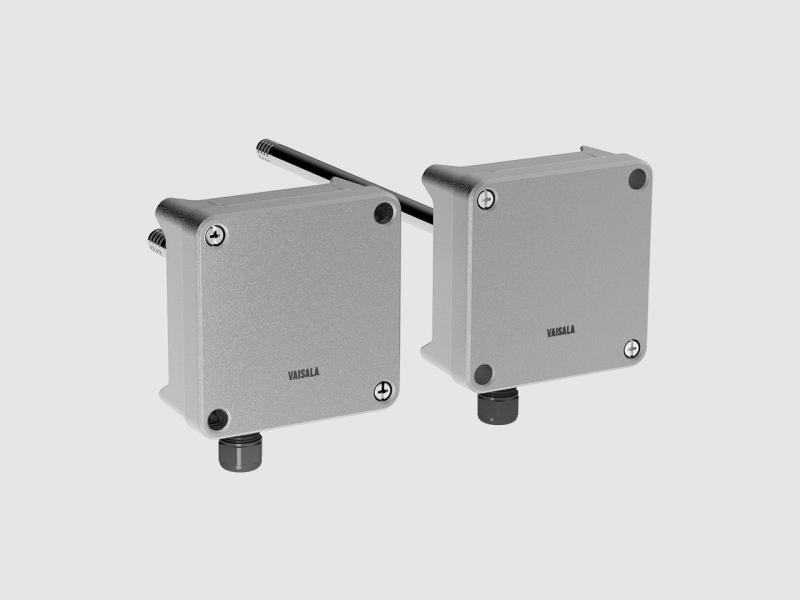
For high precision measurements in demanding HVAC applications
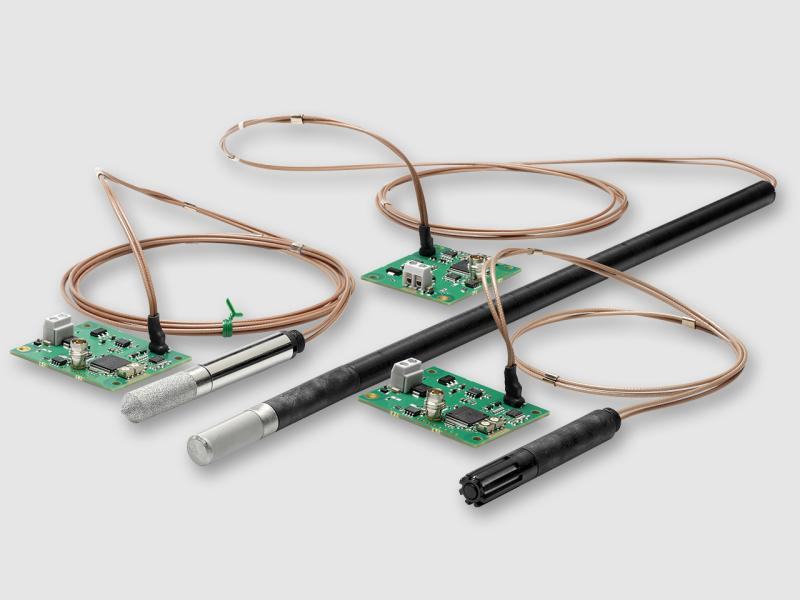
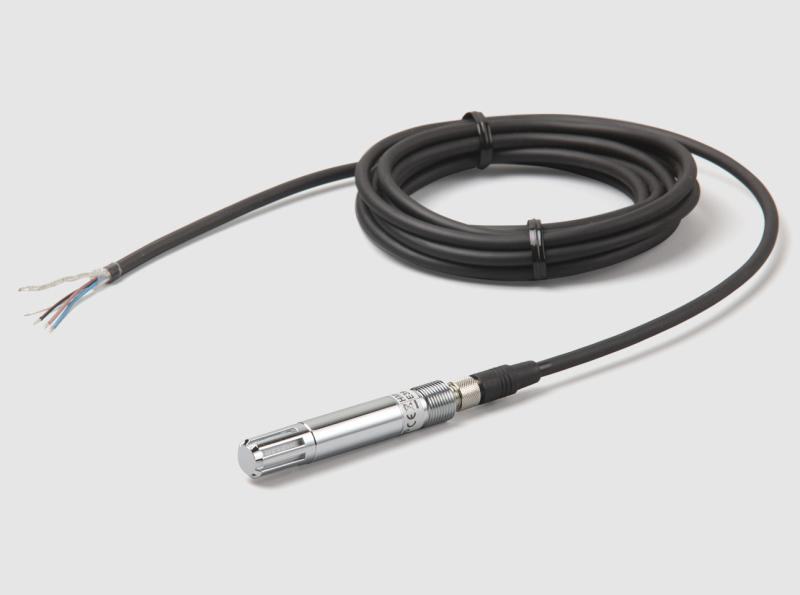
with ±1.5%RH accuracy for demanding volume applications
for quick inspections and spot-checking
For high precision measurements in demanding HVAC applications
for environmental chambers
with ±1.5%RH accuracy for demanding volume applications
with ±1.5%RH accuracy for demanding volume applications
with ±1.5%RH accuracy for demanding volume applications
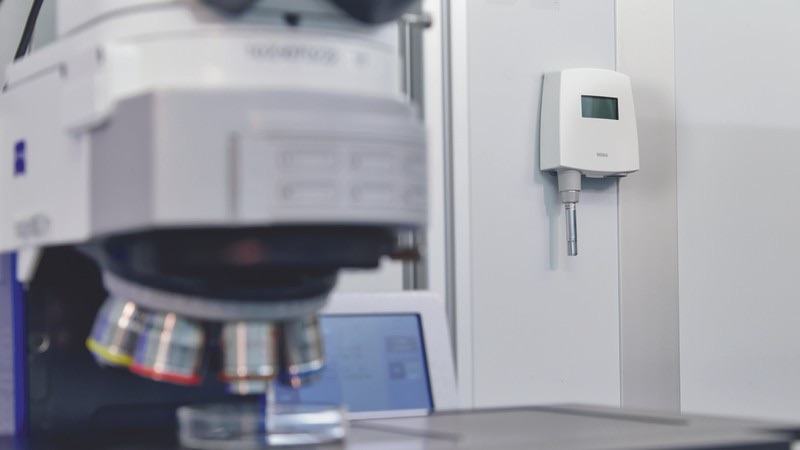
What relative humidity, dew point, absolute humidity and mixing ratio are, how temperature and pressure distort the reading, and why dew point is…
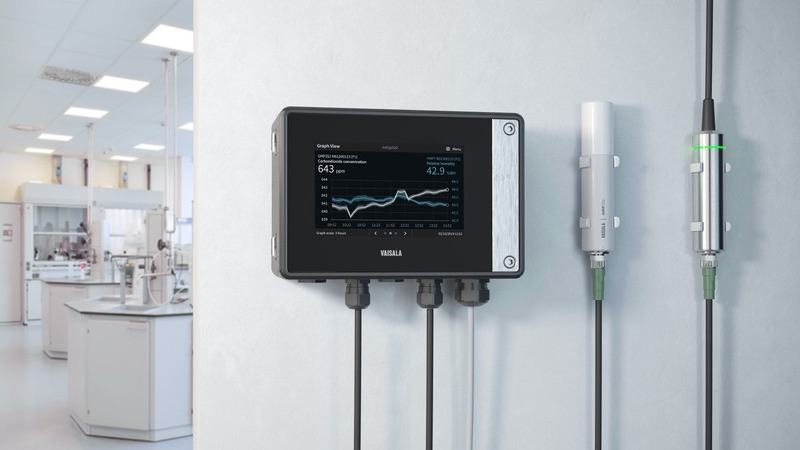
How humidity behaves in real conditions, the three most common measurement problems, and two practical scenarios —heated air and compressed air—…

Cooling accounts for up to 40% of a data center's energy demand. This Vaisala guide explains how measurement accuracy cuts costs and risks, with a…

Why measuring oxygen concentration alone is not enough to detect air ingress in sealed transformers, and how total gas pressure turns leak detection…
A specialist replies with the solution, the instrument and the service that fit.
Instruments to quote
No instruments yet. An enquiry can be sent anyway: a specialist answers.