

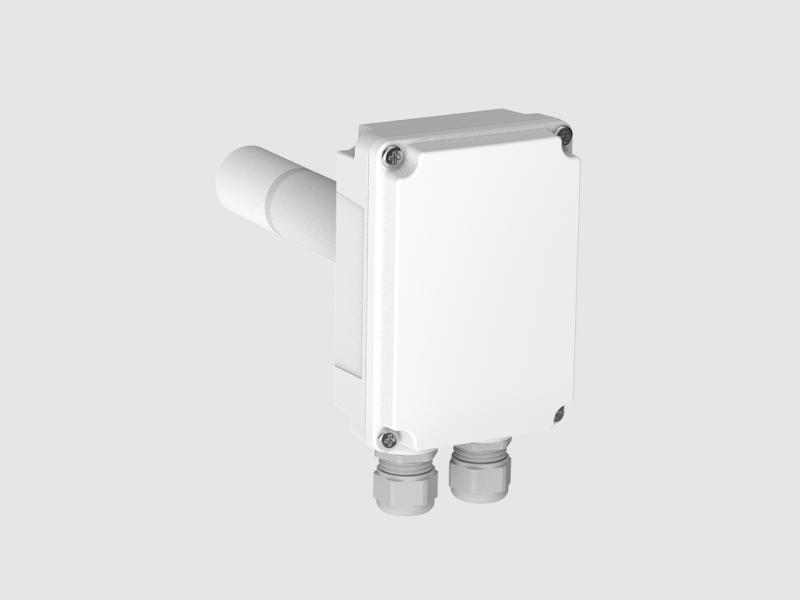
Duct CO2 Transmitter GMD110
For high-accuracy measurements in HVAC applications
Technical note
With countless studies showing that most of us spend 90% of our time indoors, the potential impact of indoor air quality on human health is huge. The Covid-19 pandemic means that the issue of healthy indoor air is now more topical than ever before. So how can we find out if the air we are breathing is of good quality?
Sources of indoor air impurities can be chemical or particulate matter. Chemical air impurities can be caused by the building itself – the materials and chemicals used in its construction – by the furniture inside it, by what we do while inside, or by us as human beings.
When we exhale we release carbon dioxide (CO2) and other pollutants into the indoor air around us. Measuring CO2 is a far more accurate way to detect the presence of living creatures than any kind of traditional occupancy detection system. You can fool a passive infrared sensor by staying perfectly still, but you cannot hold your breath for more than a minute or two. The amount of CO2 in the air is therefore a fairly good indicator of indoor air pollutants originating from living creatures. What we perhaps did not think about so much in the past is that pollutants originating from humans also include viruses.
While CO2 isn’t toxic to humans in itself, it does replace oxygen, meaning high concentrations can be lethal. According to research, concentrations below the level lethal to humans cause physical symptoms and impair brain function. High CO2 levels are especially detrimental to our higher mental functions like decision making, strategic thinking, crisis response, and learning. Until recently, high CO2 levels have probably not been a strong enough motivator to encourage us to focus on ensuring sufficient ventilation and good indoor air quality, at least not in all our buildings; Covid-19 has altered this perspective for good.
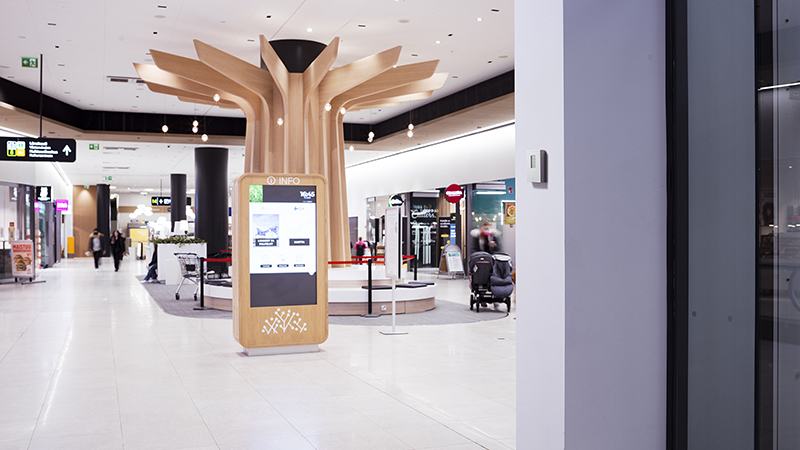
You could say that the CO2 level reveals the pollution load of indoor air, and good ventilation is obviously extremely important to keep the air fresh and healthy in our buildings. CO2 measurement in rooms and other indoor spaces is commonly used as an input for demand-controlled ventilation as part of a building automation system; sufficiently low CO2 levels tell us that the ventilation system is doing its job properly.
However, not all buildings have this level of capability yet. For example, in school buildings in Europe ventilation is often a challenge according to REHVA (Federation of European Heating, Ventilation, and Air Conditioning Associations). Today, many schools in Europe are naturally instead of mechanically ventilated, and sufficient natural ventilation cannot always be guaranteed.
Does this mean that we have to carry out complex and expensive renovations to bring our buildings up to scratch? Not necessarily, at least not right away. At home or in schools, for example, we can use the tried and tested method of simply opening a window. At the very least we should be monitoring the CO2 level in the spaces where we spend time so that we can be made aware when it is approaching or exceeding the recommended limit. Our recommendation is to use professional CO2 transmitters, which can also be used as standalone units. This is an easy way to get started with CO2 monitoring; just make sure that the transmitters have the capability to connect to the ventilation system controls once you upgrade your system. Lastly, remember that a reliable, high-quality transmitter with a long lifetime is a wise choice.
To sum up, let’s never forget that good-quality, healthy indoor air has a massive positive impact on our health and well-being – and good ventilation controlled using reliable CO2 measurement is the way to make it happen!
For more information about CO2 measurements, contact us.
For high-accuracy measurements in HVAC applications
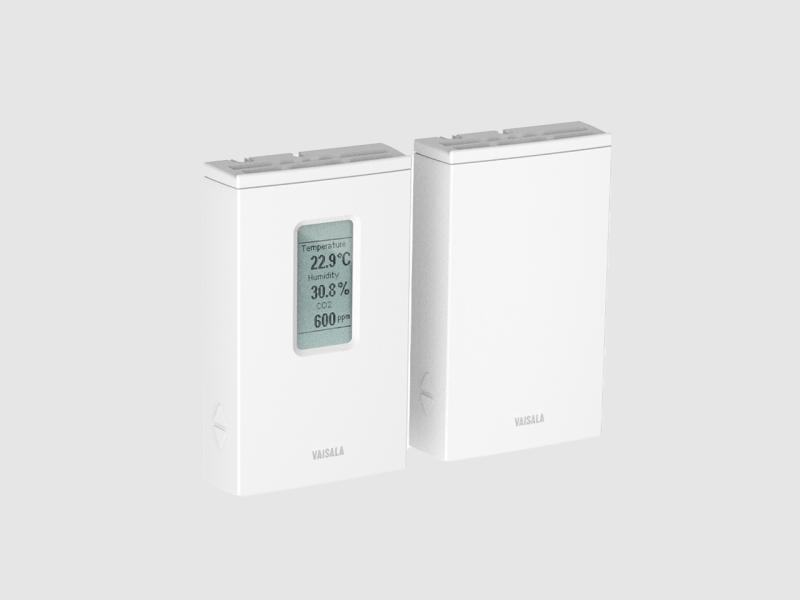
for green building projects
for green building projects
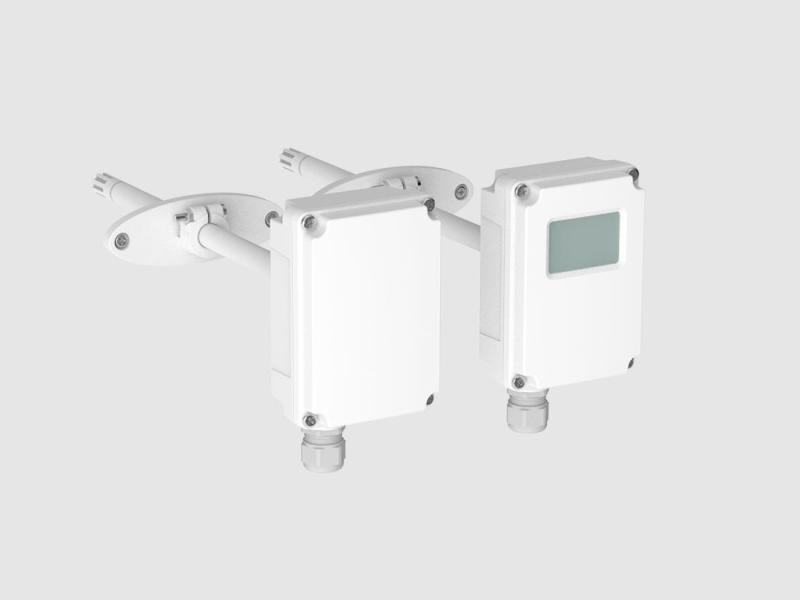
For high-precision measurements in HVAC applications
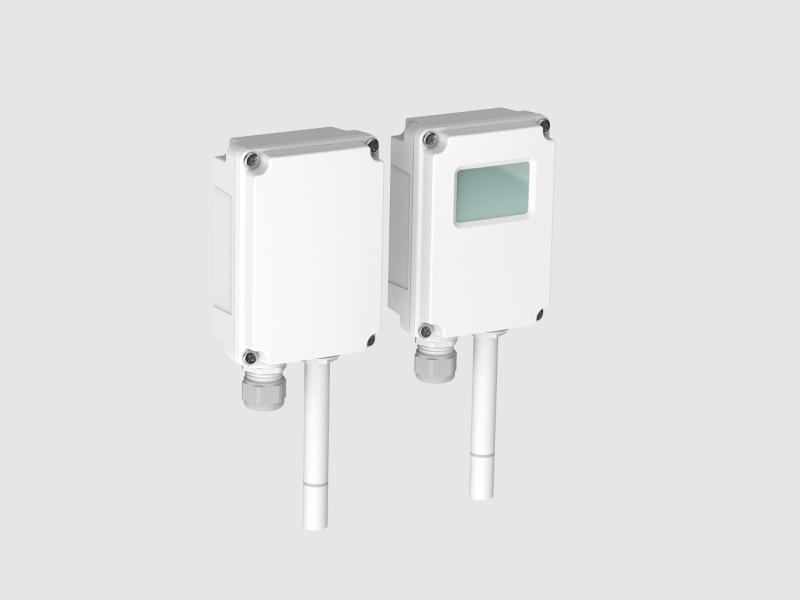
For high-precision measurements in HVAC applications
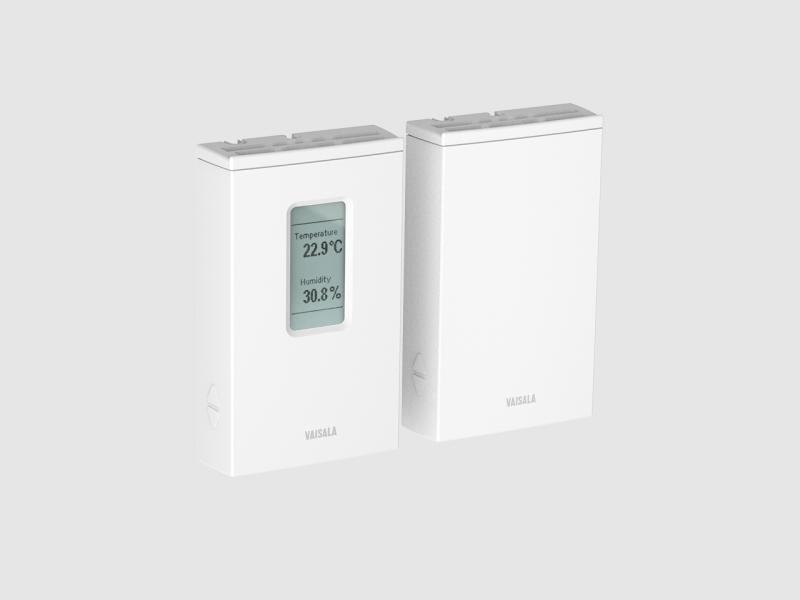
±1.7%RH wall transmitters with a certificate for demanding HVAC

What relative humidity, dew point, absolute humidity and mixing ratio are, how temperature and pressure distort the reading, and why dew point is…

How humidity behaves in real conditions, the three most common measurement problems, and two practical scenarios —heated air and compressed air—…

When to measure relative humidity vs. dew point, what high and low humidity demand, how temperature and pressure factor in, and when a warmed probe…

Cooling accounts for up to 40% of a data center's energy demand. This Vaisala guide explains how measurement accuracy cuts costs and risks, with a…
A specialist replies with the solution, the instrument and the service that fit.
Instruments to quote
No instruments yet. An enquiry can be sent anyway: a specialist answers.