


CAB100 Industrial Cabinet for continuous monitoring systems
for cleanrooms and industrial settings
Technical note
In a recent webinar, “How Continuous Monitoring & Building Management Systems Support Monitoring, Compliance, & Control” we received several questions on monitoring clean room applications. In this blog, Senior Project Sales Engineer John Coen and Senior GxP Regulatory Expert Paul Daniel answer the questions they did not have time to answer during their presentation.
Question: From a validation perspective, when we validate the CMS should the BMS for the cleanroom be qualified as a baseline?
Answer: To be clear on terms, let’s agree that validation is for a process, and qualification is for the equipment used for the process. A clean room is a great example, because clean rooms definitely need monitoring beyond the Building Management System for differential pressure and particles, so some sort of validated monitoring solution is required. Clean rooms also need the BMS that controls the HVAC that maintains the temperature, relative humidity, and air pressure. Since I need a monitoring system anyway, I would validate my monitoring system.
But what level of control do we need for the BMS? We can all agree that the BMS needs some level of control, according to GEP (Good Engineering Practice) as a minimum. But do we validate it?
I have a lot of confidence saying that for the HVAC control in a simpler space, like a warehouse, that the BMS doesn’t need to be validated. But that is harder to say with a more complicated space like a clean room. Clean room validation may be a case-by-case scenario, but with the hopeful goal of a system organization that allows the BMS to remain un-validated but controlled (per GEP).
Some define “qualified” as simply meaning controlled. I think it should be clearly stated if the BMS is a GxP system and therefore qualified/validated and incorporated into your Quality Management System, or if the BMS is a non-GxP system, and therefore controlled and not part of your QMS.
Perhaps posing the question another way gives the answer: Do you intend to make your Building Management System SOPs into GxP Documents and maintain the training of your BMS Operators as GxP Records? Do you intend to go through a GxP Change Control process when you update the BMS server, or if you want to change a setpoint for better efficiency? If you think that level of control of the BMS is not necessary, then you are not intending the treat the BMS a GxP system, so you may not need to qualify the equipment or validate the processes.
Question: Does the EU GMP Annex 1 require monitoring humidity in clean room classes C and D?
Answer: There may not actually be a specific regulatory requirement to control or monitor humidity in any clean room, unless your company has approved a procedure stating that you will control and monitor humidity. It’s one of those things where if you said you would do it in a GxP document, then now it is a GxP requirement that you do what you said you would do.
However, there are some practical reasons to monitor and control humidity in clean rooms that are under regulatory control. The room must be operated in a way that will safeguard product and the health of your employees. A clean room that is too dry, or too humid, can have knock-on effects.
For example, if too humid, operators will sweat and contaminate the clean room; if too dry, static charge can build up, labels might not stick correctly, and you can cause health problems for employees, again creating conditions for contamination. So, while there is no direct regulatory requirement to control or monitor humidity in a clean room, failing to do so could create other problems that can affect product quality, and could become apparent during a regulatory inspection or survey.
Question: What is your recommendation for recording intervals for temperature/humidity in clean rooms?
Answer: There was a historical issue with collecting too much data, because storage can become costly. This led to longer recording intervals, such as 15 minutes. Now that storage is cheaper, we can collect as much as we want and think about what is ideal. Five minutes can be a happy medium, because temperatures are unlikely to change drastically within that time frame.
That said, Vaisala’s RFL100 data loggers collect data at one-minute intervals by default. This interval is for applications where more frequent data is desired, and we wanted to remove the difficulty of having to configure sample intervals for multiple applications. Report data in viewLinc can be filtered to present data in five- or 15-minute intervals as desired.
Learn more about Vaisala's CAB100 solution for clean room environmental monitoring.
for cleanrooms and industrial settings

For high precision measurements in demanding HVAC applications
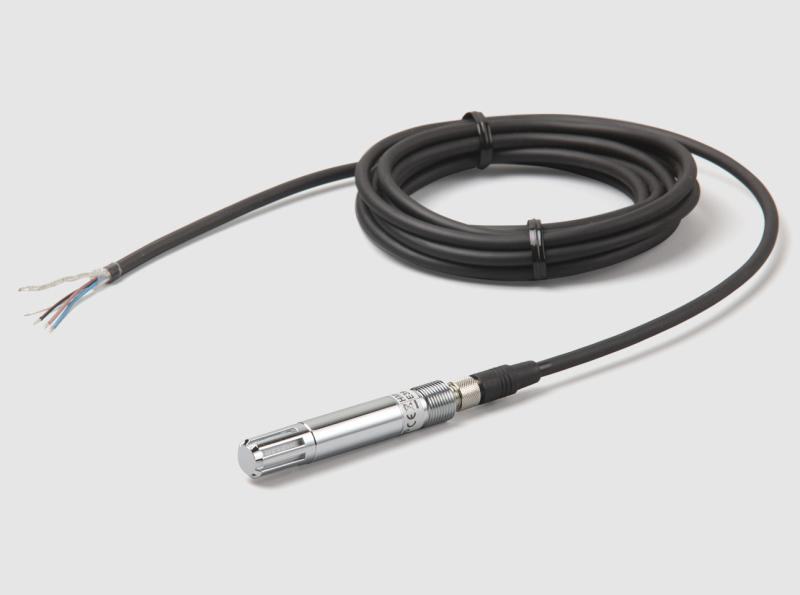
with ±1.5%RH accuracy for demanding volume applications
with ±1.5%RH accuracy for demanding volume applications
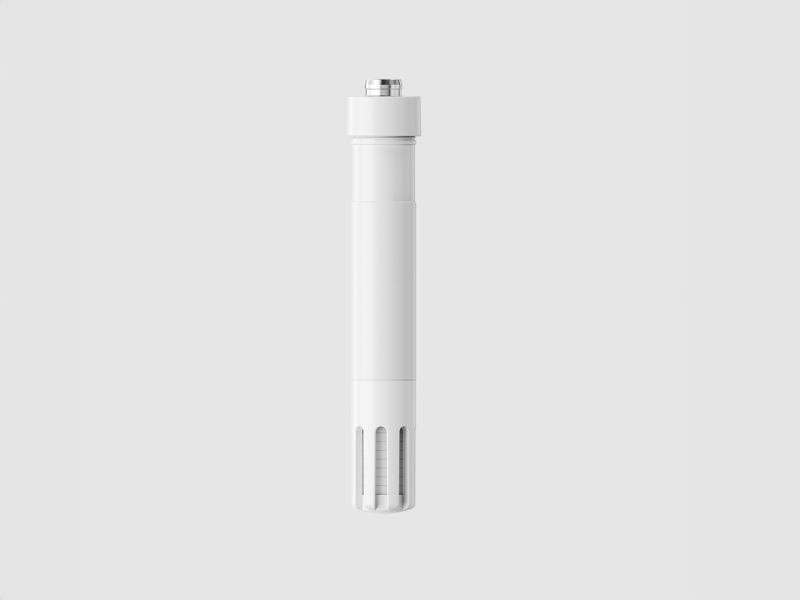
The Vaisala HUMICAP® Humidity and Temperature Probe HMP113 is a highly accurate and cost-effective humidity probe with a plastic enclosure. It has…
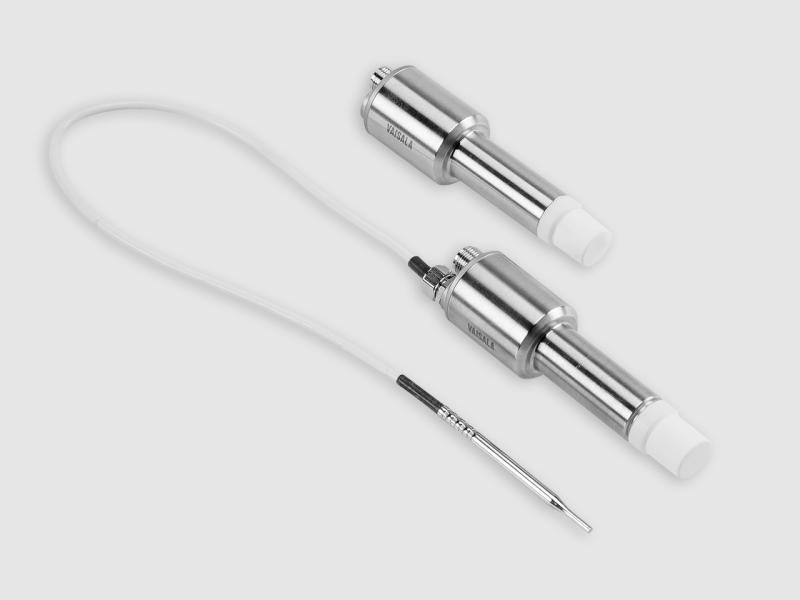
for bio-decontamination processes

What relative humidity, dew point, absolute humidity and mixing ratio are, how temperature and pressure distort the reading, and why dew point is…

How humidity behaves in real conditions, the three most common measurement problems, and two practical scenarios —heated air and compressed air—…

When to measure relative humidity vs. dew point, what high and low humidity demand, how temperature and pressure factor in, and when a warmed probe…

Cooling accounts for up to 40% of a data center's energy demand. This Vaisala guide explains how measurement accuracy cuts costs and risks, with a…
A specialist replies with the solution, the instrument and the service that fit.
Instruments to quote
No instruments yet. An enquiry can be sent anyway: a specialist answers.