

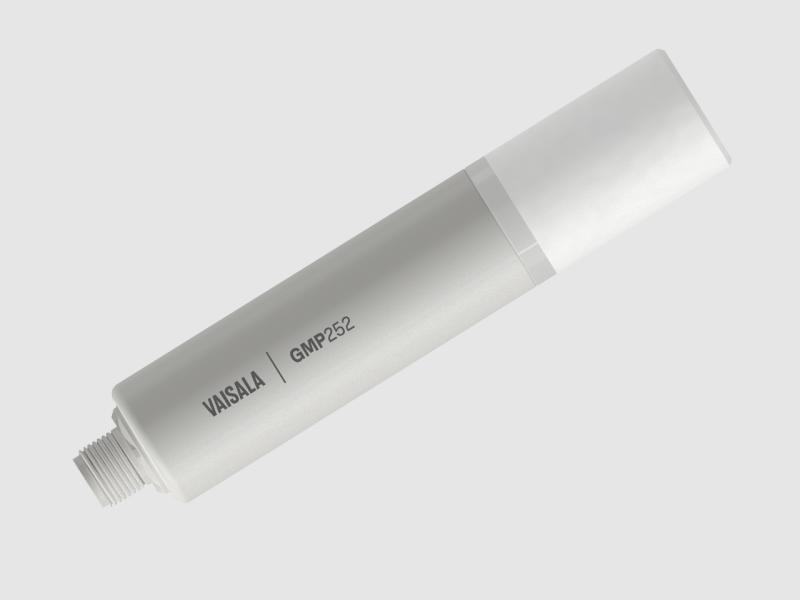
CO₂ Probe GMP252
for ppm-level measurements in agriculture, refrigeration, demanding HVAC, and for plant growth manufacturers
Application note
Few variables run through the food chain end to end like carbon dioxide. For the general context of this magnitude, see the CO2 instrumentation landing.
At each stage CO2 plays a different role — an input to photosynthesis, a ripening indicator, a fermentation by-product, a risk to people or a component of biogas — and in all of them, the quality of the decision depends on the quality of the measurement.
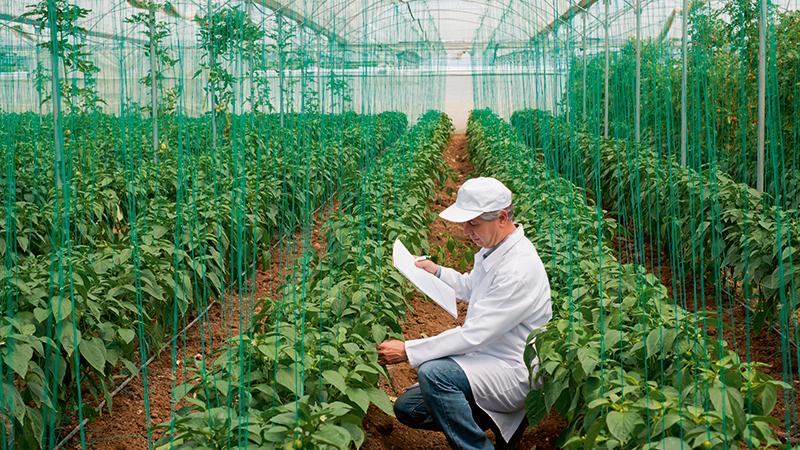
In greenhouses, vertical farms and container growing, the environment is controlled to achieve exact growth conditions — and CO2 is a direct input to photosynthesis. Keeping it at the target level, together with temperature and humidity, is what maximizes crop yield with efficient use of resources.
A poorly measured CO2 level costs twice: below target, the crop grows under its potential; if enrichment overshoots the range, gas and energy are wasted.
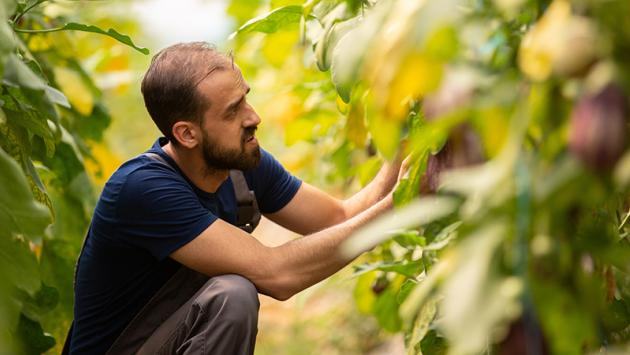
Once harvested, fruit and vegetables keep respiring: they consume O2 and release CO2. Controlled-atmosphere rooms turn that mechanism into an advantage — lowering O2 and raising CO2 to slow ripening and extend shelf life through storage and transport. The same principle governs ripening rooms, where conditions are tuned so fruit reaches the shelf at exactly the right point.
The technical catch is the environment itself: cold and very high relative humidity, conditions that degrade unprepared sensors. We analyze that case in depth in the CO2 in controlled-atmosphere storage note.
In brewing, winemaking and other fermented products, CO2 is an unavoidable by-product of the process — and in bottling, an input injected for carbonation. In both cases it has to be measured twice over: as a process variable and as a safety risk, because it is a colorless, odorless gas that at high concentrations endangers the people working in fermentation rooms and bottling plants.
Which areas of a brewery concentrate the highest risk, and which instruments cover each concentration range, is covered in the CO2 in fermentation and brewing note.
The chain doesn't end at the shelf: organic waste from food production can be turned into biogas through anaerobic digestion. Measuring the gas composition — the ratio of methane to CO2 — is what optimizes digester yield and protects generation equipment. See the biogas application.
Vaisala documents this full journey with its CARBOCAP® infrared sensor technology, designed to measure CO2 stably both in ppm (ambient and safety) and in percent (processes, controlled atmosphere and biogas).
This technical content is based on Vaisala's documentation on CO2 measurement in the food industry. AKRIBIS is an authorized Vaisala partner for distribution and technical support in the region — explore the full Vaisala instrumentation line. To define the measurement points for your operation, consult a specialist.
for ppm-level measurements in agriculture, refrigeration, demanding HVAC, and for plant growth manufacturers
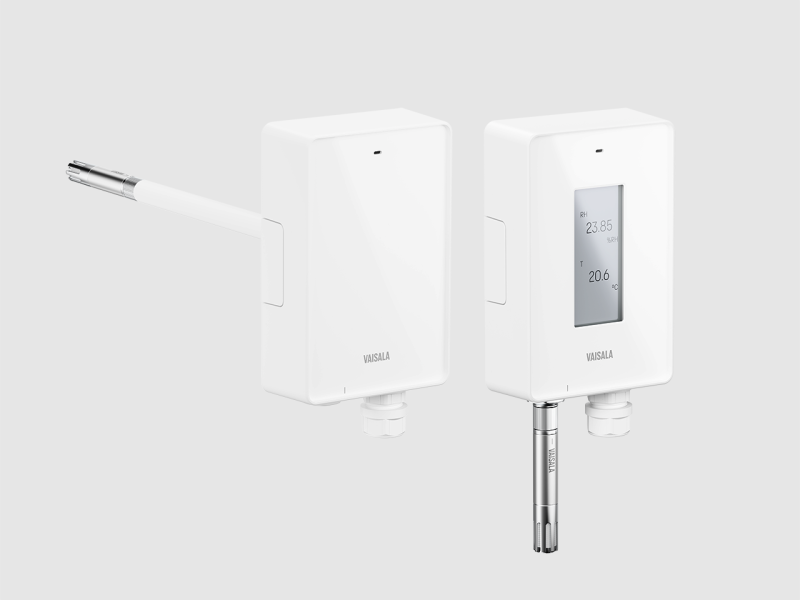
How infrared sensors work, temperature/pressure/humidity compensation, and transmitter placement.
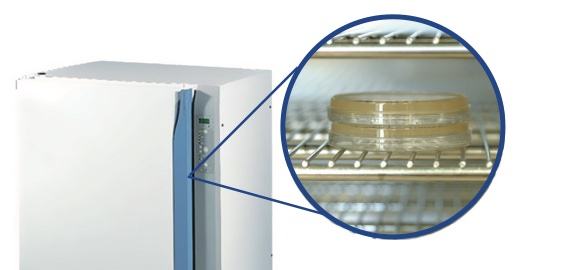
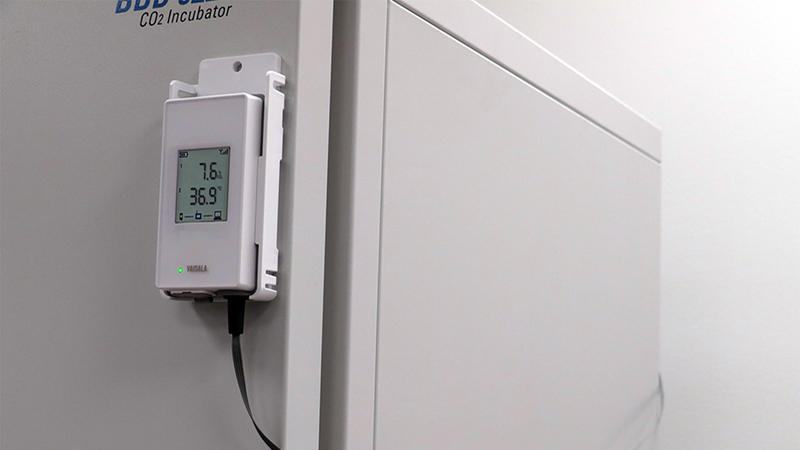
Why CO2 is critical in cell culture, the risk of condensation when measuring in high humidity and temperature, and why sterilization without removing…
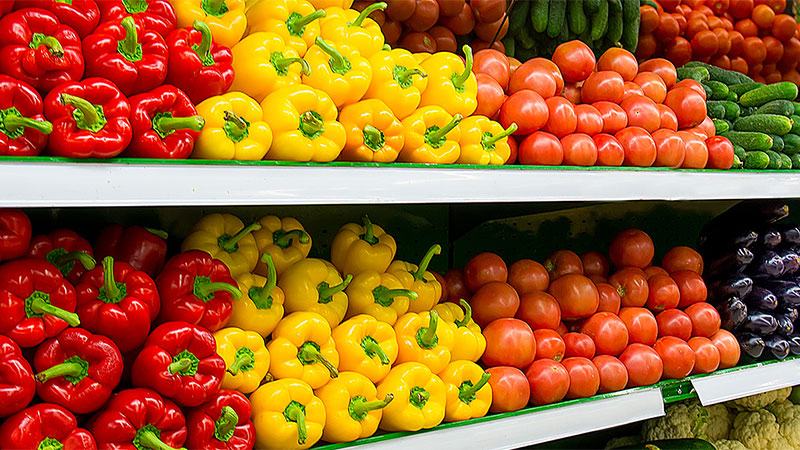
Why O2 is lowered and CO2 raised in controlled-atmosphere rooms, and which instruments withstand the cold and high humidity of this environment.

What equilibrium sampling is, why sensor heating can skew field measurements, and what range is needed for deep soil profiles.
A specialist replies with the solution, the instrument and the service that fit.
Instruments to quote
No instruments yet. An enquiry can be sent anyway: a specialist answers.